Tour de France AI Video Generator
Create stunning Tour de France videos from a single prompt with Agent Opus. Whether you're covering race highlights, cycling tips, or brand activations around the world's greatest bike race, our Tour de France AI video generator transforms your text into publish-ready videos complete with dynamic motion graphics, professional voiceovers, and social-optimized formats. No timeline editing, no stock footage hunting, no manual assembly. Describe your vision, and Agent Opus delivers a finished video in minutes, ready for TikTok, Reels, YouTube Shorts, and LinkedIn.

Explore what's possible with Agent Opus

Reasons why creators love Agent Opus' Tour de France AI Video Generator
Ship in Minutes, Not Hours
Generate a publish-ready video in under 10 minutes from a single prompt — no timeline editing, no asset hunting, no creative dry spells.
Zero Editing Skills Required
Describe your concept and Agent Opus handles scene composition, motion graphics, voiceover, and platform formatting automatically — even if you've never opened a video editor.
Studio-Grade Output
Cinematic motion graphics, beat-synced cuts, professional voiceover, and precise typography — every video ships looking production-quality from the first generation.
Stays On-Brand
Upload your logo, fonts, and color palette once. Agent Opus applies them across every video automatically so your content stays visually consistent.
How to use Agent Opus’ Tour de France AI Video Generator
 1
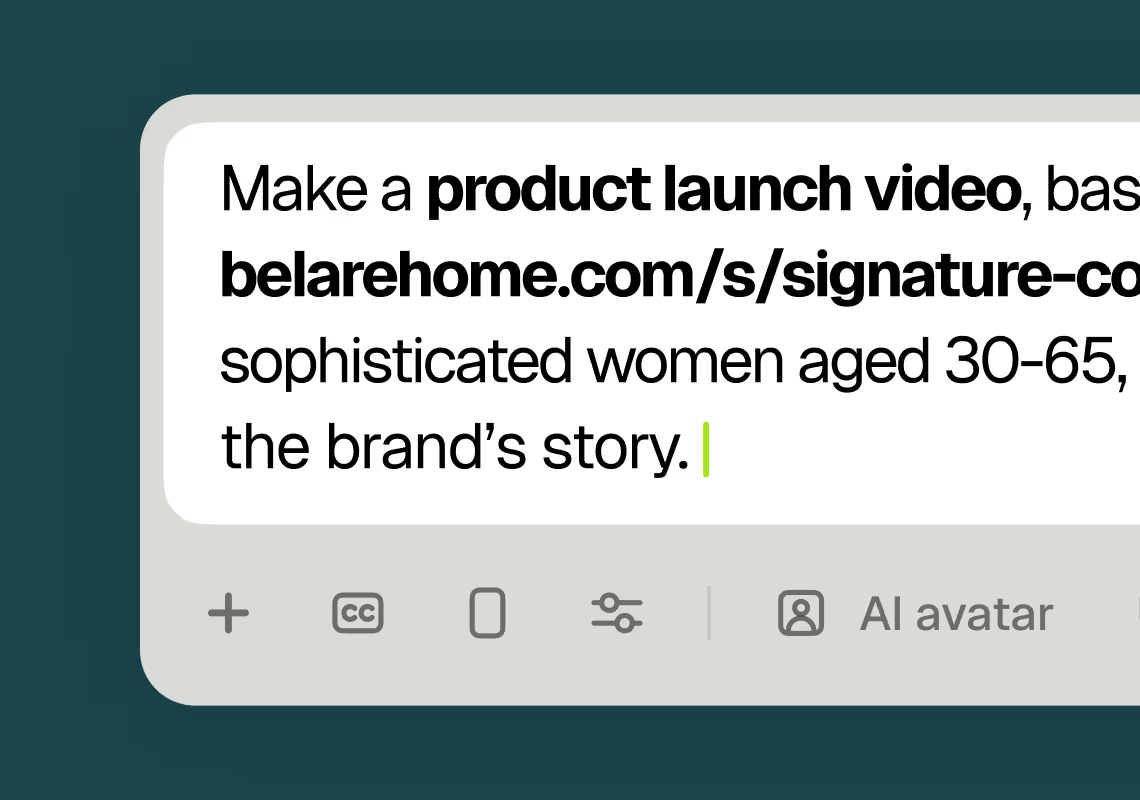
1Describe your video
Paste your promo brief, script, outline, or blog URL into Agent Opus.
 2
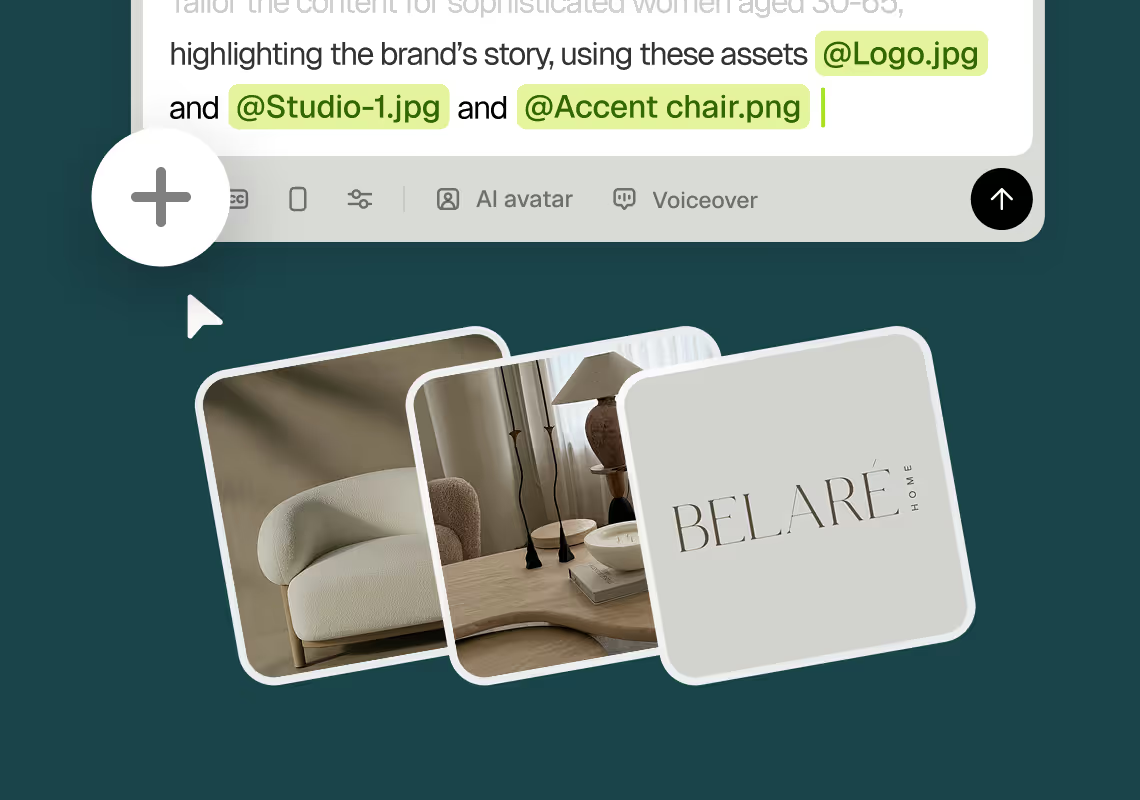
2Add assets and sources
Upload brand assets like logos and product images, or let the AI source stock visuals automatically.
 3
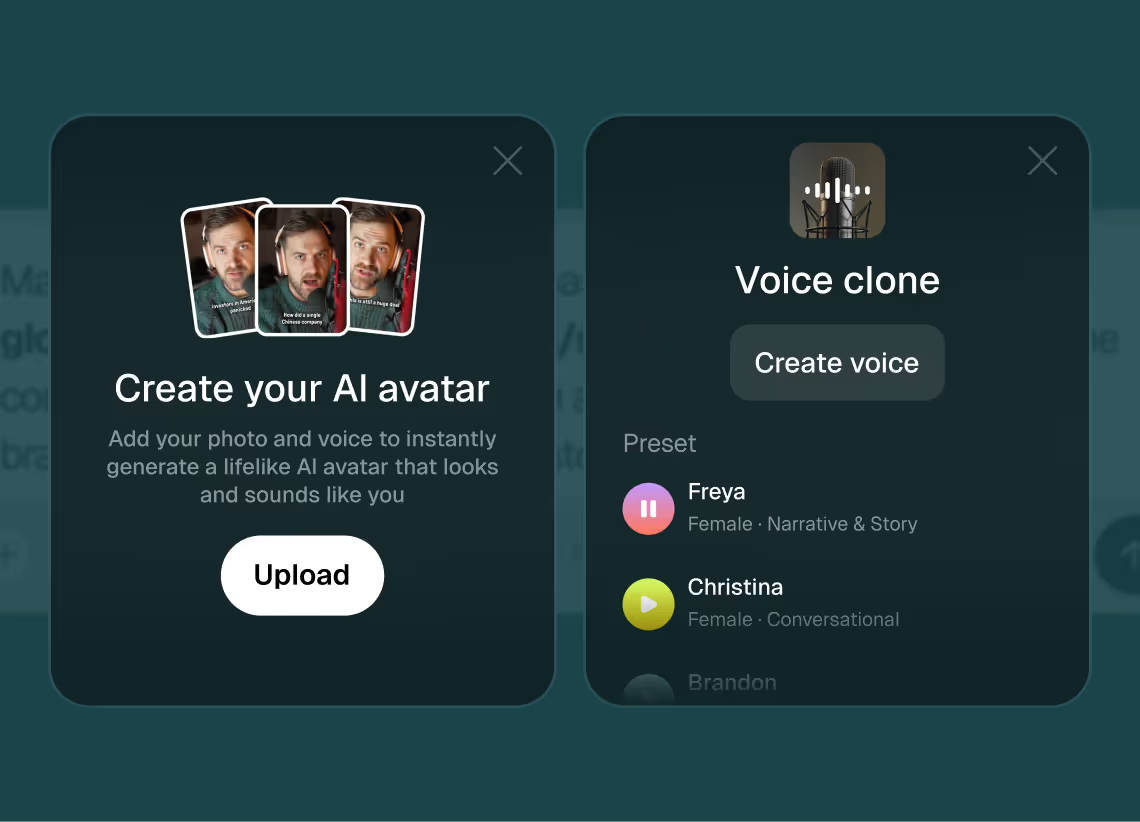
3Choose voice and avatar
Choose voice (clone yours or pick an AI voice) and avatar style (user or AI).
 4
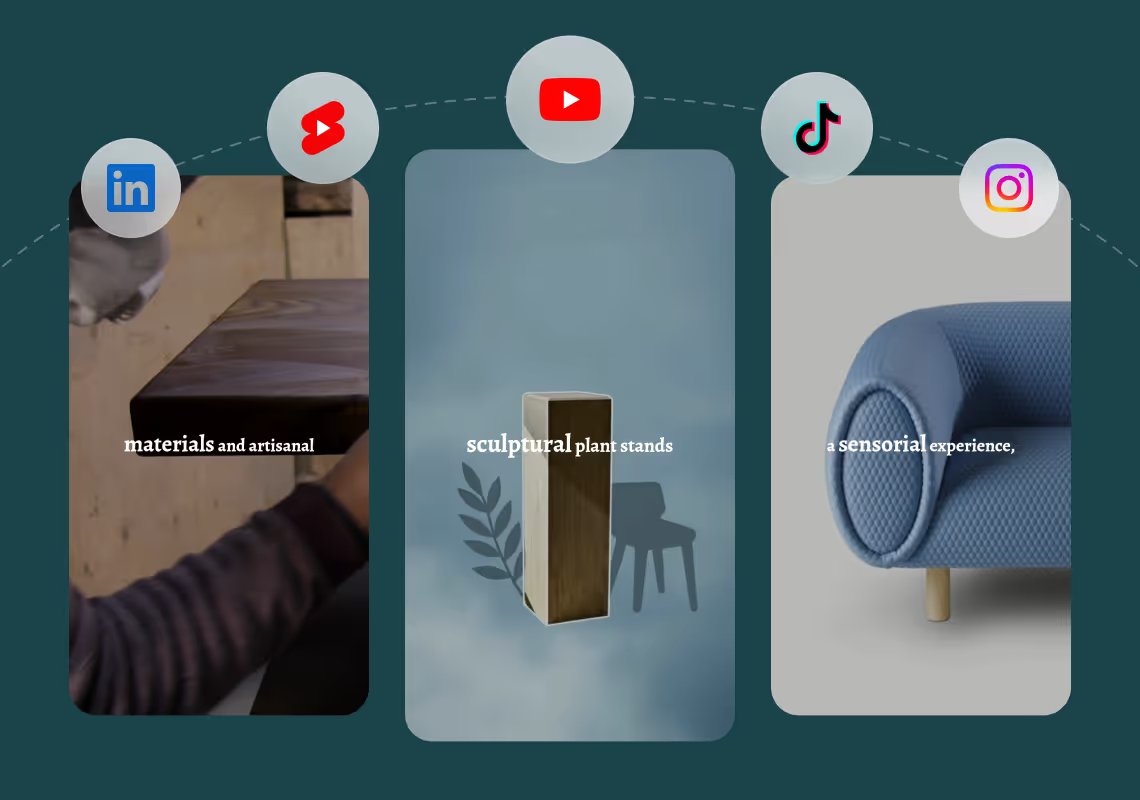
4Generate and publish-ready
Click generate and download your finished promo video in seconds, ready to publish across all platforms.


8 powerful features of Agent Opus' Tour de France AI Video Generator
Prompt-to-Video Generation
Turn a one-line idea into a finished video. The agent handles structure, pacing, B-roll selection, and final assembly automatically.
Script and Outline Support
Paste a full script, drop in an outline with section headers, or supply a blog or article URL — Agent Opus reads any of them and builds a video around the content.
AI Voiceover and Voice Cloning
Pick from natural-sounding AI voices in 30+ languages, or clone your own voice once. Every video then ships with your authentic narration.
Beat-Synced Motion Graphics
Dynamic visuals that lock to the beat of your audio or the pacing of your script — kinetic typography, transitions, and effects, no manual keyframing required.
Automatic Captions and Subtitles
Burn-in captions for short-form, soft subtitles for long-form, and multi-language translations — all generated and synced automatically.
Multi-Aspect-Ratio Export
9:16, 1:1, and 16:9 outputs from one job, with intelligent reframing of text, motion graphics, and focal elements for each ratio.
Brand Asset Integration
Upload your logo, watermark, fonts, and color palette. Agent Opus applies them consistently across every video automatically.
Avatar and Talking Head Support
Add an AI avatar, your own video footage, or a synthetic spokesperson to any video — useful for explainers, ads, and personal-brand content.
Testimonials
This looks like a game-changer for us. We're building narrative-driven, visually layered content — and the ability to maintain character and motion consistency across episodes would be huge. If Agent Opus can sync branded motion graphics, tone, and avatar style seamlessly, it could easily become part of our production stack for short-form explainers and long-form investigative visuals.
srtaduck
I reviewed version a and I was very impressed with this version, it did very well in almost all aspects that users need, you would only have to make very small changes and maybe replace one of 2 of the pictures, but even saying that it could be used as is and still receive decent views or even chances at going viral depending on the story or the content the user chooses.
Jeremy
all in all LOVE THIS agent. I'm curious to see how I can push it (within reason) Just need to learn to get the consistency right with my prompts
Rebecca
Frequently Asked Questions
How does the Tour de France AI video generator handle different types of cycling content inputs?
Agent Opus accepts four input formats tailored to how cycling creators and sports marketers actually work. First, you can write a short prompt describing the video you want, such as 'Stage 12 mountain finish recap with Pogacar's attack' or 'Top 5 climbing techniques used in the Alps.' The AI interprets your intent and builds the full video narrative. Second, you can paste a complete script if you've already written race commentary or tactical analysis. Agent Opus will match visuals, pacing, and motion graphics to your exact wording. Third, you can provide an outline with bullet points covering stage highlights, rider stats, or training tips, and the system expands each point into a cohesive video segment. Fourth, you can drop in a blog or article URL from your cycling website. The platform reads the content, extracts key points about the race, riders, or tactics, and generates a video that mirrors your written analysis. Across all formats, the Tour de France AI video generator automatically sources relevant imagery like peloton shots, mountain landscapes, team jerseys, and finish-line celebrations. It applies motion graphics that reflect the speed and drama of professional cycling, such as speed ramps during sprint finishes or slow-motion overlays for tactical breakdowns. Voice and pacing adjust based on content type. A stage recap gets energetic narration with quick cuts, while a training tutorial receives a steadier instructional tone. The system also recognizes cycling-specific terminology like breakaways, domestiques, GC contenders, and time gaps, ensuring visuals align with the sport's unique language. This flexibility means you can generate daily race recaps from quick prompts during the Tour, produce in-depth rider profile videos from full scripts in the off-season, or convert your cycling blog's written stage analysis into video content without rewriting anything. The Tour de France AI video generator adapts to your workflow rather than forcing you into a rigid template, which is critical when covering a three-week race with 21 stages and constantly shifting narratives.
What are best practices for prompts when creating Tour de France videos with this AI generator?
Effective prompts for the Tour de France AI video generator balance specificity with creative freedom, giving Agent Opus enough context to source accurate visuals while leaving room for the AI to apply compelling motion graphics and pacing. Start with the content type and target audience. For example, 'Stage 15 recap for casual cycling fans' signals different visual choices and narration style than 'Tactical analysis of Stage 15 for competitive cyclists.' The AI adjusts complexity, terminology, and pacing accordingly. Next, specify the narrative focus. Tour de France coverage spans dozens of storylines, so clarify whether you're highlighting a specific rider ('Vingegaard's time trial performance'), a team strategy ('Jumbo-Visma's mountain train tactics'), a geographic element ('Alpe d'Huez climb breakdown'), or a race dynamic ('How the breakaway survived to the finish'). This focus guides which imagery the system prioritizes, whether that's close-ups of individual riders, team formation shots, mountain landscape visuals, or peloton-wide race footage. Include key moments or data points you want featured. Phrases like 'show the 2km-to-go attack,' 'include power output stats,' or 'highlight the final sprint at 70kph' ensure the Tour de France AI video generator emphasizes the dramatic or analytical beats that matter most to your audience. If you're creating evergreen content like training tips or historical retrospectives, specify the instructional angle or time period so the AI sources appropriate imagery and adopts the right tone. For brand activations, mention sponsor elements explicitly: 'Feature our energy gel product in a fueling strategy video' or 'Show our cycling apparel brand logo alongside pro team kits.' Agent Opus integrates your brand assets naturally within the cycling context. Avoid overly rigid shot-by-shot directions. Instead of 'Start with a wide peloton shot, then cut to a rider close-up, then show a mountain,' trust the AI's motion graphics engine to create dynamic visual sequences. You can guide the mood with descriptors like 'high-energy sprint finish vibe' or 'contemplative mountain stage atmosphere,' and the system applies corresponding visual effects, pacing, and music. For voice, specify if you want your cloned voice for personal branding or an AI narrator for a more broadcast feel. If using an avatar, note whether you want a presenter-style delivery or voiceover-only. Finally, mention the target platform and length if it affects content structure. A 15-second TikTok teaser of a stage finish requires different pacing than a 90-second YouTube breakdown of the same stage. The Tour de France AI video generator optimizes visual density, text overlays, and narrative arc based on these parameters, ensuring your cycling content performs well on each social platform.
Can the Tour de France AI video generator maintain consistent branding across a multi-week race series?
Yes, Agent Opus is built for serialized content creation, which is essential when covering the Tour de France's 21 stages over three weeks. The platform allows you to upload and store brand assets like your channel logo, custom color palettes, sponsor graphics, and intro/outro templates. Once configured, every video generated for your Tour de France coverage series automatically applies these elements, ensuring visual consistency whether you're publishing stage recaps, rider interviews, or tactical breakdowns. This is critical for cycling creators and sports brands who need to build recognizable content franchises during the race. For voice consistency, the Tour de France AI video generator's voice cloning feature captures your unique commentary style. Record a short sample of your race analysis or cycling insights, and the AI replicates your tone, pacing, and energy across all subsequent videos. This means your Stage 1 recap, Stage 10 mountain analysis, and Stage 21 Champs-Élysées finale all sound like the same host, even if you're generating videos from text prompts rather than recording fresh audio each day. Viewers recognize your voice immediately, strengthening your personal brand or channel identity throughout the three-week race. If you're using an avatar, you can upload your own video footage or select a consistent AI avatar that appears in every video. This presenter continuity is especially valuable for daily race updates where audiences expect to see the same face delivering the news, similar to traditional sports broadcasting. The system also learns your content preferences over time. If your early Tour de France videos emphasize certain visual styles, like slow-motion mountain climbs or data-driven power meter overlays, Agent Opus recognizes these patterns and applies similar effects to future videos in the series. You're not starting from scratch with each stage recap. For teams managing multiple creators or regional coverage, the platform supports brand guidelines that ensure all Tour de France content aligns with sponsor requirements and visual standards, even when different team members are generating videos. One creator might focus on French stages while another covers sprint stages, but both outputs maintain the same logo placement, color scheme, and sponsor integration. This brand consistency extends to multi-platform distribution. When the Tour de France AI video generator exports your stage recap in vertical, square, and landscape formats, your branding elements resize and reposition intelligently. Your logo stays visible and properly placed whether the video appears on TikTok, Instagram, or YouTube, maintaining professional presentation across every touchpoint where cycling fans engage with your content during the race.
What are the limitations or edge cases when generating Tour de France videos with AI?
While the Tour de France AI video generator handles most cycling content scenarios effectively, understanding its boundaries helps you set realistic expectations and plan workflows accordingly. First, the system relies on publicly available imagery and stock footage for visual sourcing. If you need exclusive race footage from official Tour de France broadcasters or proprietary team content, you'll need to provide those assets directly. Agent Opus can integrate your uploaded videos, photos, and graphics, but it cannot access copyrighted broadcast feeds without permission. For most creators and brands, the combination of auto-sourced cycling imagery and your own product shots or team photos provides sufficient visual variety, but if your content strategy depends on official race footage, plan to supply that material. Second, highly niche or emerging storylines may require more specific prompting. If you're covering a lesser-known rider's breakout performance or a technical rule change that just occurred, the AI benefits from additional context in your prompt or script. The more detail you provide about obscure tactics, new equipment, or developing narratives, the better the Tour de France AI video generator can match visuals and tone to your specific angle. Mainstream topics like yellow jersey battles, famous climbs, and sprint finishes generate excellent results with minimal prompting because the AI has extensive training on these common cycling themes. Third, real-time race data integration has limits. While you can include stats and results in your script or prompt, Agent Opus doesn't pull live race feeds or update videos automatically as stages unfold. If you want to publish a stage recap within minutes of the finish, you'll need to input the results and key moments yourself, then let the AI generate the video. This still saves enormous time compared to manual editing, but it's not a fully automated live-coverage system. For post-race analysis and next-day content, this workflow is seamless. Fourth, voice cloning quality depends on your sample audio. Provide clear recordings without background noise, and the Tour de France AI video generator replicates your voice accurately. Low-quality samples with wind noise, crowd sounds, or audio distortion may produce less natural results. If you're recording voice samples at race venues, find a quiet space or use a directional microphone to ensure clean audio for cloning. Fifth, the platform optimizes for social media and digital distribution, not broadcast television. If you need content that meets traditional TV technical specifications or broadcast compliance standards, you may require additional post-processing. For YouTube, Instagram, TikTok, LinkedIn, and website embedding, the output is immediately publish-ready. Finally, while the AI applies sophisticated motion graphics and visual effects, it doesn't replace human creative direction for highly stylized or artistic projects. If you're producing a cinematic Tour de France documentary or an avant-garde brand film, you'll likely want to use Agent Opus for rapid prototyping or supplementary content while reserving your flagship pieces for traditional production. However, for the vast majority of cycling content needs, daily race coverage, training tutorials, sponsor activations, and social media engagement, the Tour de France AI video generator delivers professional results that would otherwise require a full production team and hours of manual editing.