Video GPT
Video GPT transforms your text into finished, publish-ready videos in minutes. Describe what you want, paste a script, share a blog URL, or drop in an outline, and Agent Opus assembles a complete video with AI motion graphics, voiceover, optional avatar, and social-ready formatting. No timeline. No trimming. No manual editing. Just prompt to publish. Built for creators, marketers, and founders who need professional video content fast, Video GPT handles scene pacing, visual sourcing, voice cloning, and dynamic compositing automatically. Generate your first video free and see how text becomes video without the production headache.

Explore what's possible with Agent Opus

Reasons why creators love Agent Opus' Video GPT
Ship in Minutes, Not Hours
Generate a publish-ready video in under 10 minutes from a single prompt — no timeline editing, no asset hunting, no creative dry spells.
Zero Editing Skills Required
Describe your concept and Agent Opus handles scene composition, motion graphics, voiceover, and platform formatting automatically — even if you've never opened a video editor.
Studio-Grade Output
Cinematic motion graphics, beat-synced cuts, professional voiceover, and precise typography — every video ships looking production-quality from the first generation.
Stays On-Brand
Upload your logo, fonts, and color palette once. Agent Opus applies them across every video automatically so your content stays visually consistent.
How to use Agent Opus’ Video GPT
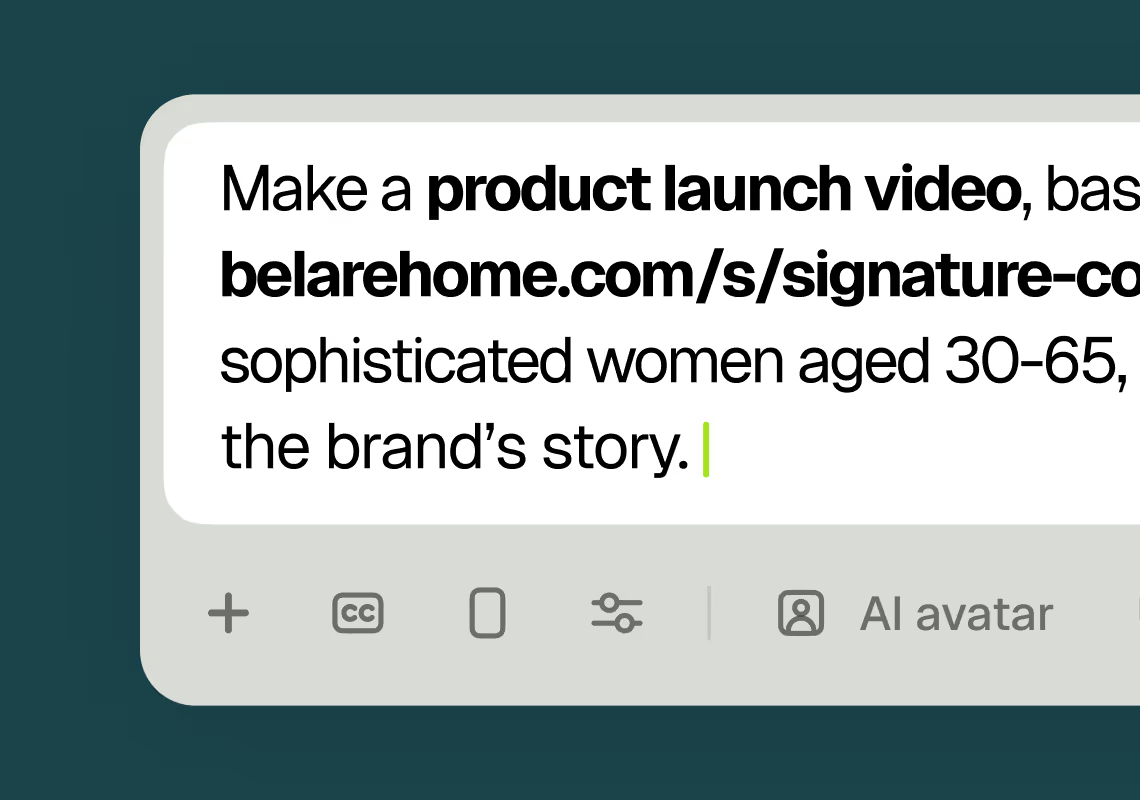 1
1Describe your video
Paste your promo brief, script, outline, or blog URL into Agent Opus.
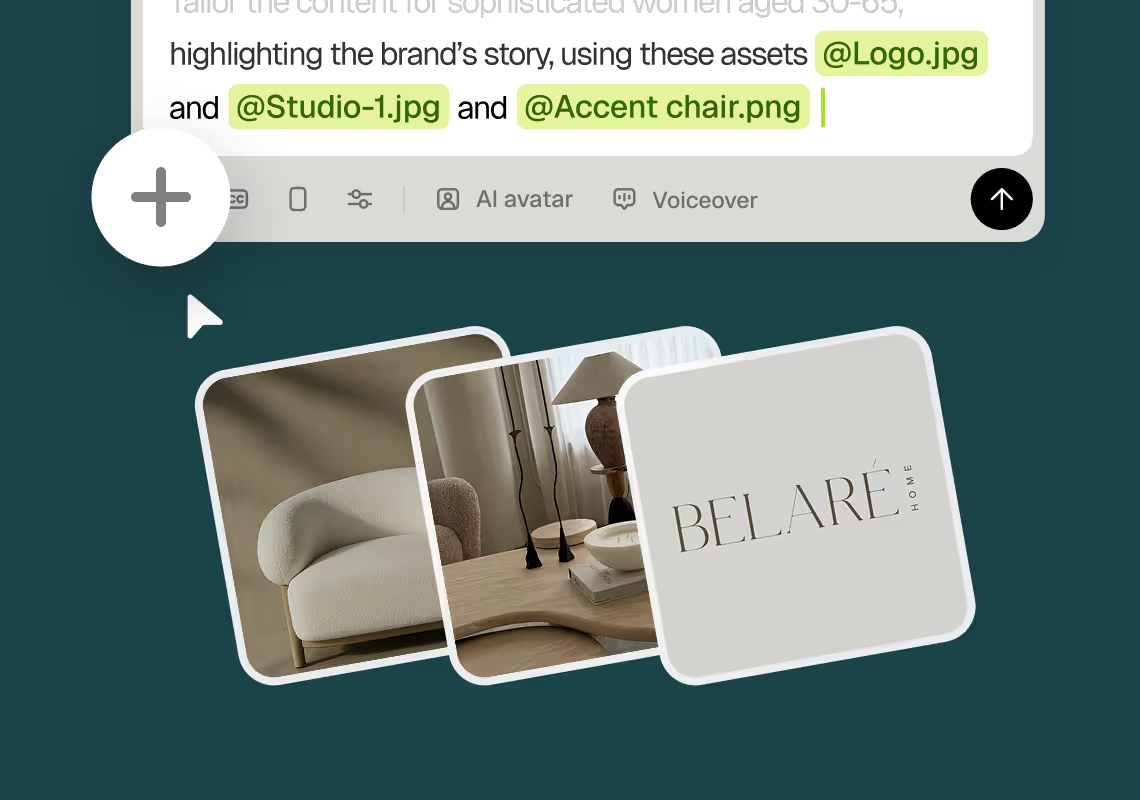 2
2Add assets and sources
Upload brand assets like logos and product images, or let the AI source stock visuals automatically.
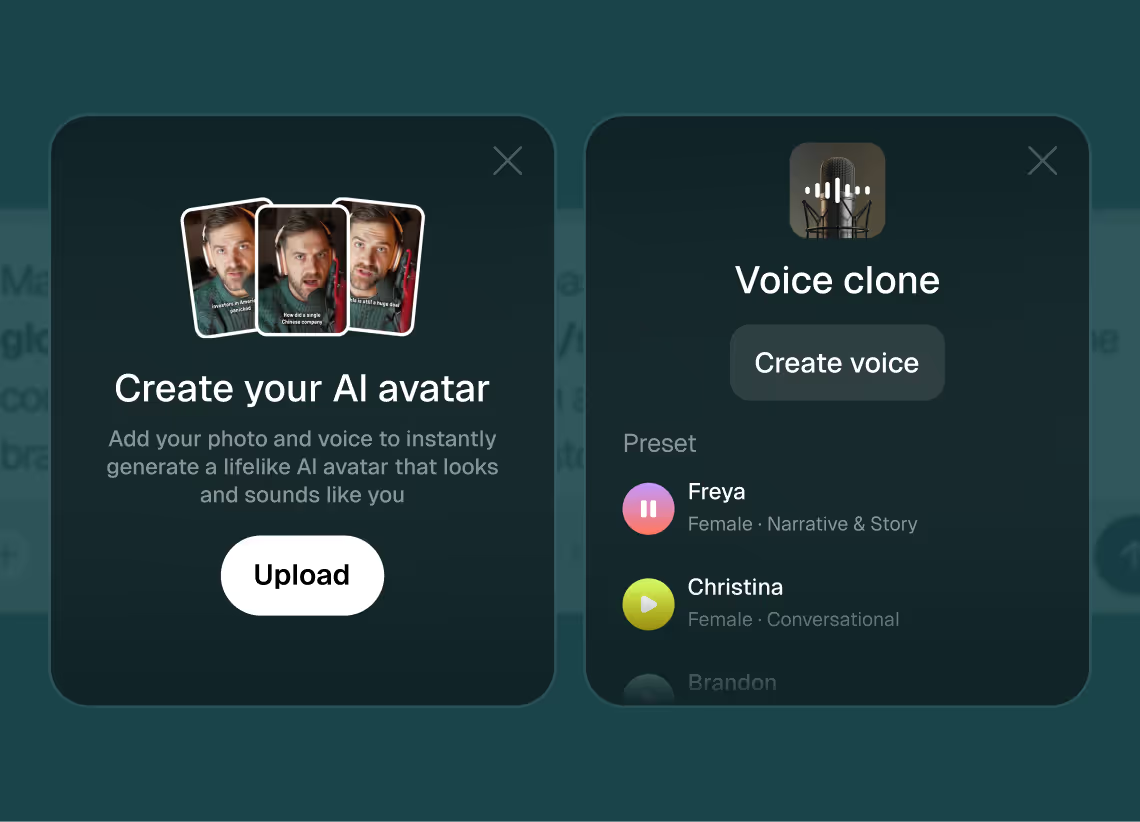 3
3Choose voice and avatar
Choose voice (clone yours or pick an AI voice) and avatar style (user or AI).
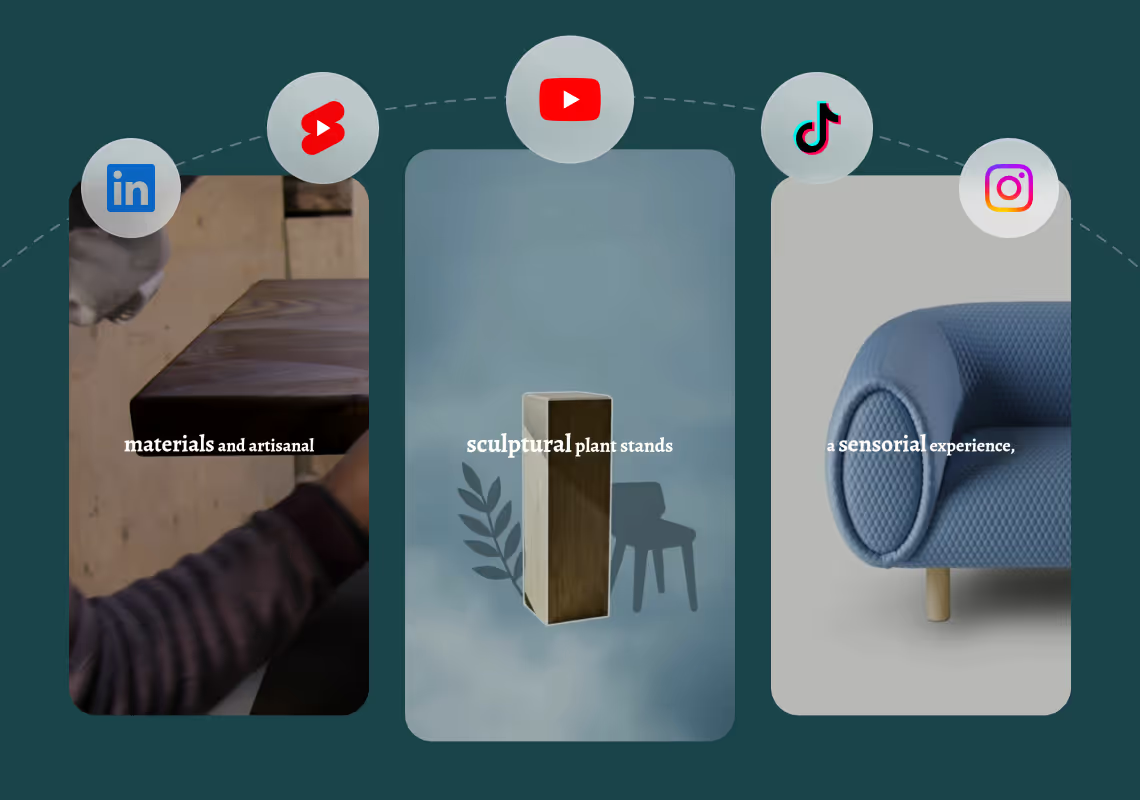 4
4Generate and publish-ready
Click generate and download your finished promo video in seconds, ready to publish across all platforms.


8 powerful features of Agent Opus' Video GPT
Prompt-to-Video Generation
Turn a one-line idea into a finished video. The agent handles structure, pacing, B-roll selection, and final assembly automatically.
Script and Outline Support
Paste a full script, drop in an outline with section headers, or supply a blog or article URL — Agent Opus reads any of them and builds a video around the content.
AI Voiceover and Voice Cloning
Pick from natural-sounding AI voices in 30+ languages, or clone your own voice once. Every video then ships with your authentic narration.
Beat-Synced Motion Graphics
Dynamic visuals that lock to the beat of your audio or the pacing of your script — kinetic typography, transitions, and effects, no manual keyframing required.
Automatic Captions and Subtitles
Burn-in captions for short-form, soft subtitles for long-form, and multi-language translations — all generated and synced automatically.
Multi-Aspect-Ratio Export
9:16, 1:1, and 16:9 outputs from one job, with intelligent reframing of text, motion graphics, and focal elements for each ratio.
Brand Asset Integration
Upload your logo, watermark, fonts, and color palette. Agent Opus applies them consistently across every video automatically.
Avatar and Talking Head Support
Add an AI avatar, your own video footage, or a synthetic spokesperson to any video — useful for explainers, ads, and personal-brand content.
Testimonials
Frequently Asked Questions
How does Video GPT handle different input types like prompts, scripts, and blog URLs?
Video GPT is designed to accept multiple text input formats, making it flexible for different workflows and content sources. If you provide a short prompt or brief, Agent Opus interprets your intent, generates a script structure, sources visuals, and assembles scenes that match the tone and message you described. This is ideal for quick social posts, product announcements, or concept videos where you want to describe the outcome rather than write every word. If you paste a full script, Video GPT treats each section as a scene blueprint, pacing visuals and voiceover to match your written flow. This gives you precise control over messaging while still automating all production tasks like motion graphics, image sourcing, and audio sync. For blog URLs or article links, Agent Opus extracts key points, summarizes the content, and structures a video narrative that highlights the main ideas. This is perfect for repurposing written content into video format for social media, email campaigns, or landing pages. Across all input types, Video GPT maintains consistent quality by applying AI motion graphics, auto-sourcing royalty-free or web images, integrating your brand assets like logos and product shots, and syncing voiceover or avatar delivery. The system adapts scene length, pacing, and visual density based on the input format, so a 50-word prompt generates a punchy 15-second video while a 500-word blog post becomes a structured 60-second explainer. You can also mix inputs by starting with a prompt, reviewing the generated script, and refining it before final video generation. This hybrid approach gives you the speed of automation with the precision of manual scripting when needed. Video GPT's input flexibility means you can generate videos from whatever text asset you already have, whether that's a tweet-length idea, a detailed script, or a published article, without reformatting or rewriting for video production.
What are best practices for writing prompts that generate high-quality videos with Video GPT?
Writing effective prompts for Video GPT starts with clarity and specificity. The more context you provide about tone, audience, and desired outcome, the better Agent Opus can tailor scene composition, visual style, and pacing. Start your prompt with the video's purpose, such as 'Create a product demo video for a new fitness app targeting busy professionals' or 'Generate a testimonial-style video explaining how our software saves time for small business owners.' This framing helps Video GPT select appropriate visuals, motion graphics, and voiceover tone. Next, outline key points or messages you want to cover. Instead of a vague prompt like 'Make a video about our service,' try 'Explain three benefits of our service: faster onboarding, 24/7 support, and lower costs. Use upbeat tone and modern visuals.' This gives Agent Opus a clear structure to follow and ensures the generated video hits your main talking points. If you have specific brand guidelines, mention them in the prompt. For example, 'Use our logo in the intro, feature our product screenshots, and keep colors aligned with our blue and white brand palette.' Video GPT integrates uploaded brand assets automatically, but calling them out in the prompt ensures they're prioritized in scene assembly. Specify the target platform and length if relevant. A prompt like 'Generate a 15-second Instagram Reel announcing our sale, vertical format, high energy' tells Video GPT to optimize for short-form social with fast cuts and punchy text overlays. For longer content, prompts like 'Create a 60-second YouTube video explaining our three-step process, include voiceover and on-screen text' guide pacing and format decisions. Avoid overly complex or contradictory instructions. Video GPT works best with clear, linear prompts rather than nested conditions or multiple conflicting requests. If you need variations, generate one video, review it, then refine your prompt and generate again. Finally, experiment with tone descriptors like 'professional,' 'playful,' 'inspirational,' or 'educational.' These cues influence visual style, motion graphics speed, and voiceover delivery. Video GPT's AI interprets natural language well, so writing prompts conversationally, as if briefing a video producer, tends to produce the best results. The key is balancing detail with simplicity: give enough context to guide the output without overloading the system with micro-level instructions that constrain creative assembly.
Can Video GPT maintain consistent branding across multiple videos, including logos, colors, and voice?
Yes, Video GPT is built to support brand consistency across all your video projects, which is critical for creators and marketers building recognizable content libraries. Agent Opus allows you to upload brand assets like logos, product images, color palettes, and font preferences, then automatically integrates them into every video you generate. Once uploaded, your logo can appear in intros, outros, or as a persistent watermark, depending on your prompt instructions. Product shots and custom images are prioritized during visual sourcing, so Video GPT pulls from your asset library first before searching stock or web images. This ensures your videos feature real product footage, team photos, or branded graphics rather than generic stock that dilutes your identity. For color consistency, you can specify brand colors in prompts or upload a style guide, and Agent Opus will apply those hues to motion graphics, text overlays, and transitions. This is especially valuable for social media campaigns where every video needs to feel cohesive even when covering different topics or formats. Voice consistency is another major advantage of Video GPT. If you clone your own voice using Agent Opus's voice cloning feature, every video you generate can use that same voice, creating a recognizable audio signature across your content. This is ideal for founders, influencers, or brand spokespeople who want their personal voice on every video without recording each one manually. Alternatively, if you select a specific AI voice for your brand, you can reuse that voice across projects to maintain tonal consistency. Avatar options work the same way: upload your own video footage once, and Agent Opus can composite your avatar into multiple generated videos, or use a consistent AI avatar that represents your brand persona. Beyond individual assets, Video GPT learns from your prompt patterns and preferences over time. If you consistently request 'modern, minimal motion graphics with blue accents and upbeat pacing,' Agent Opus adapts to that style, making future generations faster and more aligned with your brand without needing to restate every detail. For teams and agencies managing multiple brands, you can organize asset libraries and voice profiles by client or project, ensuring each video pulls the correct branding without cross-contamination. This makes Video GPT scalable for high-volume content production where brand consistency is non-negotiable. The result is a video library that looks and sounds like it came from a single creative team, even though every piece was generated from text prompts in minutes.
What are the limitations or edge cases when using Video GPT for complex or niche video projects?
While Video GPT excels at generating publish-ready videos from text, understanding its limitations helps you set realistic expectations and choose the right tool for each project. First, Video GPT is optimized for short- to mid-form content, typically 15 to 90 seconds. If you need a 10-minute documentary or long-form tutorial with dozens of chapters, the current system works best when you break that content into shorter segments and generate each as a separate video. This modular approach still saves massive time compared to traditional editing, but it's not a single-prompt solution for feature-length content. Second, highly specialized or technical visuals may require manual asset creation. Video GPT auto-sources web and stock images and integrates your uploaded assets, but if your video needs custom 3D animations, intricate diagrams, or proprietary footage that doesn't exist in stock libraries, you'll need to create and upload those assets first. Agent Opus will composite them into the video, but it won't generate complex custom graphics from scratch based solely on a text description. For most marketing, social, and explainer videos, the available motion graphics and sourced visuals are more than sufficient, but niche industries with unique visual requirements may need hybrid workflows. Third, Video GPT's voice cloning and AI voices are high-quality but not identical to professional studio recordings with multiple takes and manual editing. If your project demands celebrity-level voice acting, emotional nuance across a wide dynamic range, or specific accents and dialects not covered by available AI voices, you may need to record and upload custom audio. Agent Opus will sync it perfectly to visuals, but the voice generation itself has boundaries. For 95% of business and creator use cases, the voice quality is indistinguishable from human recordings, but audio purists or projects with extreme vocal requirements should test first. Fourth, Video GPT generates videos based on the text input provided, so if your prompt or script is vague, contradictory, or lacks structure, the output may require iteration. The system doesn't read your mind; it interprets your words. Clear, well-structured prompts produce better results on the first try. If you're used to visual-first workflows where you sketch storyboards or mock up scenes before scripting, you may need to adapt your process to a text-first approach. Finally, while Video GPT handles most aspect ratios and social formats, highly custom or non-standard video specs like ultra-wide cinematic formats, interactive video elements, or platform-specific features like Instagram's interactive stickers require post-generation adjustments outside Agent Opus. The tool delivers clean, social-ready MP4 files optimized for major platforms, but if your distribution strategy involves advanced platform integrations or interactive layers, you'll handle those in your publishing workflow. Despite these edge cases, Video GPT eliminates 90% of traditional video production work for the vast majority of content needs. Understanding where it excels and where you may need supplementary tools or assets ensures you use it strategically and get maximum value from every generation.