Wikipedia to Video Generator
Transform any Wikipedia article into a polished, publish-ready video in minutes. Agent Opus is a Wikipedia to Video Generator that converts encyclopedia entries into engaging visual content with AI motion graphics, automatic voiceover, and social-ready formats. Simply paste a Wikipedia URL or copy the article text, and Agent Opus assembles scenes, sources visuals, adds narration, and delivers a complete video. No editing, no timeline, no manual work. Perfect for educators, content creators, and marketers who want to turn research into shareable video content instantly.

Explore what's possible with Agent Opus

Reasons why creators love Agent Opus' Wikipedia to Video Generator
Scale Your Channel Effortlessly
Produce consistent educational content across unlimited topics without burning out or hiring a production team.
Turn Research Into Revenue
Transform dense Wikipedia articles into engaging video content that attracts viewers and monetizes your knowledge instantly.
Educational Content Without the Camera
Create professional explainer videos from any topic without filming, editing experience, or appearing on screen yourself.
Credibility Built Into Every Frame
Leverage Wikipedia's trusted information with professional narration and visuals that make your content feel authoritative and polished.
Authority in Minutes, Not Months
Establish yourself as a trusted source by publishing polished educational videos faster than traditional content creators.
Complex Topics Made Watchable
Break down intricate Wikipedia subjects into digestible visual stories that keep audiences engaged from start to finish.
How to use Agent Opus’ Wikipedia to Video Generator
 1
1Describe your video
Paste your promo brief, script, outline, or blog URL into Agent Opus.
 2
2Add assets and sources
Upload brand assets like logos and product images, or let the AI source stock visuals automatically.
 3
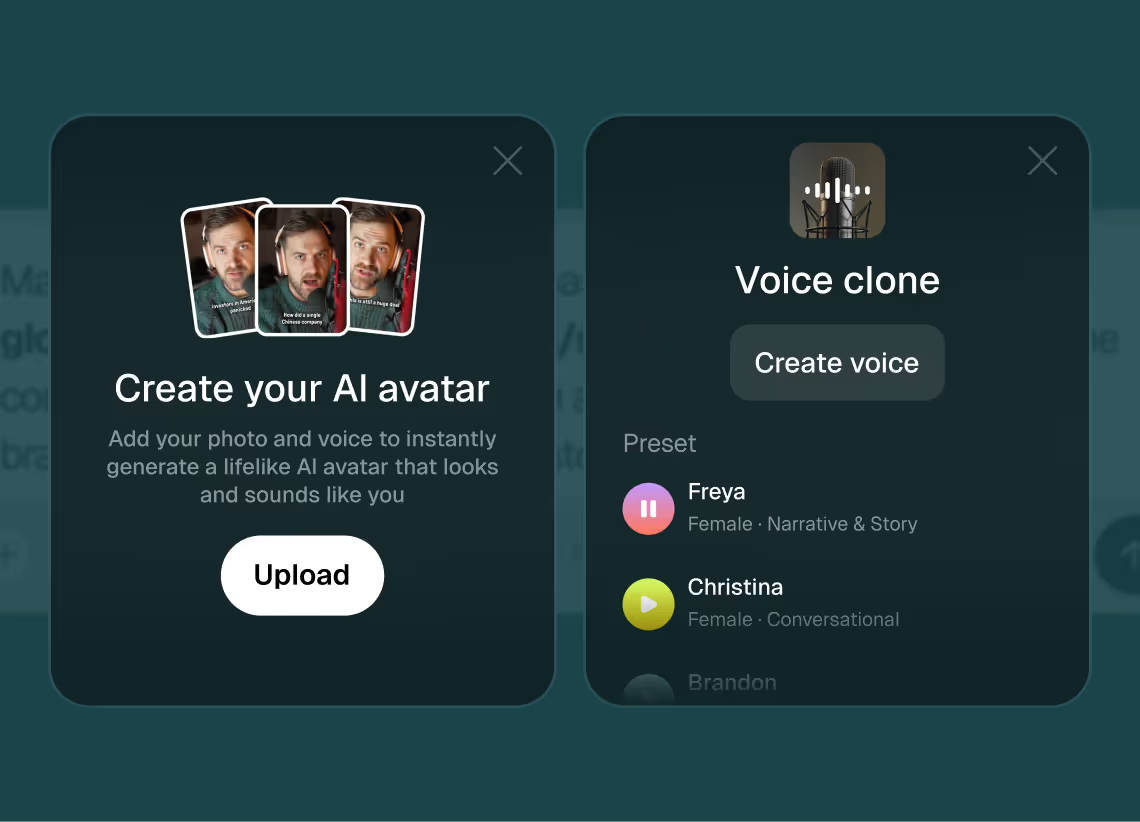
3Choose voice and avatar
Choose voice (clone yours or pick an AI voice) and avatar style (user or AI).
 4
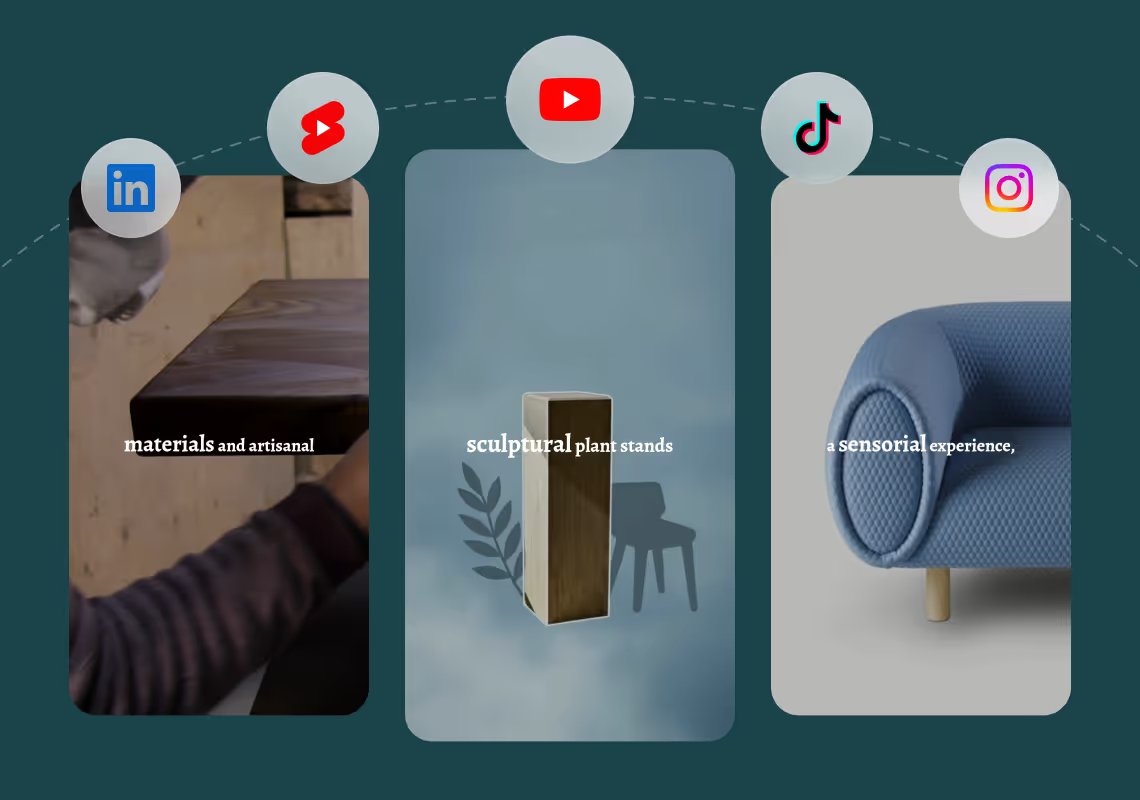
4Generate and publish-ready
Click generate and download your finished promo video in seconds, ready to publish across all platforms.


8 powerful features of Agent Opus' Wikipedia to Video Generator
Reference-Based Accuracy
Maintain factual integrity by generating videos that stay true to Wikipedia source material.
Educational Voiceover Generation
Transform Wikipedia text into clear, professional AI narration that explains complex topics simply.
Knowledge Video Library
Build a collection of educational videos from Wikipedia articles for learning or content distribution.
Auto-Extract Key Facts
Agent Opus pulls essential information from Wikipedia articles to build your video script automatically.
Wikipedia URL to Video
Paste any Wikipedia link and generate an educational video with visuals and narration instantly.
Multi-Topic Video Creation
Turn lengthy Wikipedia entries into structured videos with chapters covering each major section.
Instant Explainer Videos
Convert Wikipedia definitions and explanations into shareable explainer videos within minutes.
Visual Context Matching
Generate relevant imagery and motion graphics that illustrate Wikipedia concepts throughout your video.
Testimonials
Frequently Asked Questions
How does Wikipedia to Video Generator handle different article lengths and complexity?
Agent Opus adapts to any Wikipedia article structure, from short biographical entries to comprehensive topic overviews spanning thousands of words. When you input a Wikipedia URL or paste article text, the system analyzes the content hierarchy, identifies key sections, and determines optimal scene distribution. For longer articles, Agent Opus intelligently condenses information while preserving core facts and narrative flow. It recognizes section headers, extracts main points, and structures scenes to maintain viewer engagement without overwhelming them with detail. Short articles receive full treatment with expanded visual storytelling and pacing adjustments to meet minimum video length requirements. The AI understands Wikipedia's citation style and filters out reference markers, ensuring clean narration. Complex topics with technical terminology receive pronunciation handling and contextual visual support. You can guide the output by specifying target video length in your prompt, and Agent Opus will adjust scene count, pacing, and detail level accordingly. The system maintains factual accuracy while transforming dense encyclopedia prose into conversational video narration. Whether you are working with a 500-word stub or a 10,000-word featured article, the Wikipedia to Video Generator delivers a coherent, engaging video that respects the source material while optimizing for visual medium consumption.
What types of visuals does Wikipedia to Video Generator source for encyclopedia content?
Agent Opus sources visuals specifically matched to Wikipedia article content through a multi-layered approach. For biographical articles, the system pulls portraits, historical photos, and relevant location imagery. For scientific topics, it sources diagrams, charts, laboratory images, and natural phenomena visuals. Historical articles receive period-appropriate imagery, maps, and archival photos. The AI reads article context to understand which visuals will best support each scene. It prioritizes Wikipedia Commons images when available, ensuring licensing compatibility, then expands to curated stock libraries and web sources with proper usage rights. For abstract concepts, Agent Opus generates or sources metaphorical imagery that represents ideas visually. The system applies AI motion graphics to static images, creating zoom effects, pans, and transitions that maintain visual interest. For articles about places, it sources landscape photography, aerial views, and landmark images. For events, it finds news imagery, crowd scenes, and contextual visuals. The Wikipedia to Video Generator understands that encyclopedia content often lacks inherent visual drama, so it compensates with dynamic motion graphics, split-screen comparisons, and layered visual storytelling. You can also upload your own images, logos, or product shots to blend with auto-sourced content. Every visual choice is contextually relevant to the article section being narrated, creating a cohesive educational video experience that enhances comprehension beyond what text alone provides.
Can Wikipedia to Video Generator maintain educational tone and factual accuracy?
Yes, Agent Opus is specifically designed to preserve the informational integrity of Wikipedia content while adapting it for video format. The system does not editorialize or inject opinion into encyclopedia articles. It converts Wikipedia prose into conversational narration that maintains factual accuracy and neutral point of view. The AI recognizes Wikipedia's encyclopedic tone and adjusts voiceover pacing to support learning and retention rather than entertainment alone. For technical terms, Agent Opus ensures proper pronunciation and provides visual context to aid understanding. The Wikipedia to Video Generator respects citation-heavy content by filtering reference markers from narration while preserving the factual claims they support. When articles present multiple perspectives on controversial topics, the system maintains balanced presentation in video form. You can choose between formal AI voices that match traditional documentary style or more conversational tones for educational social content. The scene structure follows Wikipedia's logical organization, helping viewers build knowledge progressively. Agent Opus does not add sensationalism, clickbait elements, or dramatic music that would undermine educational credibility. For academic or professional use cases, the system can include on-screen text highlighting key facts, dates, and terminology. The final video serves as a legitimate educational resource, not entertainment content that happens to reference Wikipedia. This makes the Wikipedia to Video Generator ideal for teachers, students, researchers, and knowledge-sharing creators who need to maintain source credibility while reaching video-first audiences on social platforms and learning management systems.
How does Wikipedia to Video Generator handle articles with tables, lists, and structured data?
Agent Opus intelligently converts Wikipedia's structured data elements into visual storytelling components. When an article contains tables, the system extracts key data points and presents them through animated charts, comparison graphics, or sequential reveals rather than displaying static table screenshots. For bulleted or numbered lists, Agent Opus creates individual scenes for each item, using motion graphics to present list elements as distinct visual beats. The Wikipedia to Video Generator recognizes infoboxes and pulls critical facts like birth dates, locations, and key statistics, integrating them as on-screen text overlays synchronized with narration. For timeline-based content, the system generates chronological visual sequences with date markers and transitional effects. When articles include categorical breakdowns or classification systems, Agent Opus structures scenes to mirror that hierarchy, using visual separators and section headers. The AI understands that direct table-to-video conversion rarely works, so it interprets the data's meaning and presents it through appropriate visual metaphors. For example, a population statistics table becomes a bar chart animation; a list of achievements becomes a sequential highlight reel with supporting imagery for each item. You maintain control over how much detail to include by adjusting your prompt or specifying focus areas. The system prioritizes the most relevant structured data for video format while avoiding information overload. This approach transforms Wikipedia's reference-style presentation into narrative-driven video that communicates the same information more effectively for visual learners and social media audiences who expect dynamic, scannable content rather than dense text blocks.