Générateur de vidéos artistiques par IA
Créez des vidéos artistiques époustouflantes à partir de texte en quelques minutes. Agent Opus est un générateur de vidéos artistiques par IA qui transforme vos idées, scripts ou articles de blog en contenu visuel soigné avec des animations graphiques dynamiques, des images générées par IA et des voix off professionnelles. Décrivez votre vision et regardez Agent Opus assembler une vidéo artistique complète, prête à être publiée, sans aucun montage manuel. Parfait pour les créateurs, marketeurs et fondateurs qui ont besoin de contenu visuel accrocheur qui se démarque sur toutes les plateformes.

Explore what's possible with Agent Opus

Reasons why creators love Agent Opus' Générateur de vidéos artistiques par IA
Experiment Without Risk
Test bold artistic directions and iterate freely without wasting budget on concepts that might not work.
Gallery-Ready in Minutes
Go from concept to polished art video faster than traditional creation methods, keeping your content calendar full.
Scale Your Creative Output
Produce multiple art video variations for different platforms and audiences without multiplying your workload.
Stand Out in Crowded Feeds
Capture attention with eye-catching art videos that stop the scroll and make your brand unforgettable.
Your Vision, Zero Art Skills
Turn ideas into stunning visual art without learning complex design software or hiring expensive artists.
Consistent Style Across Projects
Maintain your unique artistic signature in every video without wrestling with style drift or manual adjustments.
How to use Agent Opus’ Générateur de vidéos artistiques par IA
 1
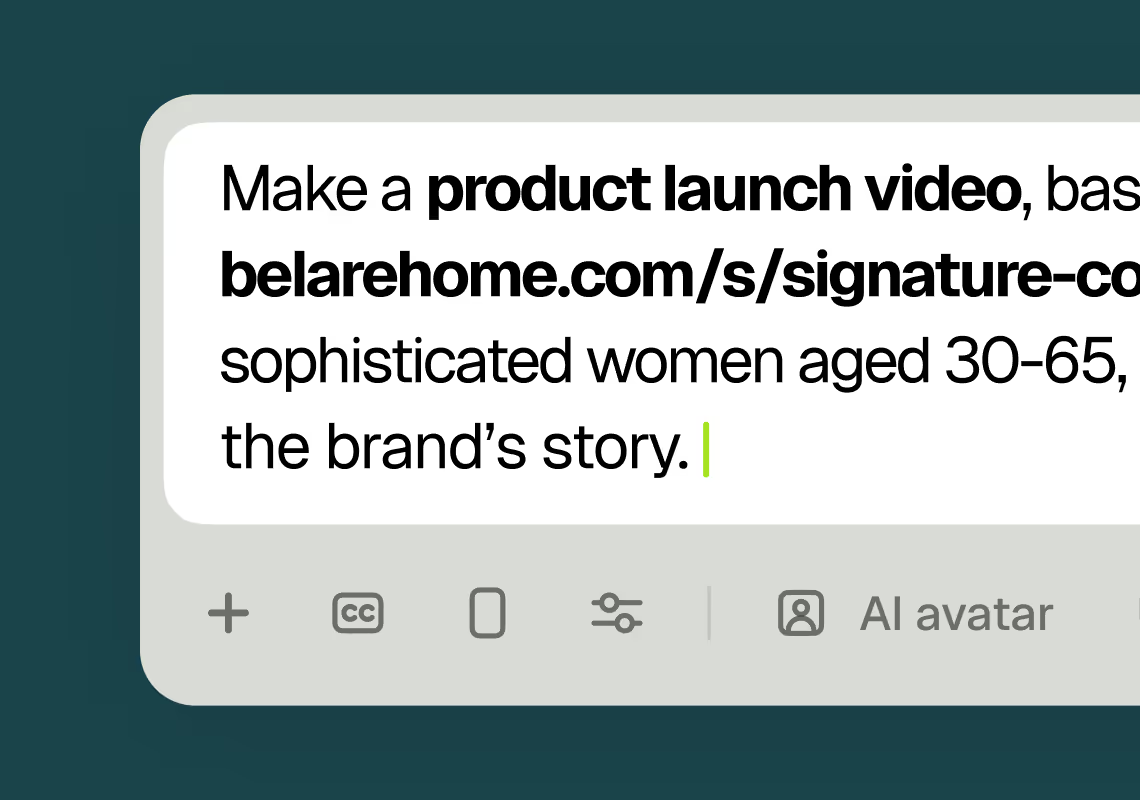
1Describe your video
Paste your promo brief, script, outline, or blog URL into Agent Opus.
 2
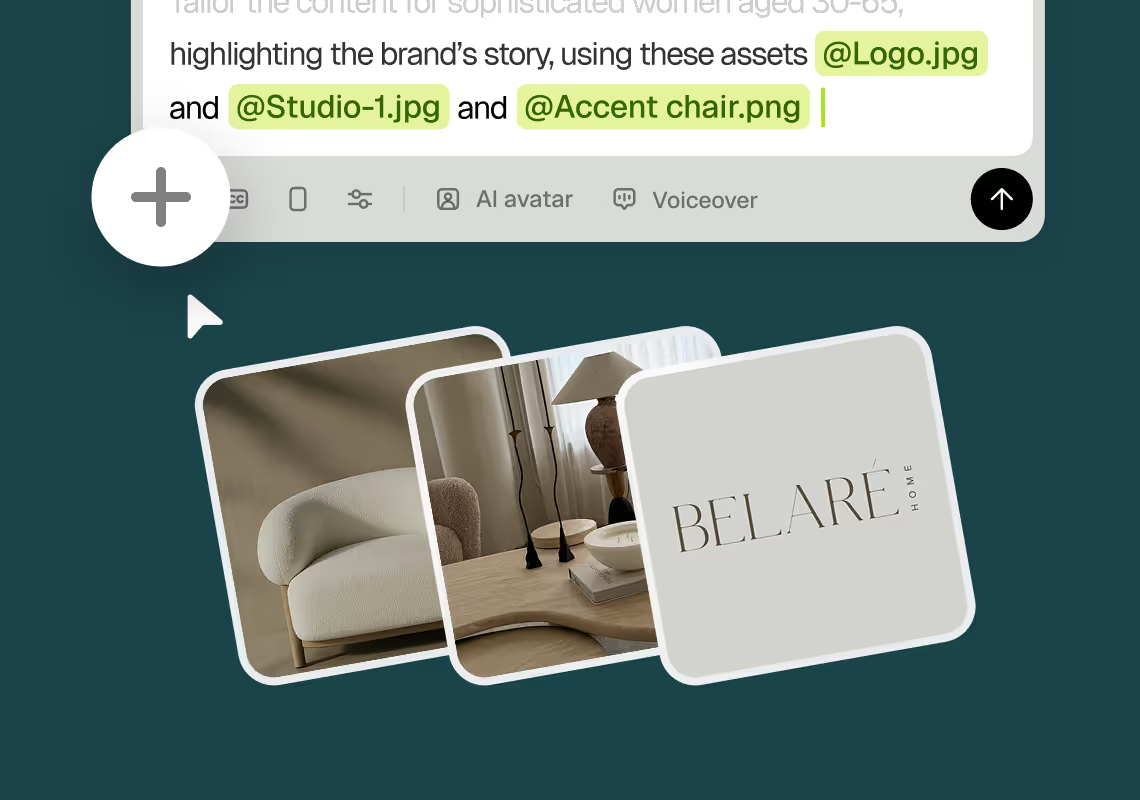
2Add assets and sources
Upload brand assets like logos and product images, or let the AI source stock visuals automatically.
 3
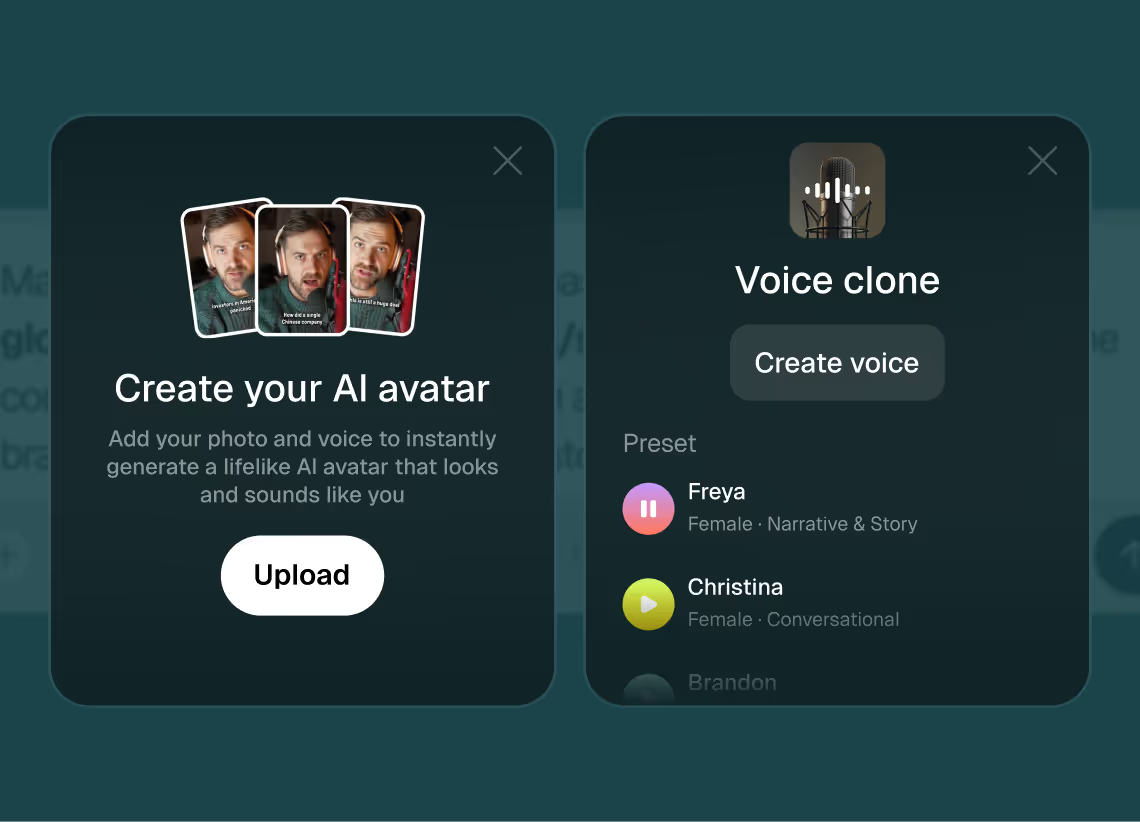
3Choose voice and avatar
Choose voice (clone yours or pick an AI voice) and avatar style (user or AI).
 4
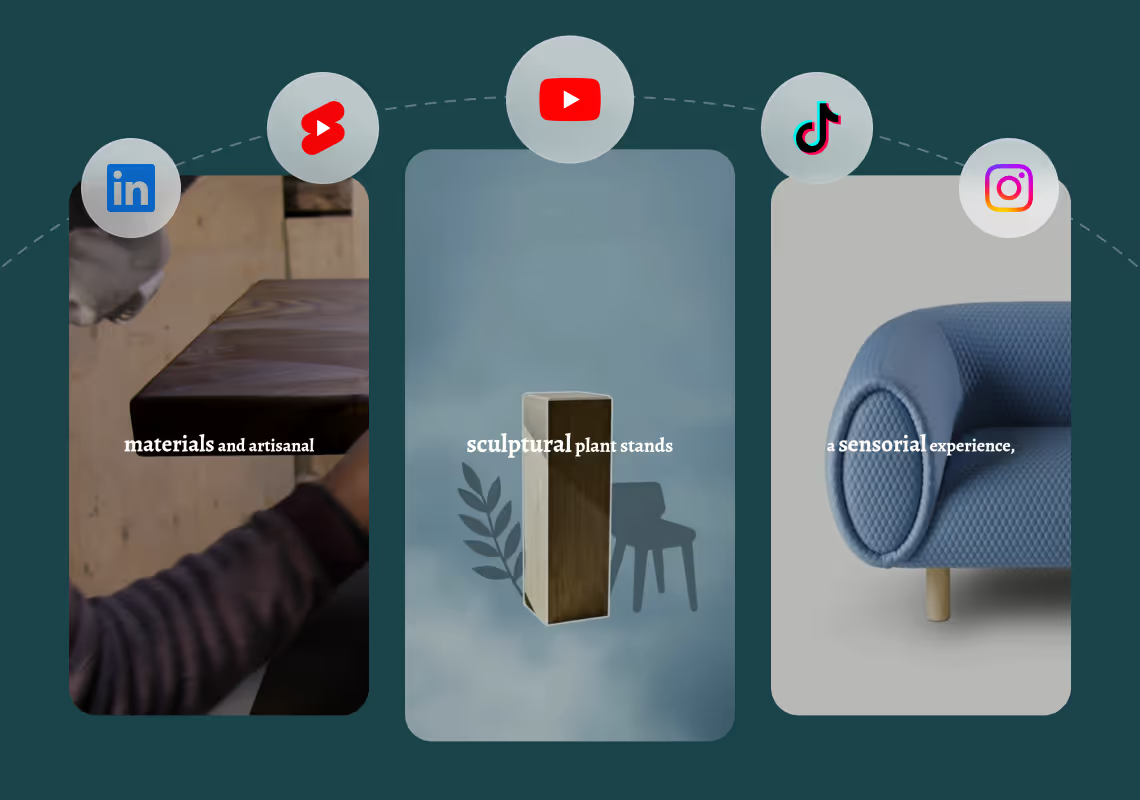
4Generate and publish-ready
Click generate and download your finished promo video in seconds, ready to publish across all platforms.


8 powerful features of Agent Opus' Générateur de vidéos artistiques par IA
Music-Synced Art
Generate art videos that pulse and transition in rhythm with your chosen soundtrack.
Resolution Control
Output your AI art videos in formats optimized for social platforms or high-resolution displays.
Prompt to Art Video
Transform text descriptions into stunning AI-generated art videos with dynamic visual styles.
Animated Art Sequences
Generate flowing art videos where each frame morphs seamlessly into the next scene.
Instant Preview Renders
See draft versions of your AI art video within seconds before finalizing generation.
Multi-Scene Art Stories
Build narrative art videos with multiple generated scenes that flow into a cohesive visual journey.
Style-Driven Generation
Create art videos in specific aesthetics from impressionist to cyberpunk with one prompt.
Motion Graphics Integration
Combine AI-generated artwork with kinetic typography and animated graphic elements automatically.
Testimonials
Awesome output, Most of my students and followers could not catch that it was using Agent Opus. Thank you Opus.
Wealth with Gaurav
This looks like a game-changer for us. We're building narrative-driven, visually layered content — and the ability to maintain character and motion consistency across episodes would be huge. If Agent Opus can sync branded motion graphics, tone, and avatar style seamlessly, it could easily become part of our production stack for short-form explainers and long-form investigative visuals.
srtaduck
Frequently Asked Questions
Comment un générateur de vidéos artistiques par IA crée-t-il des vidéos à partir d'un simple texte ?
Un générateur de vidéos artistiques par IA comme Agent Opus utilise des modèles d'apprentissage automatique avancés pour interpréter votre texte et le traduire en un récit visuel complet. Lorsque vous fournissez un prompt, un script ou un plan, le système analyse le contenu pour identifier les thèmes clés, les moments émotionnels et les concepts visuels. Il génère ou sélectionne ensuite les images appropriées, applique des animations graphiques et des transitions, et assemble le tout en une séquence vidéo cohérente. L'IA prend en compte le rythme, la hiérarchie visuelle et le flux narratif pour s'assurer que chaque scène soutient votre message. Pour les vidéos artistiques en particulier, le générateur met l'accent sur la composition esthétique, l'harmonie des couleurs et le mouvement dynamique qui crée un intérêt visuel. Le système peut travailler avec des concepts abstraits, un langage métaphorique ou des descriptions concrètes, adaptant son approche visuelle en fonction de votre input. Si vous fournissez un script détaillé, il associe les visuels à des lignes et moments spécifiques. Avec un prompt bref, il développe votre concept en une structure narrative complète. L'IA gère également les aspects techniques comme la sélection du format d'image, l'optimisation de la durée et le formatage spécifique à chaque plateforme. La synthèse vocale ou le clonage de voix ajoute une narration parfaitement synchronisée avec les transitions visuelles. La sélection de musique de fond complète l'ambiance et l'énergie de votre vidéo artistique. L'ensemble du processus se déroule automatiquement, éliminant le besoin de montage manuel sur timeline, d'animation par images clés ou de recherche de ressources. Vous recevez une vidéo artistique prête à être publiée, d'aspect professionnel, avec des animations graphiques, des visuels dynamiques et un audio soigné. Cette approche démocratise la création de vidéos artistiques, la rendant accessible à toute personne ayant une idée, quelles que soient ses compétences techniques ou son expérience en design.
Quels types de styles visuels un générateur de vidéos artistiques par IA peut-il produire ?
Un générateur de vidéos artistiques par IA offre une polyvalence remarquable en matière de styles visuels, s'adaptant à votre vision créative et à votre identité de marque. Agent Opus peut produire des vidéos artistiques abstraites avec des formes fluides, des dégradés de couleurs et des motifs géométriques qui créent des expériences visuelles fascinantes. Pour le contenu axé sur les produits, il génère des compositions épurées et modernes qui mettent en valeur les caractéristiques avec des effets de zoom dynamiques et des transitions élégantes. Les vidéos artistiques conceptuelles utilisent des images métaphoriques et des visuels symboliques pour communiquer des idées complexes à travers la narration visuelle. Le système peut créer des designs minimalistes avec une typographie audacieuse et des formes simples, ou des compositions riches et superposées avec plusieurs éléments visuels travaillant en harmonie. Les styles d'animations graphiques vont des mouvements fluides et organiques aux animations vives et cinétiques qui pulsent d'énergie. Les palettes de couleurs s'adaptent aux directives de votre marque ou au ton émotionnel de votre message, que cela signifie des teintes vibrantes et saturées ou des tons subtils et sophistiqués. L'IA sait comment mélanger des éléments photographiques avec des composants illustrés, créant des styles hybrides qui semblent à la fois réels et artistiques. Pour le contenu éducatif ou explicatif, elle produit des visuels clairs de type diagramme avec des annotations animées et des révélations progressives. Les vidéos artistiques axées sur la marque intègrent vos logos, photos de produits et ressources personnalisées de manière fluide dans le flux visuel. Le générateur peut imiter les tendances esthétiques populaires comme le vaporwave, le cyberpunk ou les styles rétro sur demande, ou créer des langages visuels entièrement uniques adaptés à vos besoins spécifiques. Les transitions de scènes varient des fondus subtils aux balayages dramatiques, zooms et morphings qui maintiennent l'élan visuel. Les animations de texte vont des simples fondus à la typographie cinétique qui danse à travers l'écran. Le système équilibre la complexité visuelle avec la clarté, garantissant que votre vidéo artistique reste engageante sans submerger les spectateurs. Cette flexibilité de style signifie que vous pouvez maintenir une image de marque cohérente sur plusieurs vidéos tout en variant l'approche créative pour garder le contenu frais et les audiences engagées.
Comment un générateur de vidéos artistiques par IA gère-t-il la cohérence de marque sur plusieurs vidéos ?
Maintenir la cohérence de marque est crucial pour un contenu professionnel, et un générateur de vidéos artistiques par IA comme Agent Opus excelle à préserver votre identité visuelle dans toutes les productions. Le système vous permet d'intégrer les éléments de votre marque directement dans le processus de génération, y compris les logos, palettes de couleurs, choix typographiques et photographies de produits. Lorsque vous fournissez ces éléments, l'IA s'assure qu'ils apparaissent de manière cohérente dans les contextes appropriés tout au long de vos vidéos artistiques. Les schémas de couleurs restent fidèles aux directives de votre marque, le générateur sélectionnant des teintes complémentaires qui rehaussent plutôt que de contraster avec votre palette établie. Les choix typographiques respectent les polices de votre marque et la hiérarchie du texte, garantissant que les titres, légendes et annotations correspondent à votre identité visuelle. Le placement du logo suit les meilleures pratiques en matière de visibilité et de professionnalisme, apparaissant dans des positions cohérentes sans dominer l'image. L'IA apprend de vos préférences au fil du temps, comprenant quels styles visuels, types de transitions et choix de rythme correspondent à la voix de votre marque. Si vous générez plusieurs vidéos artistiques sur des sujets connexes, le système peut maintenir une cohérence thématique tout en variant les visuels spécifiques pour éviter la répétition. Les styles d'animations graphiques restent cohésifs, utilisant des techniques d'animation et des schémas de timing similaires qui créent une signature reconnaissable dans votre bibliothèque de contenu. La sélection de voix reste cohérente lorsque vous utilisez des voix IA ou clonez votre propre voix, garantissant que l'identité audio correspond à votre identité visuelle. Le générateur peut adapter les niveaux d'intensité et d'énergie pour convenir à différents types de contenu tout en maintenant les éléments fondamentaux de la marque. Par exemple, une vidéo de lancement de produit peut utiliser des visuels audacieux et énergiques, tandis qu'un contenu éducatif adopte une approche plus calme et mesurée, mais les deux appartiennent clairement à la même famille de marque. Cette cohérence renforce la reconnaissance et la confiance du public, rendant votre contenu instantanément identifiable sur toutes les plateformes. Le système respecte également les exigences spécifiques à chaque plateforme tout en maintenant l'intégrité de la marque, ajustant les formats d'image et la densité visuelle sans compromettre votre identité fondamentale. En gérant ces détails automatiquement, le générateur de vidéos artistiques par IA garantit que chaque contenu renforce votre marque plutôt que de la diluer par une exécution incohérente.
Quelles sont les meilleures pratiques pour rédiger des prompts pour un générateur de vidéos artistiques par IA ?
Rédiger des prompts efficaces pour un générateur de vidéos artistiques par IA nécessite de comprendre comment communiquer clairement votre vision tout en laissant place à l'interprétation créative. Commencez par une déclaration claire de l'objectif principal de votre vidéo et du public visé. Précisez si vous souhaitez une œuvre artistique abstraite, une présentation de produit, un explicatif éducatif ou une histoire de marque. Incluez des descripteurs de ton émotionnel comme énergique, apaisant, inspirant ou mystérieux pour guider l'ambiance visuelle. Décrivez les éléments visuels clés que vous envisagez, tels que les schémas de couleurs, les types d'images ou les objets spécifiques qui doivent apparaître. Si vous avez des éléments de marque comme des logos ou des photos de produits, mentionnez où et comment ils doivent s'intégrer dans la composition. Fournissez le contexte sur la plateforme et le public, car une vidéo artistique TikTok nécessite un rythme et une densité visuelle différents d'un contenu LinkedIn. Pour les prompts basés sur un script, rédigez une narration conversationnelle qui coule naturellement, en évitant un langage trop technique sauf si votre sujet l'exige. Divisez les idées complexes en segments clairs, car cela aide l'IA à structurer les scènes de manière logique. Utilisez un langage vivant et concret lorsque vous décrivez des concepts abstraits, donnant au générateur des accroches visuelles tangibles avec lesquelles travailler. Spécifiez vos préférences de durée si vous avez des contraintes de plateforme, bien que l'IA optimise automatiquement le rythme. Mentionnez tous les moments incontournables ou messages clés qui ne peuvent pas être omis, garantissant que le contenu critique figure dans la vidéo finale. Évitez de prescrire chaque détail, car cela peut limiter la capacité de l'IA à créer un flux visuel cohérent et des choix créatifs surprenants. Au lieu de cela, établissez des garde-fous et des objectifs, puis faites confiance au système pour gérer l'exécution. Si vous souhaitez des styles d'animations graphiques spécifiques, référencez-les par nom ou description, comme la typographie cinétique, le défilement parallaxe ou les transitions par morphing. Pour la voix et l'audio, indiquez si vous préférez une livraison énergique ou mesurée, et mentionnez toute préférence d'accent ou de genre pour les voix IA. Incluez toutes les exigences légales ou de conformité, comme éviter certains types d'images ou inclure des mentions légales spécifiques. Testez différentes longueurs et styles de prompts pour découvrir ce qui fonctionne le mieux pour vos besoins. Certains créateurs préfèrent des plans détaillés, tandis que d'autres obtiennent de meilleurs résultats avec des descriptions concises et évocatrices. Examinez les vidéos générées pour comprendre comment l'IA interprète votre langage, puis affinez votre approche de rédaction de prompts en fonction des résultats. L'objectif est une communication claire qui inspire une exécution créative plutôt que des instructions rigides qui limitent les possibilités.