AI Documentary Video Maker
Create compelling documentary videos from nothing but text. Agent Opus is an AI documentary video maker that transforms your research, scripts, or article URLs into polished, publish-ready documentaries complete with narration, motion graphics, and dynamic visuals. Describe your documentary concept or paste your outline, and watch AI assemble professional footage, source relevant imagery, add voiceover, and deliver a finished video ready for YouTube, social media, or presentations. No timeline editing, no stock footage hunting, no production crew required.

Explore what's possible with Agent Opus

Reasons why creators love Agent Opus' AI Documentary Video Maker
Cinematic Quality Without the Crew
Achieve broadcast-level polish without hiring cinematographers, editors, or voice talent for every project.
Your Voice, Every Episode
Maintain consistent narration across entire documentary series without scheduling studio sessions or managing audio files.
Scale Your Storytelling
Produce multiple documentary projects simultaneously without multiplying your budget or burning out your team.
Research to Release in Record Time
Turn months of production into days, letting you publish timely documentaries while stories are still fresh and relevant.
Professional Credibility From Day One
Launch your documentary channel with production values that build audience trust and attract sponsorships immediately.
Focus on the Story, Not the Software
Spend your energy researching and crafting narratives instead of wrestling with complex editing timelines and render queues.
How to use Agent Opus’ AI Documentary Video Maker
 1
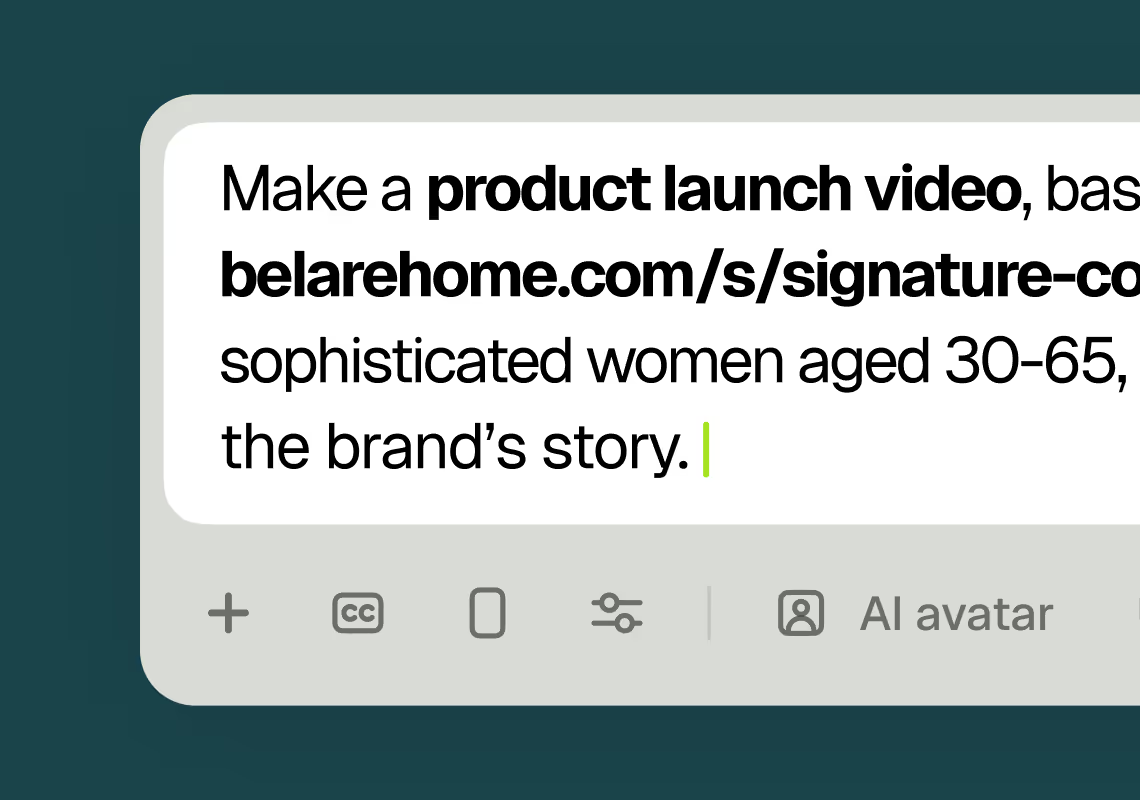
1Describe your video
Paste your promo brief, script, outline, or blog URL into Agent Opus.
 2
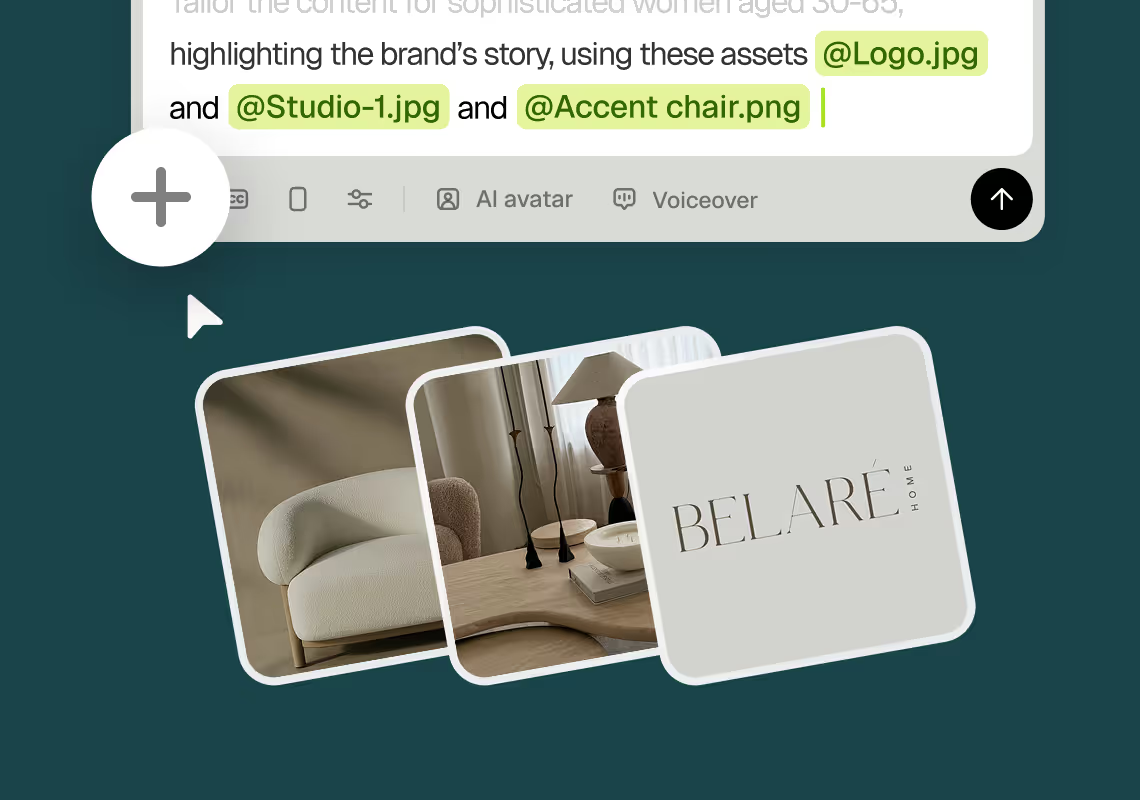
2Add assets and sources
Upload brand assets like logos and product images, or let the AI source stock visuals automatically.
 3
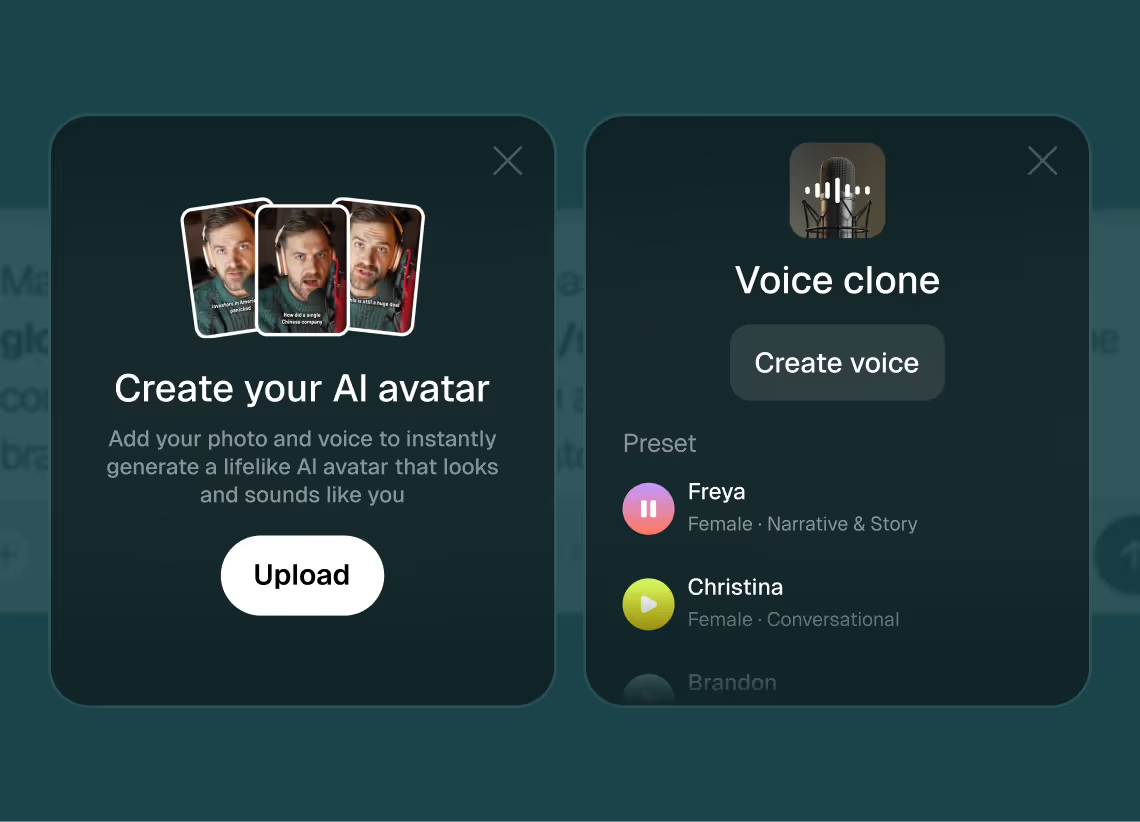
3Choose voice and avatar
Choose voice (clone yours or pick an AI voice) and avatar style (user or AI).
 4
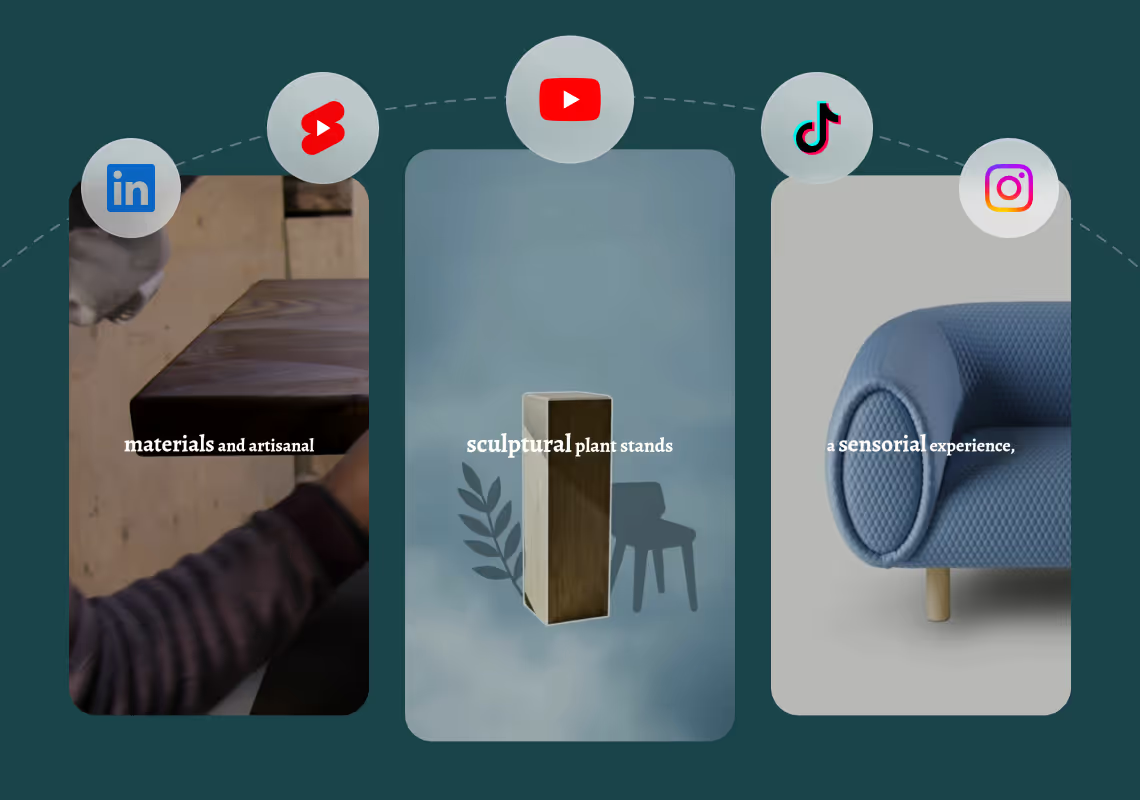
4Generate and publish-ready
Click generate and download your finished promo video in seconds, ready to publish across all platforms.


8 powerful features of Agent Opus' AI Documentary Video Maker
Script to Documentary
Transform written narratives into compelling documentary videos with automated scene generation and pacing.
Background Music Scoring
Generate atmospheric soundtracks that enhance emotional impact and support your documentary's tone.
Fact-Based Visual Rendering
Create educational visuals that illustrate data, timelines, and concepts central to documentary storytelling.
Cinematic Transitions
Apply documentary-style transitions and pacing that maintain viewer engagement throughout longer narratives.
Archival Footage Integration
Generate documentary sequences that blend AI visuals with historical themes and storytelling depth.
Voiceover Narration Sync
Add professional AI narration that syncs perfectly with your documentary's visual timeline.
Interview Scene Creation
Build authentic interview segments with AI avatars delivering scripted testimonials and expert commentary.
Multi-Chapter Structure
Organize complex stories into chapters with seamless flow between documentary segments and themes.
Testimonials
This looks like a game-changer for us. We're building narrative-driven, visually layered content — and the ability to maintain character and motion consistency across episodes would be huge. If Agent Opus can sync branded motion graphics, tone, and avatar style seamlessly, it could easily become part of our production stack for short-form explainers and long-form investigative visuals.
srtaduck
I reviewed version a and I was very impressed with this version, it did very well in almost all aspects that users need, you would only have to make very small changes and maybe replace one of 2 of the pictures, but even saying that it could be used as is and still receive decent views or even chances at going viral depending on the story or the content the user chooses.
Jeremy
all in all LOVE THIS agent. I'm curious to see how I can push it (within reason) Just need to learn to get the consistency right with my prompts
Rebecca
Frequently Asked Questions
How does an AI documentary video maker handle complex narratives with multiple timelines or perspectives?
Agent Opus approaches documentary structure by analyzing your script or outline for narrative arcs, chronological markers, and thematic shifts. When you provide a script with multiple timelines, such as a historical documentary that jumps between past events and present-day interviews, the system identifies temporal cues and structural signals to organize scenes logically. For example, if your script includes phrases like 'Meanwhile in 1945' or 'Fast forward to today,' the AI recognizes these as transition points and adjusts visual treatment accordingly, perhaps using archival-style footage for historical segments and modern cinematography for contemporary scenes. The motion graphics engine can generate timeline overlays, date stamps, or location cards that orient viewers during temporal shifts. For documentaries with multiple perspectives, like a brand story told from founder, employee, and customer viewpoints, Agent Opus segments the narrative and can assign different visual treatments or narrator tones to each perspective. You maintain control by structuring your input clearly: use section headers, explicitly mark perspective changes, or describe the visual style you want for each segment. The AI documentary video maker then interprets these structural elements and assembles footage, pacing, and graphics that support comprehension. Best practice is to provide a detailed outline or script that clearly delineates narrative sections, includes context for visual references, and specifies any must-have elements like specific charts, maps, or archival references you want included.
What types of visual sources does this AI documentary video maker pull from, and how accurate are they for historical or technical topics?
The AI documentary video maker accesses multiple visual repositories including licensed stock footage libraries, public domain archival collections, and web-sourced imagery that's cleared for use. When you create a documentary about a historical event, scientific concept, or technical process, Agent Opus analyzes your script for visual keywords and contextual clues, then sources imagery that matches both the subject matter and the documentary's intended tone. For a World War II documentary, it might pull period-appropriate archival photographs, maps of battle locations, and historical footage. For a tech explainer documentary, it sources diagrams, product shots, and abstract visuals that illustrate complex concepts. The system prioritizes visual accuracy by cross-referencing your script's factual claims with metadata from source libraries. However, you should review generated documentaries for historical or technical accuracy, especially for specialized subjects. To improve precision, include specific visual directions in your script, such as 'show a diagram of cellular mitosis' or 'display a 1960s factory floor.' You can also upload your own images, charts, infographics, or product photography, and Agent Opus will integrate these custom assets seamlessly into the documentary flow. For brand documentaries or case studies, this capability is essential: provide your logo variations, product shots, team photos, or customer testimonials as visual inputs, and the AI weaves them into the narrative at appropriate moments. The motion graphics layer adds professional polish by animating static images, creating parallax effects on photographs, or building data visualizations from numbers in your script.
Can an AI documentary video maker maintain a consistent brand voice and visual identity across a documentary series?
Absolutely. Agent Opus is designed for creators and brands producing ongoing documentary content, and it offers several mechanisms to ensure consistency across episodes or series. First, voice cloning allows you to establish a signature narrator voice: record a short sample of yourself or your chosen spokesperson, and Agent Opus replicates that voice for every documentary you generate. This creates immediate audio continuity that viewers associate with your brand. Second, you can upload brand assets like logos, color palettes, custom fonts, and visual templates that the AI incorporates into every video. For example, if your brand uses a specific lower-third style for on-screen text or a particular motion graphics treatment for data visualization, provide those elements once and Agent Opus applies them consistently. Third, the system learns from your input patterns: if you consistently structure documentaries with an opening hook, three-act narrative, and call-to-action ending, the AI recognizes this pattern and replicates it in future generations. To maximize consistency, create a documentary style guide as a text document describing your preferred pacing, visual tone, music mood, and structural conventions, then reference or paste relevant sections into each new documentary prompt. For example, 'Use the investigative documentary style with dark, moody visuals and suspenseful music' becomes a reusable instruction. Brand documentary series benefit enormously from this approach: whether you're producing monthly customer success stories, quarterly product evolution documentaries, or annual company retrospectives, Agent Opus ensures each installment feels cohesive while allowing you to focus creative energy on storytelling rather than technical consistency.
What are the best practices for writing prompts or scripts that produce high-quality documentary videos with this AI tool?
Effective prompts for an AI documentary video maker balance narrative clarity with visual direction. Start with a clear structural outline: documentaries typically follow a three-act structure with setup, conflict or exploration, and resolution, so organize your script or prompt accordingly. Include explicit scene descriptions that guide visual selection. Instead of writing 'The company grew rapidly,' write 'The company grew rapidly, expanding from a garage startup to a 50-person team in gleaming downtown offices.' This gives the AI concrete visual anchors: garage imagery, team growth montages, modern office spaces. Specify the documentary's tone and pacing early in your prompt: 'Create a 3-minute investigative documentary with a serious, journalistic tone' or 'Generate an uplifting 5-minute educational documentary for middle school students.' Tone cues influence everything from narrator voice selection to music choices and visual pacing. For historical or technical documentaries, include factual context and terminology that helps the AI source accurate visuals: 'Explain the Apollo 11 mission, showing the Saturn V rocket, lunar module, and Neil Armstrong's first steps.' Mention specific visual elements you want: maps, charts, timelines, archival photos, or modern recreations. If you have custom assets, note where they should appear: 'Show our product demo video at the 2-minute mark when discussing features.' For voice and avatar preferences, specify early: 'Use a warm, authoritative female AI voice' or 'Clone my voice for narrator continuity.' Length matters: provide enough script content to fill your target duration, roughly 150-180 words per minute of final video. Finally, include a call-to-action or closing statement that gives the documentary purpose: 'End with an invitation to visit our website' or 'Conclude with a question that prompts viewer reflection.' The more specific and structured your input, the more polished and purposeful your AI-generated documentary will be.