AI Motion Graphics Generator
Turn text into professional motion graphics videos in seconds. Agent Opus is an AI motion graphics generator that transforms your prompts, scripts, or blog posts into finished animated videos with dynamic visuals, voiceover, and social-ready formatting. No design experience, timeline editing, or stock footage hunting required. Describe what you want, and Agent Opus assembles a complete motion graphics video ready to publish across TikTok, Instagram Reels, YouTube Shorts, and LinkedIn. Perfect for product demos, explainer videos, social content, and promotional campaigns that need eye-catching animated visuals without the production overhead.

Explore what's possible with Agent Opus

Reasons why creators love Agent Opus' AI Motion Graphics Generator
Iterate Until It's Perfect
Test different motion graphic styles and variations instantly, giving you creative freedom without budget anxiety.
Launch-Ready in One Session
Go from idea to published motion graphics video without waiting on designers, revisions, or render queues.
Hours Saved on Every Project
Turn concepts into finished motion graphics in minutes instead of spending days learning complex animation tools.
Studio-Quality Without the Studio
Create polished motion graphics that look professionally designed, no animation software or technical skills required.
Scale Content Without Scaling Costs
Produce unlimited motion graphics at a fraction of what traditional animation agencies or freelancers charge.
Consistent Brand Identity Everywhere
Your motion graphics automatically match your brand style across every video, building recognition with your audience.
How to use Agent Opus’ AI Motion Graphics Generator
 1
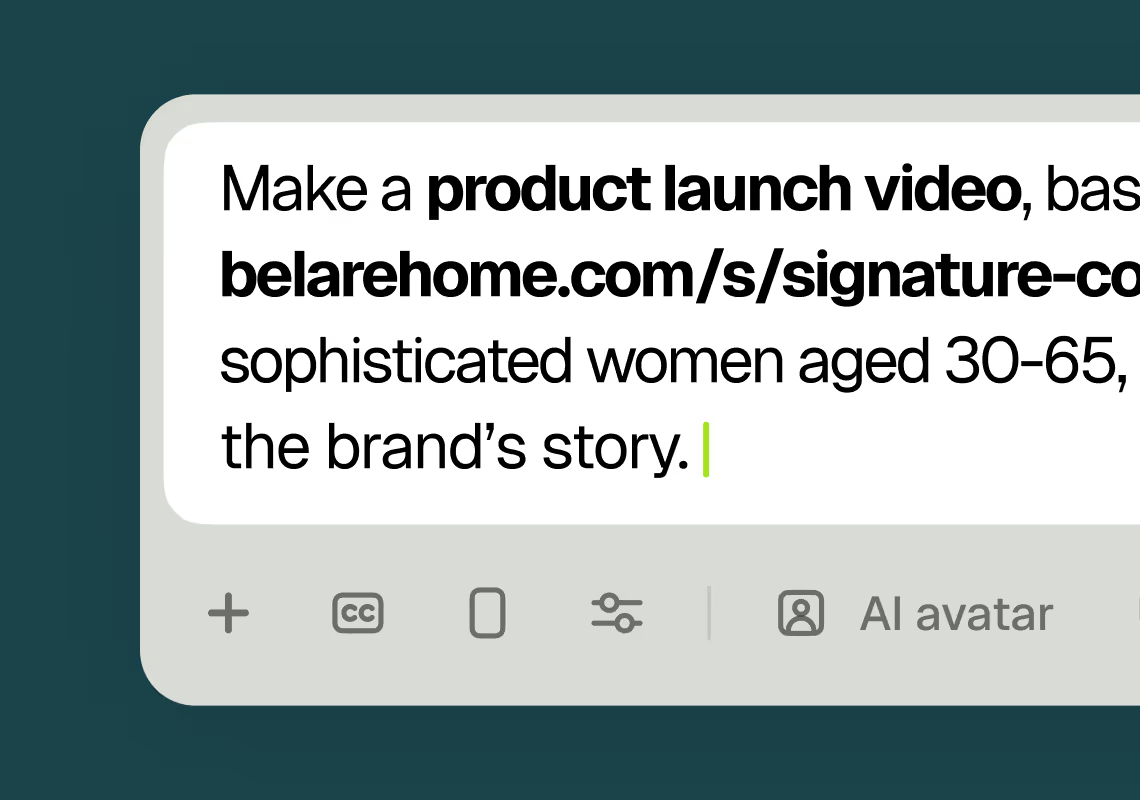
1Describe your video
Paste your promo brief, script, outline, or blog URL into Agent Opus.
 2
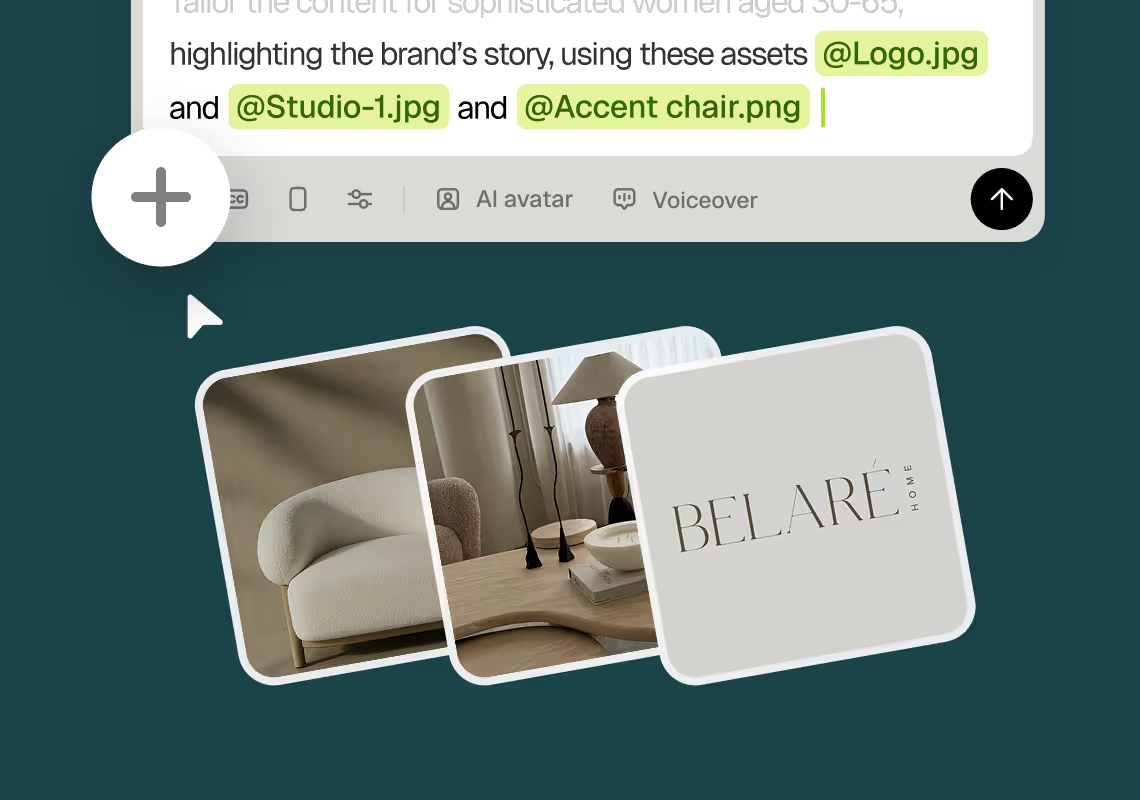
2Add assets and sources
Upload brand assets like logos and product images, or let the AI source stock visuals automatically.
 3
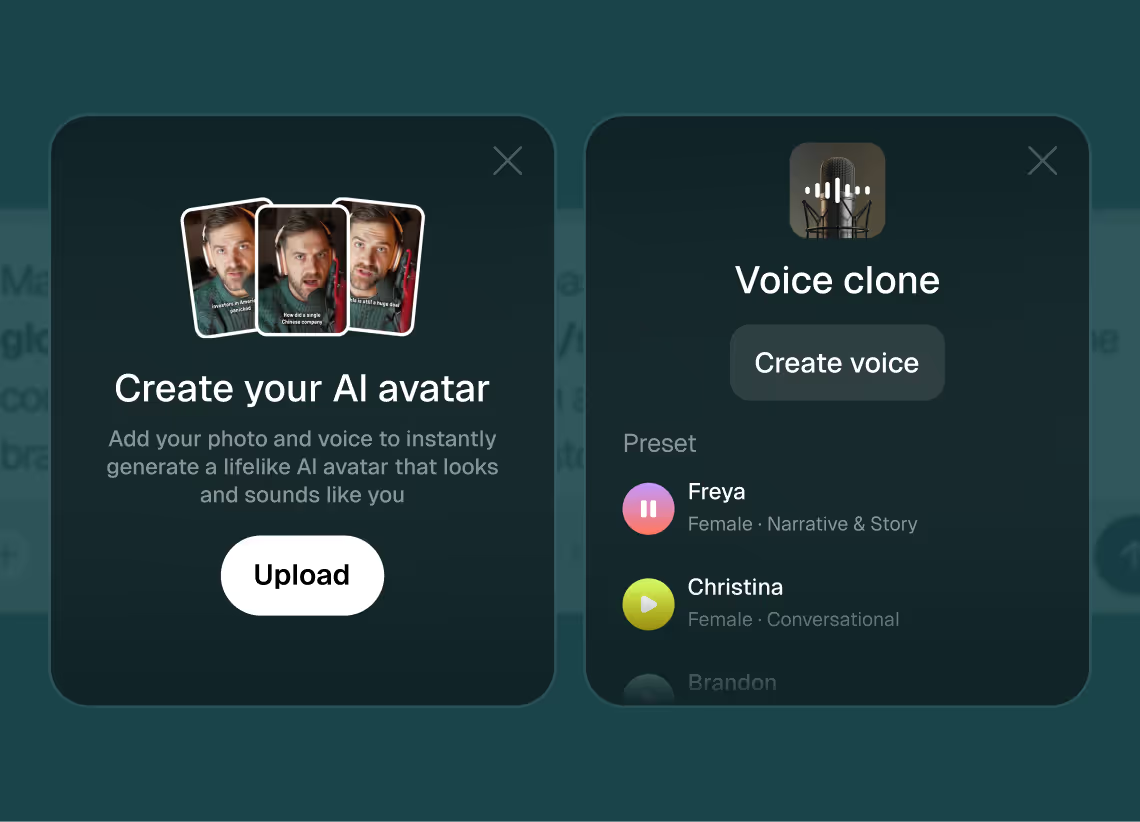
3Choose voice and avatar
Choose voice (clone yours or pick an AI voice) and avatar style (user or AI).
 4
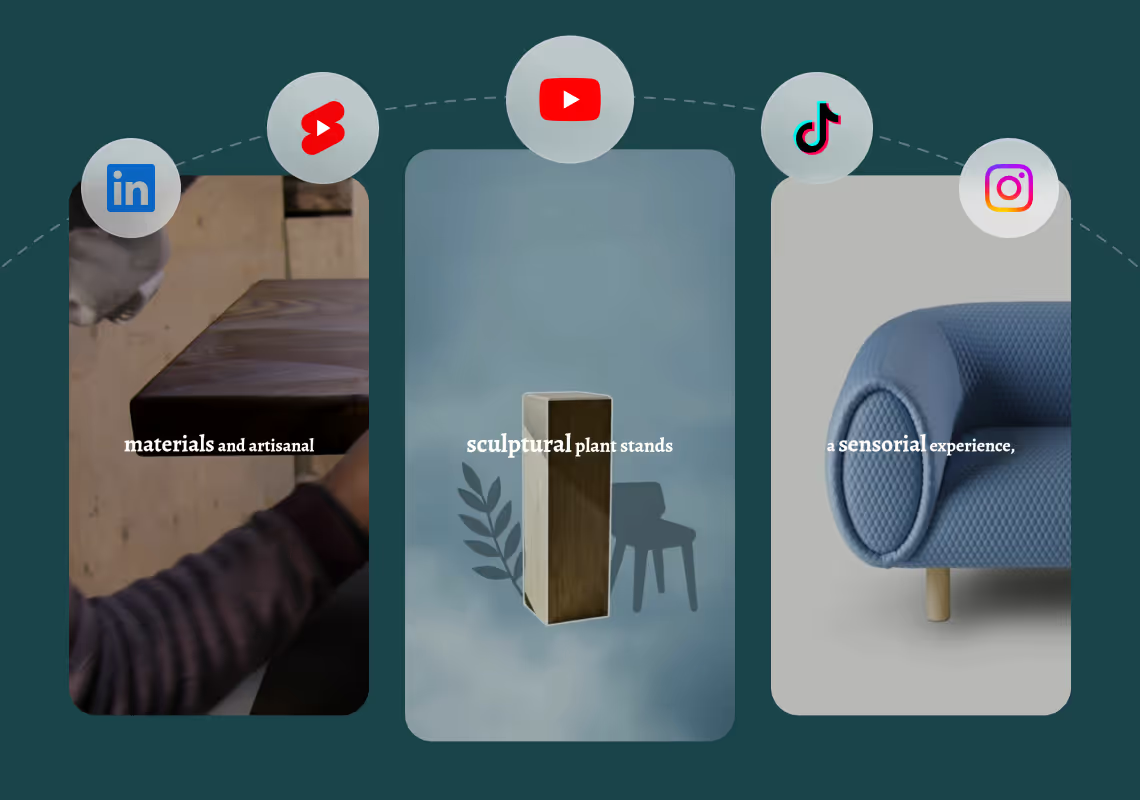
4Generate and publish-ready
Click generate and download your finished promo video in seconds, ready to publish across all platforms.


8 powerful features of Agent Opus' AI Motion Graphics Generator
Layered Visual Effects
Stack animated elements with depth, parallax, and timing that creates polished motion graphic sequences.
Dynamic Text Animations
Transform headlines and copy into kinetic typography with smooth transitions and professional motion design.
Music-Synced Animations
Agent Opus times motion graphic beats to background music for rhythm-driven visual impact.
Export-Ready Motion Files
Download finished motion graphics optimized for social platforms, ads, and presentation decks instantly.
Automated Shape Animations
Generate geometric shapes, icons, and abstract elements that move in sync with your narrative.
Instant Explainer Graphics
Turn product features or data points into animated infographics that clarify complex ideas visually.
Prompt-Driven Motion Graphics
Type a concept and watch Agent Opus generate animated motion graphics instantly from your text.
Brand-Consistent Motion Styles
Apply your color palette and design language to every generated motion graphic automatically.
Testimonials
I reviewed version a and I was very impressed with this version, it did very well in almost all aspects that users need, you would only have to make very small changes and maybe replace one of 2 of the pictures, but even saying that it could be used as is and still receive decent views or even chances at going viral depending on the story or the content the user chooses.
Jeremy
I dont think id change a thing
Quirky Collectables
wow that's actually great 🔥
irtaza65
Frequently Asked Questions
How does an AI motion graphics generator handle complex visual sequences?
Agent Opus breaks your input text into logical scenes, then assembles each scene with appropriate motion graphics elements, transitions, and timing. When you provide a prompt or script, the system analyzes the narrative structure and identifies key moments that need visual emphasis. For example, if your script mentions a product feature, the generator will source relevant imagery, apply motion graphics treatments like zooms, pans, or animated overlays, and time everything to match your voiceover pacing. The AI handles layer compositing automatically, meaning multiple visual elements can appear simultaneously with proper depth and movement. You can include brand-specific assets like logos or product photos in your input, and the generator will incorporate them into the motion graphics sequences at contextually appropriate moments. The system also manages visual consistency across scenes, ensuring color schemes, animation styles, and graphic treatments feel cohesive throughout the video. This approach eliminates the manual keyframing and timeline work that traditional motion graphics require, while still producing professional animated sequences with dynamic movement and visual interest.
What types of prompts work best for motion graphics generation?
The most effective prompts for an AI motion graphics generator combine clear messaging with visual direction. Start with your core message or script, then add notes about visual style, pacing, and emphasis. For instance, instead of just 'Explain our new app feature,' try 'Explain our new app feature with fast-paced visuals showing phone screens, highlight the one-tap checkout process, use our brand blue, upbeat tone.' The generator responds well to structural cues like 'Start with a problem statement, then show three benefits, end with a call to action.' You can specify visual treatments: 'Use bold text overlays for key stats' or 'Show product shots with zoom-in effects.' If you have a blog post or article, the AI motion graphics generator will extract the main points and create visual sequences automatically, but you can guide it by highlighting which sections deserve emphasis. Prompts that mention pacing help too: 'Keep it punchy for social media' versus 'Allow time for detailed explanation.' The system handles both short-form content (15-60 seconds for social) and longer explainers (2-3 minutes). Including your brand assets in the prompt ensures they appear in the motion graphics. The key is balancing creative freedom with enough direction that the output matches your vision and brand standards.
Can I use my own brand assets and maintain visual consistency?
Yes, Agent Opus is designed to work with your existing brand materials. You can upload logos, product images, brand colors, and even reference visual styles, and the AI motion graphics generator will incorporate them throughout the video. When you provide brand assets, the system treats them as primary visual elements rather than generic stock imagery. Your logo might appear as a watermark, an intro/outro element, or integrated into scene transitions. Product shots get featured prominently with motion graphics treatments that highlight key details through zooms, rotations, or animated callouts. The generator maintains visual consistency by analyzing your brand materials and applying similar color palettes, graphic styles, and animation speeds across all scenes. If you upload multiple videos over time, the system can learn your preferred visual language and replicate it in new motion graphics. This is especially valuable for teams producing regular content series where brand consistency matters. You can also specify visual guidelines in your prompts: 'Use minimalist animations' or 'Apply bold, high-contrast graphics.' The AI motion graphics generator balances your brand requirements with platform best practices, ensuring videos look on-brand while still performing well on social feeds. This eliminates the usual tension between maintaining brand standards and adapting to platform-specific content styles.
How does voice and avatar integration work in motion graphics videos?
Agent Opus offers flexible voice and avatar options that integrate seamlessly with motion graphics. For voiceover, you can clone your own voice by uploading a sample, or choose from AI voices with different tones, accents, and speaking styles. The AI motion graphics generator automatically syncs the voiceover timing with visual elements, so text overlays, product reveals, and scene transitions happen at the right moments in the narration. This sync is critical for motion graphics because visual emphasis needs to match verbal emphasis. If your script says 'three key benefits,' the generator will time the appearance of each benefit graphic to align with when you say it. For avatar integration, you can appear on-screen as a presenter with motion graphics elements surrounding you, or use an AI avatar if you prefer not to be on camera. The avatar option works well for explainer videos and tutorials where a human presence adds credibility, while pure motion graphics without avatars suit product demos and data-driven content. The system handles the compositing automatically, placing the avatar in a position that doesn't compete with motion graphics elements. You can specify avatar placement in your prompt: 'Show me in the bottom right with graphics filling the main frame.' Voice cloning is particularly powerful for teams creating content at scale, because one voice sample enables unlimited motion graphics videos with consistent narration, no recording sessions required.