AI Stop Motion Video Maker
Create stunning stop motion-style videos in minutes with Agent Opus, the AI stop motion video maker that transforms text into professional animated content. Describe your vision or paste a script, and watch as AI assembles dynamic stop motion sequences with motion graphics, voiceover, and social-ready formatting. No manual frame-by-frame animation, no timeline editing, no stock footage hunting. Just prompt to publish-ready video, powered by AI that understands stop motion aesthetics and pacing. Perfect for product launches, explainer content, social campaigns, and creative storytelling that demands attention.

Explore what's possible with Agent Opus

Reasons why creators love Agent Opus' AI Stop Motion Video Maker
Creative Freedom Unleashed
Experiment with impossible stop motion scenarios and visual effects that would be impractical or costly in physical production.
Iterate at Lightning Speed
Test different stop motion concepts and revisions in minutes instead of reshooting entire sequences from scratch.
Scale Without Studio Costs
Produce multiple stop motion videos per week without investing in equipment, materials, or dedicated shooting space.
Launch-Ready in Minutes
Go from concept to polished stop motion video fast enough to ride trends and meet tight content deadlines.
Consistent Style Every Time
Maintain your signature stop motion aesthetic across all videos without worrying about lighting or positioning changes.
Skip the Setup Hassle
Create stop motion magic without physical sets, cameras, or hours of frame-by-frame shooting.
How to use Agent Opus’ AI Stop Motion Video Maker
 1
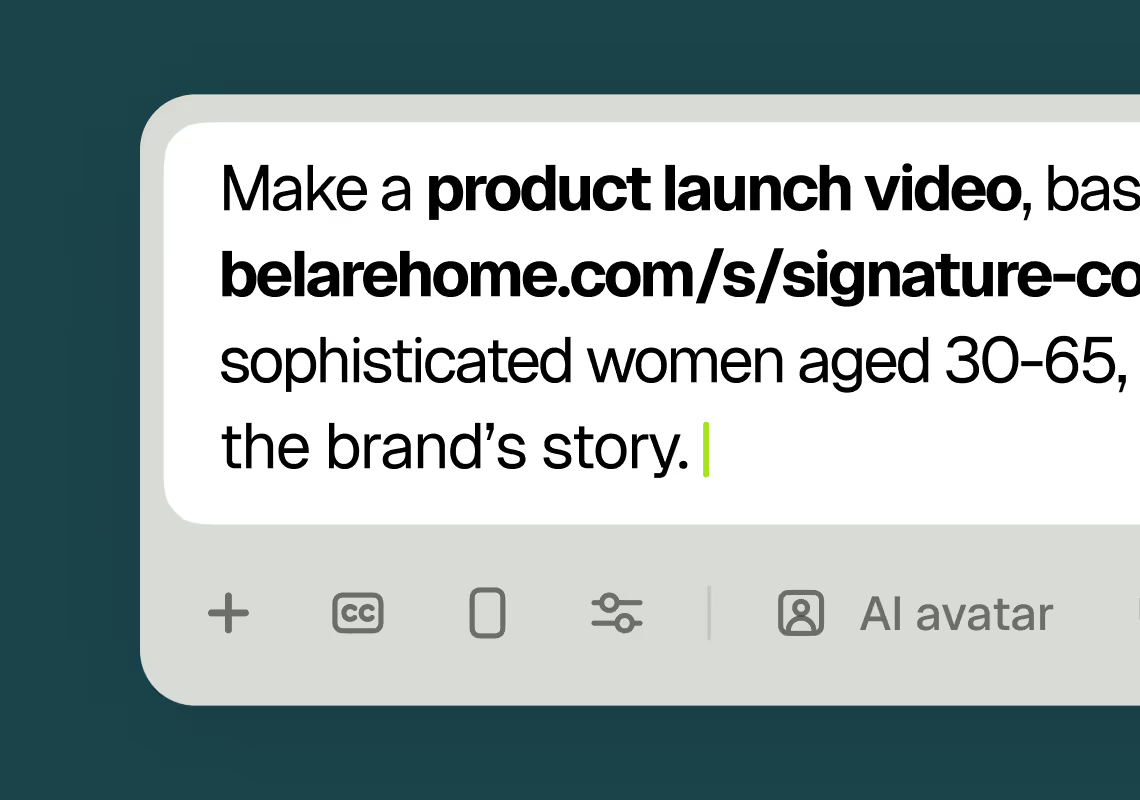
1Describe your video
Paste your promo brief, script, outline, or blog URL into Agent Opus.
 2
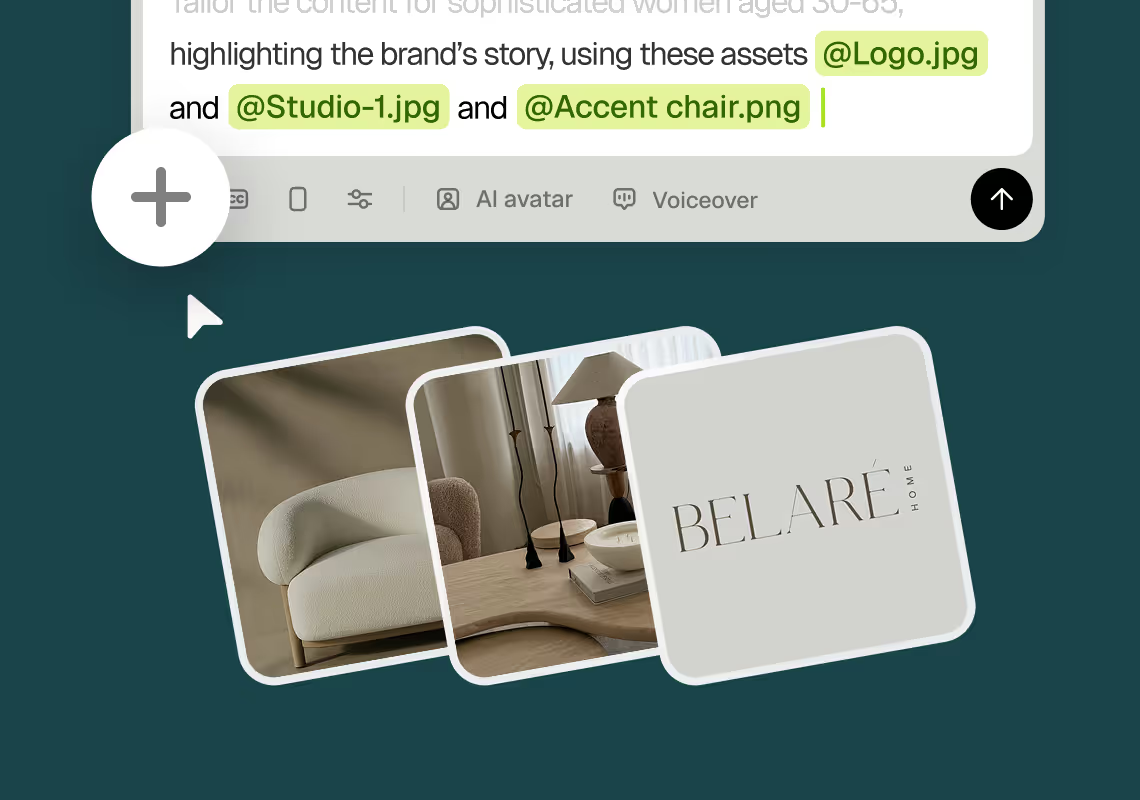
2Add assets and sources
Upload brand assets like logos and product images, or let the AI source stock visuals automatically.
 3
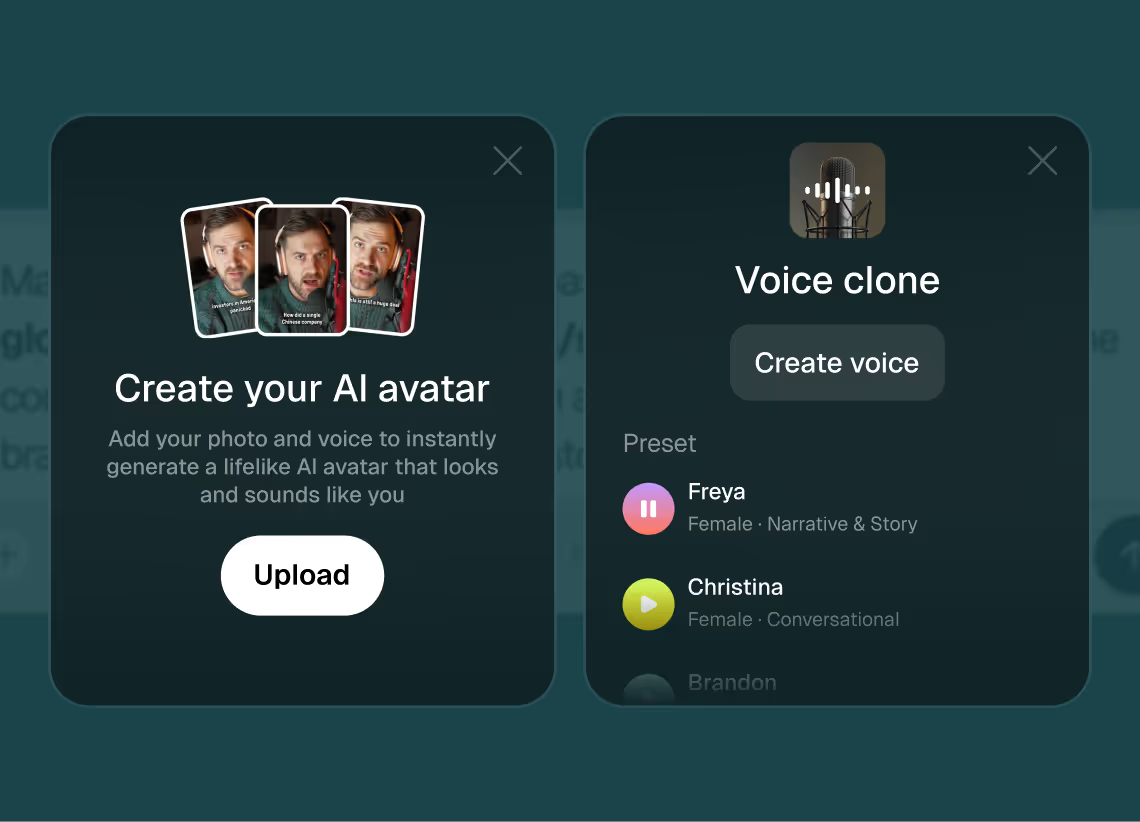
3Choose voice and avatar
Choose voice (clone yours or pick an AI voice) and avatar style (user or AI).
 4
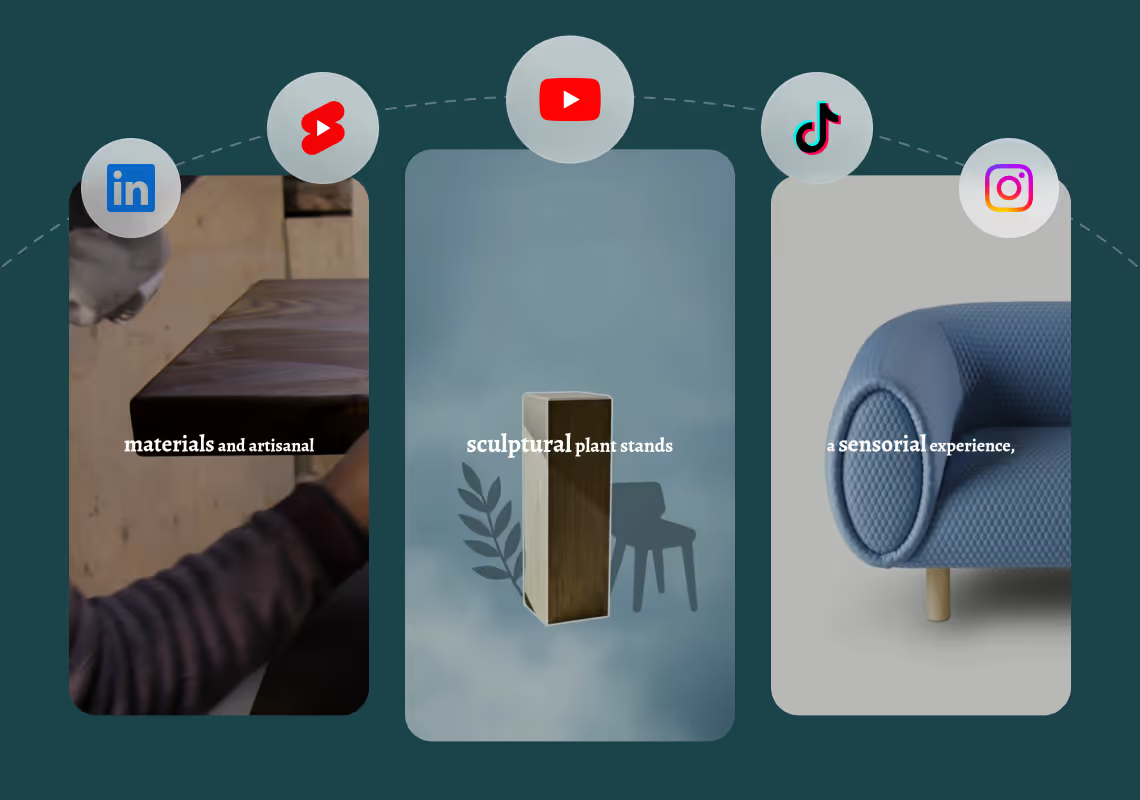
4Generate and publish-ready
Click generate and download your finished promo video in seconds, ready to publish across all platforms.


8 powerful features of Agent Opus' AI Stop Motion Video Maker
Text to Stop Motion
Transform written prompts into frame-by-frame stop motion videos with authentic handcrafted aesthetics.
Object Animation Control
Direct character movements and object interactions through simple text descriptions for precise stop motion storytelling.
Vintage Stop Motion Effects
Apply authentic film grain, lighting imperfections, and frame jitter for nostalgic stop motion charm.
Automated Frame Sequencing
Generate smooth stop motion sequences automatically without manual photography or physical setup.
Multi-Material Simulation
Generate stop motion videos featuring clay, paper, fabric, or wooden materials with realistic textures.
Stop Motion Pacing
Control frame rates and timing to achieve the distinctive rhythm of traditional stop motion animation.
Claymation Style Rendering
Create videos with realistic claymation textures and lighting that mimic traditional stop motion techniques.
Scene Transition Automation
Build multi-scene stop motion narratives with smooth transitions between settings and character positions.
Testimonials
Frequently Asked Questions
How does an AI stop motion video maker handle different creative briefs and scripts?
Agent Opus processes four input types to generate stop motion-style videos, each optimized for different workflows. Short prompts work best for concept testing—describe the visual style, key objects, and mood in 2-3 sentences, and AI interprets stop motion aesthetics automatically. For example, 'create a stop motion video of office supplies assembling into our logo with playful energy' triggers scene planning, object selection, and motion sequencing without additional direction. Full scripts provide maximum control over pacing and narrative structure. Paste a 200-word product script and AI maps each sentence to visual beats, selecting stop motion transitions and object movements that match your messaging rhythm. The system recognizes when scripts call for close-ups, wide shots, or dynamic reveals and adjusts motion graphics accordingly. Outlines offer a middle path—bullet points like 'intro: product unboxing, middle: feature highlights, outro: call-to-action' give AI a structural framework while preserving creative flexibility in motion design. Blog or article URLs trigger content extraction and automatic script generation, then video assembly. AI identifies key points, converts them into visual sequences, and applies stop motion styling that matches the article's tone. Across all input types, the system maintains stop motion's signature charm—deliberate pacing, tactile object movement, and frame-by-frame visual rhythm—while eliminating manual animation. You control narrative direction through your input; AI handles motion graphics execution, asset sourcing, scene assembly, and timing. The result is stop motion content that feels handcrafted but generates in minutes, not days.
What are best practices for prompts when using an AI stop motion video maker?
Effective prompts for stop motion video generation balance creative vision with AI-friendly specificity. Start by naming 3-5 key objects or visual elements you want featured—'wooden blocks,' 'product packaging,' 'paper cutouts,' 'office supplies'—because stop motion thrives on tangible, recognizable items. AI uses these anchors to source appropriate imagery and plan motion sequences. Specify the emotional tone or energy level: 'playful and energetic,' 'calm and methodical,' 'quirky and unexpected.' This guides pacing decisions, transition speed, and motion graphic intensity. Stop motion can feel whimsical or sophisticated depending on rhythm, and tone keywords help AI calibrate correctly. Include one sentence about your core message or goal. 'Showcase eco-friendly materials' or 'explain app features through visual metaphor' gives AI narrative direction for scene sequencing. Mention brand elements explicitly if you're uploading assets: 'integrate our blue logo in the final scene' or 'feature product shots throughout.' AI prioritizes these elements in composition and timing. Avoid over-specifying camera angles or technical animation terms—AI handles motion graphics and visual assembly automatically. Instead, focus on outcomes: 'build excitement toward the reveal' or 'create a satisfying loop for social media.' For voiceover integration, note whether you want narration to drive pacing or serve as background context. 'Voiceover explains each step' triggers tighter sync between audio and visual beats compared to 'background voiceover sets mood.' Test short prompts first to see how AI interprets stop motion aesthetics for your concept, then refine with additional detail. The system learns from iteration—if the first output feels too fast, add 'slower, more deliberate pacing' to your next prompt. Successful prompts give AI creative constraints (objects, tone, message) while trusting its motion graphics engine to deliver authentic stop motion movement and visual storytelling.
Can an AI stop motion video maker maintain consistent branding across multiple videos?
Agent Opus preserves brand consistency across stop motion video projects through asset integration, voice cloning, and visual style memory. Upload brand assets once—logos, product photography, color palettes, custom graphics—and AI stores them for reuse across unlimited videos. When you generate new stop motion content, reference these assets in your prompt: 'use our uploaded product shots in the opening sequence' or 'integrate brand logo in stop motion transitions.' The system automatically sources your materials and weaves them into motion graphics with appropriate scale, positioning, and timing. This eliminates the brand drift that occurs when manually sourcing stock footage for each project. Voice cloning ensures audio consistency. Record a 30-second sample of your voice (or a brand spokesperson's voice), and AI generates voiceover for all future videos that matches tone, pacing, and vocal character. Stop motion videos featuring the same voice across campaigns build stronger brand recognition than projects using different AI voices or narrators. For visual style, AI learns from your prompt patterns. If you consistently request 'bright, minimalist stop motion with clean transitions,' the system prioritizes similar aesthetic choices in subsequent generations. Over time, your video library develops a cohesive look even as individual concepts vary. Color palette consistency matters in stop motion because object colors and background tones create emotional associations. Specify brand colors in prompts—'use our teal and orange palette throughout'—and AI selects imagery and applies motion graphics that honor those constraints. The system also maintains aspect ratio and formatting preferences. Generate videos for Instagram Reels at 9:16, and AI remembers this preference for future social content, ensuring your stop motion library fits platform requirements without manual resizing. For teams, shared asset libraries mean multiple creators can generate stop motion videos that feel unified. Everyone accesses the same logos, product shots, and voice profiles, preventing the fragmentation that occurs when individuals use different tools or stock sources. Brand consistency in AI-generated stop motion comes from intentional asset management and prompt discipline, not from rigid templates. You maintain creative flexibility while ensuring every video reinforces visual and audio identity.
What are the limitations or edge cases when generating stop motion videos with AI?
AI stop motion video generation excels at object-based animation, product showcases, and conceptual storytelling but faces constraints in specific scenarios. Highly detailed human motion—like realistic hand gestures or facial expressions—works better with avatar-based video than stop motion styling. Stop motion aesthetics emphasize object movement and scene transitions over nuanced character animation, so prompts requiring complex human interaction may yield stylized rather than photorealistic results. If your concept centers on people, consider using AI avatar features instead of pure stop motion treatment. Extreme visual complexity in a single scene can challenge motion graphics assembly. A prompt like 'show 50 different products moving simultaneously in intricate patterns' may produce cluttered compositions because stop motion relies on deliberate, focused movement. Simplify to 5-8 key objects per scene for cleaner results, or break complex concepts into multiple shorter videos. AI sources imagery from web and stock libraries, which means highly niche or proprietary objects may not have perfect visual matches. If you need a specific rare product or custom prototype, upload reference images as brand assets rather than relying on auto-sourcing. The system integrates uploaded materials seamlessly but cannot generate photorealistic renders of objects that don't exist in its training data. Timing precision for music sync presents an edge case. While AI handles background soundtracks and general pacing well, frame-perfect synchronization to specific musical beats requires additional prompt detail. Specify 'sync object movements to upbeat tempo' or 'match transitions to music drops' for better rhythm alignment, but expect some variation compared to manual timeline editing. Stop motion style inherently features visible 'frames' and deliberate motion, which may not suit every brand aesthetic. Luxury or high-tech brands sometimes prefer smooth, cinematic motion graphics over stop motion's tactile, handcrafted feel. Test a sample video to ensure the style matches your brand voice before committing to a full campaign. Extremely long videos—over 90 seconds—may lose narrative cohesion because stop motion pacing works best in focused bursts. Break longer content into episodic segments or use stop motion for key moments within a larger video strategy. Finally, AI cannot replicate the happy accidents and improvisation of hands-on stop motion animation. If your creative process relies on discovering unexpected visual moments during production, AI generation offers speed and consistency but less serendipity. Understanding these boundaries helps you leverage AI stop motion for its strengths—rapid iteration, brand consistency, social-ready output—while recognizing when traditional production methods better serve specific creative goals.