AI Video Generator for Teachers
Turn lesson plans, scripts, and teaching notes into polished classroom videos without filming or editing. Agent Opus is an AI video generator for teachers that transforms your prompts, outlines, or blog posts into publish-ready educational content. Describe what you want to teach, and Agent Opus assembles scenes, adds motion graphics, sources visuals, generates voiceover, and delivers social-ready videos for YouTube, Google Classroom, or Flipgrid. No timeline. No manual editing. Just prompt to publish-ready teaching videos in minutes.

Explore what's possible with Agent Opus

Reasons why creators love Agent Opus' AI Video Generator for Teachers
Consistent Quality Every Time
Maintain the same polished look and clear delivery across all your videos without technical expertise.
More Time for Teaching
Automate the tedious parts of content creation so you can focus on what matters most—your students.
Lesson-Ready in Minutes
Transform curriculum into engaging video content without spending hours editing or learning complex software.
No Budget Barriers
Skip expensive videographers and studio time while still producing professional content your students deserve.
Students Stay Focused
Deliver concepts through dynamic visuals and clear narration that hold attention better than static slides.
Teach Beyond the Classroom
Extend your reach with flipped classroom content, makeup lessons, and resources students can revisit anytime.
How to use Agent Opus’ AI Video Generator for Teachers
 1
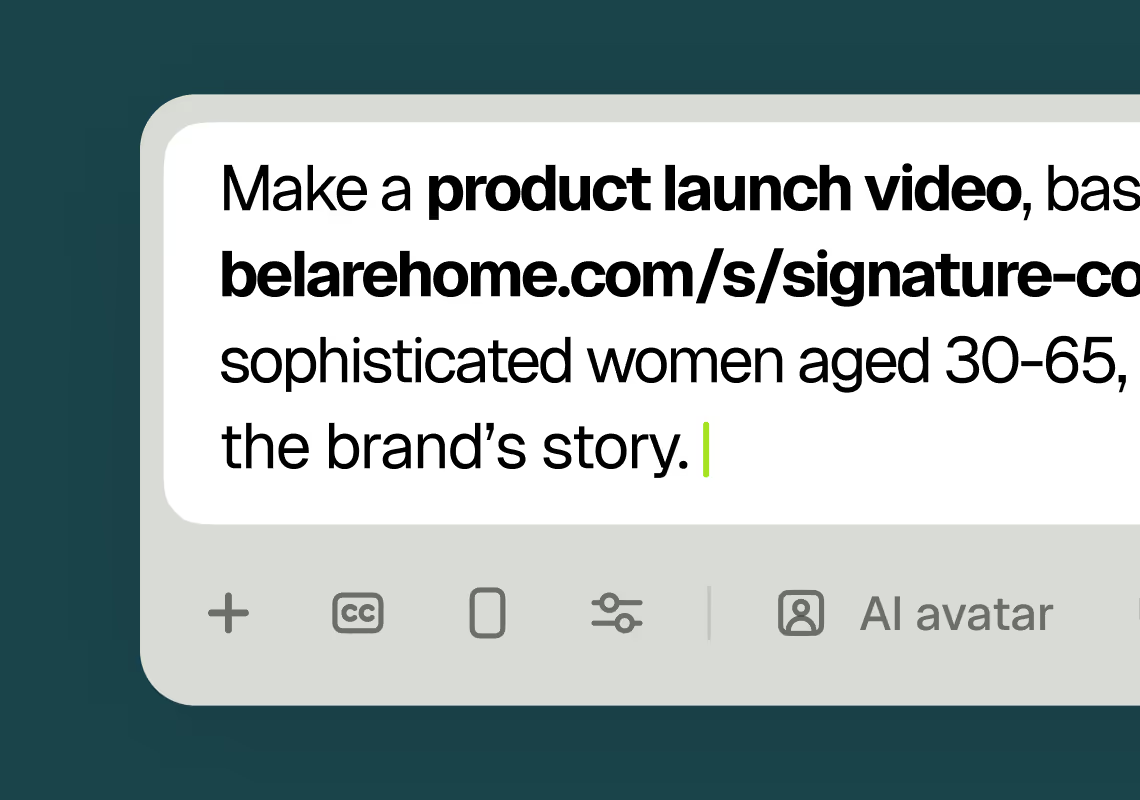
1Describe your video
Paste your promo brief, script, outline, or blog URL into Agent Opus.
 2
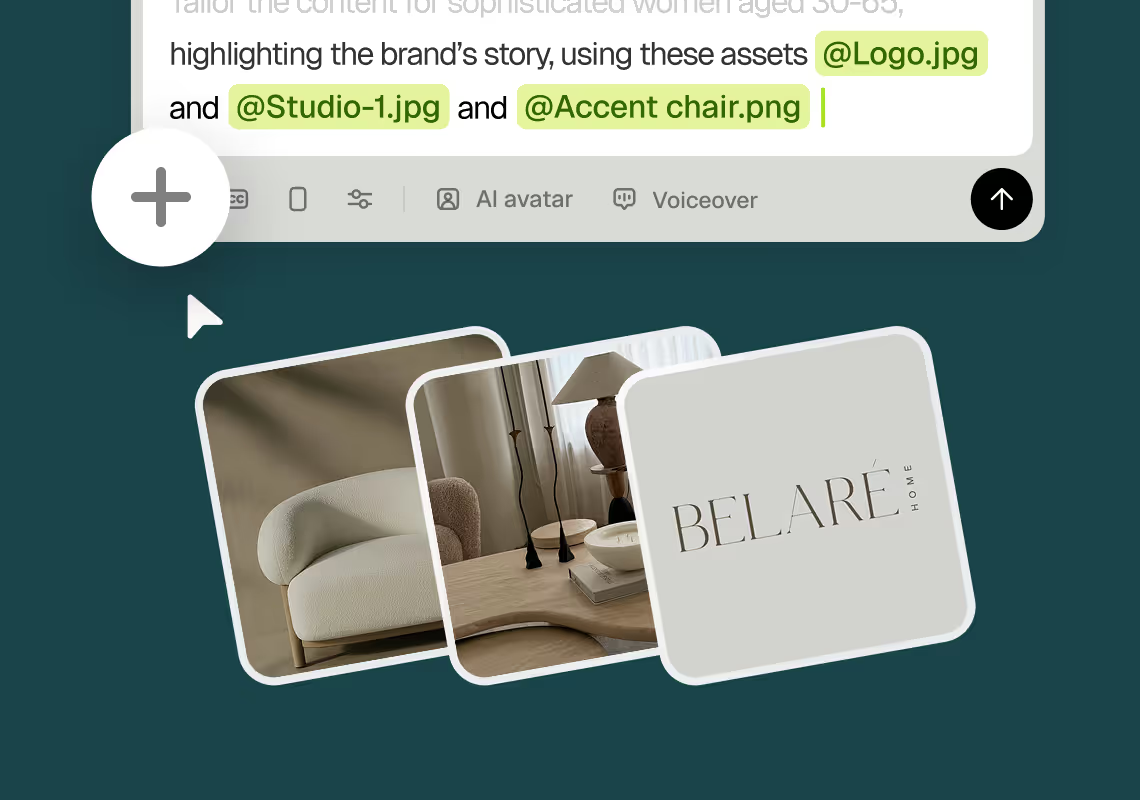
2Add assets and sources
Upload brand assets like logos and product images, or let the AI source stock visuals automatically.
 3
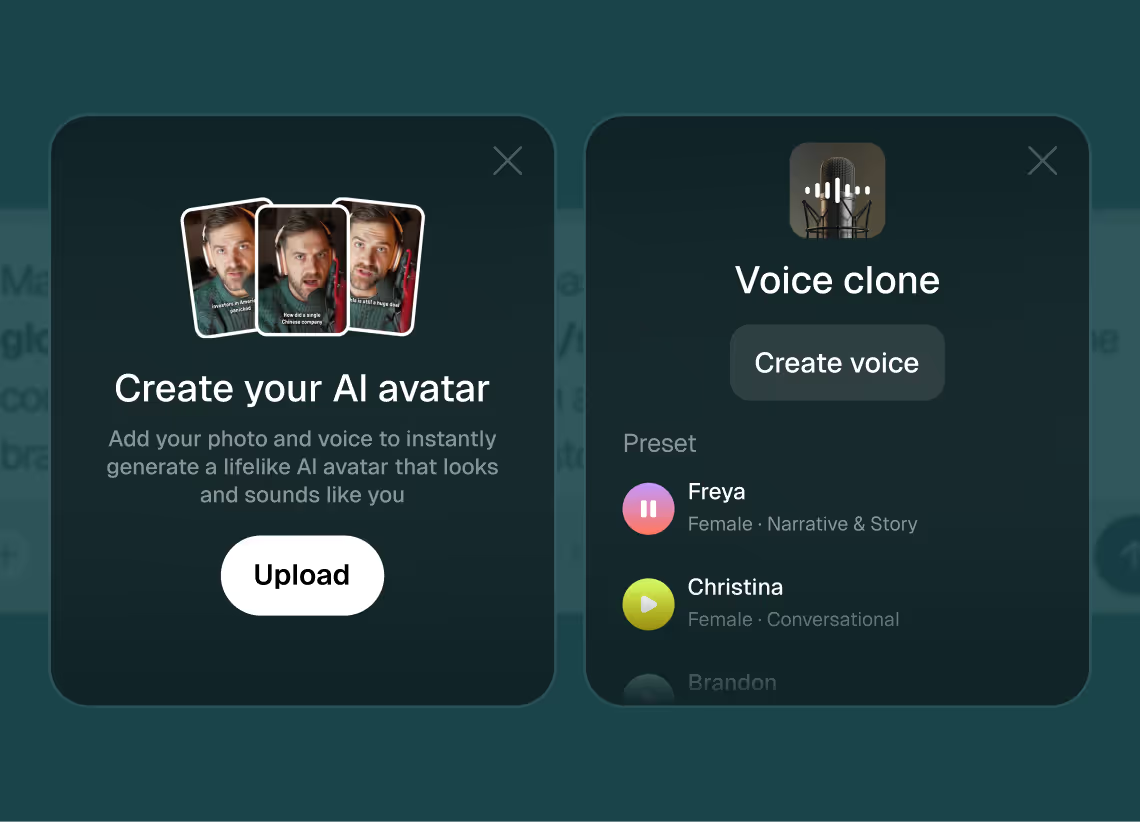
3Choose voice and avatar
Choose voice (clone yours or pick an AI voice) and avatar style (user or AI).
 4
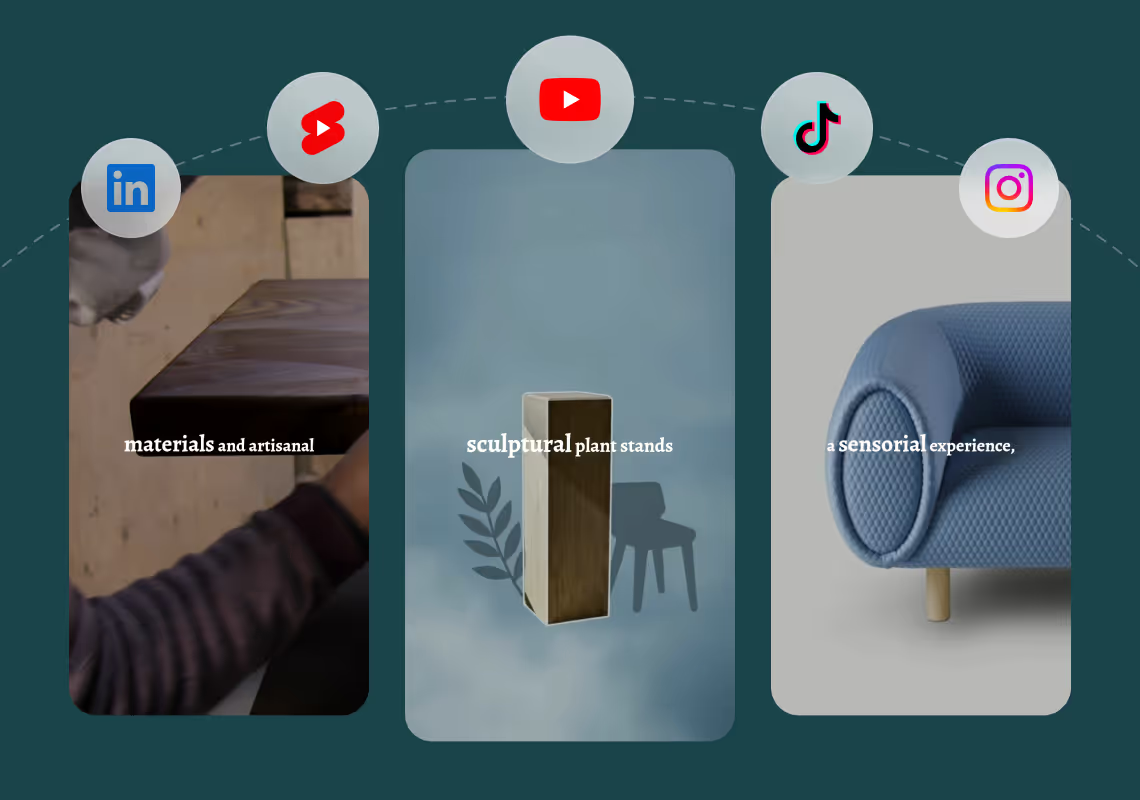
4Generate and publish-ready
Click generate and download your finished promo video in seconds, ready to publish across all platforms.


8 powerful features of Agent Opus' AI Video Generator for Teachers
Classroom Flip Materials
Produce pre-class instructional videos that free up classroom time for interactive learning activities.
Curriculum-Aligned Visuals
Generate educational videos that match your curriculum standards and learning objectives automatically.
Homework Review Content
Create step-by-step video walkthroughs of assignments so students can review at their own pace.
Student-Paced Learning
Generate videos students can pause and replay to support differentiated instruction and individual needs.
Concept Explanation Videos
Transform complex topics into clear visual explanations that help students grasp difficult material.
Multi-Subject Video Library
Build a reusable collection of teaching videos across subjects without filming or editing skills.
Lesson Videos From Text
Turn lesson plans and teaching notes into engaging video content students can watch anytime.
Parent Communication Videos
Create quick update videos explaining classroom activities and learning goals for family engagement.
Testimonials
This looks like a game-changer for us. We're building narrative-driven, visually layered content — and the ability to maintain character and motion consistency across episodes would be huge. If Agent Opus can sync branded motion graphics, tone, and avatar style seamlessly, it could easily become part of our production stack for short-form explainers and long-form investigative visuals.
srtaduck
I reviewed version a and I was very impressed with this version, it did very well in almost all aspects that users need, you would only have to make very small changes and maybe replace one of 2 of the pictures, but even saying that it could be used as is and still receive decent views or even chances at going viral depending on the story or the content the user chooses.
Jeremy
all in all LOVE THIS agent. I'm curious to see how I can push it (within reason) Just need to learn to get the consistency right with my prompts
Rebecca
Frequently Asked Questions
How does an AI video generator for teachers handle lesson scripts versus short prompts?
Agent Opus adapts to whatever input format works best for your teaching workflow. If you have a detailed lesson script with specific talking points, definitions, and examples, paste the entire script and Agent Opus will structure the video to match your narrative flow, breaking it into logical scenes with corresponding visuals and voiceover. The AI reads the script, identifies key concepts, and sources relevant images or diagrams to illustrate each point. If you prefer working from a short prompt like 'Explain photosynthesis for fifth graders,' Agent Opus generates the script, scenes, and visuals automatically based on the topic and grade level you specify. You can also start from an outline with bullet points or headings, and the AI will expand each section into a full video segment. The key difference is control versus speed: scripts give you precise narrative control and ensure specific terminology or examples appear exactly as written, while prompts let the AI handle content creation end-to-end for maximum speed. Both approaches produce publish-ready videos with the same motion graphics, voiceover quality, and visual polish. Teachers often use scripts for standards-aligned lessons where exact wording matters, and prompts for quick concept reviews or supplementary content. You can mix approaches too: write a detailed intro script, then prompt the AI to generate practice problem walkthroughs or summary sections. Agent Opus maintains consistent pacing, visual style, and voiceover tone across all input types, so students experience a cohesive lesson regardless of how you built it.
What are best practices for prompts when using an AI video generator for teachers?
Effective prompts for teaching videos balance clarity, context, and constraints. Start by specifying the topic and target audience: 'Explain the water cycle for third graders' works better than just 'water cycle' because it tells Agent Opus the vocabulary level, pacing, and visual complexity to use. Include the learning objective or outcome you want: 'Teach students to identify the three states of matter and give real-world examples' guides the AI to structure content around application, not just definitions. If you have curriculum standards or specific concepts to cover, list them: 'Cover evaporation, condensation, precipitation, and collection with everyday examples like boiling water and rain.' This ensures the video aligns with your lesson plan. Mention the desired tone and style: 'Use a friendly, conversational tone with simple analogies' or 'Keep it formal and fact-focused for high school students.' Specify any visuals or examples you want included: 'Show diagrams of the water cycle, plus real photos of clouds, rivers, and oceans.' If you want the video to include practice questions, summaries, or calls to action, add those: 'End with three review questions students can answer in their notebooks.' For voice and pacing, note preferences like 'Use a calm, slower pace for younger students' or 'Keep it energetic and fast for middle schoolers.' If you have brand or style requirements, mention them: 'Include our school logo in the intro and use our blue and gold color scheme.' The more context you provide about your students, teaching goals, and classroom needs, the better Agent Opus can tailor the video. You do not need to write every word, just give the AI enough direction to match your teaching style and curriculum requirements.
Can an AI video generator for teachers keep on-brand voices, logos, and classroom visuals?
Yes, Agent Opus supports full branding and voice consistency for teachers and schools. Voice cloning lets you record a short sample of your teaching voice, and Agent Opus will generate all future video narration in that voice, so students hear the same familiar tone across every lesson. This is especially valuable for younger students who respond better to their teacher's voice, or for educators building a recognizable personal brand on YouTube or social media. If you prefer not to clone your voice, Agent Opus offers professional AI voices in multiple accents, genders, and speaking styles. You can choose a voice that matches your classroom personality and use it consistently across all videos. For visual branding, upload your school logo, district colors, or custom graphics, and Agent Opus will incorporate them into intros, lower thirds, and end screens automatically. If you have specific classroom visuals like anchor charts, manipulatives, or student work samples, you can include those as reference images, and the AI will source similar visuals or use your uploads directly. This ensures every video feels like an extension of your physical classroom, not generic stock content. Teachers building course libraries or flipped classroom content benefit from this consistency because students develop visual and auditory familiarity with the format, reducing cognitive load and increasing engagement. You can also create templates for recurring video types: a 'Daily Warm-Up' template with your logo and upbeat music, a 'Concept Deep Dive' template with diagrams and slower pacing, or a 'Parent Update' template with friendly visuals and conversational tone. Agent Opus remembers these preferences, so you can generate new videos in each style without re-specifying branding every time. This brand consistency also matters for teachers sharing videos publicly or building a YouTube channel, where recognizable intros, colors, and voiceovers help grow an audience.
What are the limitations or edge cases of an AI video generator for teachers in classroom settings?
Agent Opus excels at generating structured, narrative-driven teaching videos from text inputs, but certain classroom video needs fall outside its current scope. The tool does not support live screen recording or software tutorials, so if you need to demonstrate how to use Google Docs, navigate a math app, or walk through coding steps in real time, you will need screen capture software instead. Agent Opus also does not generate interactive elements like embedded quizzes, clickable annotations, or branching scenarios; it produces linear videos designed for passive viewing or follow-along practice. If your lesson requires students to interact with the video itself rather than just watch and respond, you will need a dedicated interactive video platform. The AI sources royalty-free stock images and web visuals automatically, but it cannot generate custom illustrations of highly specific scenarios like 'a diagram of our school's new playground layout' or 'a photo of our class hamster.' For those, you would upload your own images as reference materials. Voice cloning requires a clear audio sample, so if you record your voice in a noisy classroom or with poor microphone quality, the cloned voice may sound less natural. Use a quiet space and a decent microphone for best results. Agent Opus generates videos based on text inputs, so it cannot analyze or incorporate existing video footage; if you have recorded classroom moments or student presentations you want to include, those need to be handled separately. The tool is optimized for educational content that follows a clear narrative or instructional structure, so highly abstract or experimental video formats may not align well with its scene assembly logic. Finally, while Agent Opus outputs social-ready formats for YouTube, Google Classroom, and other platforms, it does not handle platform-specific features like YouTube chapters, end screens with clickable links, or embedded Google Forms. You can add those manually after export. Understanding these boundaries helps you use Agent Opus for what it does best: turning lesson scripts, outlines, and prompts into polished, publish-ready teaching videos without filming or editing, while recognizing when other tools or manual steps are needed for specialized classroom video requirements.