Andrew Schulz AI Video Generator
Create Andrew Schulz comedy videos in minutes with Agent Opus. Our Andrew Schulz AI video generator transforms your text, scripts, or ideas into polished stand-up clips, podcast segments, and social content. Whether you're building comedy reels, promotional clips, or audience engagement content, Agent Opus delivers finished videos with AI voiceovers, dynamic visuals, and motion graphics. No editing skills required. Just describe your vision, and Agent Opus assembles a publish-ready video complete with pacing, visuals, and audio. Perfect for comedians, content creators, and marketers who want Schulz energy without the production overhead.

Explore what's possible with Agent Opus

Reasons why creators love Agent Opus' Andrew Schulz AI Video Generator
Ship in Minutes, Not Hours
Generate a publish-ready video in under 10 minutes from a single prompt — no timeline editing, no asset hunting, no creative dry spells.
Zero Editing Skills Required
Describe your concept and Agent Opus handles scene composition, motion graphics, voiceover, and platform formatting automatically — even if you've never opened a video editor.
Studio-Grade Output
Cinematic motion graphics, beat-synced cuts, professional voiceover, and precise typography — every video ships looking production-quality from the first generation.
Stays On-Brand
Upload your logo, fonts, and color palette once. Agent Opus applies them across every video automatically so your content stays visually consistent.
How to use Agent Opus’ Andrew Schulz AI Video Generator
 1
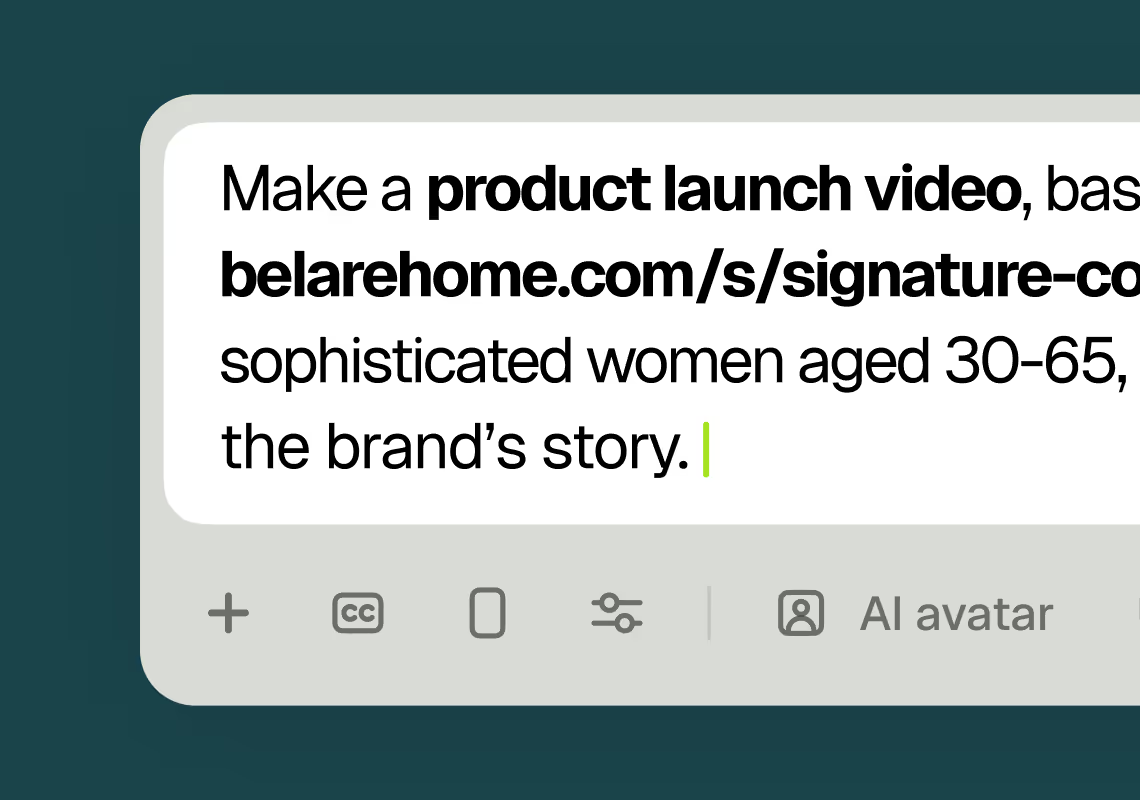
1Describe your video
Paste your promo brief, script, outline, or blog URL into Agent Opus.
 2
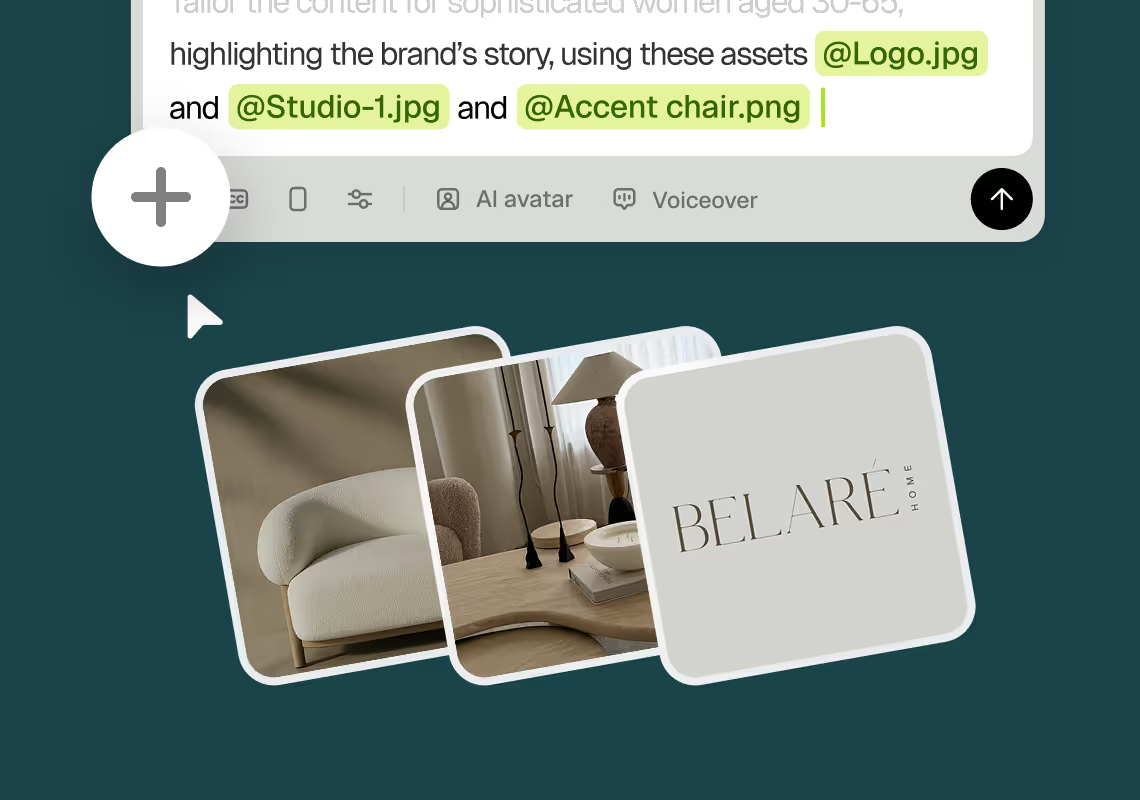
2Add assets and sources
Upload brand assets like logos and product images, or let the AI source stock visuals automatically.
 3
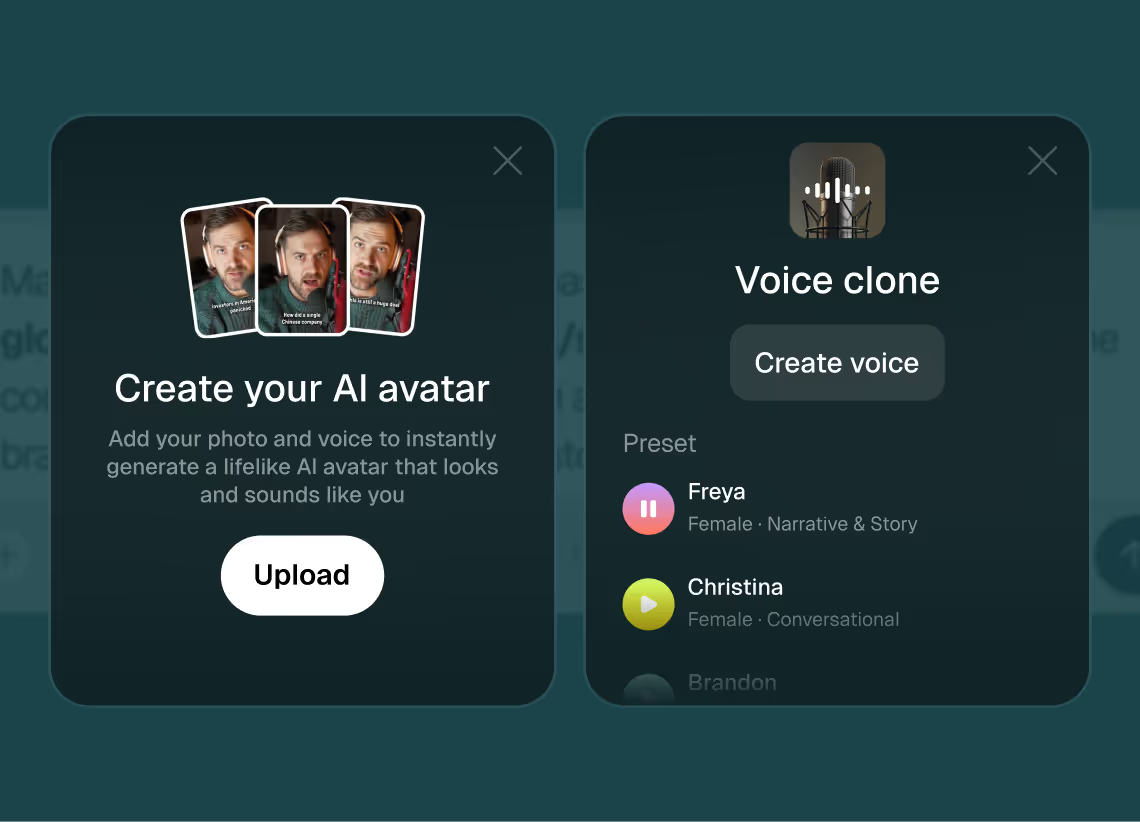
3Choose voice and avatar
Choose voice (clone yours or pick an AI voice) and avatar style (user or AI).
 4
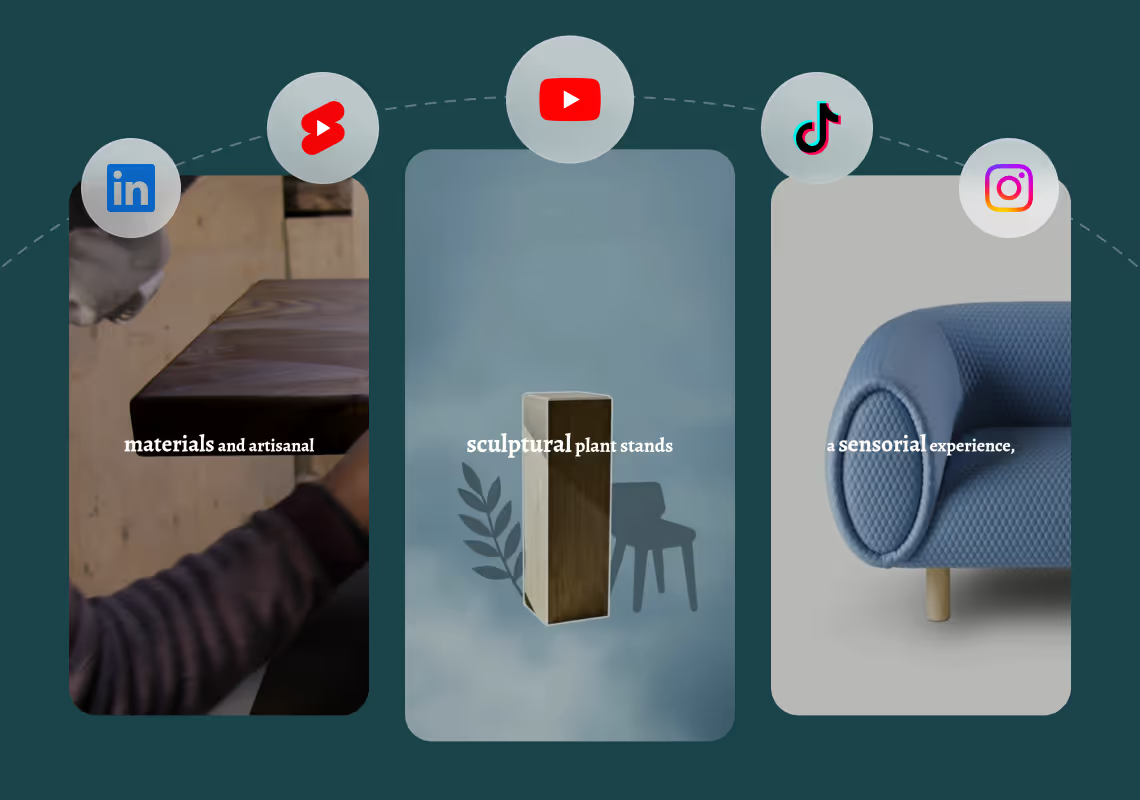
4Generate and publish-ready
Click generate and download your finished promo video in seconds, ready to publish across all platforms.


8 powerful features of Agent Opus' Andrew Schulz AI Video Generator
Prompt-to-Video Generation
Turn a one-line idea into a finished video. The agent handles structure, pacing, B-roll selection, and final assembly automatically.
Script and Outline Support
Paste a full script, drop in an outline with section headers, or supply a blog or article URL — Agent Opus reads any of them and builds a video around the content.
AI Voiceover and Voice Cloning
Pick from natural-sounding AI voices in 30+ languages, or clone your own voice once. Every video then ships with your authentic narration.
Beat-Synced Motion Graphics
Dynamic visuals that lock to the beat of your audio or the pacing of your script — kinetic typography, transitions, and effects, no manual keyframing required.
Automatic Captions and Subtitles
Burn-in captions for short-form, soft subtitles for long-form, and multi-language translations — all generated and synced automatically.
Multi-Aspect-Ratio Export
9:16, 1:1, and 16:9 outputs from one job, with intelligent reframing of text, motion graphics, and focal elements for each ratio.
Brand Asset Integration
Upload your logo, watermark, fonts, and color palette. Agent Opus applies them consistently across every video automatically.
Avatar and Talking Head Support
Add an AI avatar, your own video footage, or a synthetic spokesperson to any video — useful for explainers, ads, and personal-brand content.
Testimonials
Awesome output, Most of my students and followers could not catch that it was using Agent Opus. Thank you Opus.
Wealth with Gaurav
This looks like a game-changer for us. We're building narrative-driven, visually layered content — and the ability to maintain character and motion consistency across episodes would be huge. If Agent Opus can sync branded motion graphics, tone, and avatar style seamlessly, it could easily become part of our production stack for short-form explainers and long-form investigative visuals.
srtaduck
I reviewed version a and I was very impressed with this version, it did very well in almost all aspects that users need, you would only have to make very small changes and maybe replace one of 2 of the pictures, but even saying that it could be used as is and still receive decent views or even chances at going viral depending on the story or the content the user chooses.
Jeremy
all in all LOVE THIS agent. I'm curious to see how I can push it (within reason) Just need to learn to get the consistency right with my prompts
Rebecca
Frequently Asked Questions
How does the Andrew Schulz AI video generator handle different comedy formats like stand-up bits versus podcast clips?
Agent Opus adapts to whatever comedy format you feed it. For stand-up bits, you can paste a written joke or routine, and the AI will pace the delivery, add visual emphasis at punchlines, and layer in motion graphics that complement the comedic timing. If you're working with podcast clips, you can input a transcript or describe the segment, and Agent Opus will assemble a video that captures the conversational energy and back-and-forth rhythm typical of Schulz's podcast style. The key difference is in how you structure your input. Stand-up material benefits from tight scripting with clear setup and punchline markers. Podcast content works best when you provide context about the topic and any key moments you want highlighted. Agent Opus uses AI to determine pacing, visual cuts, and emphasis based on the content type. For stand-up, it might hold on a single visual longer to let a joke land. For podcast clips, it might cut between images or graphics more frequently to maintain energy. You can also specify tone in your prompt. If you want high-energy, fast-paced visuals like Schulz's crowd work clips, say so. If you want a more laid-back, conversational feel like his podcast segments, describe that. The AI motion graphics system adjusts accordingly. Voice cloning is especially powerful here. If you clone your own voice, Agent Opus can deliver your material in your style, whether that's rapid-fire one-liners or slower storytelling. If you use an AI voice, you can select one that matches the energy level you're targeting. The system also handles visual sourcing differently based on format. Stand-up videos might pull in audience reaction shots, stage imagery, or abstract graphics. Podcast-style videos might use more conversational visuals, topic-related images, or split-screen effects. You don't manually choose these. Agent Opus infers the right visual style from your input and the format you describe. The result is a finished video that feels native to the format, whether you're creating a 15-second stand-up clip for TikTok or a 90-second podcast highlight for YouTube Shorts.
What are best practices for writing prompts that generate Andrew Schulz-style comedy videos?
The best prompts for generating Schulz-style comedy videos are specific about tone, pacing, and visual style. Start by describing the energy level. Schulz's content ranges from high-energy crowd work to conversational podcast storytelling. Tell Agent Opus which end of that spectrum you're targeting. For example, 'Create a high-energy stand-up clip about dating apps with fast cuts and bold text overlays' will produce a different result than 'Generate a conversational podcast-style video discussing dating apps with a laid-back vibe.' Next, provide clear content structure. If you're working with a joke, include the setup and punchline explicitly. Agent Opus uses these markers to time visual emphasis and pacing. If you're creating a longer segment, break it into beats or key moments. For instance, 'Start with a relatable observation about social media, build tension with three escalating examples, then deliver the punchline about influencers.' This gives the AI a roadmap for visual assembly and timing. Specify visual preferences when they matter. If you want a specific look, say 'use bold, high-contrast graphics' or 'keep visuals minimal and let the voiceover drive the content.' If you have brand assets like logos or product shots, mention them in the prompt so Agent Opus incorporates them naturally. For voice and avatar, be explicit. If you've cloned your voice, say 'use my cloned voice with high energy and emphasis on punchlines.' If you're using an AI voice, describe the delivery style: 'conversational and sarcastic' or 'fast-paced and animated.' If you want an avatar on screen, specify whether it should be you or an AI avatar, and describe the framing: 'close-up for intimacy' or 'medium shot with gesture space.' Length and platform matter too. Tell Agent Opus if you're creating a 15-second TikTok, a 60-second Reel, or a 90-second YouTube Short. The AI adjusts pacing, visual density, and content structure to fit. Shorter videos get tighter pacing and fewer visual elements. Longer videos can breathe more and develop ideas. Finally, reference style when it helps. Saying 'Schulz-style crowd work energy' or 'podcast storytelling vibe' gives Agent Opus context for tone and pacing. You can also reference specific types of content: 'roast-style humor,' 'observational comedy,' or 'hot take commentary.' The more context you provide about tone, structure, and style, the more precisely Agent Opus can generate a video that matches your vision.
Can the Andrew Schulz AI video generator maintain consistent branding across multiple comedy videos?
Yes, Agent Opus is built to maintain brand consistency across every video you generate. This is critical for comedians and creators building a recognizable content library. The system supports several layers of brand consistency. First, voice cloning ensures every video sounds like you. Once you clone your voice, Agent Opus uses it for all future videos unless you specify otherwise. This creates audio consistency that audiences recognize instantly. If you're using AI voices, you can select the same voice profile for every video, ensuring tonal consistency even without voice cloning. Second, visual branding stays consistent through asset integration. Upload your logo, and Agent Opus will place it in the same position across all videos. If you have a specific color palette or graphic style, describe it in your prompts, and the AI will apply it. For example, 'use bold yellow and black graphics with my logo in the bottom right' becomes a repeatable instruction. You can save these preferences as part of your workflow, so you don't have to re-describe them every time. Third, avatar consistency matters for on-camera presence. If you use your own avatar, Agent Opus maintains the same framing and visual style across videos. If you use an AI avatar, you can select the same one for every video, ensuring visual continuity. This is especially important for series content or recurring segments where audiences expect to see the same face. Fourth, formatting and platform outputs stay consistent. If you always publish vertical videos for TikTok and Reels, Agent Opus will generate the same aspect ratio and layout every time. If you need both vertical and horizontal versions, you can specify that in your workflow, and the AI will produce both formats with consistent branding in each. Fifth, motion graphics and visual style can be templated. If you like how Agent Opus handled graphics in one video, you can reference that style in future prompts: 'use the same bold text style as my last video' or 'apply the motion graphics approach from my dating app video.' The AI learns from your feedback and can replicate successful visual treatments. Finally, content tone and pacing can be standardized. If you're building a series, you can describe the tone once and reference it in every prompt: 'same high-energy crowd work style as my previous videos' or 'maintain the conversational podcast vibe from my last three clips.' Agent Opus uses this context to ensure tonal consistency across your content library. The result is a portfolio of videos that feel like they belong together, even though each one is generated from a unique prompt. This brand consistency is what turns individual videos into a recognizable content brand.
What are the limitations or edge cases when generating Andrew Schulz-style comedy videos with AI?
Agent Opus is powerful, but understanding its limitations helps you get the best results. First, the AI generates videos based on your input. If your script or prompt lacks clear structure, the output may feel unfocused. Comedy relies on timing and pacing, so vague prompts produce vague results. The more specific you are about setup, punchline, and tone, the better the AI can assemble a video that lands. If you're working with complex multi-layered jokes or callbacks, you may need to break them into simpler segments or provide extra context so the AI understands the structure. Second, voice cloning quality depends on your source audio. If you provide clear, high-quality recordings, the cloned voice will sound natural and expressive. If your source audio is noisy or inconsistent, the clone may lack the nuance needed for comedic delivery. For best results, record your voice samples in a quiet environment with consistent energy and pacing. If you're using AI voices instead of cloning, they may not capture the exact inflection or sarcasm you want. You can work around this by describing delivery style in your prompt: 'sarcastic tone with emphasis on the word ridiculous' helps the AI adjust pacing and emphasis. Third, visual sourcing is automatic, which is a strength and a limitation. Agent Opus pulls royalty-free and web images based on your content, but it can't read your mind about specific visuals. If you have a very specific image in mind, you may need to upload it as a custom asset or describe it in detail in your prompt. The AI is excellent at finding relevant, high-quality visuals, but it won't always match your exact creative vision without guidance. If you want a particular aesthetic, say so: 'use dark, moody visuals' or 'bright, colorful graphics with a playful vibe.' Fourth, comedic timing is subjective. What feels perfectly paced to one person may feel rushed or slow to another. Agent Opus uses AI to determine pacing based on your content and tone, but you may want to adjust timing in your prompt. If a video feels too fast, your next prompt can say 'slower pacing with longer pauses for laughs.' If it feels too slow, say 'tighten pacing and cut to punchline faster.' The AI learns from this feedback and adjusts. Fifth, platform-specific nuances matter. A joke that works in a 90-second YouTube Short may not land in a 15-second TikTok. Agent Opus formats videos for each platform, but you need to consider content length and structure when writing your prompt. Shorter videos require tighter setups and faster punchlines. Longer videos can develop ideas more fully. If you're generating content for multiple platforms, you may need separate prompts optimized for each format. Sixth, brand asset integration requires clear input. If you upload a logo or product shot, Agent Opus will incorporate it, but you need to specify placement and prominence. If you want your logo subtle in the corner, say so. If you want a product shot as the main visual, describe that. The AI won't guess your branding priorities without direction. Finally, Agent Opus generates finished videos, but it's not a manual editing tool. If you want to tweak a specific frame, adjust a single word, or rearrange scenes, you'll need to generate a new video with a revised prompt. This is by design. The system is built for speed and automation, not granular control. The trade-off is that you get publish-ready videos in minutes, but you sacrifice frame-by-frame editing flexibility. Understanding these limitations helps you write better prompts and set realistic expectations, so you get the most out of the Andrew Schulz AI video generator.