Engineering Explainer Video Maker
Turn complex technical concepts into clear, engaging engineering explainer videos in minutes. Agent Opus is an engineering explainer video maker that transforms your prompts, scripts, outlines, or documentation into polished, publish-ready videos. No timeline editing, no stock footage hunting, no motion graphics expertise required. Describe your technical concept, add your brand assets, and get a complete video with AI motion graphics, voiceover, and social-ready formatting. Perfect for product demos, architecture overviews, API tutorials, and technical onboarding content that actually makes sense to your audience.

Explore what's possible with Agent Opus

Reasons why creators love Agent Opus' Engineering Explainer Video Maker
Scale Knowledge Sharing
Build a library of reusable technical explainers that reduce repetitive meetings and support tickets.
Consistent Brand Authority
Present your engineering solutions with the same professional polish across demos, pitches, and client updates.
No Video Skills Required
Engineers create broadcast-quality explainers without learning editing software or hiring production teams.
Ship Documentation Faster
Replace hours of writing specs and diagrams with polished explainer videos your team can reference instantly.
Onboard Engineers in Days
Get new hires up to speed on architecture and workflows without tying up senior engineers for walkthroughs.
Complex Ideas, Crystal Clear
Turn dense technical concepts into visual stories that stakeholders and non-engineers actually understand.
How to use Agent Opus’ Engineering Explainer Video Maker
 1
1Describe your video
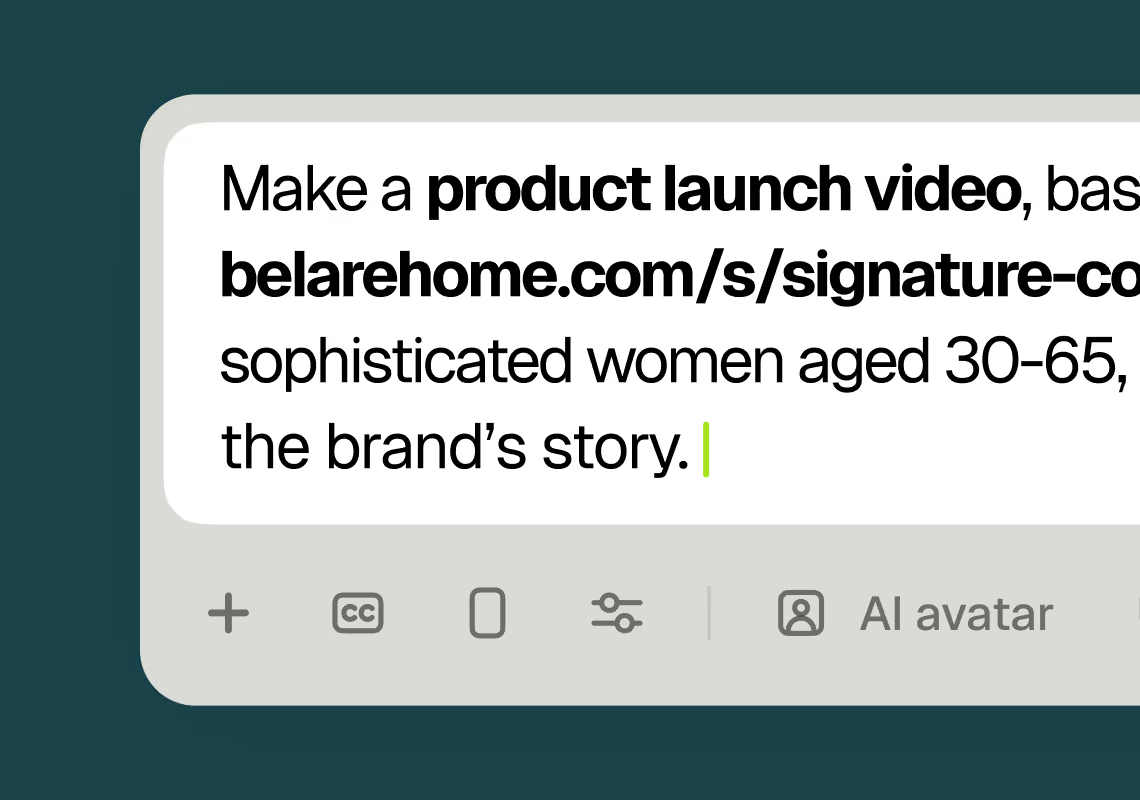
Paste your promo brief, script, outline, or blog URL into Agent Opus.
 2
2Add assets and sources
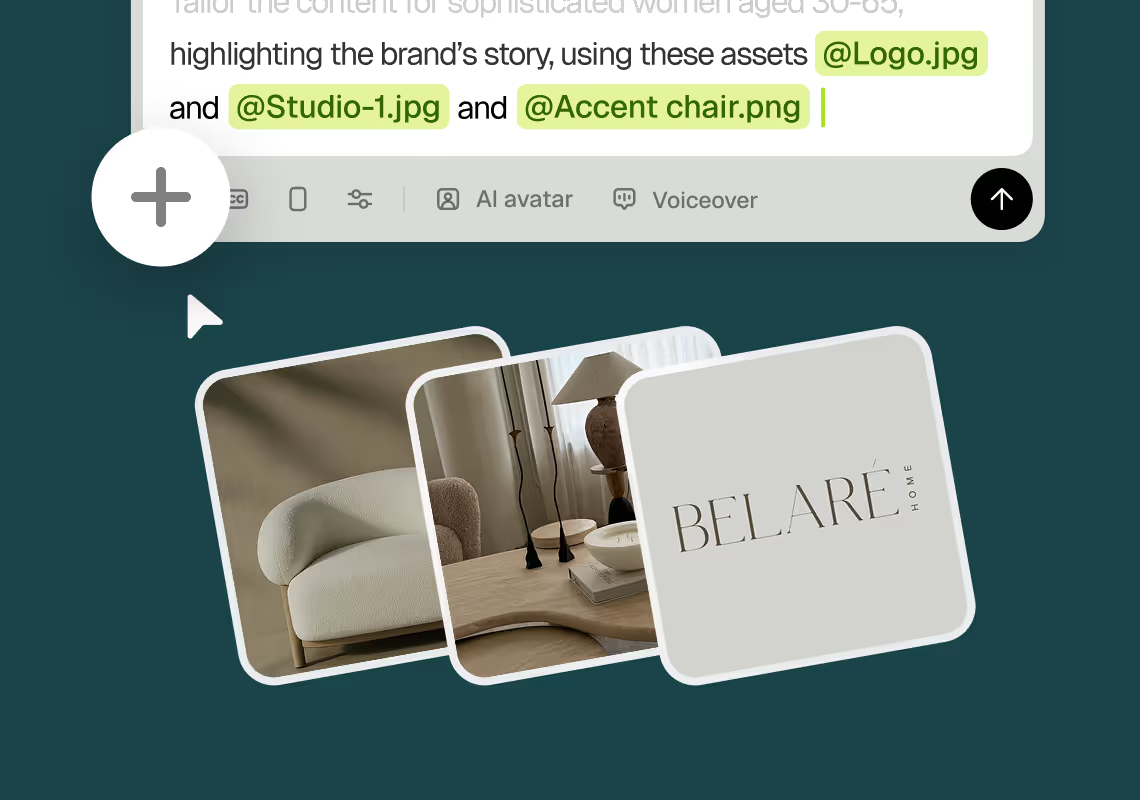
Upload brand assets like logos and product images, or let the AI source stock visuals automatically.
 3
3Choose voice and avatar
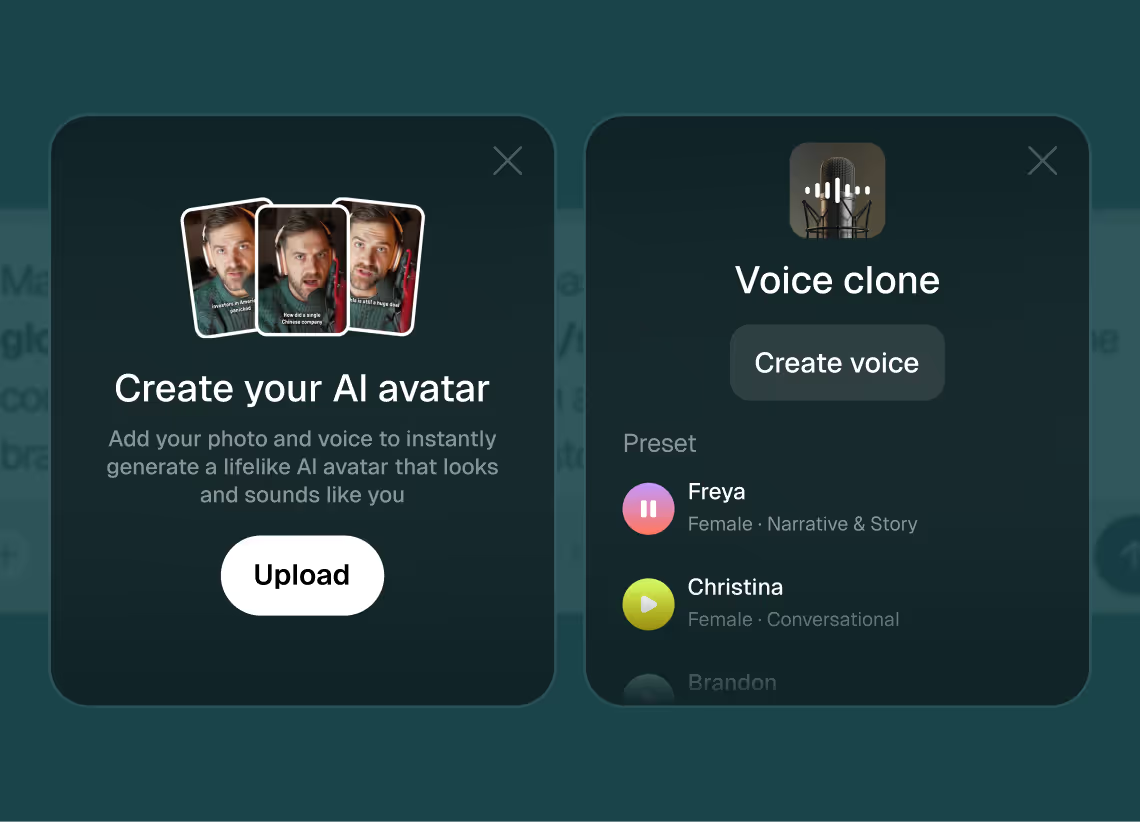
Choose voice (clone yours or pick an AI voice) and avatar style (user or AI).
 4
4Generate and publish-ready
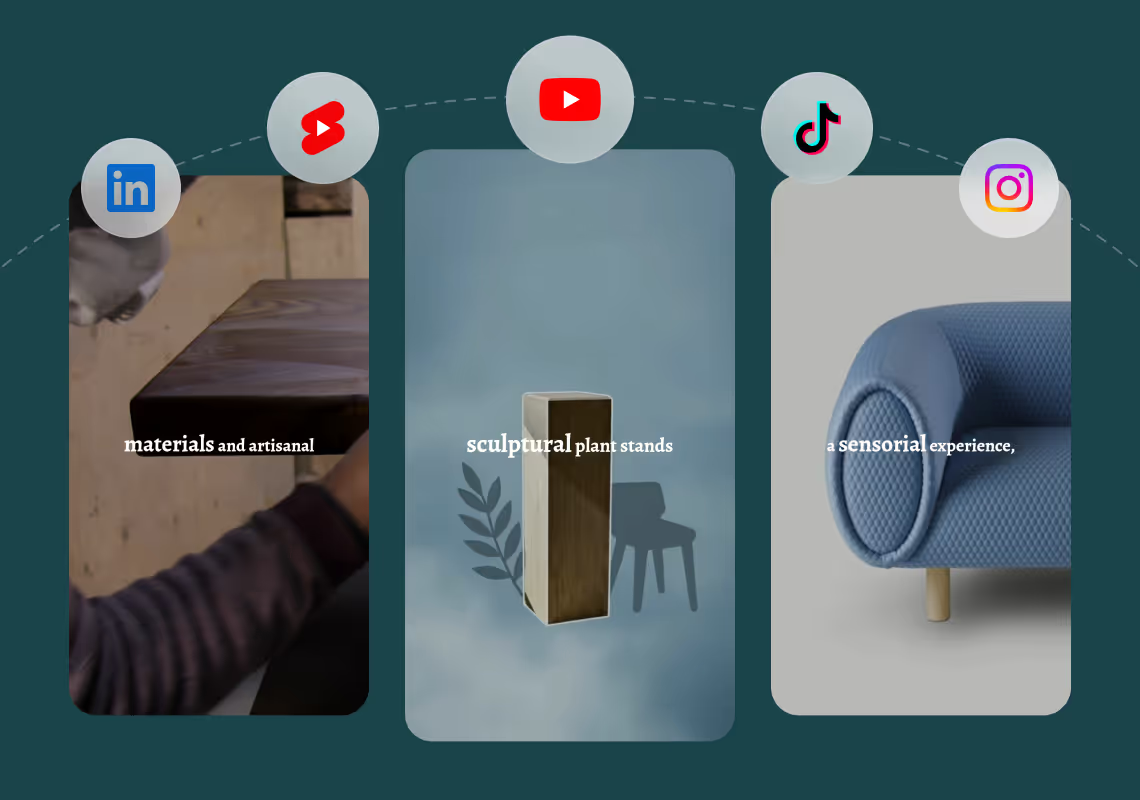
Click generate and download your finished promo video in seconds, ready to publish across all platforms.


8 powerful features of Agent Opus' Engineering Explainer Video Maker
Technical Documentation Videos
Convert engineering specifications and manuals into engaging video formats for training and client presentations.
Step-by-Step Process Videos
Create instructional videos that break down engineering procedures into sequential, easy-to-follow visual steps.
Technical Concept Visualization
Transform complex engineering principles into clear animated diagrams that illustrate processes and systems.
3D Model Integration
Generate videos featuring rotating 3D components and assemblies that showcase engineering designs from every angle.
Data-Driven Visualizations
Turn engineering data and performance metrics into animated charts and graphs for technical presentations.
Safety Protocol Videos
Produce training videos that demonstrate proper engineering safety procedures and equipment handling protocols.
Automated Narration Generation
Generate professional voiceovers that explain technical specifications and engineering workflows with precision.
Blueprint to Animation
Convert technical drawings and schematics into dynamic video sequences that demonstrate mechanical operations.
Testimonials
This looks like a game-changer for us. We're building narrative-driven, visually layered content — and the ability to maintain character and motion consistency across episodes would be huge. If Agent Opus can sync branded motion graphics, tone, and avatar style seamlessly, it could easily become part of our production stack for short-form explainers and long-form investigative visuals.
srtaduck
I reviewed version a and I was very impressed with this version, it did very well in almost all aspects that users need, you would only have to make very small changes and maybe replace one of 2 of the pictures, but even saying that it could be used as is and still receive decent views or even chances at going viral depending on the story or the content the user chooses.
Jeremy
all in all LOVE THIS agent. I'm curious to see how I can push it (within reason) Just need to learn to get the consistency right with my prompts
Rebecca
Frequently Asked Questions
How does an engineering explainer video maker handle technical accuracy and complex concepts?
Agent Opus approaches technical content differently than generic video tools. When you input a prompt, script, or documentation URL, the system analyzes the technical structure and identifies key concepts that need visual explanation. For engineering explainer videos, this means recognizing architectural patterns, data flows, API interactions, and system dependencies. The AI then assembles visual sequences that mirror how engineers actually think about these systems—starting with high-level architecture, drilling into components, showing data movement, and highlighting integration points. You can include your own product screenshots, architecture diagrams, Figma exports, or system flowcharts by uploading them as brand assets. Agent Opus will intelligently place these assets at the right moments in the narrative. For concepts that need additional visual support—like explaining distributed consensus or microservice communication—the system sources relevant stock imagery or generates motion graphics that illustrate the principle without requiring you to design animations manually. The key to technical accuracy is in your input: the more specific your prompt or script, the more precisely Agent Opus can match visuals to concepts. If you're explaining a three-tier architecture, describe each tier's role. If you're walking through an API flow, specify request-response patterns. The system respects technical terminology and won't oversimplify in ways that make engineers cringe. For teams creating multiple engineering explainer videos, you can establish a visual language by uploading a library of branded technical assets—your standard architecture icons, color-coded system diagrams, product UI screenshots—and Agent Opus will reuse these consistently across videos. This creates a cohesive technical content library where every explainer video feels like part of the same documentation ecosystem, even when different team members generate them.
What are best practices for writing prompts that produce effective engineering explainer videos?
Effective prompts for engineering explainer video creation follow a structure that mirrors good technical writing. Start with the core concept or problem you're solving, then layer in architectural details, use cases, and outcomes. For example, instead of 'explain our caching system,' write 'explain how our distributed Redis cache reduces database load by storing frequently accessed user session data, with automatic failover to secondary nodes when primary cache instances go down.' The specificity helps Agent Opus select appropriate visuals and pace the explanation correctly. Break complex systems into logical chunks. If you're explaining a data pipeline, structure your prompt in stages: ingestion, transformation, storage, and consumption. This gives the engineering explainer video maker clear narrative beats to visualize. You might write: 'First, show raw event data streaming from mobile apps into Kafka topics. Then visualize our Spark jobs transforming and enriching that data. Next, show the processed data landing in our data warehouse. Finally, demonstrate how analysts query this data through our BI tools.' Each sentence becomes a distinct scene with matching visuals. Include technical constraints and edge cases when they matter. If your system handles eventual consistency, mention it. If there's a specific latency requirement, call it out. These details help Agent Opus emphasize the right technical trade-offs in the final video. For script-based inputs, write in a conversational but precise tone—the way you'd explain the concept to a new engineering hire. Avoid jargon without explanation, but don't dumb down the content. Agent Opus preserves your technical voice while adding visual support. When using documentation URLs, ensure the source material has clear headings and logical flow. The system extracts structure from well-organized docs more effectively than from wall-of-text wikis. If you're converting API documentation into an engineering explainer video, the clearer your endpoint descriptions and example payloads, the better the visual representation of request-response cycles.
Can engineering explainer videos maintain consistent branding and technical visual style across a documentation library?
Absolutely, and this is where Agent Opus shines for engineering teams building comprehensive video documentation. The system allows you to upload a library of brand assets—logos, product screenshots, architecture diagram templates, UI mockups, color palettes, and custom icons—that become reusable components across all your engineering explainer videos. Once uploaded, these assets are automatically integrated into new videos based on context. If you're explaining a feature that involves your dashboard UI, Agent Opus will pull the relevant screenshot. If you're describing system architecture, it will use your standard architecture diagram style. This creates visual consistency without requiring manual asset management for each video. For technical visual style, you can establish patterns through your initial videos and prompts. If your first engineering explainer video uses a specific way of visualizing microservices—say, rounded rectangles with service names and color-coded by domain—you can reference that style in subsequent prompts: 'use the same microservice visualization style as our authentication flow video.' The AI maintains these visual conventions, building a cohesive technical content library. Voice consistency matters too. By cloning your voice or a designated technical evangelist's voice, every engineering explainer video sounds like it comes from the same trusted source. This is particularly valuable for onboarding series or multi-part technical tutorials where continuity enhances learning. For teams with multiple video creators, Agent Opus ensures brand consistency even when different engineers generate content. Unlike traditional video production where each creator might use different stock libraries, fonts, or animation styles, the centralized asset library and AI-driven assembly mean every video adheres to the same visual standards. You can also create template prompts for common video types. If you regularly produce API endpoint explainers, database schema overviews, or feature release videos, save prompt templates that include your standard structure and visual preferences. New team members can use these templates to generate on-brand engineering explainer videos without needing to understand your entire visual system. The result is a documentation library that looks professionally produced and technically coherent, even as it scales to dozens or hundreds of videos.
How does this engineering explainer video maker handle different technical audiences, from developers to executives?
Agent Opus adapts engineering explainer videos to audience technical depth through prompt-level guidance and structural choices. The same technical concept can be explained at multiple abstraction levels depending on who needs to understand it. For developer-focused videos, your prompt can include implementation details, code snippets, API endpoints, and architectural trade-offs. You might write: 'explain our event-driven architecture for backend engineers, including message queue configuration, consumer group patterns, and retry logic.' Agent Opus will generate a video that respects this technical depth, using precise terminology and detailed system diagrams. For product managers or executives, you'd adjust the prompt to emphasize outcomes over implementation: 'explain how our event-driven architecture enables real-time notifications and scales to handle traffic spikes during product launches.' The resulting engineering explainer video focuses on business value and system capabilities rather than queue configurations. The visual approach changes too—executive-focused videos might show high-level data flow diagrams and user-facing results, while developer videos dive into component interactions and error handling. You can explicitly guide this in your prompt by specifying visual emphasis: 'show the user experience of real-time updates first, then briefly illustrate the underlying pub-sub system.' Script-based inputs give you even more control over audience targeting. Write your script with the specific audience in mind, using appropriate technical depth and examples. For a sales engineering video explaining your API to potential customers, you'd focus on ease of integration and powerful capabilities. For an internal engineering onboarding video about the same API, you'd cover authentication flows, rate limiting, and error response codes. Agent Opus preserves these audience-specific nuances while adding matching visuals. For organizations that need the same technical concept explained to multiple audiences, you can generate different versions from adjusted prompts. Create a developer-deep version, a product-overview version, and an executive-summary version of the same engineering explainer video. Each uses the same core technical assets—your architecture diagrams, product screenshots—but with different narrative focus and visual emphasis. The voice and avatar options also support audience targeting. A cloned voice of your CTO might be perfect for developer-focused technical deep dives, while a professional AI voice could work better for customer-facing product explainers. You can even use an AI avatar presenter for tutorial-style videos aimed at new hires, creating a more personal learning experience than voiceover alone.