History Explainer Video Maker
Agent Opus is a history explainer video maker that transforms any historical topic into a finished, narrated video. Describe your subject, paste a script, or share a blog URL, and Agent Opus assembles scenes, sources period imagery, adds AI motion graphics, and delivers a publish-ready explainer. No timeline, no stock-footage hunting, no manual editing. Whether you're teaching the French Revolution or the Space Race, you get a complete video in minutes, ready for YouTube, TikTok, or the classroom.

Explore what's possible with Agent Opus

Reasons why creators love Agent Opus' History Explainer Video Maker
Keep Viewers Hooked
Hold attention through dense historical content with dynamic visuals that make every era feel immediate and engaging.
Focus on Research, Not Rendering
Spend your time finding compelling historical insights instead of wrestling with timelines and visual effects software.
Launch-Ready in Minutes
Turn complex timelines and historical events into polished explainer videos without spending days in post-production.
Stay Consistent Across Eras
Maintain your signature style and branding whether you're explaining ancient Rome or modern revolutions.
Scale Your Content Calendar
Produce multiple history explainers each week without hiring editors, letting you cover more topics and grow faster.
Sound Like a Pro Narrator
Skip studio costs and still deliver authoritative, clear narration that brings historical stories to life authentically.
How to use Agent Opus’ History Explainer Video Maker
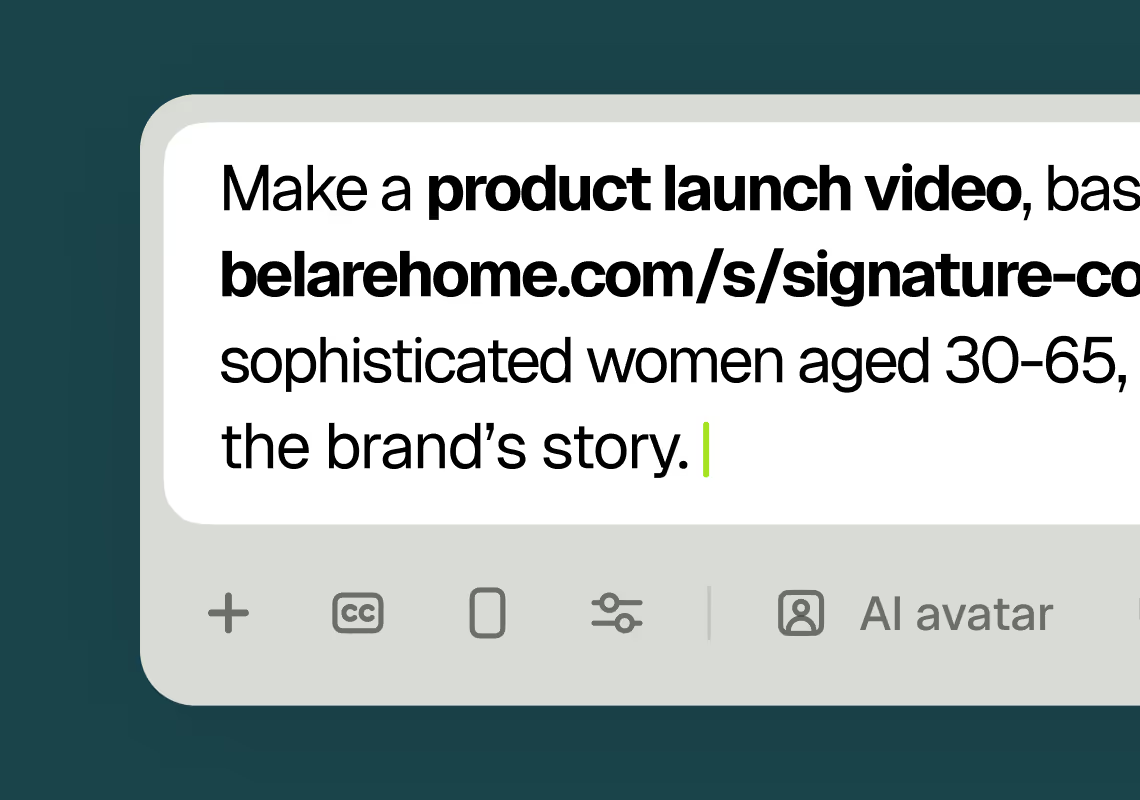 1
1Describe your video
Paste your promo brief, script, outline, or blog URL into Agent Opus.
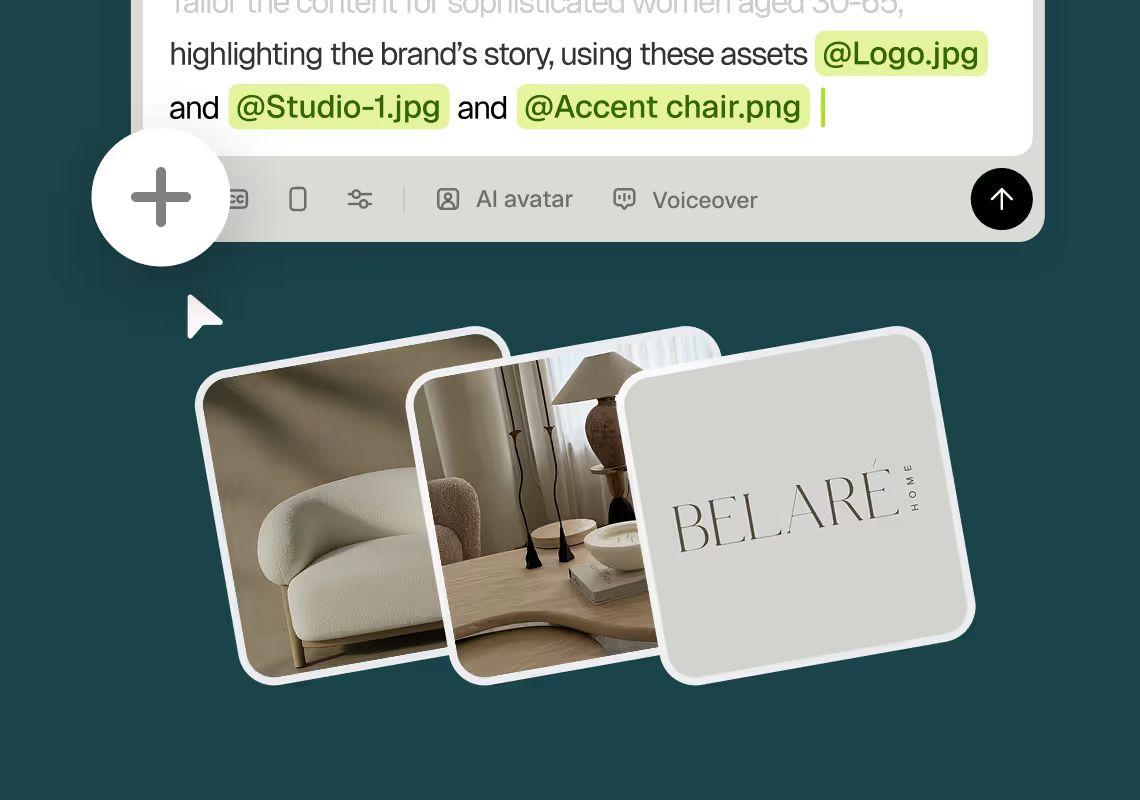 2
2Add assets and sources
Upload brand assets like logos and product images, or let the AI source stock visuals automatically.
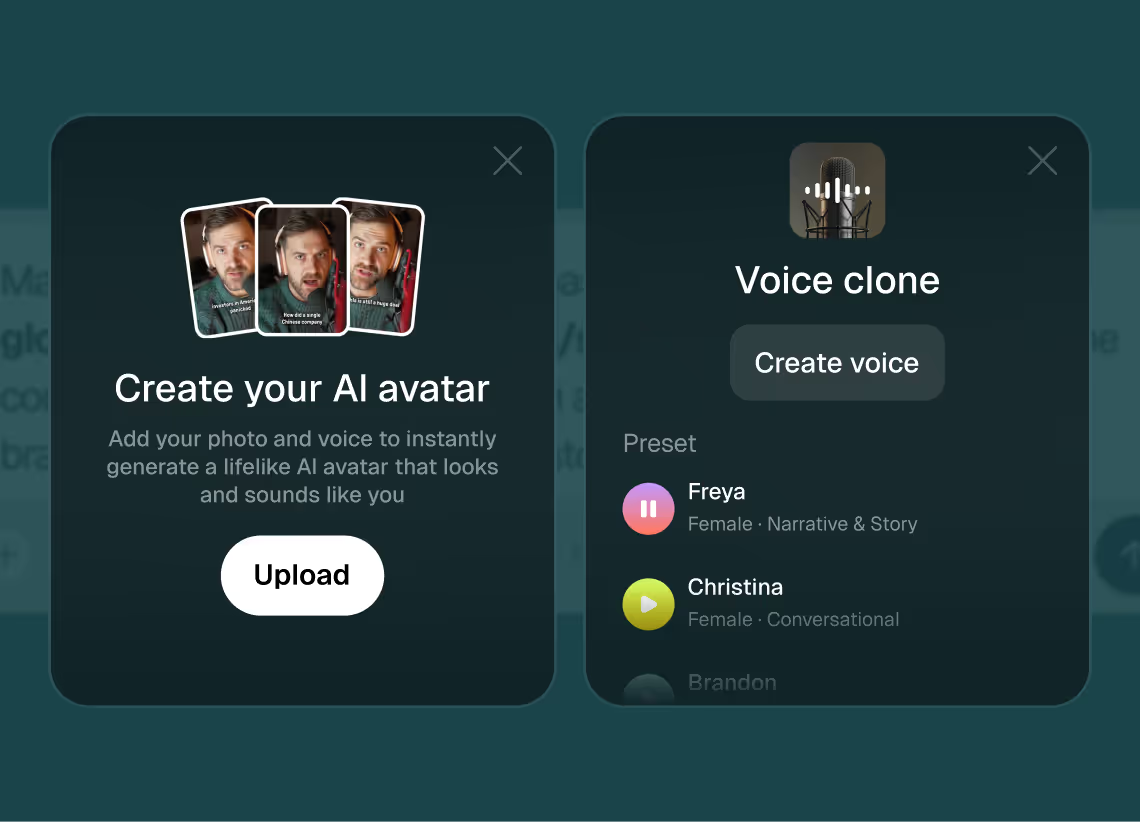 3
3Choose voice and avatar
Choose voice (clone yours or pick an AI voice) and avatar style (user or AI).
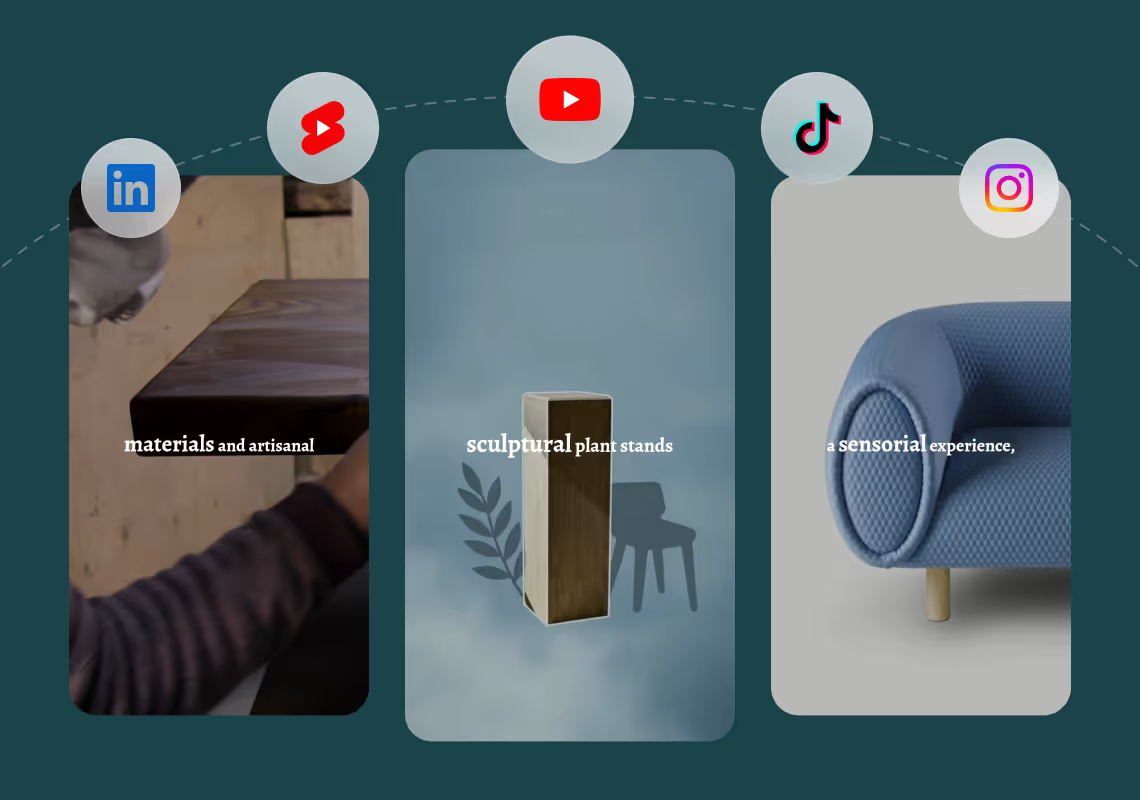 4
4Generate and publish-ready
Click generate and download your finished promo video in seconds, ready to publish across all platforms.


8 powerful features of Agent Opus' History Explainer Video Maker
Educational Voiceover
Add professional AI narration that explains historical context clearly for student and audience comprehension.
Text to History Video
Turn historical prompts or scripts into engaging explainer videos with AI-generated visuals and narration.
Map Animation
Create videos showing territorial changes, battles, or migrations with animated maps and geographic overlays.
Timeline Visualization
Generate videos that illustrate historical events in chronological order with dynamic motion graphics.
Archival Image Integration
Combine historical photos and documents into video sequences with smooth transitions and background music.
Multi-Language History
Produce explainer videos in multiple languages to reach global audiences learning about world history.
Era-Specific Styling
Generate videos with period-appropriate aesthetics, fonts, and color palettes matching the historical era.
Quick Educational Content
Generate complete history explainer videos in minutes for classrooms, social media, or online courses.
Testimonials
This looks like a game-changer for us. We're building narrative-driven, visually layered content — and the ability to maintain character and motion consistency across episodes would be huge. If Agent Opus can sync branded motion graphics, tone, and avatar style seamlessly, it could easily become part of our production stack for short-form explainers and long-form investigative visuals.
srtaduck
I reviewed version a and I was very impressed with this version, it did very well in almost all aspects that users need, you would only have to make very small changes and maybe replace one of 2 of the pictures, but even saying that it could be used as is and still receive decent views or even chances at going viral depending on the story or the content the user chooses.
Jeremy
all in all LOVE THIS agent. I'm curious to see how I can push it (within reason) Just need to learn to get the consistency right with my prompts
Rebecca
Frequently Asked Questions
How does a history explainer video maker handle different historical periods and topics?
Agent Opus adapts to any era or subject by analyzing your input and sourcing visuals that match the time period and theme. When you describe a topic like the Industrial Revolution, the system searches for factory imagery, steam engines, and period maps. For ancient history, it pulls classical art, archaeological photos, and historical reconstructions. You can guide the visual style in your prompt by specifying tone (documentary, educational, dramatic) or requesting specific types of imagery (maps, portraits, artifacts). The AI motion graphics layer then applies era-appropriate treatments: sepia tones and film grain for early 20th century topics, clean pans for modern history, or illustrated overlays for ancient civilizations. If you paste a script or outline, Agent Opus parses each section and matches visuals to narrative beats, ensuring that when your voiceover mentions a battle, the screen shows a battlefield map, and when you discuss a leader, their portrait appears. This context-aware assembly means you don't need to manually tag every image or specify every transition. The system also respects chronological flow, so if your script moves from cause to effect or spans decades, the visual sequence mirrors that progression. For educators, this means you can generate a video on the Renaissance one day and the Cold War the next without changing your workflow. For creators building a history channel, you maintain visual consistency across episodes because Agent Opus applies the same intelligent sourcing and pacing logic to every topic.
What are best practices for writing prompts in a history explainer video maker?
The most effective prompts for history explainer videos combine narrative structure with visual cues. Start by stating the topic and target length: 'Create a 90-second explainer on the fall of the Roman Empire.' Then outline key points or scenes: 'Cover political instability, barbarian invasions, and economic collapse. Use maps to show territorial changes and portraits of key emperors.' This gives Agent Opus both a content roadmap and visual direction. If you want a specific tone, specify it: 'Make it dramatic and cinematic' or 'Keep it educational and neutral for a classroom audience.' For voiceover, indicate whether you want a formal documentary style or a conversational teaching voice. If you're cloning your own voice, note any pacing preferences: 'Speak slowly for younger students' or 'Use an energetic pace for social media.' When you have a script, paste it directly and let Agent Opus handle scene breaks and visual matching. The system treats paragraphs as natural scene divisions, so structure your script with one idea per paragraph for cleaner cuts. If you're working from a blog post or article, link to the URL and specify any sections to emphasize or skip. For example: 'Focus on the causes section and skip the bibliography.' You can also request specific visual elements: 'Include a timeline graphic' or 'Show primary source documents.' The more context you provide about audience and platform, the better Agent Opus tailors pacing and aspect ratio. A YouTube explainer can run longer with detailed visuals, while a TikTok version needs punchy cuts and bold text overlays. Finally, if you're creating a series, mention it: 'This is episode three in a World War II series.' Agent Opus will maintain visual and tonal consistency across episodes, using similar motion graphics and color grading.
Can a history explainer video maker keep on-brand voices, logos, and visual styles?
Yes. Agent Opus supports brand consistency across all your history explainer videos. If you're an educator or creator with a recognizable voice, clone it once and use that voice profile for every video. The system stores your voice model, so future explainers sound like you without re-recording. For channels and institutions, you can upload a logo and specify placement: lower-third corner, intro slate, or end card. Agent Opus embeds your logo in every generated video, ensuring brand visibility on every platform. Visual style consistency comes from prompt templates and asset libraries. If you want all your history videos to use a specific color palette (sepia for pre-1900 topics, vibrant for modern history), state that in your prompt or save it as a default. The AI motion graphics engine applies the same animation style (subtle pans, bold zooms, timeline overlays) across videos, so your channel maintains a cohesive look. You can also upload custom assets like period maps, family photos, or proprietary illustrations. Agent Opus integrates these alongside auto-sourced stock imagery, giving you control over key visuals while still automating the rest. For example, if you're creating a series on American presidents, upload official portraits and Agent Opus will prioritize those over generic stock photos. Tone and pacing also stay consistent when you reuse script structures. If your first explainer used a three-act format (context, event, impact), Agent Opus recognizes that pattern in future scripts and applies the same scene rhythm. This is especially valuable for educators building curriculum libraries or creators launching episodic history content. You don't need to manually enforce style guides or re-edit every video. Agent Opus learns from your inputs and maintains brand voice, visual identity, and narrative structure automatically.
What are the limitations or edge cases of a history explainer video maker?
Agent Opus excels at generating polished history explainer videos from text, but a few edge cases require workarounds. First, highly obscure or niche historical topics may have limited archival imagery available in stock libraries and web sources. If you're covering a lesser-known regional event or a figure with few surviving photos, Agent Opus will still generate a video, but you may need to supplement with custom uploads. For example, a video on a small 19th-century labor strike might rely more on generic period imagery (factories, crowds) unless you provide specific photos. Second, the system generates videos based on your input, so factual accuracy depends on your script or prompt. Agent Opus doesn't fact-check historical claims; it assembles visuals and narration from what you provide. If your script contains errors or anachronisms, the video will reflect them. Always review generated content for historical accuracy before publishing. Third, while Agent Opus handles most historical topics, extremely sensitive or graphic subjects (war atrocities, violent events) may require careful prompt framing to ensure appropriate visual treatment. The system sources imagery based on keywords, so if your script mentions violence, specify tone: 'Use maps and diagrams, avoid graphic photos.' Fourth, Agent Opus generates one video per prompt, so if you want multiple versions (a 60-second TikTok cut and a 5-minute YouTube version), you'll need to generate each separately with adjusted prompts. The system doesn't auto-create multiple edits from one input. Fifth, voice cloning works best with clear, consistent audio samples. If your source recording has background noise or multiple speakers, the clone may lack fidelity. Record a clean 30-second sample in a quiet space for best results. Finally, while Agent Opus supports brand logos and custom assets, it doesn't offer frame-by-frame manual editing. If you need to adjust a specific scene's timing or swap one image, you'll work within the prompt-driven workflow rather than a traditional timeline editor. For most history explainer use cases, these limitations are minor, but understanding them helps you plan prompts and uploads for optimal results.