Music to Video AI Generator
Turn any song or audio track into a polished, publish-ready music video in minutes. Agent Opus is a complete music-to-video generator that takes your audio file (MP3, WAV, or streaming link), pairs it with a one-line prompt, and assembles a finished video — complete with AI-generated motion graphics, beat-synced cuts, lyric overlays, and frequency-reactive visuals, auto-synced lyric animations, and platform-specific exports. No editing skills required, no timeline work, no manual syncing. Upload your track, describe the vibe, and ship a finished music video across every social platform from a single job. Built for musicians, indie artists, labels, producers, and creators promoting tracks across YouTube, TikTok, Reels, and Spotify Canvas.

Explore what's possible with Agent Opus

Reasons why creators love Agent Opus' Music to Video AI Generator
Ship in Minutes, Not Hours
Generate a publish-ready video in under 10 minutes from a single prompt — no timeline editing, no asset hunting, no creative dry spells.
Zero Editing Skills Required
Describe your concept and Agent Opus handles scene composition, motion graphics, voiceover, and platform formatting automatically — even if you've never opened a video editor.
Studio-Grade Output
Cinematic motion graphics, beat-synced cuts, professional voiceover, and precise typography — every video ships looking production-quality from the first generation.
Stays On-Brand
Upload your logo, fonts, and color palette once. Agent Opus applies them across every video automatically so your content stays visually consistent.
How to use Agent Opus’ Music to Video AI Generator
 1
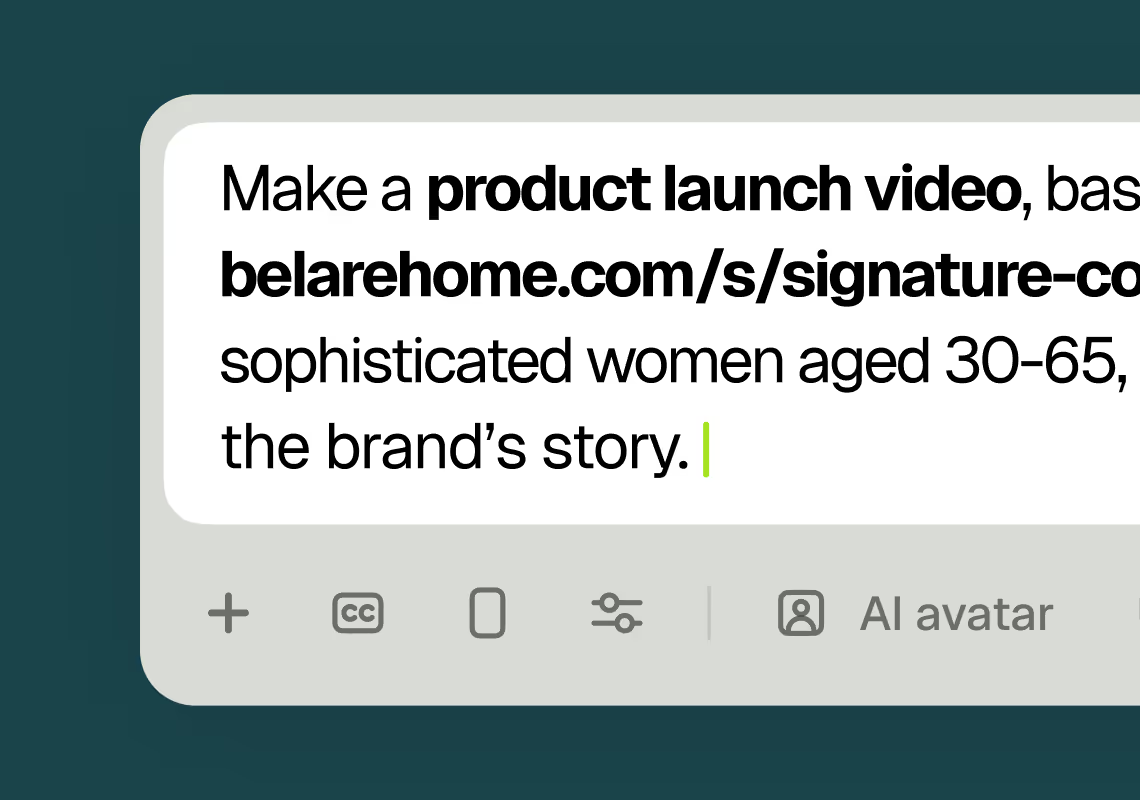
1Describe your video
Paste your promo brief, script, outline, or blog URL into Agent Opus.
 2
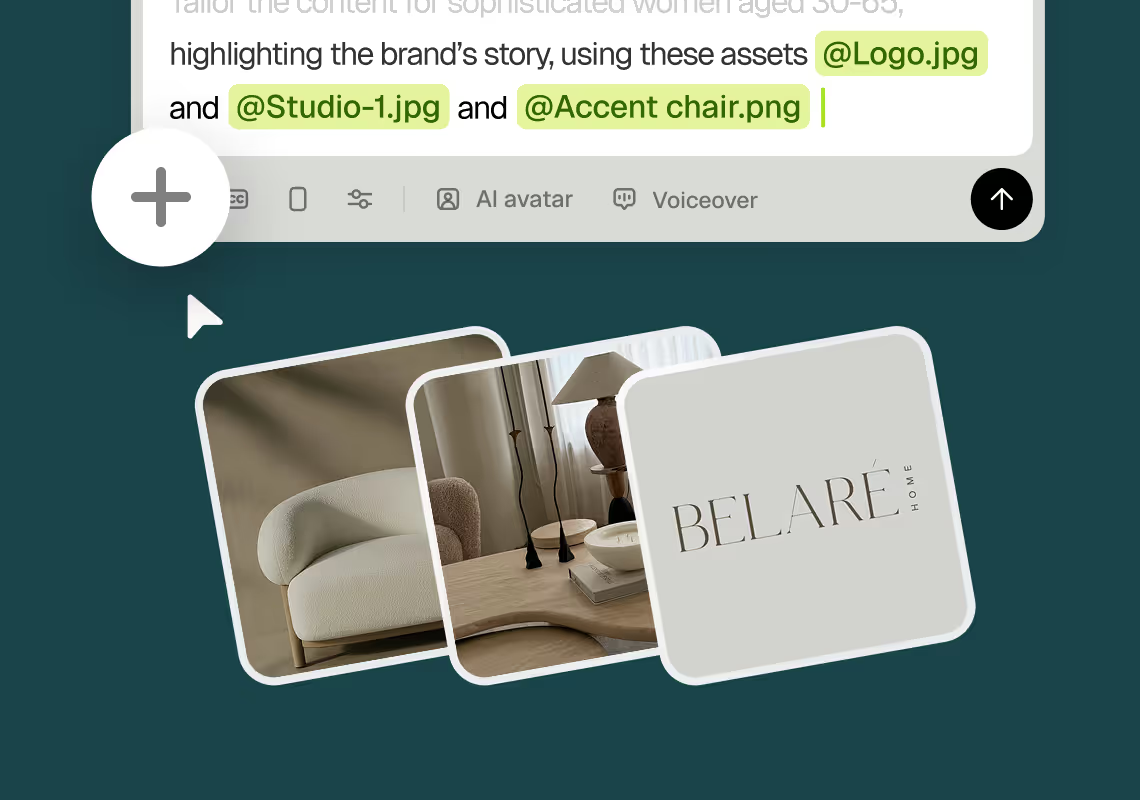
2Add assets and sources
Upload brand assets like logos and product images, or let the AI source stock visuals automatically.
 3
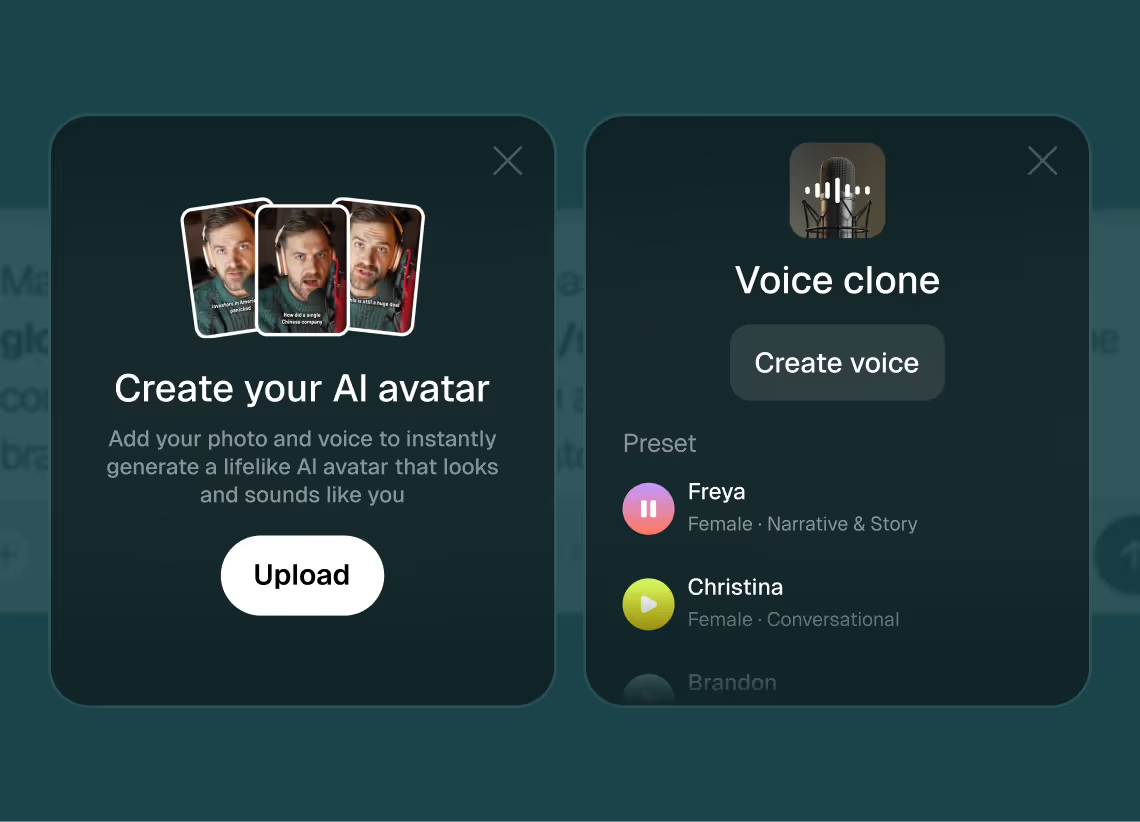
3Choose voice and avatar
Choose voice (clone yours or pick an AI voice) and avatar style (user or AI).
 4
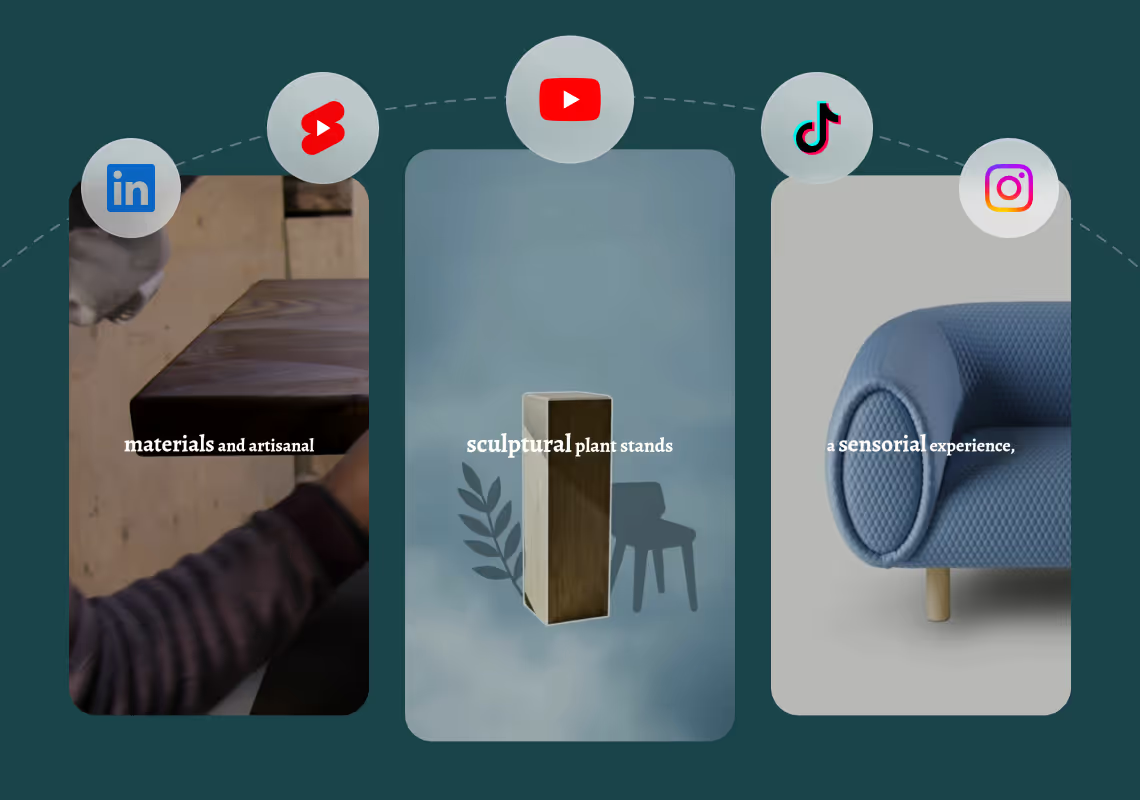
4Generate and publish-ready
Click generate and download your finished promo video in seconds, ready to publish across all platforms.


8 powerful features of Agent Opus' Music to Video AI Generator
Prompt-to-Video Generation
Turn a one-line idea into a finished video. The agent handles structure, pacing, B-roll selection, and final assembly automatically.
Script and Outline Support
Paste a full script, drop in an outline with section headers, or supply a blog or article URL — Agent Opus reads any of them and builds a video around the content.
AI Voiceover and Voice Cloning
Pick from natural-sounding AI voices in 30+ languages, or clone your own voice once. Every video then ships with your authentic narration.
Beat-Synced Motion Graphics
Dynamic visuals that lock to the beat of your audio or the pacing of your script — kinetic typography, transitions, and effects, no manual keyframing required.
Automatic Captions and Subtitles
Burn-in captions for short-form, soft subtitles for long-form, and multi-language translations — all generated and synced automatically.
Multi-Aspect-Ratio Export
9:16, 1:1, and 16:9 outputs from one job, with intelligent reframing of text, motion graphics, and focal elements for each ratio.
Brand Asset Integration
Upload your logo, watermark, fonts, and color palette. Agent Opus applies them consistently across every video automatically.
Avatar and Talking Head Support
Add an AI avatar, your own video footage, or a synthetic spokesperson to any video — useful for explainers, ads, and personal-brand content.
Testimonials
i got to say honestly really impressed me with the subtle click sound on each of the edits, it may seem little but that polish honestly makes it seem near the quality to publish without any further edits
Tony
all in all LOVE THIS agent. I'm curious to see how I can push it (within reason) Just need to learn to get the consistency right with my prompts
Rebecca
I reviewed version a and I was very impressed with this version, it did very well in almost all aspects that users need, you would only have to make very small changes and maybe replace one of 2 of the pictures, but even saying that it could be used as is and still receive decent views or even chances at going viral depending on the story or the content the user chooses.
Jeremy
Frequently Asked Questions
How does the music to video generator turn audio into a finished video?
You upload your audio (MP3, WAV, M4A) or paste a streaming link, add a short prompt describing the visual mood you want, and Agent Opus assembles a complete music video from it. The agent runs frequency analysis on your track to detect drops, breakdowns, vocal phrasing, and tempo, then matches visual intensity to those moments — fast cuts on the chorus, slower holds during quiet sections, dramatic transitions on drops. Motion graphics, beat-synced typography, B-roll selection, and lyric animations (if you provide a lyric sheet) are all handled automatically. You can override any element in the prompt: change the color palette, swap the visual style, request specific imagery, or specify on-screen text. The output renders simultaneously in 16:9 (YouTube), 9:16 (TikTok, Reels, Shorts, Spotify Canvas), and 1:1 (Instagram Feed) — each version reframed intelligently rather than naively cropped. Most projects go from audio upload to finished export in under five minutes.
What prompts produce the best music to video results?
Effective music-to-video prompts combine three things: mood, visual style, and specific imagery you want featured. Start with the emotional tone of the track — energetic, melancholic, triumphant, dreamy, aggressive — then layer in style references like cinematic, abstract, neon-lit, retro, hand-drawn, or photoreal. Finally, name concrete elements you want on screen ("neon city at night," "sunset desert highway," "abstract liquid color visualizer"). The more specific the prompt, the better the first generation lands. If your track has distinct sections — intro, verse, chorus, drop, outro — describe how visuals should shift between them; the agent respects those breakpoints. You can also reference real artists, films, or music videos as style anchors and the agent interprets the aesthetic without copying directly. Avoid vague prompts like "make it cool"; iterate with refinements — usually two or three passes get you to a final cut. Save your prompt as a preset for a consistent look across an album or release.
Can I use my own branding, cover art, and reference footage in the music video?
Yes. Upload your cover art, logo, color palette, fonts, and any reference imagery, and Agent Opus integrates them across the generated video. Cover art can anchor the intro and outro, drive the color grade for the entire piece, or reappear during instrumental sections. Logos appear as a corner watermark, animate as a bumper, or hold on the open and close. Brand colors override the default palette so the music video stays consistent with your visual identity. For artists shipping a series of releases, save your style as a preset on the first music video and reuse it for every track that follows — the agent remembers your aesthetic and applies it automatically. The system also accepts your own reference video clips — performance footage, behind-the-scenes shots, location B-roll — and weaves them into the AI-generated sequences so the final cut blends real and generated content seamlessly. Standard creator-economy needs (subscribe overlays, end-card CTAs, release-date stingers) are handled automatically.
What platforms get the strongest results for music to video content?
Short-form vertical formats on TikTok, Reels, and YouTube Shorts are the strongest performers for music-to-video content — that's where listeners discover new tracks and where algorithmic discovery is highest. Agent Opus optimizes for these platforms by default with hook-forward 15-to-60-second cuts focused on the chorus or signature moment, captions burned in, and pacing tuned to mobile attention spans. For longer-form content, YouTube music videos at 16:9 are the right home for full-track visualizers with chapter markers and developed scene sequences. Spotify Canvas is the underused channel — loopable 8-second visualizers that pair with the streaming version of your track. LinkedIn works for behind-the-scenes or commentary clips at square 1:1. The same generation produces all formats from a single job — 9:16, 1:1, and 16:9 with intelligent reframing rather than naive cropping. Schedule the cuts across your full posting stack and a single track becomes a week of platform-native content.