Onboarding Video Maker
Turn your employee training materials into professional onboarding videos instantly. Agent Opus is an onboarding video maker that transforms scripts, outlines, documentation, or simple prompts into polished, publish-ready videos. No timeline editing, no stock footage hunting, no voiceover recording sessions. Describe your onboarding content or paste your training doc, and get a complete video with AI motion graphics, voiceover, branded visuals, and social-ready formatting. Perfect for HR teams, founders, and L&D professionals who need scalable video onboarding without the production overhead.

Explore what's possible with Agent Opus

Reasons why creators love Agent Opus' Onboarding Video Maker
Ship in Minutes, Not Hours
Generate a publish-ready video in under 10 minutes from a single prompt — no timeline editing, no asset hunting, no creative dry spells.
Zero Editing Skills Required
Describe your concept and Agent Opus handles scene composition, motion graphics, voiceover, and platform formatting automatically — even if you've never opened a video editor.
Studio-Grade Output
Cinematic motion graphics, beat-synced cuts, professional voiceover, and precise typography — every video ships looking production-quality from the first generation.
Stays On-Brand
Upload your logo, fonts, and color palette once. Agent Opus applies them across every video automatically so your content stays visually consistent.
How to use Agent Opus’ Onboarding Video Maker
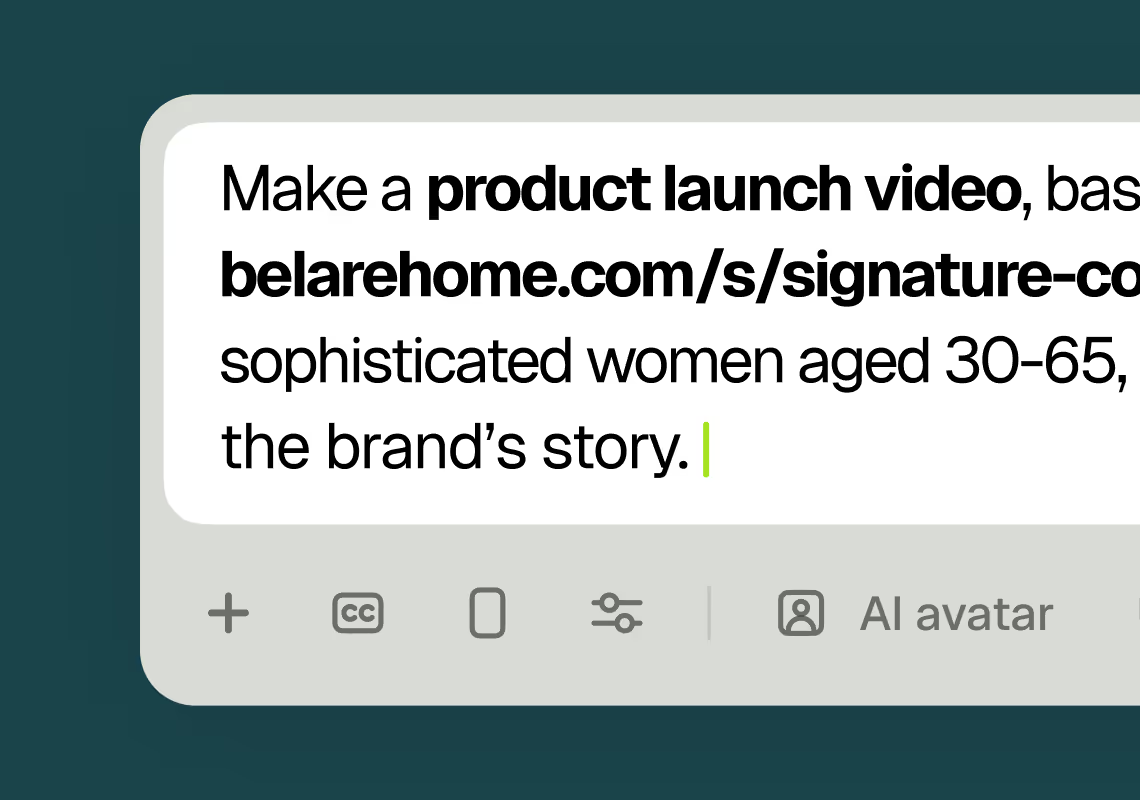 1
1Describe your video
Paste your promo brief, script, outline, or blog URL into Agent Opus.
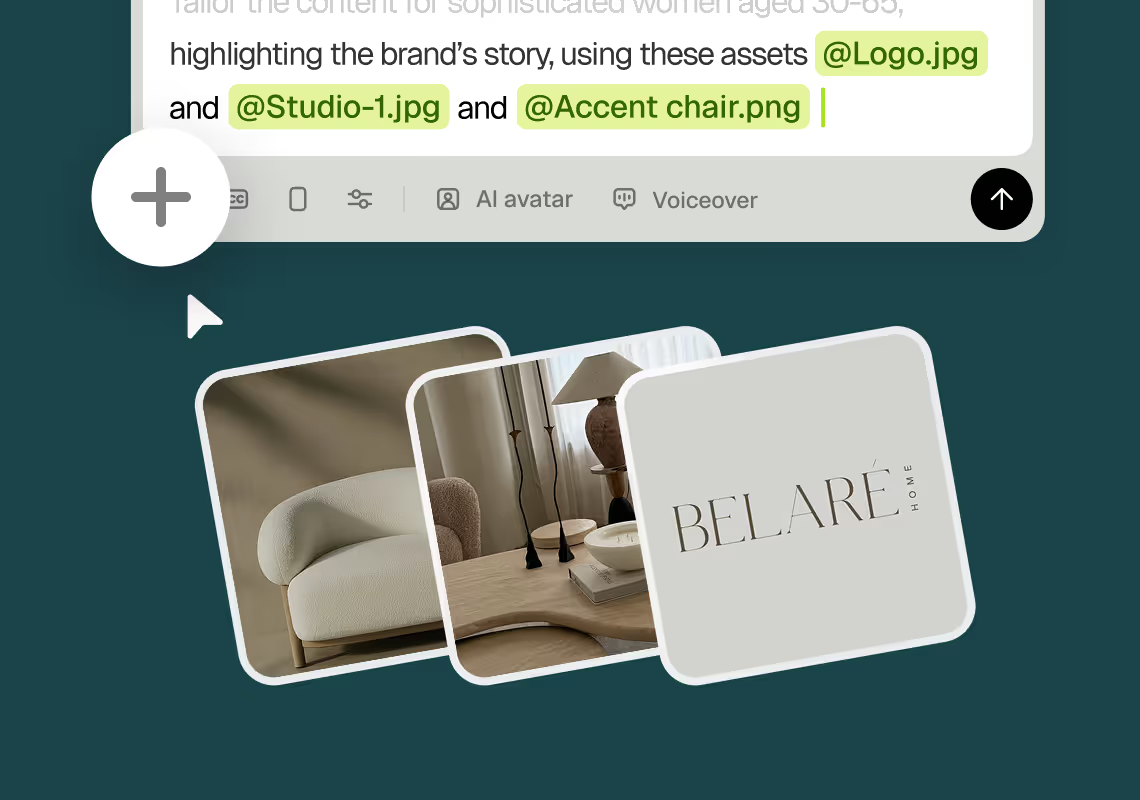 2
2Add assets and sources
Upload brand assets like logos and product images, or let the AI source stock visuals automatically.
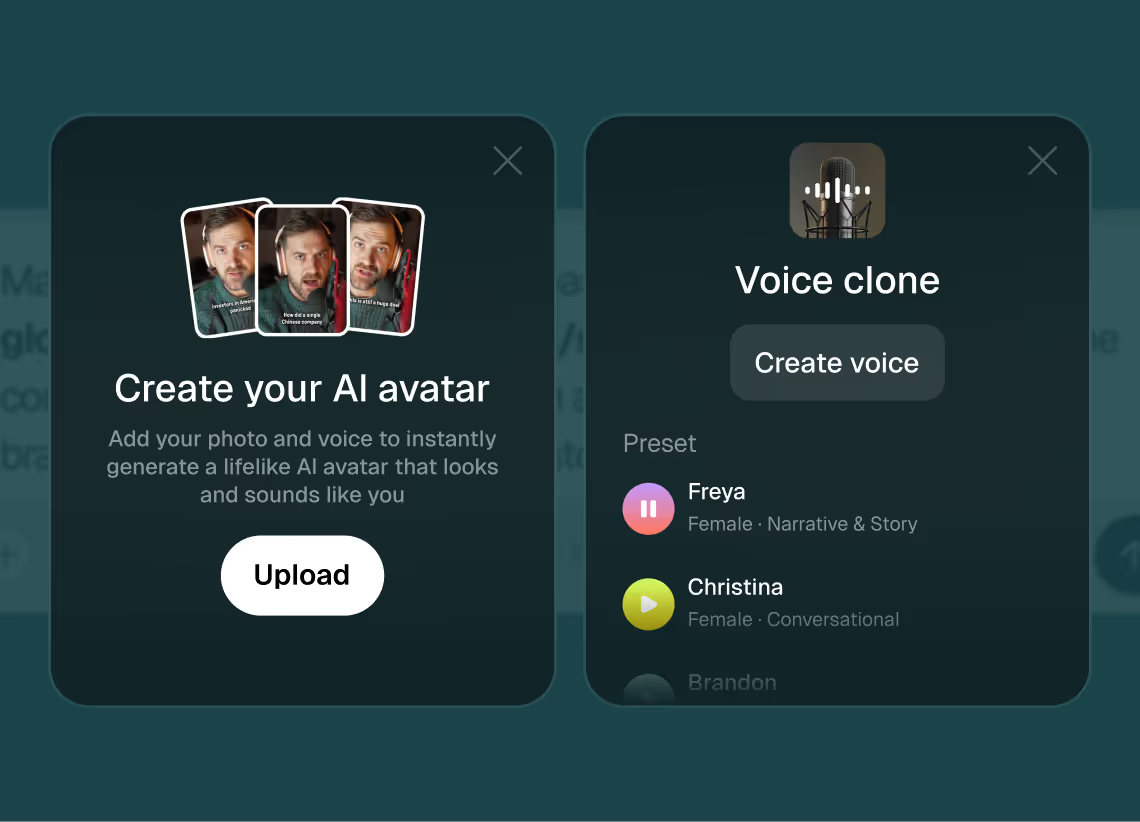 3
3Choose voice and avatar
Choose voice (clone yours or pick an AI voice) and avatar style (user or AI).
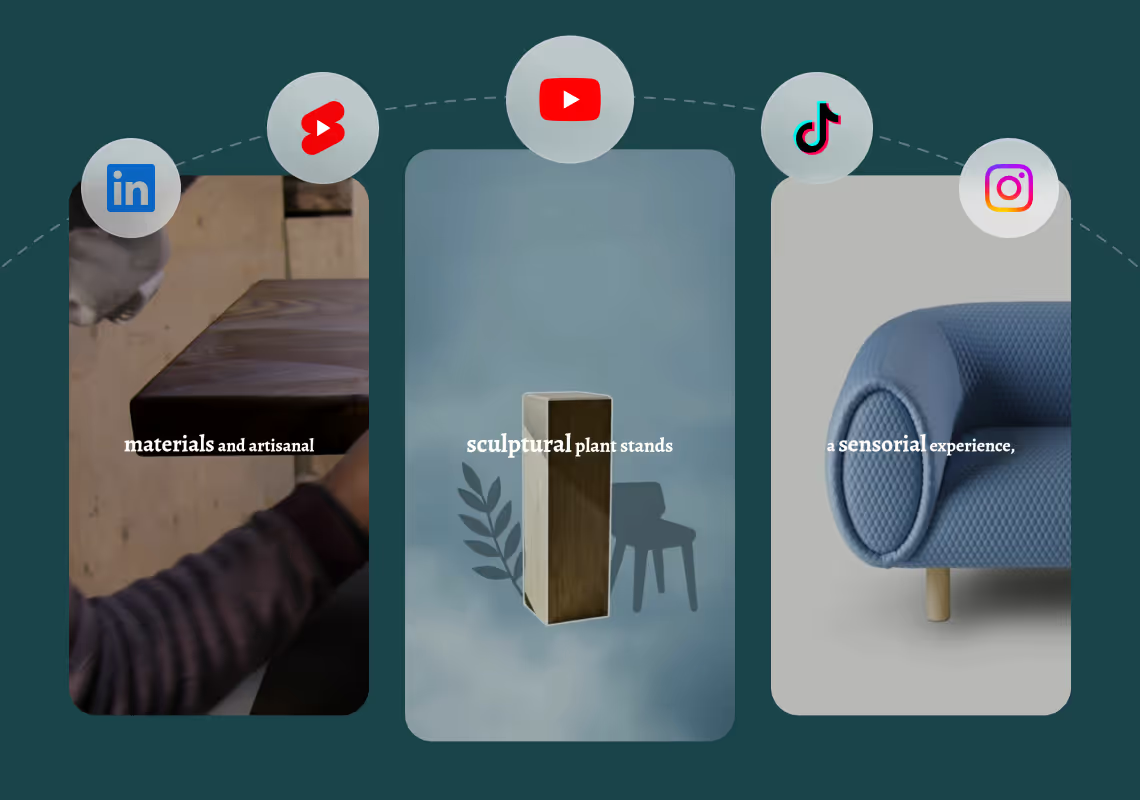 4
4Generate and publish-ready
Click generate and download your finished promo video in seconds, ready to publish across all platforms.


8 powerful features of Agent Opus' Onboarding Video Maker
Prompt-to-Video Generation
Turn a one-line idea into a finished video. The agent handles structure, pacing, B-roll selection, and final assembly automatically.
Script and Outline Support
Paste a full script, drop in an outline with section headers, or supply a blog or article URL — Agent Opus reads any of them and builds a video around the content.
AI Voiceover and Voice Cloning
Pick from natural-sounding AI voices in 30+ languages, or clone your own voice once. Every video then ships with your authentic narration.
Beat-Synced Motion Graphics
Dynamic visuals that lock to the beat of your audio or the pacing of your script — kinetic typography, transitions, and effects, no manual keyframing required.
Automatic Captions and Subtitles
Burn-in captions for short-form, soft subtitles for long-form, and multi-language translations — all generated and synced automatically.
Multi-Aspect-Ratio Export
9:16, 1:1, and 16:9 outputs from one job, with intelligent reframing of text, motion graphics, and focal elements for each ratio.
Brand Asset Integration
Upload your logo, watermark, fonts, and color palette. Agent Opus applies them consistently across every video automatically.
Avatar and Talking Head Support
Add an AI avatar, your own video footage, or a synthetic spokesperson to any video — useful for explainers, ads, and personal-brand content.
Testimonials
Awesome output, Most of my students and followers could not catch that it was using Agent Opus. Thank you Opus.
Wealth with Gaurav
This looks like a game-changer for us. We're building narrative-driven, visually layered content — and the ability to maintain character and motion consistency across episodes would be huge. If Agent Opus can sync branded motion graphics, tone, and avatar style seamlessly, it could easily become part of our production stack for short-form explainers and long-form investigative visuals.
srtaduck
I reviewed version a and I was very impressed with this version, it did very well in almost all aspects that users need, you would only have to make very small changes and maybe replace one of 2 of the pictures, but even saying that it could be used as is and still receive decent views or even chances at going viral depending on the story or the content the user chooses.
Jeremy
all in all LOVE THIS agent. I'm curious to see how I can push it (within reason) Just need to learn to get the consistency right with my prompts
Rebecca
Frequently Asked Questions
How does an onboarding video maker like Agent Opus handle different input formats?
Agent Opus accepts four primary input types for onboarding video creation: short prompts, full scripts, structured outlines, and URLs to blog posts or documentation. If you have a detailed employee handbook or training guide hosted online, paste the URL and Agent Opus will parse the content, identify key sections, and structure a video narrative automatically. For teams with existing onboarding scripts, you can paste the full text and the AI will break it into scenes, assign pacing, and match visuals to each segment. If you are starting from scratch, a simple prompt like 'Create a 90-second onboarding video for remote sales reps covering CRM setup, communication tools, and first-week goals' is enough. The system interprets your intent, generates a script internally, and produces a complete video. Outlines work well for modular training: list your topics as bullet points and Agent Opus expands each into a narrated scene with supporting visuals. This flexibility means you can work with whatever onboarding materials you already have, whether they are polished documents or rough notes, and get a professional video without rewriting or reformatting. The AI adapts to your input style and fills in gaps with context-appropriate visuals, voiceover pacing, and motion graphics, so you spend less time preparing content and more time refining the final message.
What are best practices for writing prompts in an onboarding video maker?
Effective prompts for onboarding video creation balance specificity with brevity. Start by defining your audience and goal: 'onboarding video for new customer support agents' or 'welcome video for remote engineering hires.' Include the key topics or steps you want covered, such as 'company values, team structure, tools overview, and first-week checklist.' Mention any brand assets you want featured: 'use our logo, include screenshots of our dashboard, and show our office photos.' If you have a preferred tone, specify it: 'friendly and conversational' or 'professional and concise.' For voice and avatar, indicate whether you want to clone your own voice, use an AI narrator, or include an on-screen avatar. Length guidance helps: 'create a two-minute video' or 'keep it under 90 seconds.' Avoid overly vague prompts like 'make an onboarding video' because the AI will have to guess your priorities. Instead, give structure: 'Start with a welcome message, then cover our mission and values, introduce the team leads, walk through our project management tool, and end with next steps for week one.' If you are generating videos for multiple roles, create a template prompt and swap out role-specific details. For example, 'onboarding video for [role] covering [tools], [team structure], and [first-week goals].' Test your first video, review the output, and refine your prompt based on what worked. Agent Opus learns from specificity, so the more context you provide upfront, the closer the first draft will be to your vision. You can always regenerate with adjusted prompts if the pacing, visuals, or emphasis needs tweaking.
Can an onboarding video maker keep on-brand voices, logos, and visuals across videos?
Yes, Agent Opus is built for brand consistency across all onboarding videos. Upload your company logo once and it will appear in every video you generate, positioned according to your layout preferences. If you have product screenshots, office photos, team headshots, or branded graphics, upload them to your asset library and Agent Opus will pull from that library when assembling scenes. This means every onboarding video for every department or role uses the same visual identity without manual insertion. Voice consistency works the same way: clone your voice or a team leader's voice once, and every video can use that same narrator. This is especially valuable for large organizations where onboarding videos need to feel cohesive across regions, roles, and departments. If your VP of People records a welcome message, you can clone that voice and use it for all onboarding narration, creating a unified employee experience. For avatar-based videos, you can use the same AI avatar or upload a video of yourself to appear on-screen in every onboarding video. Brand colors, fonts, and motion graphic styles are applied automatically based on your account settings, so you do not have to specify them in every prompt. When you update your logo or brand assets, the changes propagate to all future videos without re-uploading or re-editing. This centralized asset management saves time and ensures that onboarding videos created by HR, department heads, or regional managers all look and sound like they came from the same production team, even if they were generated independently.
What are the limitations or edge cases of using an onboarding video maker for complex training?
Agent Opus excels at structured, narrative-driven onboarding content but has specific constraints for highly interactive or software-demo-heavy training. If your onboarding requires live screen recordings with cursor movements, click-by-click walkthroughs, or interactive quizzes embedded in the video, Agent Opus is not designed for that workflow. It generates videos from text and static assets, so you would need to provide screenshots or pre-recorded demo clips as uploads rather than expecting the AI to capture live software interactions. For very long onboarding programs, such as multi-hour compliance training or certification courses, consider breaking content into modular videos rather than one continuous piece. Agent Opus performs best with videos under five minutes, where pacing and viewer attention are easier to manage. If your onboarding includes sensitive or regulated content like HIPAA training, financial compliance, or legal disclaimers, review the generated script and visuals carefully to ensure accuracy and compliance. The AI is not a subject-matter expert and relies on the input you provide, so fact-checking is essential for high-stakes material. Another edge case is highly localized onboarding for non-English audiences. While Agent Opus supports multiple languages, nuances in regional dialects, cultural references, or industry-specific jargon may require prompt refinement or manual script review. If your onboarding videos need to integrate with specific LMS platforms that require custom metadata, SCORM packaging, or interactive elements, you may need to export the video and handle those integrations separately. Finally, if your onboarding process relies heavily on in-person role-playing, live Q&A, or hands-on activities, video is a supplement, not a replacement. Use Agent Opus to handle the informational and procedural parts of onboarding, then layer in live sessions for interactive components. Understanding these boundaries helps you deploy the onboarding video maker where it adds the most value and avoid expecting it to replace workflows it was not designed to handle.