Retro Video Maker
Transform any idea into authentic retro videos in minutes. This retro video maker uses AI to generate vintage-style content with 80s neon, 90s grunge, Y2K aesthetics, and classic VHS effects. Describe your vision or paste a script, and Agent Opus delivers a complete video with period-accurate motion graphics, nostalgic color grading, and era-specific visual treatments. No manual editing, no stock footage hunting. Just prompt-to-publish retro content ready for TikTok, Instagram Reels, YouTube Shorts, and every social platform where vintage vibes drive engagement.

Explore what's possible with Agent Opus

Reasons why creators love Agent Opus' Retro Video Maker
Stand Out Instantly
Break through the sea of modern, polished videos with a distinctive aesthetic that demands attention.
Authentic Period Feel
Capture the genuine vibe of different eras without expensive props, locations, or post-production work.
Faster Than Manual Editing
Create retro-styled videos in minutes instead of wrestling with effects and color grading for hours.
Nostalgia That Converts
Tap into powerful emotional triggers that make viewers stop scrolling and actually watch your content.
No Design Skills Required
Get that perfect vintage look without hunting for filters, fonts, or spending hours in editing software.
Consistent Vintage Branding
Maintain your signature throwback style across every video without starting from scratch each time.
How to use Agent Opus’ Retro Video Maker
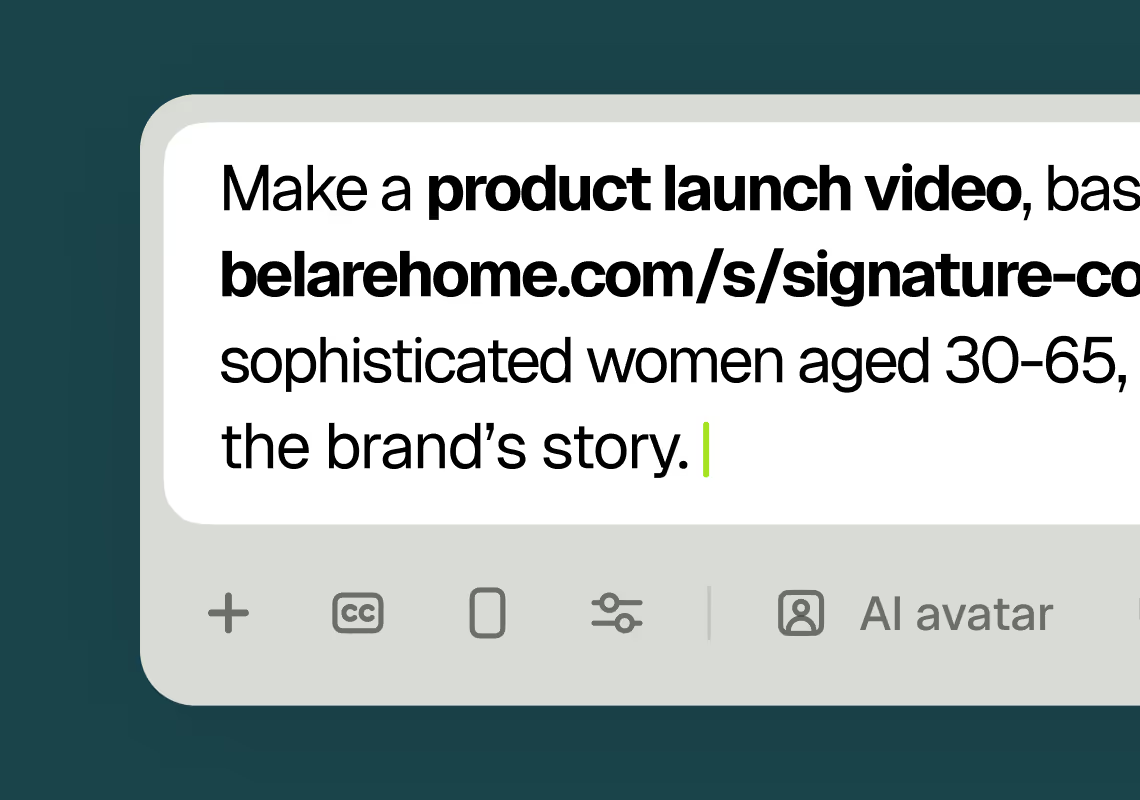 1
1Describe your video
Paste your promo brief, script, outline, or blog URL into Agent Opus.
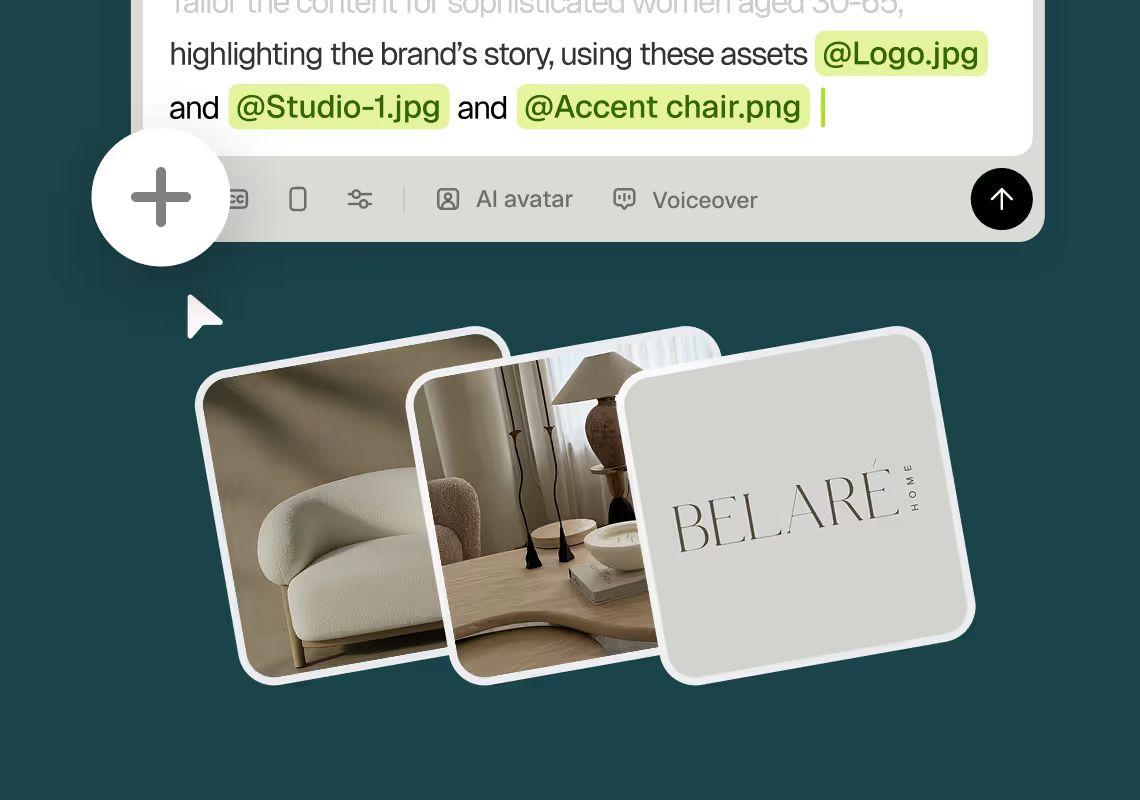 2
2Add assets and sources
Upload brand assets like logos and product images, or let the AI source stock visuals automatically.
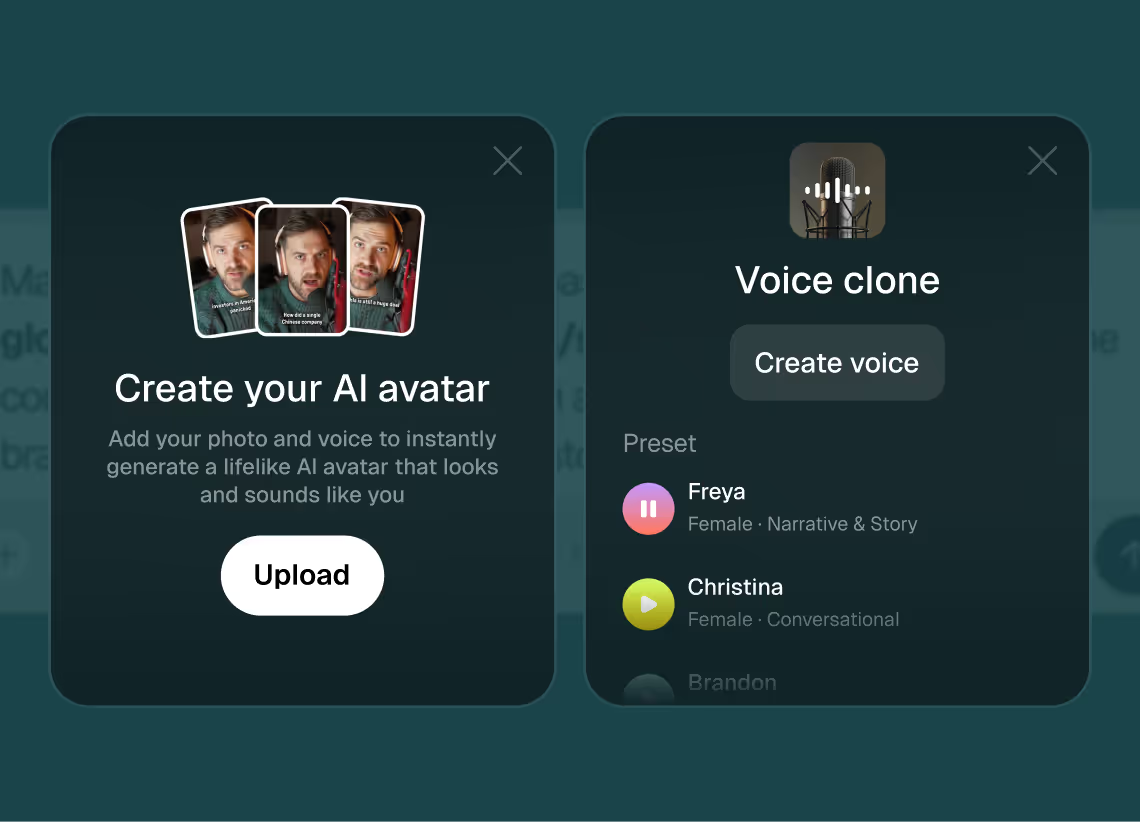 3
3Choose voice and avatar
Choose voice (clone yours or pick an AI voice) and avatar style (user or AI).
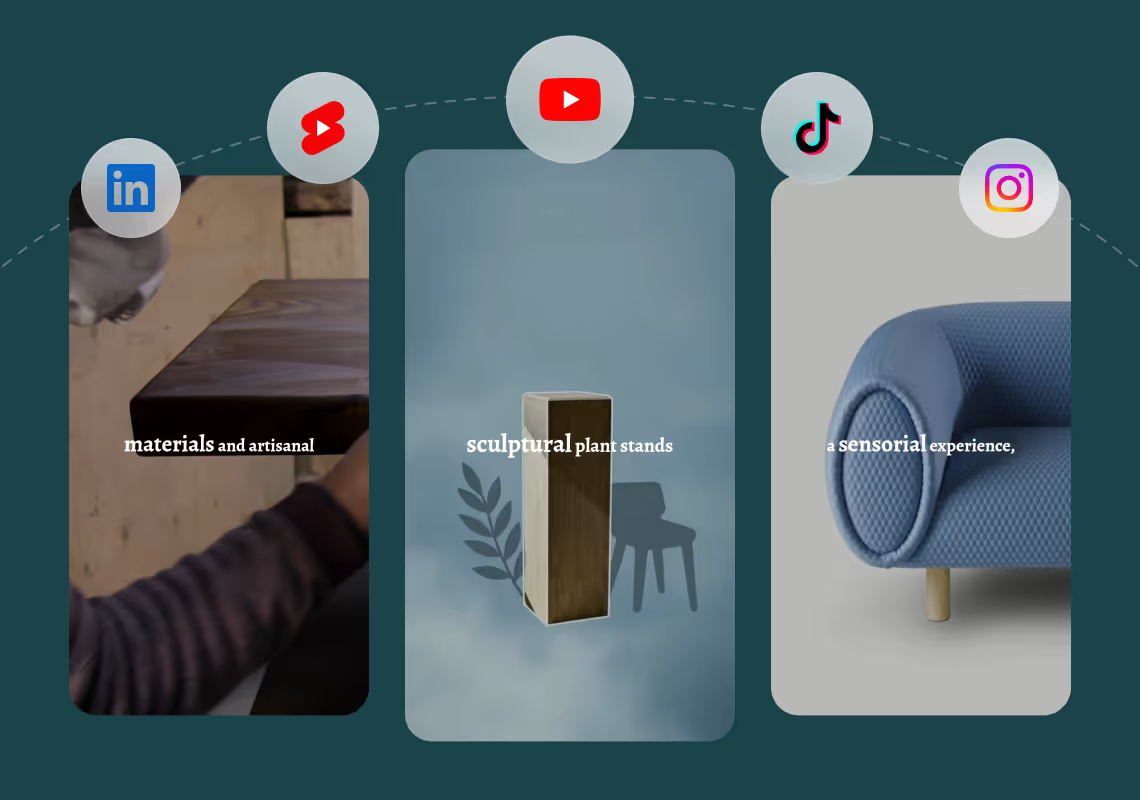 4
4Generate and publish-ready
Click generate and download your finished promo video in seconds, ready to publish across all platforms.


8 powerful features of Agent Opus' Retro Video Maker
VHS Distortion Filters
Add tracking lines, scan artifacts, and tape warping for an authentic retro camcorder look.
Pixel Art Animations
Create 8-bit and 16-bit style motion graphics that evoke classic arcade and console gaming eras.
80s Neon Graphics
Generate bold gradients, chrome text, and synthwave overlays that capture the iconic 1980s visual style.
Analog Color Grading
Apply faded hues, warm tones, and vintage saturation curves that mimic old film stock.
Retro Typography Styles
Generate period-accurate fonts and title cards from the 60s, 70s, 80s, and 90s automatically.
Nostalgic Transitions
Use star wipes, page peels, and dissolves that defined broadcast television from past decades.
Period-Accurate Music
Pair your visuals with synthesizer tracks, funk beats, and retro soundscapes that match the era.
Vintage Film Effects
Apply authentic grain, flicker, and color shifts to recreate classic analog video aesthetics instantly.
Testimonials
Awesome output, Most of my students and followers could not catch that it was using Agent Opus. Thank you Opus.
Wealth with Gaurav
This looks like a game-changer for us. We're building narrative-driven, visually layered content — and the ability to maintain character and motion consistency across episodes would be huge. If Agent Opus can sync branded motion graphics, tone, and avatar style seamlessly, it could easily become part of our production stack for short-form explainers and long-form investigative visuals.
srtaduck
I reviewed version a and I was very impressed with this version, it did very well in almost all aspects that users need, you would only have to make very small changes and maybe replace one of 2 of the pictures, but even saying that it could be used as is and still receive decent views or even chances at going viral depending on the story or the content the user chooses.
Jeremy
all in all LOVE THIS agent. I'm curious to see how I can push it (within reason) Just need to learn to get the consistency right with my prompts
Rebecca
Frequently Asked Questions
How does this retro video maker handle different vintage eras and aesthetics?
Agent Opus applies era-specific visual treatments based on your prompt description. When you specify an 80s aesthetic, the AI generates videos with neon color palettes, grid patterns, geometric shapes, chrome effects, and synthwave-inspired motion graphics. For 90s content, expect grunge textures, VHS distortion, bold typography, and the raw analog feel of that decade. Y2K requests trigger cyber aesthetics with metallic surfaces, digital artifacts, bubbly interfaces, and early-internet visual language. The system understands decade-specific design vocabulary, so phrases like "VHS tape," "arcade cabinet," "Windows 95 interface," or "MySpace profile" automatically trigger appropriate visual treatments. You can mix eras too. A prompt like "80s neon meets 90s grunge" produces hybrid aesthetics. The AI motion graphics engine applies multiple layers of vintage effects: film grain intensity, chromatic aberration, scan lines, color bleeding, frame rate adjustments, and aspect ratio treatments that match your chosen period. It also sources era-appropriate imagery. An 80s video pulls visuals with period fashion, technology, and design elements, while 90s content features different cultural markers. The color grading adapts automatically. 80s videos get high-contrast neon saturation, 90s content receives desaturated grunge tones, and Y2K pieces display oversaturated digital brightness. Every visual element from transitions to text overlays receives period-accurate styling, creating cohesive retro authenticity throughout the entire video without manual effect layering.
What are best practices for prompts when creating retro videos?
Effective retro video prompts combine three elements: era specification, visual style details, and content structure. Start by clearly stating your target decade and aesthetic. "Create an 80s-style product demo" gives the AI a foundation, but "Create an 80s synthwave product demo with neon pink and cyan, VHS scan lines, and arcade-inspired graphics" produces more precise results. Reference specific retro visual elements you want: film grain intensity, color palettes, iconic design patterns, screen effects, or cultural touchstones from that era. The AI recognizes terms like "CRT monitor glow," "cassette tape aesthetic," "dial-up modem vibes," "Trapper Keeper graphics," or "Windows 98 interface." For content structure, describe your video flow. "Start with a VHS tracking glitch intro, show three product features with retro title cards, end with a neon call-to-action" gives the AI a clear roadmap. Mention pacing preferences. Retro aesthetics often work well with specific rhythms: 80s content can be energetic and fast-cut, 90s might be more laid-back with longer holds, Y2K can feature rapid digital transitions. If you have a script, paste it directly and add a style note at the top: "Apply 90s grunge aesthetic to this script." The AI will generate scenes matching your script while layering vintage treatments. For blog-to-video conversions, the URL input works perfectly. Add a style instruction: "Convert this blog post into a retro video with 80s training video aesthetics." Brand integration works best when you specify how retro styling should interact with your assets: "Show our modern product but frame it with 90s TV commercial style" or "Display our logo with VHS distortion effects." The more specific your era references and visual vocabulary, the more authentic your retro video becomes.
Can this retro video maker maintain brand consistency while applying vintage effects?
Agent Opus balances retro aesthetics with brand integrity through intelligent asset handling and selective effect application. When you upload brand elements like logos, product photography, or custom graphics, you can specify how vintage treatments should apply. A prompt like "Apply 80s neon effects but keep our logo clean and recognizable" tells the AI to layer retro styling around your brand marks without distorting them beyond recognition. The system offers multiple approaches to brand-retro integration. Full immersion applies vintage effects to everything, creating completely period-authentic content where even your modern products look like they belong in the chosen era. This works well for nostalgic marketing campaigns or throwback content. Selective styling applies retro treatments to backgrounds, transitions, and motion graphics while keeping product shots and logos relatively clean with subtle vintage touches. This maintains brand recognition while delivering retro vibes. Framing techniques place modern brand assets within retro-styled contexts. Your crisp product photo appears inside a VHS-style frame with scan lines and tracking errors around the edges, or your logo displays on a simulated CRT monitor with period-appropriate screen glow. The AI motion graphics engine can generate era-specific animations that complement rather than overwhelm your brand. An 80s video might feature neon geometric patterns that frame your product, while 90s content uses grunge textures as backgrounds behind clean product presentations. Color palette management is crucial. You can request that brand colors remain accurate while surrounding elements receive vintage color grading, or ask for subtle retro tinting that shifts your brand colors slightly toward period palettes without losing recognition. Voice and avatar choices also impact brand consistency. Using your own voice clone maintains brand personality even within retro visual contexts. The combination of authentic vintage aesthetics with strategic brand protection creates content that feels genuinely retro while serving modern marketing objectives and maintaining the visual identity your audience recognizes.
How does AI motion graphics work for retro video generation?
The AI motion graphics system in Agent Opus generates dynamic visual elements styled to match your chosen retro era, handling everything from animated text to transitions to decorative effects automatically. When creating retro videos, the motion graphics engine draws from era-specific design languages. For 80s content, it generates geometric animations with neon outlines, grid perspectives that stretch into vanishing points, chrome text with reflective surfaces, laser beam effects, and kinetic typography that mimics arcade game interfaces or music video aesthetics from that decade. The animations feature the bold, high-energy movement characteristic of 80s motion design. For 90s videos, motion graphics shift to grunge-inspired elements: text with distressed edges and rough textures, liquid transitions that feel analog, glitch effects that simulate VHS tracking errors, and the more organic, less polished animation style of that era. Y2K aesthetics trigger bubble-like interfaces, metallic 3D text, digital particle effects, and the glossy, cyber-inspired graphics of early 2000s web design. The system doesn't just apply static filters. It generates actual animated elements that move through your video. Title cards slide in with era-appropriate motion curves. Transitions between scenes use period-specific effects: star wipes for 80s, analog distortion for 90s, digital pixelation for Y2K. Lower thirds and callouts animate with vintage timing and easing that matches how motion graphics actually moved in those eras, not just how they looked. The AI understands compositional principles from each period. 80s layouts often feature strong diagonals, symmetry, and centered compositions. 90s designs embrace asymmetry, layered elements, and organized chaos. Y2K graphics use glossy depth, floating elements, and the spatial illusions of early 3D software. When you include product shots or brand assets, motion graphics frame and highlight them with retro styling. Your product might be revealed through an 80s-style animated grid, introduced with 90s grunge text overlays, or presented within a Y2K bubble interface. All motion graphics automatically sync with your voiceover pacing and script beats, ensuring visual emphasis matches narrative emphasis throughout the video.