SaaS Product Video Maker
Turn product briefs, feature docs, or blog posts into polished SaaS product videos in minutes. Agent Opus is a complete text-to-video system built for founders, marketers, and product teams who need demo videos, explainer content, and feature walkthroughs without hiring editors or learning complex tools. Describe your product, paste a script or outline, and get a publish-ready video with AI motion graphics, voiceover, and your brand assets. No timeline, no manual editing, just prompt to video.

Explore what's possible with Agent Opus

Reasons why creators love Agent Opus' SaaS Product Video Maker
Ship in Minutes, Not Hours
Generate a publish-ready video in under 10 minutes from a single prompt — no timeline editing, no asset hunting, no creative dry spells.
Zero Editing Skills Required
Describe your concept and Agent Opus handles scene composition, motion graphics, voiceover, and platform formatting automatically — even if you've never opened a video editor.
Studio-Grade Output
Cinematic motion graphics, beat-synced cuts, professional voiceover, and precise typography — every video ships looking production-quality from the first generation.
Stays On-Brand
Upload your logo, fonts, and color palette once. Agent Opus applies them across every video automatically so your content stays visually consistent.
How to use Agent Opus’ SaaS Product Video Maker
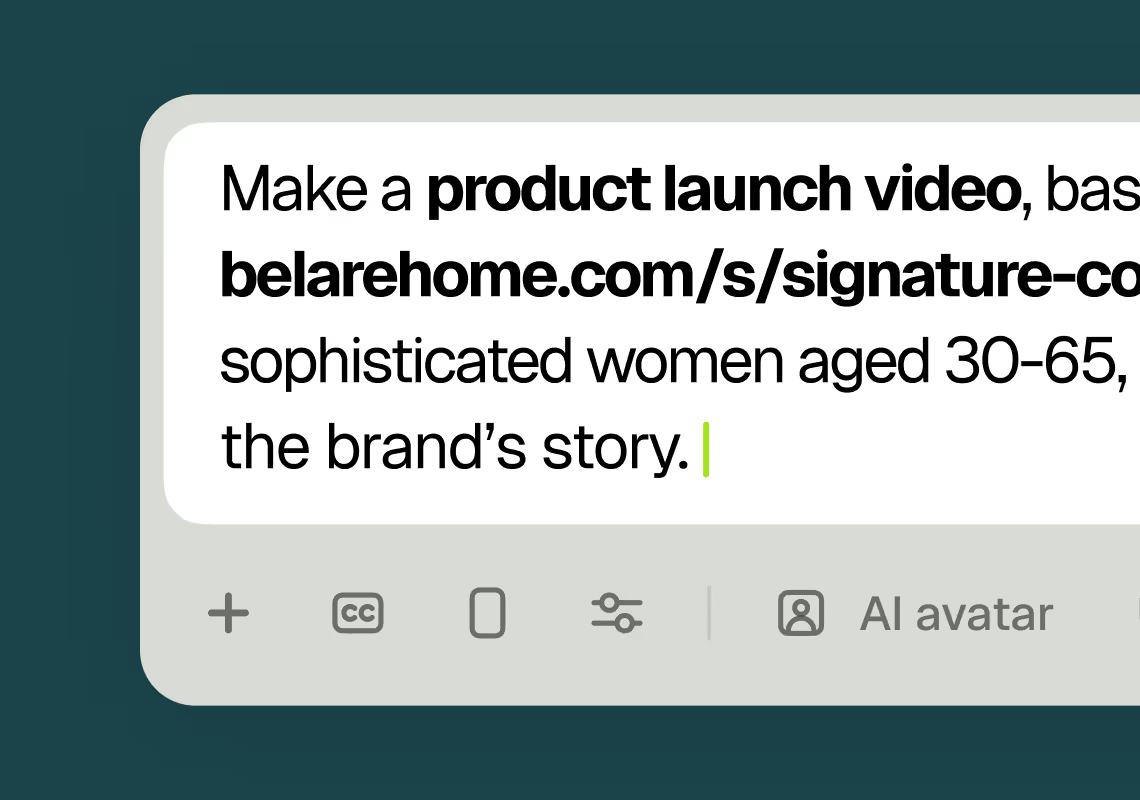 1
1Describe your video
Paste your promo brief, script, outline, or blog URL into Agent Opus.
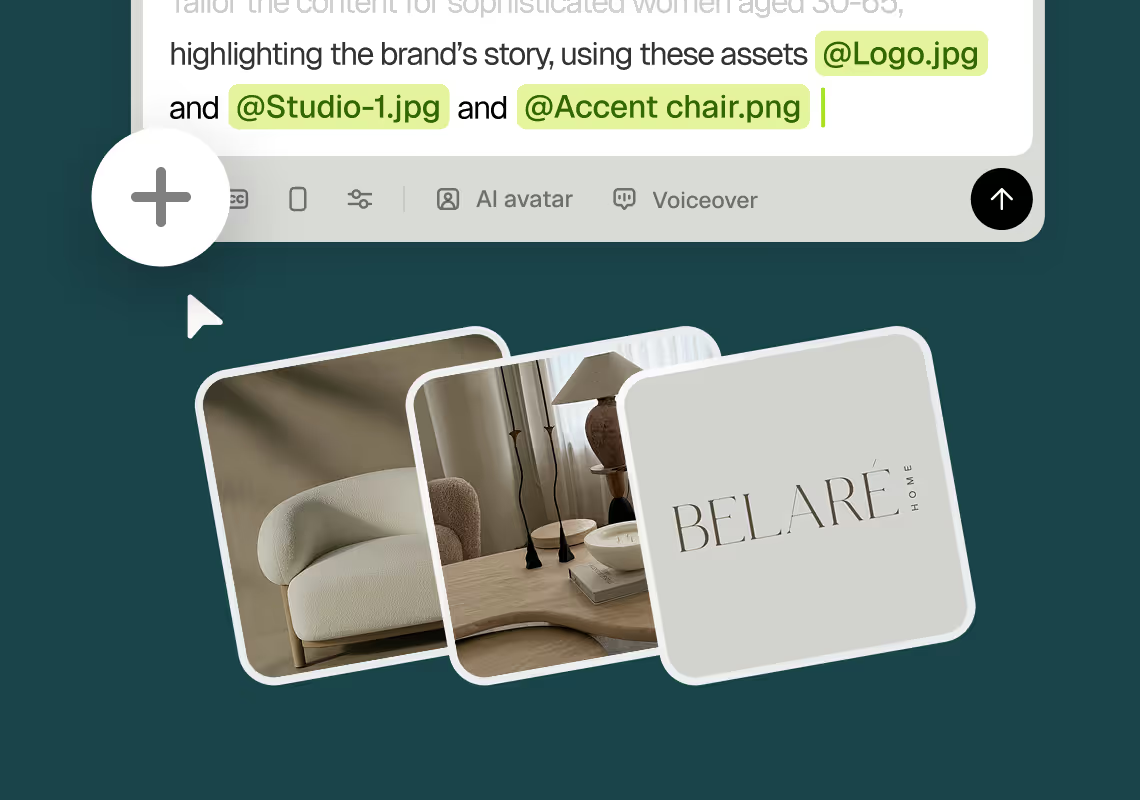 2
2Add assets and sources
Upload brand assets like logos and product images, or let the AI source stock visuals automatically.
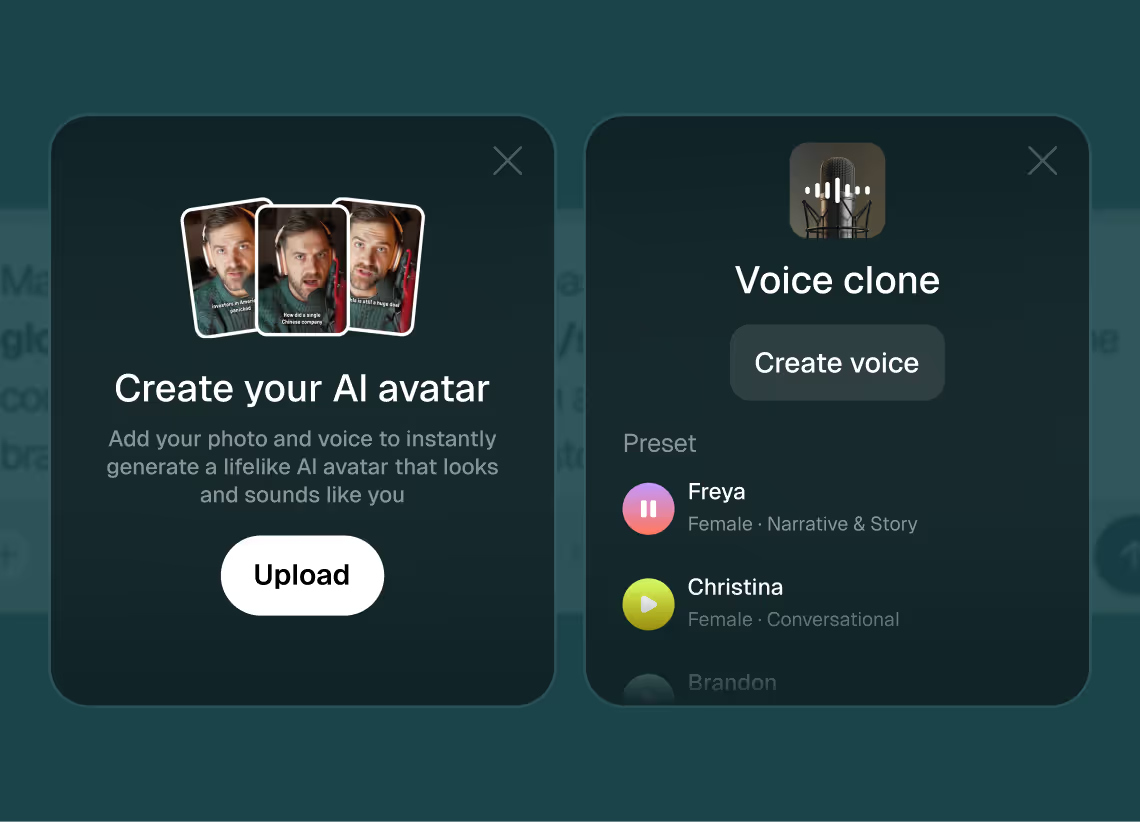 3
3Choose voice and avatar
Choose voice (clone yours or pick an AI voice) and avatar style (user or AI).
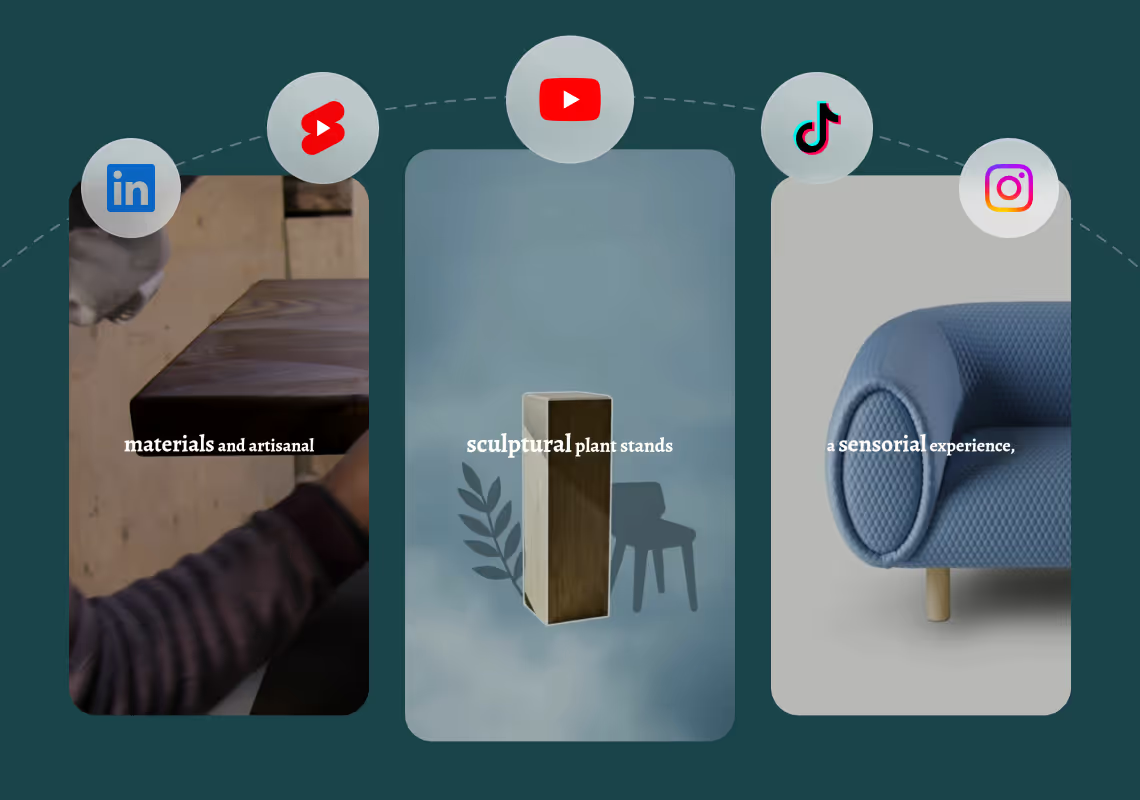 4
4Generate and publish-ready
Click generate and download your finished promo video in seconds, ready to publish across all platforms.


8 powerful features of Agent Opus' SaaS Product Video Maker
Prompt-to-Video Generation
Turn a one-line idea into a finished video. The agent handles structure, pacing, B-roll selection, and final assembly automatically.
Script and Outline Support
Paste a full script, drop in an outline with section headers, or supply a blog or article URL — Agent Opus reads any of them and builds a video around the content.
AI Voiceover and Voice Cloning
Pick from natural-sounding AI voices in 30+ languages, or clone your own voice once. Every video then ships with your authentic narration.
Beat-Synced Motion Graphics
Dynamic visuals that lock to the beat of your audio or the pacing of your script — kinetic typography, transitions, and effects, no manual keyframing required.
Automatic Captions and Subtitles
Burn-in captions for short-form, soft subtitles for long-form, and multi-language translations — all generated and synced automatically.
Multi-Aspect-Ratio Export
9:16, 1:1, and 16:9 outputs from one job, with intelligent reframing of text, motion graphics, and focal elements for each ratio.
Brand Asset Integration
Upload your logo, watermark, fonts, and color palette. Agent Opus applies them consistently across every video automatically.
Avatar and Talking Head Support
Add an AI avatar, your own video footage, or a synthetic spokesperson to any video — useful for explainers, ads, and personal-brand content.
Testimonials
Awesome output, Most of my students and followers could not catch that it was using Agent Opus. Thank you Opus.
Wealth with Gaurav
This looks like a game-changer for us. We're building narrative-driven, visually layered content — and the ability to maintain character and motion consistency across episodes would be huge. If Agent Opus can sync branded motion graphics, tone, and avatar style seamlessly, it could easily become part of our production stack for short-form explainers and long-form investigative visuals.
srtaduck
I reviewed version a and I was very impressed with this version, it did very well in almost all aspects that users need, you would only have to make very small changes and maybe replace one of 2 of the pictures, but even saying that it could be used as is and still receive decent views or even chances at going viral depending on the story or the content the user chooses.
Jeremy
all in all LOVE THIS agent. I'm curious to see how I can push it (within reason) Just need to learn to get the consistency right with my prompts
Rebecca
Frequently Asked Questions
How does a SaaS product video maker like Agent Opus generate videos from a brief?
Agent Opus uses a multi-stage AI pipeline designed specifically for product storytelling. When you input a product brief, feature description, or script, the system first analyzes the structure and intent of your content to identify key messaging beats, feature highlights, and logical scene breaks. It then assembles a visual narrative by matching each segment to appropriate motion graphics templates, product UI elements, and contextual imagery. The AI determines pacing based on the complexity of each concept, ensuring technical features get enough screen time while keeping the overall video engaging. For SaaS products, the system prioritizes clarity and conversion-focused storytelling over generic stock footage. If you provide a URL to a blog post or documentation page, Agent Opus extracts the core narrative, reformats it for video pacing, and generates corresponding visuals that reinforce each point. The voiceover layer is synthesized using either your cloned voice or a professional AI narrator, with timing automatically synced to on-screen text and graphics. Background music is selected to match the tone of your product category, whether that is enterprise software requiring a confident, authoritative feel or a consumer app needing energy and approachability. The entire process runs end-to-end without requiring you to specify camera angles, transitions, or edit points. You describe what your product does and why it matters, and the system translates that into a structured, visually coherent video optimized for product marketing. This approach eliminates the traditional bottleneck of storyboarding, asset hunting, and manual timeline editing that slows down most SaaS video production workflows.
Can I use my actual product screenshots and brand assets in a SaaS product video maker?
Yes, and this is one of the core strengths of Agent Opus as a SaaS product video maker. Unlike generic video generators that rely solely on stock footage or abstract animations, Agent Opus is built to incorporate your real product visuals directly into the generated video. You can upload product screenshots, UI mockups, dashboard views, feature demos, and brand logos, and the system will intelligently weave them into the motion graphics composition. The AI analyzes the layout and focal points of each screenshot to determine how to animate and highlight key interface elements, drawing viewer attention to buttons, data visualizations, or workflow steps that matter most. For example, if you are showcasing a new analytics dashboard, Agent Opus can zoom into specific chart elements, apply subtle motion to data points, and overlay callout text that explains what the user is seeing. Your logo and brand colors are automatically applied to lower thirds, text overlays, and transition elements, ensuring visual consistency across the entire video. This level of brand integration is critical for SaaS companies where product differentiation often comes down to UI quality and feature depth. Stock footage might illustrate a concept, but it cannot show your actual product in action. Agent Opus bridges that gap by treating your screenshots as first-class visual assets, not afterthoughts. The system also handles aspect ratio adjustments, so a widescreen dashboard screenshot can be reformatted for vertical social video without losing critical UI details. If you are creating a series of feature videos, you can build a library of reusable product assets that Agent Opus will pull from automatically based on the script context, ensuring every video stays on-brand and visually accurate to your current product version.
What are best practices for writing prompts in a SaaS product video maker?
Effective prompts for a SaaS product video maker focus on clarity, structure, and outcome-driven messaging. Start by defining the video's purpose in the first sentence: is this a feature announcement, an onboarding tutorial, a product comparison, or a use-case walkthrough? Agent Opus performs best when it understands the narrative goal upfront. Next, outline the key points you want to cover in logical order. For a feature demo, structure your prompt as problem, solution, and benefit. For example, instead of writing a vague prompt like "make a video about our new reporting feature," write "our customers struggle to visualize campaign performance across channels. Our new unified reporting dashboard solves this by aggregating data from email, social, and paid ads into a single view, saving marketers hours of manual spreadsheet work each week." This gives the AI clear narrative beats to visualize: the pain point, the product solution, and the measurable outcome. Include specific details that differentiate your product. If your SaaS has a unique workflow, describe it step-by-step. If you have proprietary technology, explain it in simple terms. The more concrete your prompt, the more tailored the generated video will be. Avoid jargon unless it is standard in your industry, and always write with your target audience in mind. A video for technical users can include API references and integration details, while a video for executives should focus on ROI and strategic value. If you are working from a script, format it with clear scene breaks or numbered steps so Agent Opus can map each section to a distinct visual treatment. For blog-to-video conversions, choose articles with strong subheadings and logical flow, as the AI uses document structure to guide scene assembly. Finally, specify the tone and pacing you want. A product launch video might need high energy and fast cuts, while an onboarding tutorial benefits from a slower, more instructional pace. Agent Opus adapts its motion graphics intensity, voiceover cadence, and music selection based on these cues, so the more context you provide in your prompt, the closer the first draft will be to your vision.
How does a SaaS product video maker handle technical features and complex workflows?
Agent Opus is designed to translate technical complexity into clear, visual storytelling, which is essential for SaaS products with multi-step workflows or abstract features. When you describe a technical feature in your prompt or script, the system breaks it down into digestible visual segments. For example, if you are explaining a data pipeline that ingests, transforms, and outputs analytics, Agent Opus will generate a sequence of motion graphics that visualize each stage: data sources flowing into a central hub, transformation logic represented by animated icons or diagrams, and final outputs displayed as dashboard mockups or report previews. The AI prioritizes clarity over technical accuracy, meaning it will simplify complex backend processes into metaphors and visual analogies that non-technical viewers can grasp while still providing enough detail for technical audiences to understand the value. For API integrations, the system can show code snippets, endpoint diagrams, or animated connection flows between your product and third-party platforms. If your feature involves automation, Agent Opus uses motion to illustrate the before-and-after state, showing manual tasks being replaced by automated workflows. This is particularly effective for SaaS products where the value proposition is time savings or reduced complexity. The voiceover layer plays a critical role here, as it provides the narrative thread that ties visual elements together. Agent Opus syncs voiceover pacing to on-screen complexity, slowing down for dense concepts and speeding up for straightforward benefits. If you are creating a series of videos covering different features, the system maintains visual consistency in how it represents recurring elements like user roles, data types, or system architecture, making it easier for viewers to build mental models across multiple videos. For highly technical products, consider supplementing your prompt with a glossary of key terms or a visual style guide so Agent Opus can align its motion graphics with your existing documentation or product design language. The goal is not to replace in-depth technical documentation but to create an engaging entry point that drives viewers to explore further, whether that is signing up for a trial, booking a demo, or reading your full feature docs.