Text to Video
Agent Opus transforms text to video in seconds. Describe what you want, paste a script, share an outline, or drop in a blog URL. Agent Opus generates a complete, publish-ready video with AI motion graphics, voiceovers, and social-ready formatting. No timeline. No manual editing. Just prompt to video, instantly. Perfect for creators, marketers, and founders who need professional video content without the production overhead.

Explore what's possible with Agent Opus

Reasons why creators love Agent Opus' Text to Video
Ship in Minutes, Not Hours
Generate a publish-ready video in under 10 minutes from a single prompt — no timeline editing, no asset hunting, no creative dry spells.
Zero Editing Skills Required
Describe your concept and Agent Opus handles scene composition, motion graphics, voiceover, and platform formatting automatically — even if you've never opened a video editor.
Studio-Grade Output
Cinematic motion graphics, beat-synced cuts, professional voiceover, and precise typography — every video ships looking production-quality from the first generation.
Stays On-Brand
Upload your logo, fonts, and color palette once. Agent Opus applies them across every video automatically so your content stays visually consistent.
How to use Agent Opus’ Text to Video
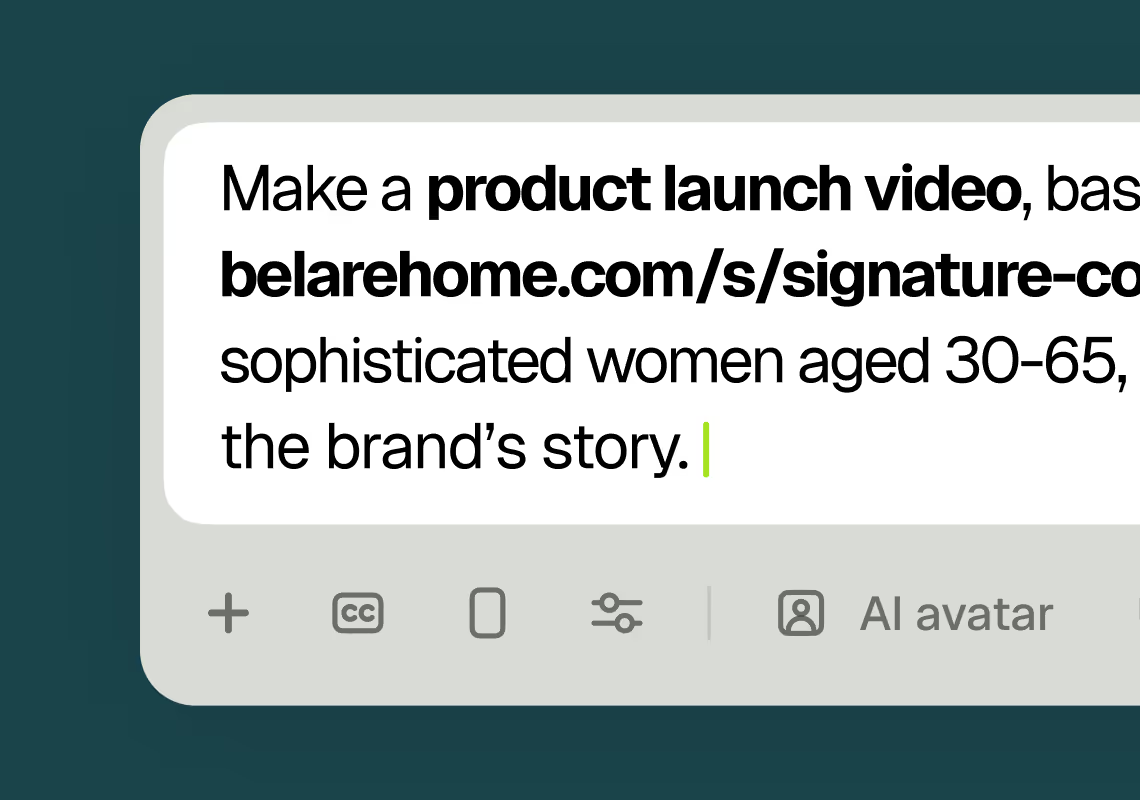 1
1Describe your video
Paste your promo brief, script, outline, or blog URL into Agent Opus.
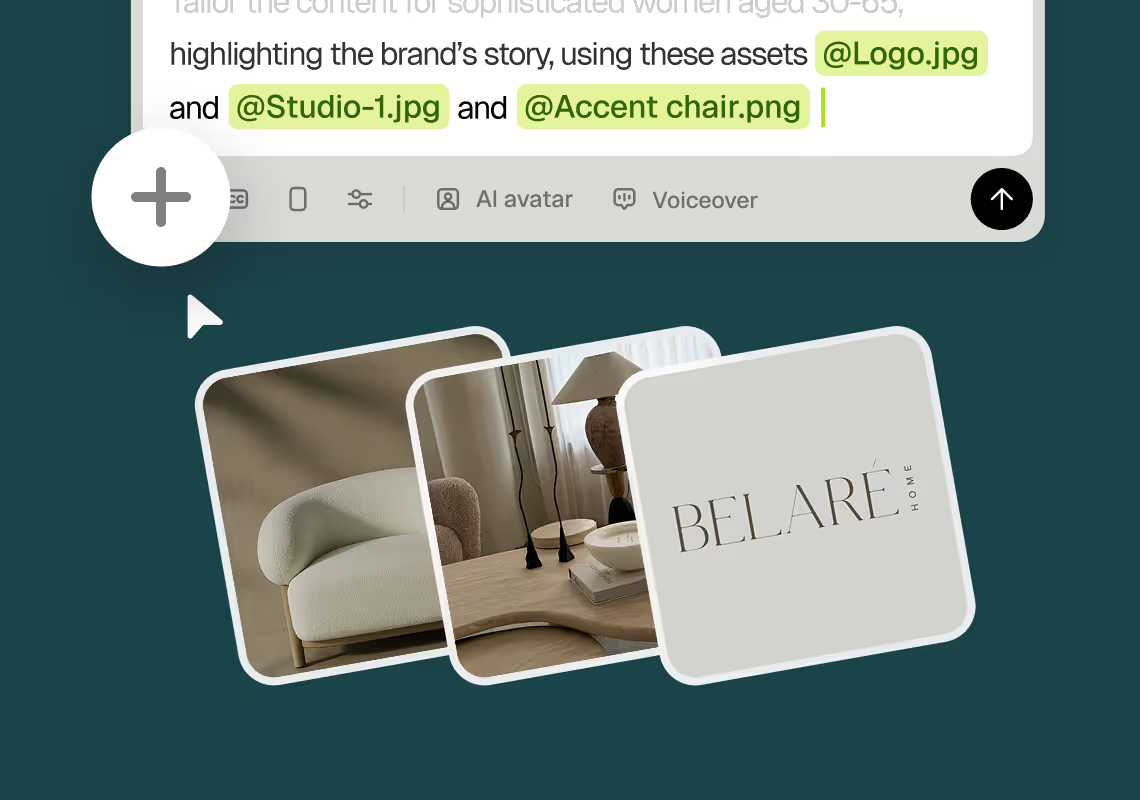 2
2Add assets and sources
Upload brand assets like logos and product images, or let the AI source stock visuals automatically.
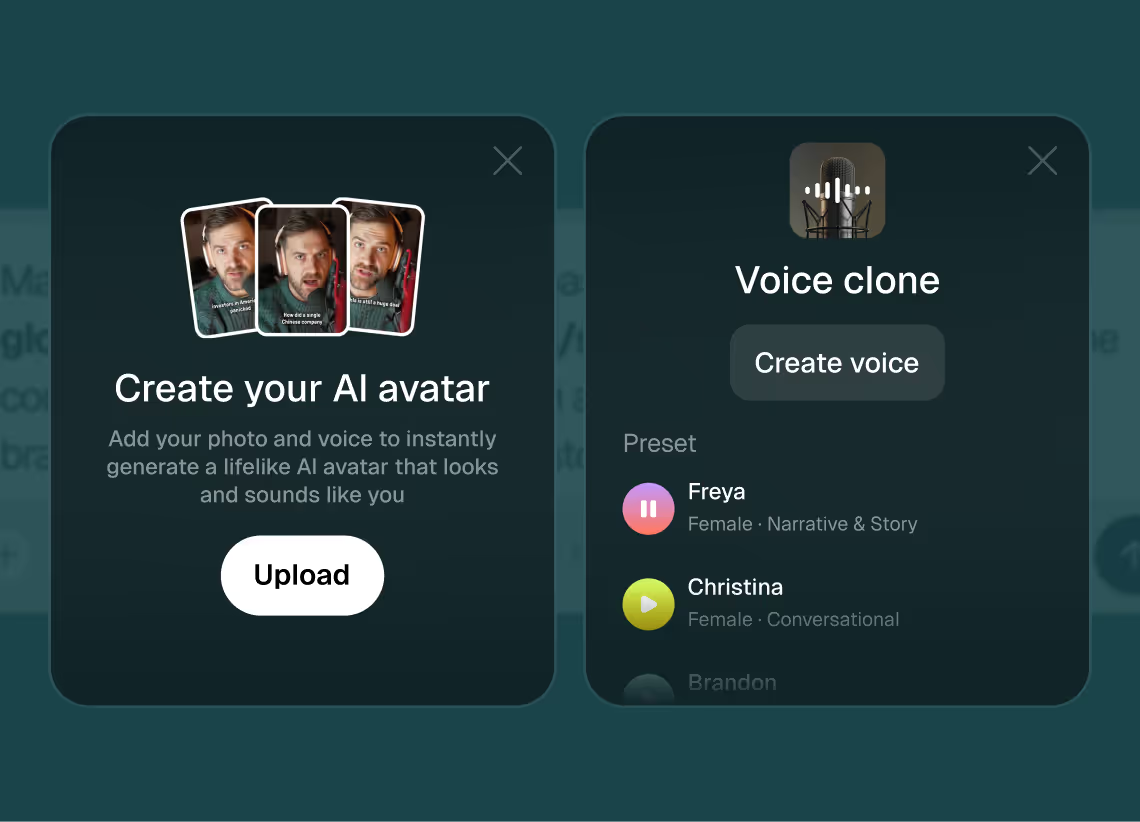 3
3Choose voice and avatar
Choose voice (clone yours or pick an AI voice) and avatar style (user or AI).
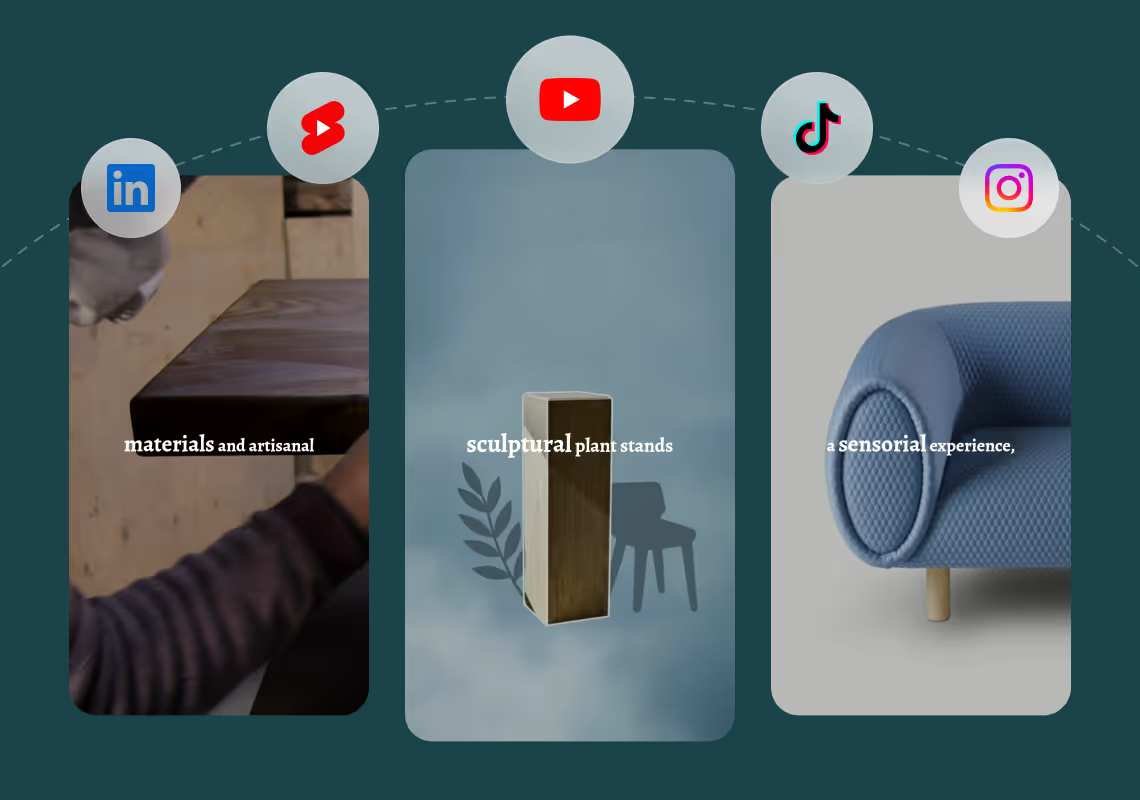 4
4Generate and publish-ready
Click generate and download your finished promo video in seconds, ready to publish across all platforms.


8 powerful features of Agent Opus' Text to Video
Prompt-to-Video Generation
Turn a one-line idea into a finished video. The agent handles structure, pacing, B-roll selection, and final assembly automatically.
Script and Outline Support
Paste a full script, drop in an outline with section headers, or supply a blog or article URL — Agent Opus reads any of them and builds a video around the content.
AI Voiceover and Voice Cloning
Pick from natural-sounding AI voices in 30+ languages, or clone your own voice once. Every video then ships with your authentic narration.
Beat-Synced Motion Graphics
Dynamic visuals that lock to the beat of your audio or the pacing of your script — kinetic typography, transitions, and effects, no manual keyframing required.
Automatic Captions and Subtitles
Burn-in captions for short-form, soft subtitles for long-form, and multi-language translations — all generated and synced automatically.
Multi-Aspect-Ratio Export
9:16, 1:1, and 16:9 outputs from one job, with intelligent reframing of text, motion graphics, and focal elements for each ratio.
Brand Asset Integration
Upload your logo, watermark, fonts, and color palette. Agent Opus applies them consistently across every video automatically.
Avatar and Talking Head Support
Add an AI avatar, your own video footage, or a synthetic spokesperson to any video — useful for explainers, ads, and personal-brand content.
Testimonials
This looks like a game-changer for us. We're building narrative-driven, visually layered content — and the ability to maintain character and motion consistency across episodes would be huge. If Agent Opus can sync branded motion graphics, tone, and avatar style seamlessly, it could easily become part of our production stack for short-form explainers and long-form investigative visuals.
srtaduck
all in all LOVE THIS agent. I'm curious to see how I can push it (within reason) Just need to learn to get the consistency right with my prompts
Rebecca
Frequently Asked Questions
How does text to video generation work with different input formats?
Agent Opus accepts four input types for text to video generation, each optimized for different workflows. First, you can write a simple prompt or brief describing what you want the video to communicate. Agent Opus interprets your intent, structures the narrative, and generates scenes accordingly. This works best for quick social content or exploratory ideas. Second, you can paste a full script with dialogue, narration, or talking points. The system respects your exact wording while adding visual layers, motion graphics, and pacing. Third, you can provide an outline or bullet-point structure. Agent Opus expands each point into scenes, maintaining your logical flow while filling in visual storytelling elements. Fourth, you can submit a blog post or article URL. The system extracts key points, condenses the narrative, and translates written content into video format with appropriate visuals and voiceover. Across all input types, Agent Opus handles scene assembly, visual sourcing, motion graphics application, voiceover generation, and social formatting automatically. The text to video process requires no manual timeline work or asset placement. You provide the words; Agent Opus delivers the finished video. Most users find that longer, structured inputs like scripts or blog posts produce the most polished results, while short prompts excel for rapid iteration and testing. The system adapts its visual complexity and pacing based on input length and structure, ensuring every text to video output feels intentional and publish-ready regardless of how you start.
What visual sources does Agent Opus use for text to video generation?
Agent Opus pulls from three visual source categories to build your text to video output. First, it uses any brand assets you upload directly, including logos, product photography, screenshots, or custom graphics. These assets get priority placement and appear wherever contextually relevant throughout the video. Second, the system auto-sources royalty-free stock imagery and video clips from licensed libraries. Agent Opus analyzes your text content, identifies key concepts and themes, then searches and selects visuals that match the narrative. This happens automatically during generation, no manual stock browsing required. Third, Agent Opus can source relevant images from the open web when stock libraries lack specific matches, particularly for niche topics, current events, or highly specific subject matter. All web-sourced content respects usage rights and licensing. Beyond static imagery, Agent Opus applies AI motion graphics to every visual element. Static photos gain dynamic movement through parallax effects, zoom animations, and layered compositing. The motion graphics engine creates transitions, overlays, and visual effects that give even simple source material a polished, professional feel. For text to video projects focused on products or services, uploading your own assets produces the strongest results because Agent Opus weaves them throughout the narrative. For educational, informational, or storytelling content, the auto-sourced imagery typically provides sufficient visual variety. You can mix approaches, uploading hero assets like logos while letting Agent Opus handle supplementary visuals. The system balances all three source types automatically, prioritizing your uploads, filling gaps with stock, and adding motion graphics layers to create cohesive visual storytelling from any text input.
How does voice and avatar selection work in text to video workflows?
Agent Opus offers flexible voice and avatar options for text to video generation, letting you match output style to audience and platform. For voiceover, you can clone your own voice by uploading a short audio sample. The system analyzes your vocal characteristics, then generates narration in your voice for any text input. Voice cloning works best with clean, 30-second to one-minute samples recorded in a quiet environment. Once cloned, your voice becomes reusable across all future text to video projects. Alternatively, you can select from a library of professional AI voices spanning different genders, ages, accents, and tonal qualities. AI voices work immediately without any upload step, making them ideal for rapid iteration or when you prefer a neutral, polished delivery. For avatar options, you can appear on-screen yourself by uploading video footage. Agent Opus integrates your footage into generated scenes, positioning you as the presenter while surrounding you with motion graphics, text overlays, and supporting visuals. This approach works well for personal brands, thought leadership, and founder-led content. If you prefer not to appear on camera, Agent Opus can generate an AI avatar that lip-syncs to the voiceover. AI avatars provide a human presence without requiring you to record yourself, useful for educational content, explainers, or when you want consistent presenter style across many videos. You can also generate text to video content with voiceover only and no on-screen presenter, letting visuals and motion graphics carry the narrative. Most users start with AI voices and no avatar for speed, then add voice cloning and custom footage as they scale production. The system remembers your preferences, so subsequent text to video generations can reuse the same voice and avatar settings automatically.
What are best practices for writing prompts and scripts for text to video generation?
Effective text to video prompts and scripts balance clarity with creative freedom, giving Agent Opus enough direction without over-specifying visual details. For short prompts, focus on the core message, target audience, and desired outcome. Example: 'Create a 30-second video explaining how our project management tool helps remote teams stay aligned, targeting startup founders, upbeat tone.' This gives Agent Opus the narrative goal, audience context, and tonal direction it needs to generate appropriate scenes, visuals, and pacing. Avoid overly prescriptive prompts that dictate specific shots or transitions; the system handles visual storytelling automatically. For longer scripts, write natural narration or dialogue as you would speak it. Agent Opus interprets the script's emotional beats and key points, then builds visuals around them. Include clear section breaks or paragraph spacing to signal scene transitions. If certain brand elements or product features must appear, mention them explicitly in the script: 'Our dashboard shows real-time updates' signals Agent Opus to include dashboard imagery. For blog-to-video conversions, choose articles with clear structure and strong subheadings. Agent Opus performs best with content that has logical flow and distinct sections, as it maps each section to a video scene. Avoid articles that are purely list-based or lack narrative arc. Across all input types, shorter is often better for social content. Text to video generation works best when you target 30 to 90 seconds for TikTok, Reels, and Shorts, or up to three minutes for YouTube and LinkedIn. Longer inputs get condensed automatically, but starting concise gives you more control over pacing. After generating your first video, review how Agent Opus interpreted your text, then refine your prompt or script based on what worked. Most users find their text to video quality improves significantly after two or three iterations as they learn how the system translates written content into visual storytelling.