KI-Anime-Generator
Erstellen Sie beeindruckende Videos im Anime-Stil aus Text mit Agent Opus, dem KI-Anime-Generator, der Ihre Ideen in fertige Inhalte verwandelt. Beschreiben Sie Ihre Vision, fügen Sie ein Skript ein oder geben Sie eine Blog-URL ein und beobachten Sie, wie Agent Opus Szenen, Motion Graphics, Voiceover und Soundtrack zu einem veröffentlichungsfertigen Anime-Video zusammenfügt. Keine Timeline. Keine manuelle Bearbeitung. Einfach vom Prompt zum Video in wenigen Minuten, optimiert für TikTok, YouTube Shorts, Instagram Reels und jede Social-Media-Plattform, auf der Anime-Inhalte erfolgreich sind.

Explore what's possible with Agent Opus

Reasons why creators love Agent Opus' KI-Anime-Generator
Own Your Anime Universe
Build a recognizable visual identity across all your content that fans instantly associate with your brand.
Characters That Feel Alive
Create expressive anime personalities that resonate with your audience and bring your stories to life authentically.
Iterate Until It's Perfect
Experiment freely with different scenes, character designs, and storylines until you nail exactly what your fans want.
Ship Episodes, Not Excuses
Go from concept to finished anime content in hours instead of months, keeping your release schedule consistent.
Studio Quality, Solo Budget
Produce professional-grade anime visuals without the six-figure costs or massive production teams traditional animation demands.
How to use Agent Opus’ KI-Anime-Generator
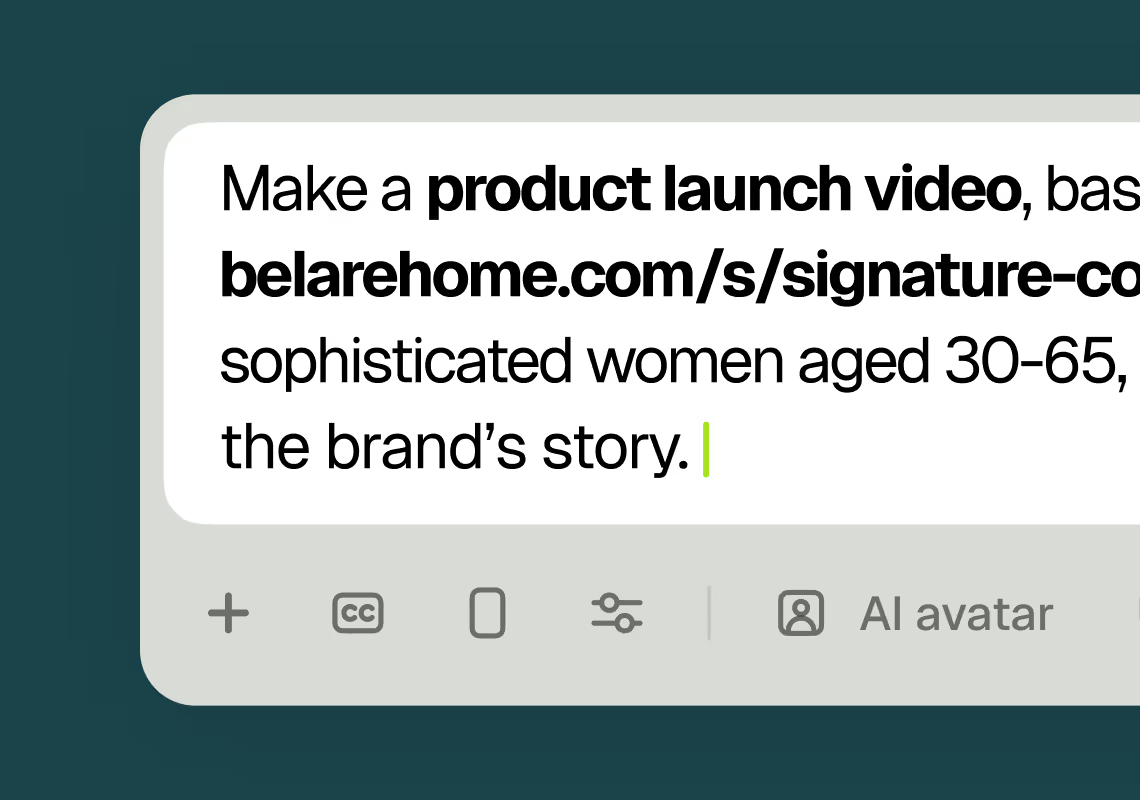 1
1Describe your video
Paste your promo brief, script, outline, or blog URL into Agent Opus.
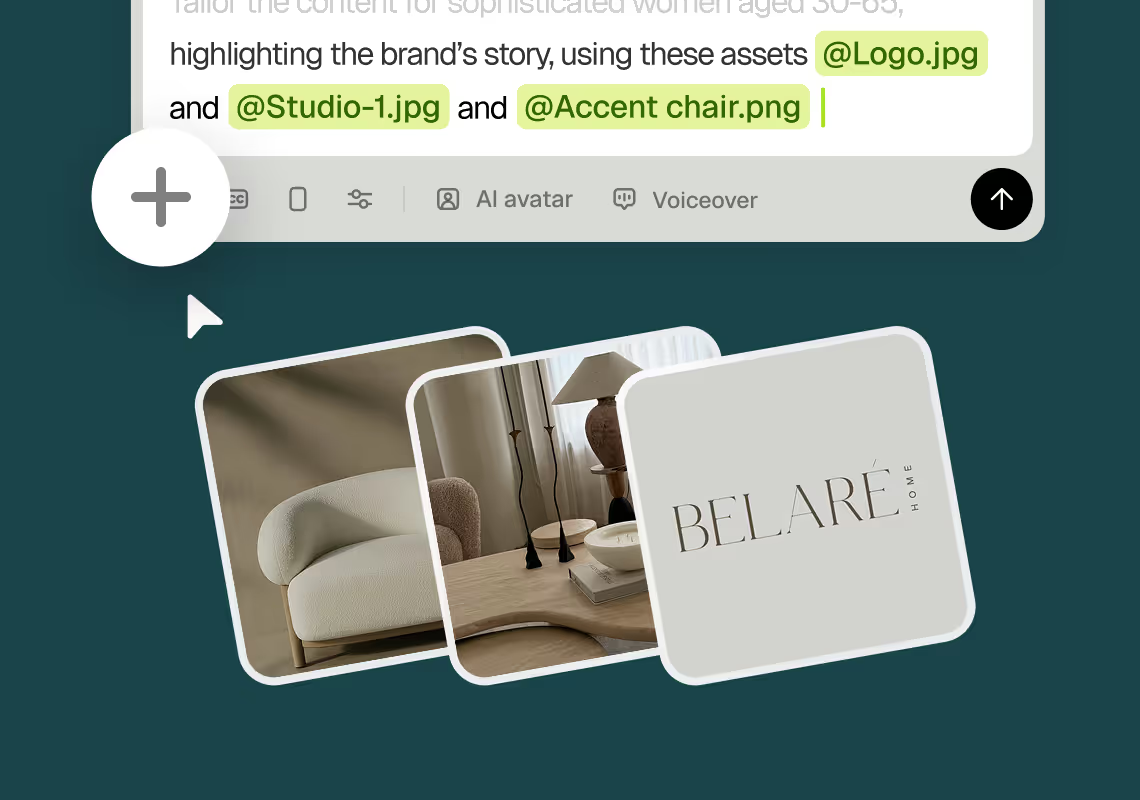 2
2Add assets and sources
Upload brand assets like logos and product images, or let the AI source stock visuals automatically.
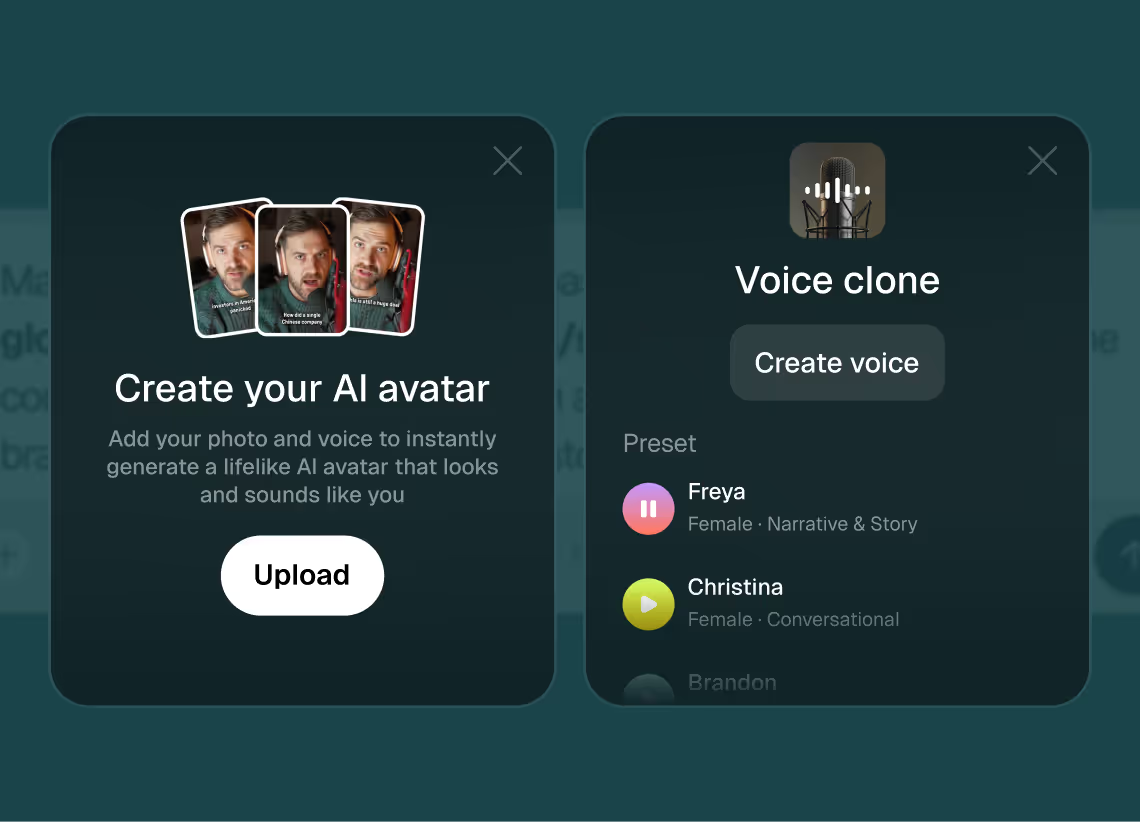 3
3Choose voice and avatar
Choose voice (clone yours or pick an AI voice) and avatar style (user or AI).
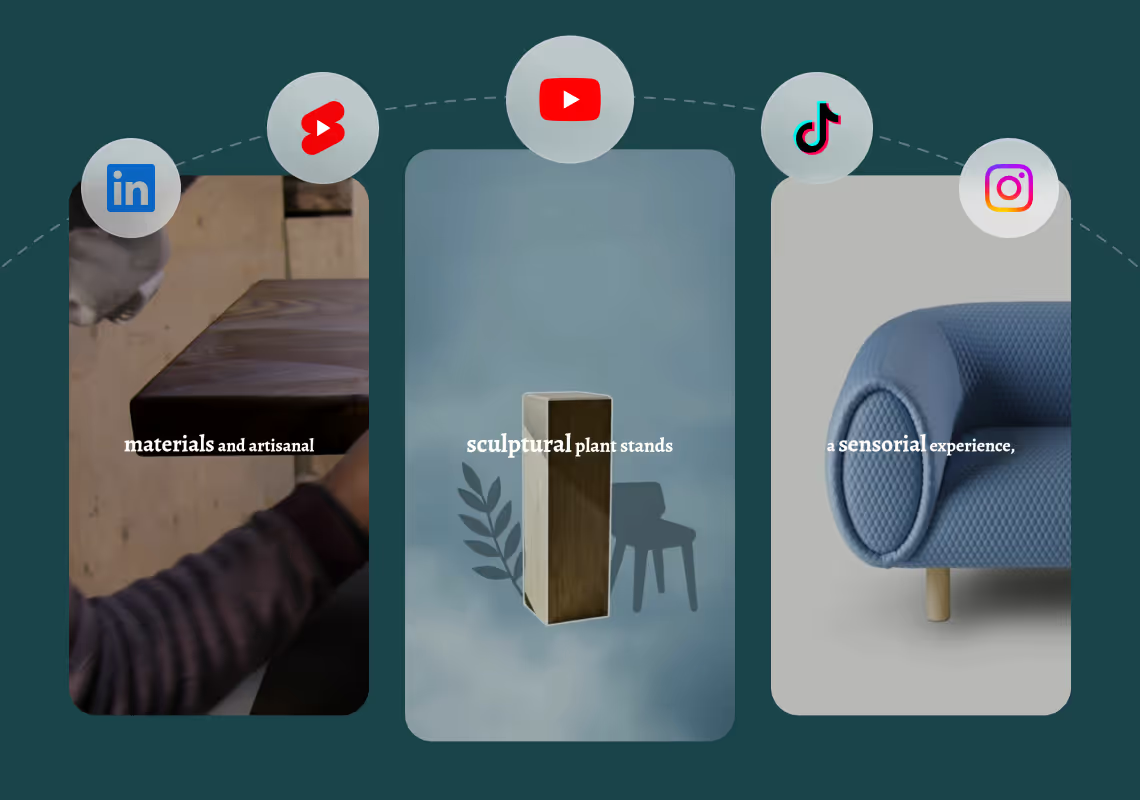 4
4Generate and publish-ready
Click generate and download your finished promo video in seconds, ready to publish across all platforms.


8 powerful features of Agent Opus' KI-Anime-Generator
Action Sequences
Turn text into fluid anime fight scenes, chase sequences, and high-energy motion moments.
Scene Transitions
Generate smooth cuts and anime-style transitions between different moments in your video narrative.
Custom Anime Styles
Generate videos in shonen, shojo, chibi, or cinematic anime aesthetics from simple prompts.
Background Generation
Produce detailed anime environments from cityscapes to fantasy worlds that match your scene requirements.
Character Consistency
Maintain the same anime character appearance and design across multiple generated video scenes.
Prompt to Anime Video
Transform text descriptions into fully animated anime scenes with character movement and backgrounds.
Emotion and Expression
Generate anime characters with expressive facial animations and body language that convey specific feelings.
Testimonials
all in all LOVE THIS agent. I'm curious to see how I can push it (within reason) Just need to learn to get the consistency right with my prompts
Rebecca
I reviewed version a and I was very impressed with this version, it did very well in almost all aspects that users need, you would only have to make very small changes and maybe replace one of 2 of the pictures, but even saying that it could be used as is and still receive decent views or even chances at going viral depending on the story or the content the user chooses.
Jeremy
I dont think id change a thing
Quirky Collectables
Frequently Asked Questions
Wie verarbeitet der KI-Anime-Generator verschiedene Eingabetypen wie Prompts im Vergleich zu vollständigen Skripten?
Agent Opus passt seinen Anime-Video-Generierungs-Workflow an die von Ihnen bereitgestellte Eingabe an, sei es ein kurzer kreativer Prompt, ein detailliertes Skript, eine strukturierte Gliederung oder sogar eine Blogbeitrag-URL. Wenn Sie einen kurzen Prompt wie „Anime-Held entdeckt verborgene Kraft in Neon-Stadt" einreichen, interpretiert der KI-Anime-Generator den Handlungsbogen, visuelle Stilhinweise und Pacing-Anforderungen und erstellt dann Szenen, die den Anime-Erzählkonventionen entsprechen, wie dramatische Enthüllungen, Action-Momente und emotionale Nahaufnahmen. Bei vollständigen Skripten analysiert Agent Opus Dialoge, Szenenbeschreibungen und Regieanweisungen, um eine bildgenaue Anime-Sequenz mit synchronisiertem Voiceover, Motion Graphics und Übergängen zu erstellen, die Ihrer geschriebenen Vision gerecht werden. Gliederungseingaben ermöglichen es Ihnen, die Aktstruktur und Schlüsselmomente zu definieren, während die visuelle Interpretation der KI überlassen wird, die Bilder im Anime-Stil beschafft, Bewegungseffekte anwendet und den Soundtrack passend zum von Ihnen angegebenen Ton unterlegt. Blog-URL-Eingaben lösen einen Inhaltsextraktionsprozess aus, bei dem Agent Opus die Haupterzählung, Kernpunkte und unterstützende Details identifiziert und diesen Text dann in ein Anime-Videoformat übersetzt, komplett mit visuellen Metaphern, charakterähnlichen Avataren falls relevant und einem Pacing, das die Zuschauer auf Social-Media-Plattformen fesselt. Unabhängig vom Eingabetyp behält der KI-Anime-Generator durch seine Motion-Graphics-Engine eine konsistente Anime-Ästhetik bei, die Techniken wie Speedlines, dramatische Lichtwechsel und stilisierte Übergänge anwendet, die das Genre definieren. Das System passt auch die Szenenlänge und visuelle Komplexität basierend auf Ihrer Zielplattform an, sodass ein TikTok-Anime-Kurzfilm schnelle Schnitte und auffällige Visuals betont, während ein YouTube-Anime-Erklärvideo Detail mit Erzählfluss ausbalanciert. Diese Flexibilität bedeutet, dass Sie mit jedem kreativen Asset beginnen können, von einem einzelnen Satz bis zu einem tausend Wörter langen Artikel, und darauf vertrauen können, dass Agent Opus ein veröffentlichungsfertiges Anime-Video liefert, das sich durchdacht, poliert und dem Anime-Stil entsprechend anfühlt, den Ihr Publikum erwartet.
Was sind die Best Practices für das Schreiben von Prompts, die mit diesem KI-Anime-Generator hochwertige Anime-Videos produzieren?
Effektive Prompts für den KI-Anime-Generator balancieren kreative Anleitung mit Flexibilität und geben Agent Opus genug Kontext, um kluge visuelle und narrative Entscheidungen zu treffen, während Raum bleibt, damit die KI Anime-Konventionen anwenden kann, an die Sie vielleicht nicht denken würden. Beginnen Sie damit, die Kernerzählung oder Botschaft in einem klaren Satz zu definieren, wie „ein junger Erfinder baut einen Roboterbegleiter und lernt etwas über Freundschaft" oder „erkläre Blockchain-Technologie durch die Reise eines digitalen Samurai". Dieser Anker hilft dem KI-Anime-Generator, Ton, Pacing und visuelle Metaphern zu etablieren, die mit Anime-Erzähltraditionen übereinstimmen. Fügen Sie als Nächstes Stilhinweise hinzu, die das Anime-Subgenre oder die gewünschte Ästhetik signalisieren, wie „Shonen-Action mit leuchtenden Farben und dynamischer Kampfchoreografie" oder „Slice-of-Life mit sanften Pastelltönen und zarten Charaktermomenten". Diese Beschreibungen leiten die Motion-Graphics-Engine und die Bildquellen-Logik, sodass Ihr Video kohärent und genretypisch wirkt. Wenn Ihr Video spezifische Markenelemente enthält, erwähnen Sie diese explizit: „zeige unser Logo in der Eröffnungsszene" oder „zeige unser Produkt als futuristisches Gadget, das der Protagonist verwendet". Agent Opus integriert Logos und Produktaufnahmen natürlich in Anime-Kompositionen und behandelt sie als Story-Elemente statt als aufdringliche Overlays. Für Voiceover geben Sie Ton und Energie an: „enthusiastischer Erzähler mit beschwingt em Tempo" oder „ruhige, nachdenkliche Stimme, die zu kontemplativen Visuals passt". Der KI-Anime-Generator passt die Stimmwiedergabe und das Szenen-Timing entsprechend an und stellt sicher, dass Audio und Visuals sich gegenseitig verstärken. Vermeiden Sie es, jedes visuelle Detail übermäßig vorzuschreiben; Prompts wie „zeige genau drei Charaktere in Dreiecksformation mit dem Sonnenuntergang in 45 Grad" schränken die KI ein und produzieren oft weniger natürliche Ergebnisse als „drei Freunde stehen vor einer schwierigen Entscheidung bei Sonnenuntergang
Can the AI anime generator maintain consistent branding, voices, and visual styles across multiple anime video projects?
Yes, Agent Opus is built to support brand consistency across every anime video you generate, which is critical for creators and marketers who need a recognizable visual identity and voice across campaigns, series, or content libraries. The AI anime generator stores your brand assets, including logos, color palettes, product images, and custom fonts, so every video automatically incorporates these elements in ways that feel native to anime composition rather than generic overlays. For example, if you upload a logo, Agent Opus might integrate it as a glowing emblem on a character's gear, a holographic display in a futuristic scene, or a stylized watermark that matches the anime aesthetic of each frame. This approach keeps branding visible without disrupting the storytelling flow that makes anime content engaging. Voice consistency is equally robust; when you clone your voice or select an AI narrator, Agent Opus saves that voice profile and applies it to all future projects unless you specify otherwise. This means your anime explainer series, product demos, and social shorts all feature the same vocal identity, building audience familiarity and trust. If you work with multiple team members or clients, you can manage separate voice profiles and switch between them per project while maintaining the same anime visual style. Visual style consistency comes from the motion graphics engine and image sourcing logic, which learn your preferences as you generate videos. If your first anime video uses high-contrast neon visuals with cyberpunk elements, Agent Opus tags that style and prioritizes similar aesthetics in subsequent projects when you use related prompts or keywords. You can also define style templates by saving successful prompts as starting points for new videos, ensuring that your anime content library shares a cohesive look even as individual videos explore different topics or narratives. For series or episodic content, the AI anime generator can reference previous videos to maintain character designs, setting details, and narrative continuity, so your audience experiences a unified story world across episodes. This is especially valuable for educational series, product launch campaigns, or brand storytelling where each video builds on the last. Agent Opus also supports batch generation, letting you create multiple anime videos from a list of prompts or scripts in one session, all styled consistently because the AI applies the same visual and audio parameters across the batch. The result is a content pipeline that feels intentional and professional, with every anime video reinforcing your brand identity while delivering the creative variety that keeps audiences engaged and coming back for more.
What are the limitations or edge cases when using an AI anime generator like Agent Opus for complex or niche anime projects?
While Agent Opus delivers publish-ready anime videos for a wide range of use cases, understanding its limitations helps you set realistic expectations and plan projects that play to the AI anime generator's strengths. First, highly specific character consistency across long-form series can be challenging; if your project requires the exact same character design, outfit details, and facial features in every scene across dozens of episodes, you may need to provide reference images and use detailed prompts to guide the AI, and even then, minor variations can occur as the motion graphics engine interprets each scene independently. For short-form content and episodic series with flexible character designs, this is rarely an issue, but creators building multi-season anime narratives should test early and provide feedback to refine character rendering. Second, the AI anime generator excels at sourcing and integrating royalty-free and web-based anime visuals, but if your project demands exclusive custom artwork or collaboration with a specific illustrator, Agent Opus is not a replacement for commissioning original animation; instead, use it to prototype concepts, generate supporting content, or create marketing videos that complement your custom animation work. Third, complex action choreography with frame-by-frame precision, such as martial arts sequences with specific move timing or intricate mecha battles with detailed transformation sequences, may not match the control level of traditional animation software where you direct every keyframe. Agent Opus applies anime motion conventions like speed lines, impact frames, and dynamic camera angles, but the AI interprets action based on your prompt rather than executing a shot list, so results lean toward stylized storytelling over technical fight animation. For most marketing, educational, and social content, this approach works beautifully, but if your project is an action-heavy anime short film with choreography as the centerpiece, consider using Agent Opus for pre-visualization or supplementary scenes rather than the entire production. Fourth, niche anime subgenres with very specific visual languages, such as avant-garde experimental anime or hyper-detailed mecha designs with engineering accuracy, may require more prompt iteration to achieve the desired aesthetic because the AI anime generator optimizes for broadly recognizable anime styles that perform well across social platforms. You can still create content in these niches, but expect to refine prompts and test multiple generations to dial in the look. Fifth, audio limitations exist around complex soundscapes; while Agent Opus provides background music and voiceover, projects requiring original score composition, licensed anime theme songs, or multi-layered sound design with precise audio cues will need post-production audio work outside the platform. Finally, the AI anime generator is optimized for social-first video lengths, typically under five minutes, with the sweet spot being 30 seconds to two minutes for maximum engagement. Longer-form anime content is supported, but as video length increases, maintaining narrative coherence and visual variety requires more detailed prompts and potentially breaking the project into segments that you generate and sequence separately. These limitations are not dealbreakers; they simply define the use cases where Agent Opus shines, which include anime explainers, product demos, social shorts, educational series, brand storytelling, and marketing campaigns where speed, consistency, and publish-ready output matter more than frame-level animation control.