KI-Pixelkunst-Generator
Verwandeln Sie Text sofort in Pixelkunst-Videos. Agent Opus ist ein KI-Pixelkunst-Generator, der Ihre Prompts, Skripte oder Blog-URLs in vollständig animierte Videos im Retro-Stil umwandelt. Keine manuelle Sprite-Arbeit, keine Timeline-Bearbeitung. Beschreiben Sie Ihre Vision und erhalten Sie ein veröffentlichungsfertiges Pixelkunst-Video mit Bewegungsgrafiken, Voiceover und Social-Media-optimierter Formatierung. Perfekt für Spieleentwickler, Retro-Content-Creator und Marken, die nostalgieorientierte Zielgruppen ansprechen. Erstellen Sie Ihr erstes Pixelkunst-Video in wenigen Minuten.

Explore what's possible with Agent Opus

Reasons why creators love Agent Opus' KI-Pixelkunst-Generator
No Artist Budget Required
Skip hiring pixel artists or buying expensive sprite packs and still produce professional-grade retro visuals.
Retro Charm, Zero Pixel Pushing
Generate authentic pixel art videos without manually placing tiles or learning complex sprite animation tools.
Scale Your Retro Content Library
Produce multiple pixel art videos per week so you can grow your channel without burning out.
Ship Nostalgia-Driven Content Fast
Turn ideas into pixel art videos in minutes, not days, so you can ride trends while they're hot.
Consistent Style Across Every Frame
Maintain your signature pixel aesthetic throughout entire videos so your brand stays instantly recognizable.
Perfect for Gaming and Indie Creators
Capture that 8-bit and 16-bit magic your audience craves without needing animation or game dev experience.
How to use Agent Opus’ KI-Pixelkunst-Generator
 1
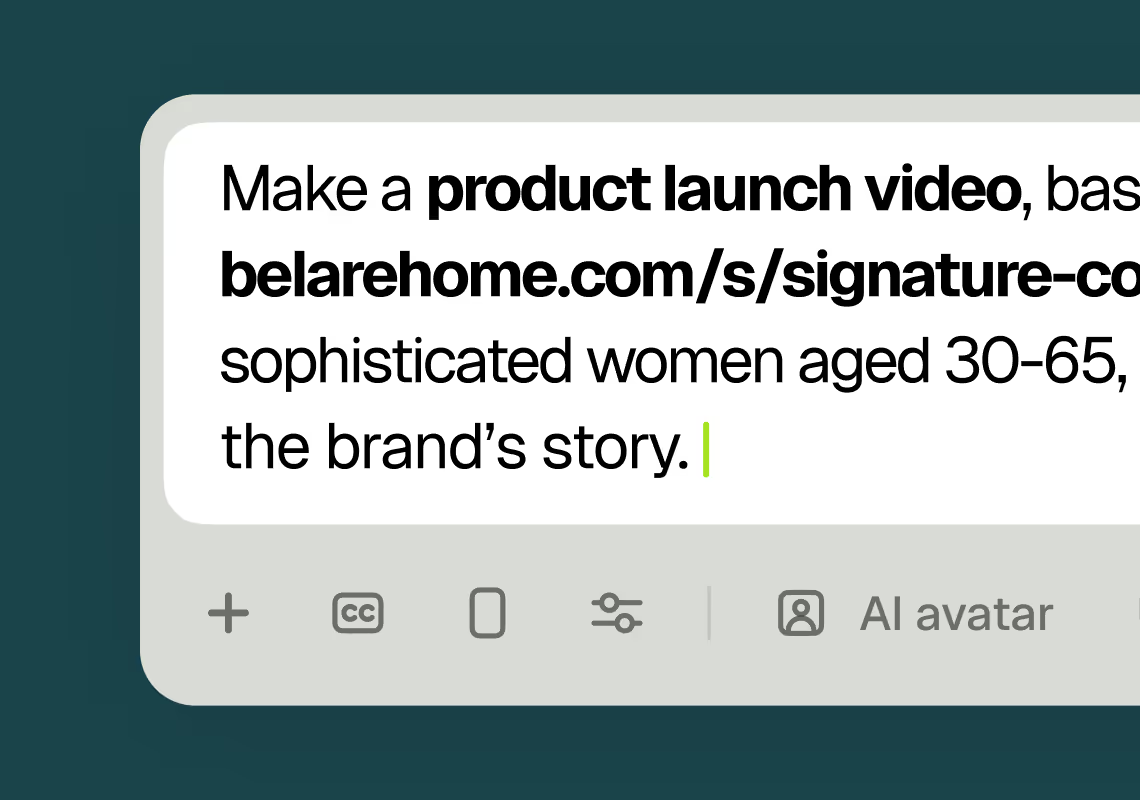
1Describe your video
Paste your promo brief, script, outline, or blog URL into Agent Opus.
 2
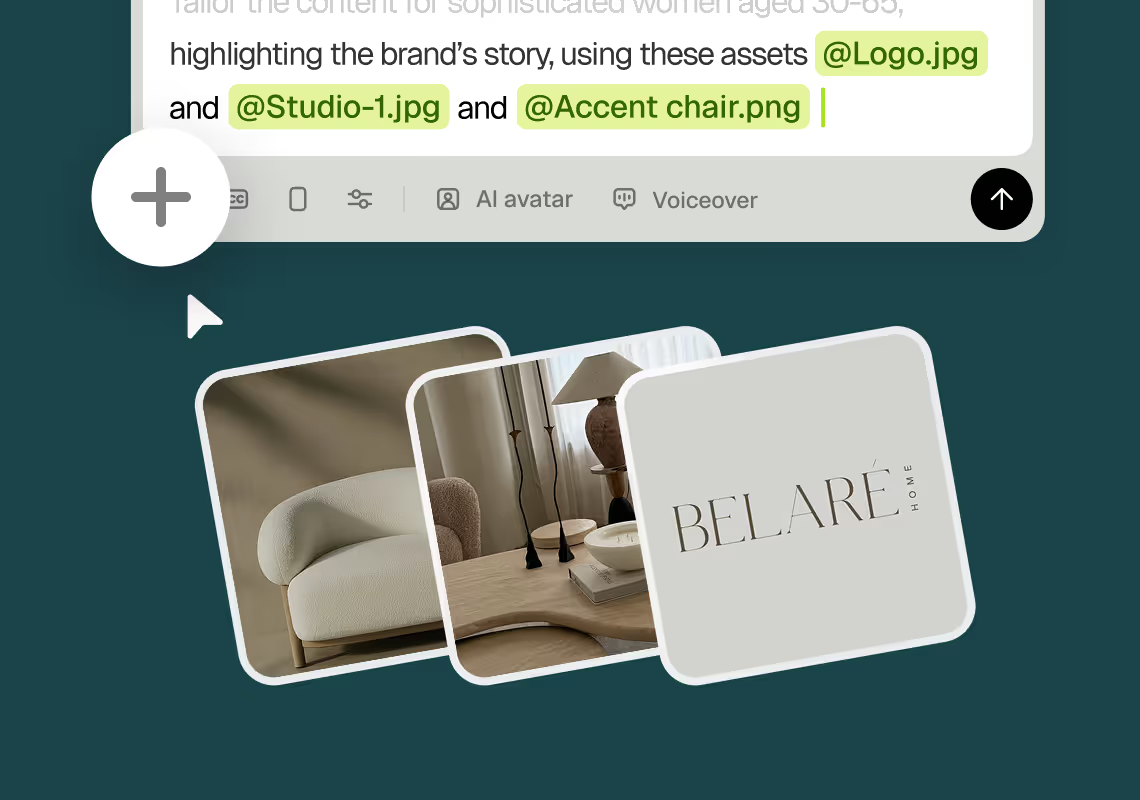
2Add assets and sources
Upload brand assets like logos and product images, or let the AI source stock visuals automatically.
 3
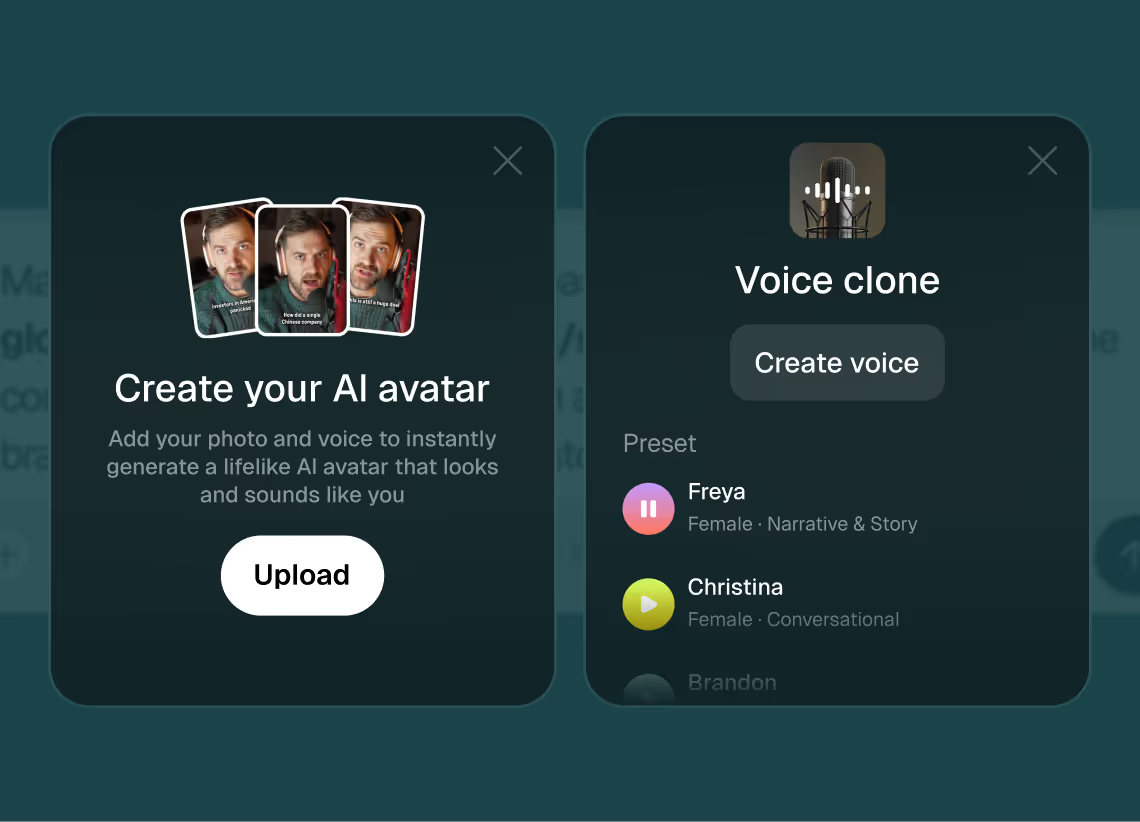
3Choose voice and avatar
Choose voice (clone yours or pick an AI voice) and avatar style (user or AI).
 4
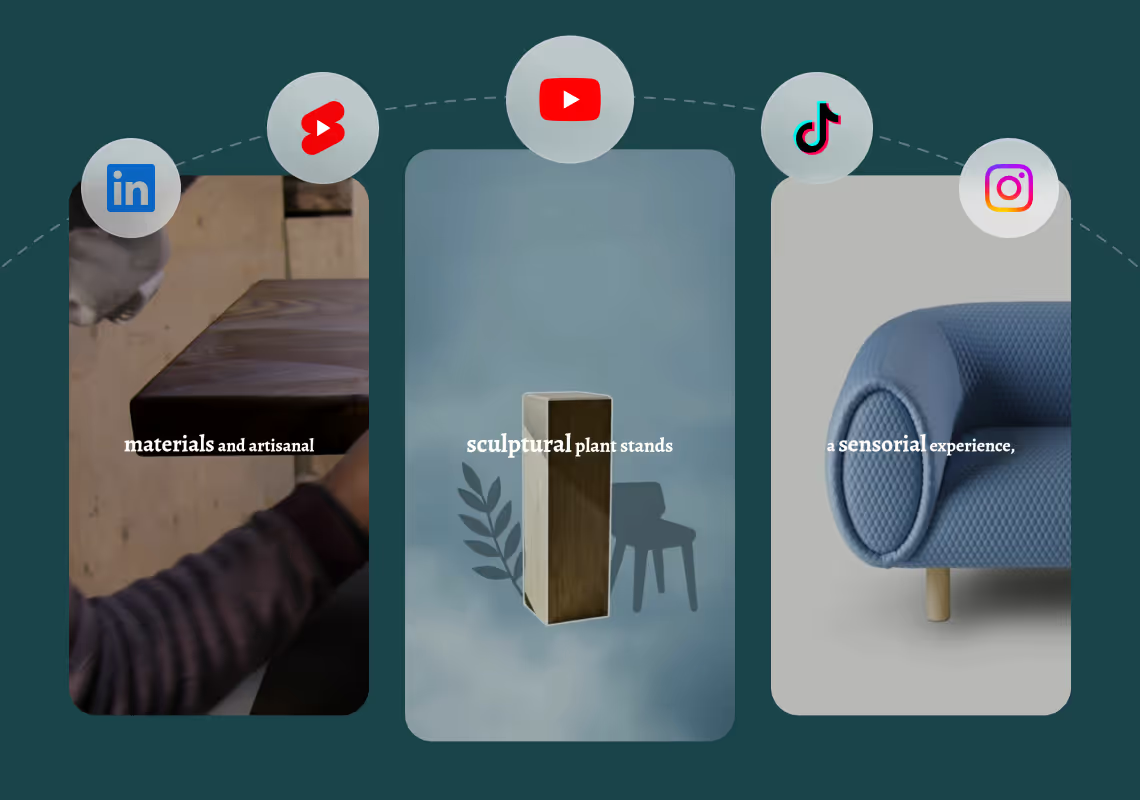
4Generate and publish-ready
Click generate and download your finished promo video in seconds, ready to publish across all platforms.


8 powerful features of Agent Opus' KI-Pixelkunst-Generator
Nostalgic Effects
Add CRT scanlines, screen flicker, and retro visual filters for authentic arcade vibes.
Scene Composition
Build complete pixelated environments and backgrounds that animate smoothly from your prompts.
Resolution Control
Set custom pixel density levels to achieve authentic low-res or high-definition pixel styles.
Prompt to Pixel Art
Transform text descriptions into retro-style pixel art videos with authentic 8-bit aesthetics.
Retro Color Palettes
Apply classic gaming color schemes automatically to match your desired pixel art era.
Frame-by-Frame Precision
Generate pixel-perfect transitions and movements that honor traditional sprite animation techniques.
Animated Sprite Sequences
Generate looping pixel art animations from simple prompts for games and social media.
Testimonials
all in all LOVE THIS agent. I'm curious to see how I can push it (within reason) Just need to learn to get the consistency right with my prompts
Rebecca
i got to say honestly really impressed me with the subtle click sound on each of the edits, it may seem little but that polish honestly makes it seem near the quality to publish without any further edits
Tony
I reviewed version a and I was very impressed with this version, it did very well in almost all aspects that users need, you would only have to make very small changes and maybe replace one of 2 of the pictures, but even saying that it could be used as is and still receive decent views or even chances at going viral depending on the story or the content the user chooses.
Jeremy
Frequently Asked Questions
Wie geht ein KI-Pixelkunst-Generator mit verschiedenen visuellen Retro-Stilen um?
Agent Opus unterstützt mehrere Pixelkunst-Ästhetiken, von klassischen 8-Bit-NES-Stil-Visuals bis hin zu detaillierteren 16-Bit-SNES-Ära-Grafiken. Wenn Sie Ihr Videokonzept im Prompt beschreiben, können Sie den gewünschten Retro-Stil angeben, wie z. B. „erstelle ein 8-Bit-Pixelkunst-Erklärvideo" oder „generiere eine 16-Bit-Pixelkunst-Produktdemo mit Game-Boy-Farbpalette". Der KI-Pixelkunst-Generator analysiert Ihre Eingabe und wendet die entsprechende visuelle Behandlung an, einschließlich Farbtiefe, Sprite-Auflösung und Animations-Framerate, die zu Ihrer gewählten Ära passt. Bei 8-Bit-Inhalten erwarten Sie klobige Pixel, begrenzte Farbpaletten (typischerweise 4-16 Farben pro Sprite) und einfachere Bewegungsmuster, die an frühe Konsolenspiele erinnern. Bei 16-Bit-Stilen erhalten Sie flüssigere Animationen, reichere Farbverläufe und detailliertere Hintergrundebenen. Das System passt automatisch die Komplexität der Bewegungsgrafiken, Partikeleffekte und Übergangsstile an, um Authentizität zu bewahren. Wenn Sie Inhalte für ein bestimmtes Spielgenre erstellen, wie Plattformer, RPGs oder Shoot-em-ups, erwähnen Sie das in Ihrem Prompt. Agent Opus wird visuelle Konventionen aus diesen Genres übernehmen, einschließlich UI-Elemente, Lebensbalken, Punkteanzeigen und Charakterbewegungsmuster. Sie können auch bestimmte Spiele oder Konsolen als Stil-Referenzen angeben, und die KI wird diese ästhetischen Hinweise interpretieren. Der Pixelkunst-Generator bewahrt die Konsistenz über Szenen hinweg, sodass Ihr gesamtes Video zusammenhängend wirkt, egal ob Sie einen 30-Sekunden-Social-Clip oder ein längeres Tutorial produzieren. Diese Flexibilität ermöglicht es Indie-Spieleentwicklern, Gameplay-Konzepte zu präsentieren, Retro-Marken nostalgische Marketinginhalte zu erstellen und Pädagogen ansprechende Pixelkunst-Erklärvideos zu erstellen – ohne Pixelkunst-Fähigkeiten oder Animationserfahrung zu benötigen.
Was sind Best Practices für Prompts in einem KI-Pixelkunst-Generator?
Effektive Prompts für die Pixelkunst-Videogenerierung kombinieren klare visuelle Anweisungen mit spezifischen Retro-Referenzen. Beginnen Sie mit Ihrer Kernbotschaft oder Geschichte und fügen Sie dann Pixelkunst-Stil-Beschreibungen hinzu. Anstatt „mach ein Video über mein Spiel" zu schreiben, formulieren Sie „erstelle einen 8-Bit-Pixelkunst-Trailer, der einen Ritter zeigt, der gegen einen Drachen in einer Burg kämpft, mit NES-Stil-Grafiken und Chiptune-Energie". Der KI-Pixelkunst-Generator reagiert gut auf ära-spezifische Sprache: Erwähnen Sie Konsolengenerationen (NES, SNES, Game Boy, Genesis), Farbpaletten-Einschränkungen (CGA, EGA, Game-Boy-Grün) oder Genre-Konventionen (Metroidvania, JRPG, Arcade). Wenn Sie ein Produkt bewerben, beschreiben Sie, wie es in Pixelform erscheinen würde: „zeige unsere Kaffeemaschine als 16-Bit-Sprite mit Dampfpartikeln und einem Lebensbalken-ähnlichen Fortschrittsanzeiger". Für Bewegung und Tempo verwenden Sie Spielterminologie: „scrollender Hintergrund
Can an AI pixel art generator maintain brand consistency across multiple videos?
Yes, Agent Opus maintains brand consistency in pixel art videos through several mechanisms. First, you can upload brand assets like logos, color palettes, and product images, which the AI pixel art generator converts to pixel art style while preserving recognizable brand elements. Your logo becomes a consistent sprite that appears across all videos, positioned according to your brand guidelines (corner placement, HUD integration, or scene watermark). Color consistency is crucial in pixel art, where limited palettes define the aesthetic. Specify your brand colors in hex codes or RGB values, and the system will build pixel art palettes around those colors, ensuring every video uses your brand's signature hues even within 8-bit or 16-bit constraints. For example, if your brand uses a specific blue, the AI will map that to the closest pixel art equivalent and use it consistently for UI elements, backgrounds, or character sprites. Character and mascot consistency works similarly. If you have a brand mascot, describe it once in detail, and Agent Opus will generate a pixel sprite version that appears across videos. The system remembers sprite designs within your account, so your mascot maintains the same pixel art style, proportions, and animation patterns in every video. This is especially valuable for game developers creating multiple trailers or tutorial videos where character recognition matters. Voice consistency is another factor. If you clone your voice or select a specific AI voice for your first pixel art video, you can reuse that voice profile for all subsequent videos, creating audio brand recognition alongside visual consistency. The same applies to music and sound effects. Choose a chiptune style or specific retro audio aesthetic, and the AI pixel art generator will apply similar audio treatments across your video library. For content series, like weekly retro gaming tips or pixel art product updates, you can establish templates by describing your preferred layout, scene structure, and visual hierarchy in your initial prompt. Then reference that structure in future prompts: 'use the same layout as last week's video but change the topic to X.' The system will maintain your established format while updating content. This approach lets you build a cohesive pixel art video brand without manually recreating sprites, backgrounds, or animation styles for each new video.
What are the limitations of an AI pixel art generator for complex animations?
While Agent Opus excels at generating pixel art videos from text, understanding its limitations helps you set realistic expectations and craft better prompts. Complex character animations with many unique frames, like fighting game combos or detailed walk cycles with multiple angles, may be simplified compared to hand-crafted sprite work. The AI pixel art generator prioritizes overall scene composition and motion flow over frame-by-frame precision. If your project requires pixel-perfect animation timing for gameplay footage or highly detailed sprite interactions, you may need to provide more specific direction in your prompt or accept that the output will favor visual storytelling over technical animation accuracy. Extremely detailed backgrounds with parallax scrolling layers and intricate environmental storytelling, common in games like Owlboy or Hyper Light Drifter, may be condensed. The system generates backgrounds that support your narrative and maintain retro aesthetics, but won't replicate the depth of manually designed multi-layer environments. If background detail is critical, describe specific elements you need: 'include a three-layer parallax background with mountains, trees, and grass, each moving at different speeds.' Text and UI elements in pixel art have readability constraints. Small pixel fonts can be hard to read, especially in social media formats. The AI pixel art generator will render text in retro fonts, but if you have critical information to display, consider using voiceover to reinforce key points rather than relying solely on on-screen text. For very specific pixel art styles, like exact color palette matching from a particular game or console, the system interprets your references but may not replicate them identically. If you need precise color accuracy, provide hex codes and specify 'use only these exact colors' in your prompt. The generator works best with clear, concrete descriptions rather than abstract artistic direction. Vague prompts like 'make it feel nostalgic' produce generic results, while specific requests like 'use a CGA 4-color palette with cyan, magenta, black, and white' yield more targeted outputs. Licensing and asset sourcing are transparent: Agent Opus uses royalty-free assets and generates original pixel art, but if you want to incorporate copyrighted game characters or trademarked elements, you're responsible for ensuring you have rights to use those references. Finally, iteration speed matters. While the AI pixel art generator is fast, highly experimental projects where you're testing many visual styles may require multiple generation cycles. Start with a clear vision, generate a first version, then refine your prompt based on what you see rather than expecting perfection on the first try.