No items found.
The Faceless Creator Playbook: How 39% of AI Video Is Made Without the Creator on Camera
April 17, 2026
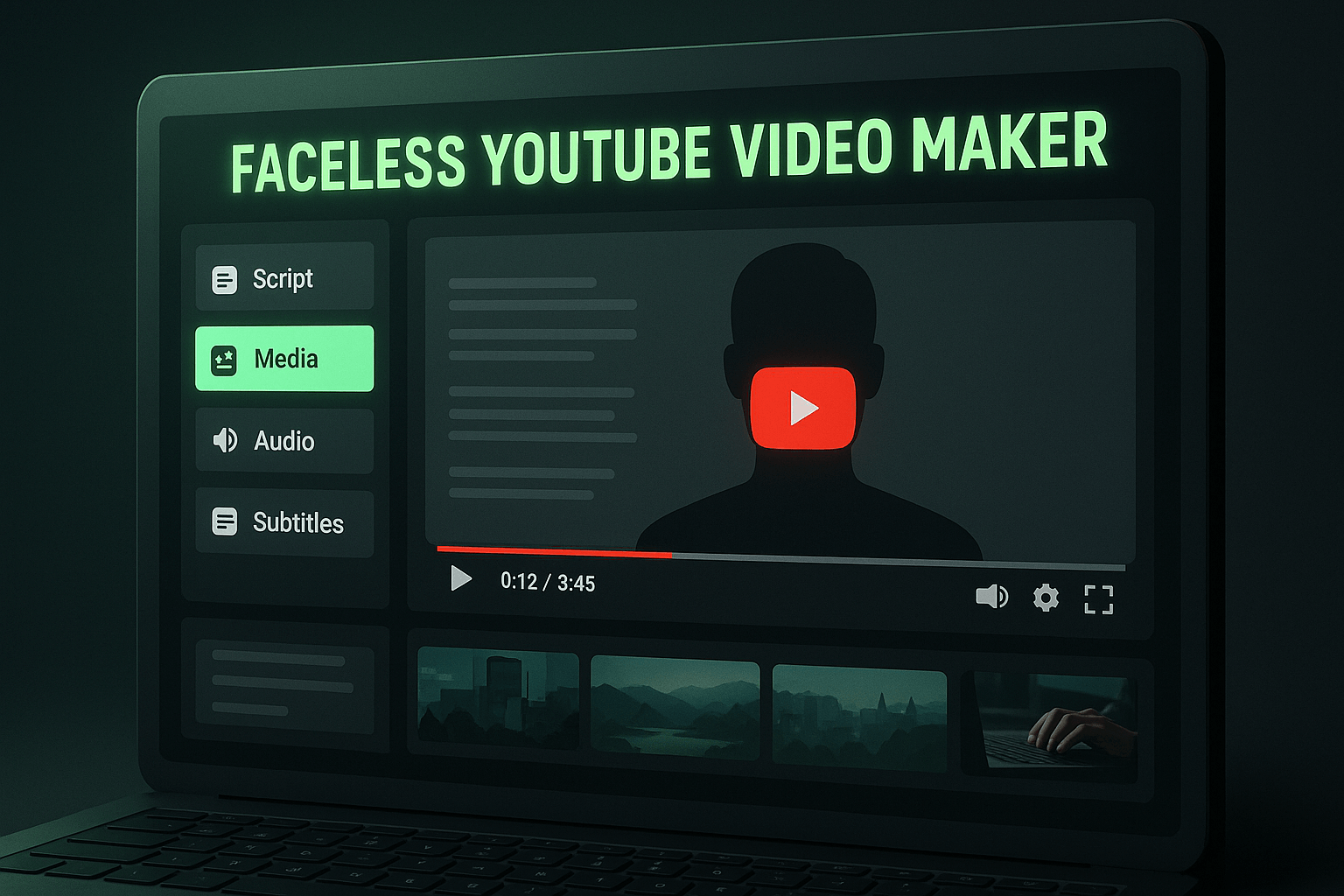
Being on camera is a tax. It costs time, it costs wardrobe decisions, it costs recording-ready mental state, and for a lot of people it costs the kind of anxiety that kills posting consistency entirely. The faceless creator economy exists because many of the most consistent creators decided to pay a different tax instead.
In 2026, the data says it's working. Across a sample of 36,388 AI videos we analyzed, lifestyle creators use AI avatars 38.7% of the time. Third-person perspective dominates viral TikToks at 77.8%. The faceless playbook is no longer a workaround — it's a primary format.
The Math in Favor of Faceless
Start with the production data. In our sample of 36,388 Agent Opus projects, avatar adoption by niche:
| Niche | Avatar adoption % |
|---|---|
| Lifestyle & Aesthetic | 38.7% |
| Tech & Innovation | 34.8% |
| Finance & Commerce | 25.9% |
| Trends & Commentary | 19.8% |
| Narrative & Documentary | 15.8% |
Lifestyle — the niche with the highest avatar adoption — is also the shortest-format niche, averaging 39.5 seconds per video. These creators are building personal-brand content without appearing themselves. Not occasionally. As the default.
Layer in the TikTok finding: third-person perspective is the winning frame 77.8% of the time in our larger 13.5M clip research. First-person, direct-address, face-to-camera content is the minority format. Narration-over-B-roll, narration-over-avatar, and narration-over-text-visuals dominate.
Why Faceless Works on the Current Algorithms
1. The algorithm doesn't care whose face it is
Social platforms rank by completion rate, watch time, replay rate, and engagement signals. None of those signals weight "human face" versus "avatar" versus "screen recording." The algorithm cares about whether viewers stayed — not about who was on camera.
Creators who assume "being on camera" improves their signal are conflating audience preference (which sometimes prefers personality-driven content) with algorithmic reward (which doesn't). These are different levers.
2. The viewer doesn't notice as much as you think
This is the hardest insight to accept if you're a creator, but it's true. The viewer on a TikTok scroll is not parsing "is that a real person or an AI avatar." They're asking: is this worth my next 3 seconds? The answer depends on the hook, the information density, the visual rhythm. Face or no face is a minor variable inside that decision.
This is especially true in formats where the narrator's voice is the primary carrier of content — explainer videos, educational content, commentary. B-roll or avatar is doing visual work; voice is doing narrative work. The viewer can't distinguish "AI visual + human voice + scripted narrative" from "edited real footage + same voice + same narrative" at scroll speed.
3. Consistency beats personality
The faceless creator's real advantage is shipping rate. Being on camera adds production friction. Friction kills posting consistency. Faceless creators ship 3–5× more often than their on-camera peers because the production cycle is shorter.
Over 12 months, the faceless creator posts 4× more. That 4× accumulates as algorithmic training data, audience familiarity, and craft refinement. Personality advantages that a face-on creator has are real but rarely large enough to outweigh a 4× posting gap.
The 2026 Faceless Playbook
Step 1: Pick a niche where faceless is native
Not every niche rewards faceless content equally. The native-faceless niches, based on production data:
- Lifestyle & aesthetic (mood, taste, design) — avatar-friendly, 38.7% adoption
- Tech & innovation (product reviews, tutorials, industry commentary) — 34.8%
- Finance & commerce (investing, business, trends) — 25.9%
- Educational explainers (any subject that can be taught)
The harder niches for faceless are vlog-style personal storytelling, beauty/fashion try-ons, and fitness (where the body is the content). Not impossible — but you're swimming upstream.
Step 2: Pick one of three production formats
Format A: Avatar-forward. You build an AI avatar that becomes your face. The avatar can be stylized (anime, illustrated, retro) or realistic. The avatar appears in most videos, creating visual continuity across your content. Best for creators who want the idea of a face without their own.
Format B: B-roll-driven narration. No avatar. The visuals are AI-generated or stock B-roll aligned with what the narrator is saying. The creator is fully behind the camera — the voice is the only identity signal. Best for creators who want anonymity and a clean aesthetic.
Format C: Text-visual hybrid. The visual is primarily kinetic typography and animated text over a subtle B-roll layer. The narrator narrates; the text reinforces. Best for information-dense content where the visual has to carry the information, not just the vibe.
Step 3: Invest in voice
If you're not on camera, your voice is your brand. This is the single highest-leverage investment for any faceless creator.
- If you hate your voice: use a voice clone of a friend whose voice you like — with permission — or use AI voice models trained on voices you've licensed.
- If you like your voice: record in a treated space, use a good mic ($150+), monitor your delivery.
- If you want optionality: clone your own voice. Once cloned, you can produce content 10× faster without re-recording.
Voice continuity across videos is the faceless creator's answer to face continuity. Make it distinct, make it consistent, make it yours.
Step 4: Build a visual language
Without a face, your visuals have to work harder. The channels that win in the faceless era are the ones with a look — a recognizable color palette, font, editing rhythm, transition style, caption animation.
This doesn't mean your videos need to look expensive. It means they need to look consistent. The same fonts across videos. The same caption style. The same color palette. A viewer should recognize your channel from a thumbnail.
This is the leverage faceless creators have over face-on creators. Face-on creators depend on their face for recognition. Faceless creators depend on visual language — which is more controllable, more scalable, and more brand-able.
Step 5: Ship at 3–5x the rate of face-on creators
The whole point. If you're faceless and not shipping more than your face-on competitors, you're leaving the structural advantage on the table. The production workflow should be:
- Script/outline — 15 minutes
- Voice record or clone-generate — 5 minutes
- Visual pass (AI-generated B-roll, avatar, or stock) — 10 minutes
- Caption and ship — 10 minutes
40 minutes per video is the target. If you're taking 3 hours, you're producing like a face-on creator. The tools are good enough in 2026 to hit 40 minutes with practice.
What Doesn't Work in Faceless Content
A few patterns that fail consistently:
- The unconvincing avatar. Low-quality avatars read as AI and undercut your authority. If the avatar doesn't look like an intentional creative choice, it looks like a shortcut.
- The mismatched voice. A young visual aesthetic paired with a corporate narrator voice creates dissonance. Voice and visual should match the same target audience.
- The endless stock-footage montage. If your entire video is generic B-roll with no visual specificity, the viewer notices. Signal-specific visuals beat generic ones.
- The personality vacuum. Faceless doesn't mean personality-less. Your writing, your voice direction, your chosen topics — these carry the personality instead. Neutral faceless content reads as AI-produced slop.
The Bigger Bet
The faceless creator trend isn't a workaround anymore. It's becoming the default production mode for a growing share of the creator economy — especially in categories where information delivery matters more than personality. The data says this shift is real.
Creators who embrace it early get the structural advantages — higher posting velocity, visual-language moats, scalable production workflows. Creators who resist it because "being on camera is what real creators do" are fighting a trend that no longer has the algorithmic or economic foundation they think it does.
The 2026 playbook isn't to be on camera or to be faceless. It's to be deliberate — to choose the production mode that matches your niche, your voice, and your velocity, and to execute it better than the creators who haven't made the same decision.
Start Building Faceless Content
OpusClip turns long-form content into short-form clips — no face required. ClipAnything extracts the most viral moments automatically, adds captions, and exports vertical-ready clips. Pair it with a voice clone and you have a full faceless production pipeline. Try OpusClip free →
Frequently Asked Questions
Can you build a successful creator brand without showing your face?
Yes — and the data says it's increasingly common. 77.8% of viral TikToks in our sample use third-person perspective rather than direct-to-camera. In our sample of AI video projects, Lifestyle & Aesthetic creators use avatars 38.7% of the time. Faceless is no longer a workaround — it's a primary format.
What niches work best for faceless creators?
Based on production data, the native-faceless niches are lifestyle & aesthetic, tech & innovation, finance & commerce, and educational explainers. Harder niches include vlog-style personal storytelling, beauty try-ons, and fitness — where the body itself is the content. Not impossible, but you're swimming upstream.
Should I use an AI avatar or just narration over B-roll?
Depends on your niche and audience. Avatars work best when you want visual continuity across videos and a recognizable on-screen presence. Narration over B-roll works best for pure information delivery and anonymity. A third option — kinetic text + narration — works for information-dense content. All three can scale; pick the one that matches your content's shape.
How do faceless creators beat face-on creators?
Posting velocity. Face-on creators face real production friction (wardrobe, space, mental state) that kills consistency. Faceless creators can produce 3–5× more often at the same quality level. Over 12 months, that 4× posting gap usually outweighs whatever personality advantage the face-on creator has.