From Code to Content: How AI Tools Empower Non-Technical Creators

February 24, 2026
From Code to Content: How AI Tools Empower Non-Technical Creators

From Code to Content: How AI Tools Empower Non-Technical Creators

Something remarkable is happening in the creator economy. AI tools originally built for developers and technical experts are finding their way into the hands of marketers, educators, small business owners, and everyday content creators. The result? A democratization of creation that is reshaping who gets to build, publish, and grow online.

The recent surge in non-developers using Anthropic's Claude Code illustrates this shift perfectly. People across industries are learning to access their terminals for the first time, not because they want to become programmers, but because they want to create. This same pattern is playing out across the AI landscape, from code generation to video production, and it represents one of the most significant opportunities for non-technical creators in 2026.

The Great Democratization: What Is Actually Happening

For decades, certain types of creation required specialized skills. Building software meant learning to code. Producing professional video meant mastering complex editing suites. Creating at scale meant hiring teams or agencies.

AI tools are collapsing these barriers at an unprecedented pace. The Verge recently highlighted how Claude Code, a developer-focused tool, has attracted a surprising user base of non-developers who figured out how to use it for their own creative projects. This is not an isolated phenomenon.

Why Non-Technical Adoption Is Accelerating

  • Natural language interfaces: You can now describe what you want in plain English instead of learning syntax
  • Lower stakes experimentation: AI tools let you try ideas quickly without massive time investments
  • Community knowledge sharing: Tutorials and templates spread rapidly through social platforms
  • Immediate feedback loops: See results in seconds rather than hours or days

This shift matters because it changes who can participate in the creator economy. A solopreneur can now produce content that previously required a production team. A teacher can create engaging video lessons without film school training. A small business owner can maintain a consistent social media presence without hiring an agency.

How AI Video Tools Are Leading the Charge

Video creation represents one of the clearest examples of AI democratization in action. Traditional video production involves shooting, editing, color grading, sound mixing, captioning, and formatting for multiple platforms. Each step historically required either expensive software, specialized skills, or both.

AI-powered tools have compressed this workflow dramatically. OpusClip, for instance, takes long-form video content and automatically identifies the most engaging moments, clips them into short-form pieces, adds captions, and formats everything for different social platforms.

The Repurposing Revolution

Consider what this means for a non-technical creator:

  • Record a single 30-minute podcast or webinar
  • Upload it to an AI repurposing tool
  • Receive multiple short clips optimized for TikTok, Instagram Reels, YouTube Shorts, and LinkedIn
  • Each clip includes accurate captions and proper aspect ratios
  • Total additional effort: minutes instead of hours

This is not about replacing creativity. It is about removing the technical friction that prevents creative ideas from reaching audiences. The creator still decides what to say, how to say it, and which clips best represent their message. The AI handles the tedious production work.

Practical Applications Across Industries

The democratization of AI tools is creating opportunities across virtually every field. Here is how different types of non-technical creators are leveraging these capabilities.

Educators and Course Creators

Teachers and online educators are using AI tools to transform lengthy lectures into digestible content pieces. A 90-minute class recording becomes a library of short explainer videos, each focused on a single concept. Students get bite-sized learning materials. Educators build content libraries without additional recording sessions.

Small Business Owners

Local businesses often struggle with consistent content creation. AI repurposing tools let them turn customer testimonial videos, product demonstrations, or behind-the-scenes footage into weeks of social content. One filming session generates enough material to maintain an active presence across multiple platforms.

Coaches and Consultants

Professional service providers can repurpose client Q&A sessions, workshop recordings, and speaking engagements into thought leadership content. The AI identifies the most insightful moments and packages them for social distribution, building authority without requiring constant new content creation.

Podcasters and Content Creators

Long-form audio and video creators face the challenge of promoting episodes across short-form platforms. AI clipping tools solve this by automatically extracting highlights, adding visual elements like captions and speaker labels, and formatting for each platform's specifications.

Creator TypeSource ContentAI OutputTime Saved
Educator90-min lecture15-20 short clips8-10 hours
Small BusinessProduct demo video10-12 social posts5-6 hours
Podcaster60-min episode8-15 highlight clips4-5 hours
CoachWorkshop recording20+ content pieces10-12 hours

Getting Started: A Step-by-Step Guide for Non-Technical Creators

If you are new to AI-powered content tools, the process is simpler than you might expect. Here is how to begin leveraging these capabilities without any technical background.

Step 1: Audit Your Existing Content

Before creating anything new, inventory what you already have. Look for long-form videos, webinar recordings, podcast episodes, or any video content sitting unused. This existing material is your starting point for AI repurposing.

Step 2: Choose Your Primary Platform

Decide where your audience spends time. Different platforms favor different content styles and lengths. TikTok and Instagram Reels work well for quick, punchy clips. YouTube Shorts can handle slightly more context. LinkedIn favors professional insights and industry commentary.

Step 3: Upload and Let AI Analyze

Tools like OpusClip analyze your long-form content to identify the most engaging segments. The AI looks for complete thoughts, emotional peaks, and moments likely to capture attention. You do not need to timestamp anything manually.

Step 4: Review and Customize

AI suggestions are starting points, not final products. Review the clips the tool generates. Adjust start and end points if needed. Select caption styles that match your brand. Add any brand elements like logos or color schemes.

Step 5: Schedule and Distribute

Export your clips in the correct formats for each platform. Many creators batch this process, generating a week or month of content in a single session. Schedule posts using your preferred social media management tool.

Step 6: Analyze and Iterate

Track which clips perform best. Over time, you will notice patterns in what resonates with your audience. Use these insights to guide future content creation and clip selection.

Common Mistakes Non-Technical Creators Should Avoid

While AI tools lower the barrier to entry, some pitfalls can undermine your results. Watch out for these common errors.

  • Over-relying on AI selections: The algorithm identifies engaging moments, but you understand your audience and message best. Always review and curate.
  • Ignoring platform differences: A clip that works on TikTok may fall flat on LinkedIn. Customize your approach for each platform's culture and expectations.
  • Skipping captions: Most social video is watched without sound. Captions are not optional; they are essential for reach and accessibility.
  • Forgetting brand consistency: Use brand kits and templates to maintain visual consistency across all your clips. Random styling looks unprofessional.
  • Publishing without context: Short clips sometimes need brief introductions or hooks that the AI cannot provide. Add context where needed.
  • Neglecting quality source material: AI can only work with what you give it. Poor audio, bad lighting, or unfocused content will produce poor clips regardless of the tool.

Pro Tips for Maximizing AI Content Tools

Once you have the basics down, these strategies will help you get more value from AI-powered creation.

  • Batch your production: Record multiple long-form pieces in one session, then process them all through AI tools. This creates a content buffer and reduces context-switching.
  • Create with clipping in mind: When recording, occasionally pause between topics. Speak in complete thoughts. This gives AI better material to work with.
  • Test different clip lengths: Some audiences prefer 15-second punchy clips. Others engage more with 60-second mini-tutorials. Experiment to find your sweet spot.
  • Repurpose across time: Evergreen content can be re-clipped and redistributed months later. Your best material deserves multiple chances to reach new audiences.
  • Combine AI tools strategically: Use one tool for clipping, another for caption styling, and another for scheduling. Build a workflow that leverages each tool's strengths.

The Bigger Picture: What This Means for Creators

The democratization of AI tools represents more than just convenience. It is fundamentally changing the economics of content creation.

Previously, consistent multi-platform presence required either significant time investment or budget for team members and agencies. Now, a single creator can maintain the output of a small production team. This levels the playing field between well-funded brands and independent creators.

It also shifts the competitive advantage. When everyone has access to similar production capabilities, differentiation comes from ideas, authenticity, and audience understanding rather than technical polish. The creators who win are those with genuine expertise and unique perspectives, not necessarily those with the biggest budgets.

For non-technical creators, this is liberating. You can focus on what you do best, whether that is teaching, coaching, entertaining, or informing, while AI handles the technical production work that used to be a barrier.

Key Takeaways

  • AI tools originally built for technical users are increasingly accessible to non-technical creators
  • Video repurposing tools like OpusClip eliminate the need for complex editing skills
  • One piece of long-form content can generate weeks of short-form social posts
  • Success requires combining AI capabilities with human judgment and brand understanding
  • The competitive advantage is shifting from production quality to authentic expertise
  • Starting is simpler than most non-technical creators expect

Frequently Asked Questions

How do AI repurposing tools identify the best clips from long-form content?

AI repurposing tools like OpusClip use multiple signals to identify engaging moments. They analyze speech patterns to find complete thoughts and natural breaks. They detect emotional peaks through tone and pacing changes. They also look for viral potential based on patterns from millions of successful short-form videos. The AI essentially scores each potential clip segment and surfaces the highest-ranking options for your review and selection.

Can non-technical creators customize AI-generated clips to match their brand?

Absolutely. Most AI video tools include brand kit features that let you save logos, color schemes, fonts, and caption styles. In OpusClip, you can create templates that automatically apply your brand elements to every clip. This means even creators with no design background can maintain professional, consistent visual identity across all their content without manually styling each piece.

What types of source content work best for AI video clipping?

The best source content features clear audio, good lighting, and speakers who communicate in complete thoughts. Podcasts, webinars, interviews, and educational presentations typically work well because they contain distinct segments and quotable moments. Avoid content with excessive background noise, multiple people talking over each other, or rambling discussions without clear points. The cleaner your source material, the better your AI-generated clips will be.

How much time can non-technical creators realistically save with AI video tools?

Most creators report saving 4 to 10 hours per piece of long-form content. Manually editing a 60-minute video into 10 short clips, adding captions, and formatting for multiple platforms typically takes 6 to 8 hours. With OpusClip, the same process takes 30 to 60 minutes, including review and customization time. Over a month of consistent content creation, this translates to 20 to 40 hours saved, essentially a full work week.

Do AI-generated clips perform as well as manually edited content?

Performance depends more on content quality and audience relevance than editing method. AI tools have become sophisticated at identifying engaging moments, and many creators report equal or better performance from AI-selected clips compared to their manual selections. The key is treating AI suggestions as starting points and applying your audience knowledge to final selections. Clips that combine AI efficiency with human curation typically perform best.

What should non-technical creators look for when choosing an AI video tool?

Prioritize ease of use, caption accuracy, and platform-specific formatting. Look for tools that require minimal technical setup and offer intuitive interfaces. Test caption quality with your specific content type, as accuracy varies between tools. Ensure the tool exports in correct aspect ratios and formats for your target platforms. OpusClip handles all these elements automatically, making it particularly suitable for creators without technical backgrounds who want professional results quickly.

What to Do Next

The barrier between having ideas and sharing them with the world has never been lower. If you have been holding back on video content because of technical complexity, now is the time to start. Take one piece of long-form content you already have, upload it to OpusClip at opus.pro, and see how quickly you can transform it into a library of short-form clips ready for distribution. The tools are ready. Your audience is waiting.
On this page

Use our Free Forever Plan

Create and post one short video every day for free, and grow faster.

From Code to Content: How AI Tools Empower Non-Technical Creators

From Code to Content: How AI Tools Empower Non-Technical Creators

Something remarkable is happening in the creator economy. AI tools originally built for developers and technical experts are finding their way into the hands of marketers, educators, small business owners, and everyday content creators. The result? A democratization of creation that is reshaping who gets to build, publish, and grow online.

The recent surge in non-developers using Anthropic's Claude Code illustrates this shift perfectly. People across industries are learning to access their terminals for the first time, not because they want to become programmers, but because they want to create. This same pattern is playing out across the AI landscape, from code generation to video production, and it represents one of the most significant opportunities for non-technical creators in 2026.

The Great Democratization: What Is Actually Happening

For decades, certain types of creation required specialized skills. Building software meant learning to code. Producing professional video meant mastering complex editing suites. Creating at scale meant hiring teams or agencies.

AI tools are collapsing these barriers at an unprecedented pace. The Verge recently highlighted how Claude Code, a developer-focused tool, has attracted a surprising user base of non-developers who figured out how to use it for their own creative projects. This is not an isolated phenomenon.

Why Non-Technical Adoption Is Accelerating

  • Natural language interfaces: You can now describe what you want in plain English instead of learning syntax
  • Lower stakes experimentation: AI tools let you try ideas quickly without massive time investments
  • Community knowledge sharing: Tutorials and templates spread rapidly through social platforms
  • Immediate feedback loops: See results in seconds rather than hours or days

This shift matters because it changes who can participate in the creator economy. A solopreneur can now produce content that previously required a production team. A teacher can create engaging video lessons without film school training. A small business owner can maintain a consistent social media presence without hiring an agency.

How AI Video Tools Are Leading the Charge

Video creation represents one of the clearest examples of AI democratization in action. Traditional video production involves shooting, editing, color grading, sound mixing, captioning, and formatting for multiple platforms. Each step historically required either expensive software, specialized skills, or both.

AI-powered tools have compressed this workflow dramatically. OpusClip, for instance, takes long-form video content and automatically identifies the most engaging moments, clips them into short-form pieces, adds captions, and formats everything for different social platforms.

The Repurposing Revolution

Consider what this means for a non-technical creator:

  • Record a single 30-minute podcast or webinar
  • Upload it to an AI repurposing tool
  • Receive multiple short clips optimized for TikTok, Instagram Reels, YouTube Shorts, and LinkedIn
  • Each clip includes accurate captions and proper aspect ratios
  • Total additional effort: minutes instead of hours

This is not about replacing creativity. It is about removing the technical friction that prevents creative ideas from reaching audiences. The creator still decides what to say, how to say it, and which clips best represent their message. The AI handles the tedious production work.

Practical Applications Across Industries

The democratization of AI tools is creating opportunities across virtually every field. Here is how different types of non-technical creators are leveraging these capabilities.

Educators and Course Creators

Teachers and online educators are using AI tools to transform lengthy lectures into digestible content pieces. A 90-minute class recording becomes a library of short explainer videos, each focused on a single concept. Students get bite-sized learning materials. Educators build content libraries without additional recording sessions.

Small Business Owners

Local businesses often struggle with consistent content creation. AI repurposing tools let them turn customer testimonial videos, product demonstrations, or behind-the-scenes footage into weeks of social content. One filming session generates enough material to maintain an active presence across multiple platforms.

Coaches and Consultants

Professional service providers can repurpose client Q&A sessions, workshop recordings, and speaking engagements into thought leadership content. The AI identifies the most insightful moments and packages them for social distribution, building authority without requiring constant new content creation.

Podcasters and Content Creators

Long-form audio and video creators face the challenge of promoting episodes across short-form platforms. AI clipping tools solve this by automatically extracting highlights, adding visual elements like captions and speaker labels, and formatting for each platform's specifications.

Creator TypeSource ContentAI OutputTime Saved
Educator90-min lecture15-20 short clips8-10 hours
Small BusinessProduct demo video10-12 social posts5-6 hours
Podcaster60-min episode8-15 highlight clips4-5 hours
CoachWorkshop recording20+ content pieces10-12 hours

Getting Started: A Step-by-Step Guide for Non-Technical Creators

If you are new to AI-powered content tools, the process is simpler than you might expect. Here is how to begin leveraging these capabilities without any technical background.

Step 1: Audit Your Existing Content

Before creating anything new, inventory what you already have. Look for long-form videos, webinar recordings, podcast episodes, or any video content sitting unused. This existing material is your starting point for AI repurposing.

Step 2: Choose Your Primary Platform

Decide where your audience spends time. Different platforms favor different content styles and lengths. TikTok and Instagram Reels work well for quick, punchy clips. YouTube Shorts can handle slightly more context. LinkedIn favors professional insights and industry commentary.

Step 3: Upload and Let AI Analyze

Tools like OpusClip analyze your long-form content to identify the most engaging segments. The AI looks for complete thoughts, emotional peaks, and moments likely to capture attention. You do not need to timestamp anything manually.

Step 4: Review and Customize

AI suggestions are starting points, not final products. Review the clips the tool generates. Adjust start and end points if needed. Select caption styles that match your brand. Add any brand elements like logos or color schemes.

Step 5: Schedule and Distribute

Export your clips in the correct formats for each platform. Many creators batch this process, generating a week or month of content in a single session. Schedule posts using your preferred social media management tool.

Step 6: Analyze and Iterate

Track which clips perform best. Over time, you will notice patterns in what resonates with your audience. Use these insights to guide future content creation and clip selection.

Common Mistakes Non-Technical Creators Should Avoid

While AI tools lower the barrier to entry, some pitfalls can undermine your results. Watch out for these common errors.

  • Over-relying on AI selections: The algorithm identifies engaging moments, but you understand your audience and message best. Always review and curate.
  • Ignoring platform differences: A clip that works on TikTok may fall flat on LinkedIn. Customize your approach for each platform's culture and expectations.
  • Skipping captions: Most social video is watched without sound. Captions are not optional; they are essential for reach and accessibility.
  • Forgetting brand consistency: Use brand kits and templates to maintain visual consistency across all your clips. Random styling looks unprofessional.
  • Publishing without context: Short clips sometimes need brief introductions or hooks that the AI cannot provide. Add context where needed.
  • Neglecting quality source material: AI can only work with what you give it. Poor audio, bad lighting, or unfocused content will produce poor clips regardless of the tool.

Pro Tips for Maximizing AI Content Tools

Once you have the basics down, these strategies will help you get more value from AI-powered creation.

  • Batch your production: Record multiple long-form pieces in one session, then process them all through AI tools. This creates a content buffer and reduces context-switching.
  • Create with clipping in mind: When recording, occasionally pause between topics. Speak in complete thoughts. This gives AI better material to work with.
  • Test different clip lengths: Some audiences prefer 15-second punchy clips. Others engage more with 60-second mini-tutorials. Experiment to find your sweet spot.
  • Repurpose across time: Evergreen content can be re-clipped and redistributed months later. Your best material deserves multiple chances to reach new audiences.
  • Combine AI tools strategically: Use one tool for clipping, another for caption styling, and another for scheduling. Build a workflow that leverages each tool's strengths.

The Bigger Picture: What This Means for Creators

The democratization of AI tools represents more than just convenience. It is fundamentally changing the economics of content creation.

Previously, consistent multi-platform presence required either significant time investment or budget for team members and agencies. Now, a single creator can maintain the output of a small production team. This levels the playing field between well-funded brands and independent creators.

It also shifts the competitive advantage. When everyone has access to similar production capabilities, differentiation comes from ideas, authenticity, and audience understanding rather than technical polish. The creators who win are those with genuine expertise and unique perspectives, not necessarily those with the biggest budgets.

For non-technical creators, this is liberating. You can focus on what you do best, whether that is teaching, coaching, entertaining, or informing, while AI handles the technical production work that used to be a barrier.

Key Takeaways

  • AI tools originally built for technical users are increasingly accessible to non-technical creators
  • Video repurposing tools like OpusClip eliminate the need for complex editing skills
  • One piece of long-form content can generate weeks of short-form social posts
  • Success requires combining AI capabilities with human judgment and brand understanding
  • The competitive advantage is shifting from production quality to authentic expertise
  • Starting is simpler than most non-technical creators expect

Frequently Asked Questions

How do AI repurposing tools identify the best clips from long-form content?

AI repurposing tools like OpusClip use multiple signals to identify engaging moments. They analyze speech patterns to find complete thoughts and natural breaks. They detect emotional peaks through tone and pacing changes. They also look for viral potential based on patterns from millions of successful short-form videos. The AI essentially scores each potential clip segment and surfaces the highest-ranking options for your review and selection.

Can non-technical creators customize AI-generated clips to match their brand?

Absolutely. Most AI video tools include brand kit features that let you save logos, color schemes, fonts, and caption styles. In OpusClip, you can create templates that automatically apply your brand elements to every clip. This means even creators with no design background can maintain professional, consistent visual identity across all their content without manually styling each piece.

What types of source content work best for AI video clipping?

The best source content features clear audio, good lighting, and speakers who communicate in complete thoughts. Podcasts, webinars, interviews, and educational presentations typically work well because they contain distinct segments and quotable moments. Avoid content with excessive background noise, multiple people talking over each other, or rambling discussions without clear points. The cleaner your source material, the better your AI-generated clips will be.

How much time can non-technical creators realistically save with AI video tools?

Most creators report saving 4 to 10 hours per piece of long-form content. Manually editing a 60-minute video into 10 short clips, adding captions, and formatting for multiple platforms typically takes 6 to 8 hours. With OpusClip, the same process takes 30 to 60 minutes, including review and customization time. Over a month of consistent content creation, this translates to 20 to 40 hours saved, essentially a full work week.

Do AI-generated clips perform as well as manually edited content?

Performance depends more on content quality and audience relevance than editing method. AI tools have become sophisticated at identifying engaging moments, and many creators report equal or better performance from AI-selected clips compared to their manual selections. The key is treating AI suggestions as starting points and applying your audience knowledge to final selections. Clips that combine AI efficiency with human curation typically perform best.

What should non-technical creators look for when choosing an AI video tool?

Prioritize ease of use, caption accuracy, and platform-specific formatting. Look for tools that require minimal technical setup and offer intuitive interfaces. Test caption quality with your specific content type, as accuracy varies between tools. Ensure the tool exports in correct aspect ratios and formats for your target platforms. OpusClip handles all these elements automatically, making it particularly suitable for creators without technical backgrounds who want professional results quickly.

What to Do Next

The barrier between having ideas and sharing them with the world has never been lower. If you have been holding back on video content because of technical complexity, now is the time to start. Take one piece of long-form content you already have, upload it to OpusClip at opus.pro, and see how quickly you can transform it into a library of short-form clips ready for distribution. The tools are ready. Your audience is waiting.

Creator name

Creator type

Team size

Channels

linkYouTubefacebookXTikTok

Pain point

Time to see positive ROI

About the creator

Don't miss these

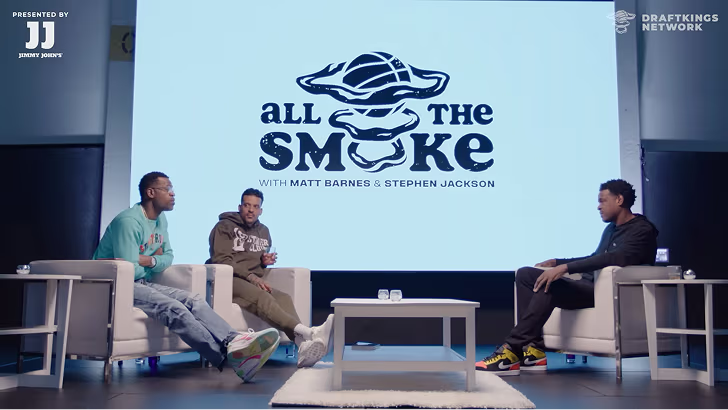
How All the Smoke makes hit compilations faster with OpusSearch

How All the Smoke makes hit compilations faster with OpusSearch

Growing a new channel to 1.5M views in 90 days without creating new videos

Growing a new channel to 1.5M views in 90 days without creating new videos

Turning old videos into new hits: How KFC Radio drives 43% more views with a new YouTube strategy

Turning old videos into new hits: How KFC Radio drives 43% more views with a new YouTube strategy

From Code to Content: How AI Tools Empower Non-Technical Creators

From Code to Content: How AI Tools Empower Non-Technical Creators
No items found.
No items found.

Boost your social media growth with OpusClip

Create and post one short video every day for your social media and grow faster.

From Code to Content: How AI Tools Empower Non-Technical Creators

From Code to Content: How AI Tools Empower Non-Technical Creators

From Code to Content: How AI Tools Empower Non-Technical Creators

Something remarkable is happening in the creator economy. AI tools originally built for developers and technical experts are finding their way into the hands of marketers, educators, small business owners, and everyday content creators. The result? A democratization of creation that is reshaping who gets to build, publish, and grow online.

The recent surge in non-developers using Anthropic's Claude Code illustrates this shift perfectly. People across industries are learning to access their terminals for the first time, not because they want to become programmers, but because they want to create. This same pattern is playing out across the AI landscape, from code generation to video production, and it represents one of the most significant opportunities for non-technical creators in 2026.

The Great Democratization: What Is Actually Happening

For decades, certain types of creation required specialized skills. Building software meant learning to code. Producing professional video meant mastering complex editing suites. Creating at scale meant hiring teams or agencies.

AI tools are collapsing these barriers at an unprecedented pace. The Verge recently highlighted how Claude Code, a developer-focused tool, has attracted a surprising user base of non-developers who figured out how to use it for their own creative projects. This is not an isolated phenomenon.

Why Non-Technical Adoption Is Accelerating

  • Natural language interfaces: You can now describe what you want in plain English instead of learning syntax
  • Lower stakes experimentation: AI tools let you try ideas quickly without massive time investments
  • Community knowledge sharing: Tutorials and templates spread rapidly through social platforms
  • Immediate feedback loops: See results in seconds rather than hours or days

This shift matters because it changes who can participate in the creator economy. A solopreneur can now produce content that previously required a production team. A teacher can create engaging video lessons without film school training. A small business owner can maintain a consistent social media presence without hiring an agency.

How AI Video Tools Are Leading the Charge

Video creation represents one of the clearest examples of AI democratization in action. Traditional video production involves shooting, editing, color grading, sound mixing, captioning, and formatting for multiple platforms. Each step historically required either expensive software, specialized skills, or both.

AI-powered tools have compressed this workflow dramatically. OpusClip, for instance, takes long-form video content and automatically identifies the most engaging moments, clips them into short-form pieces, adds captions, and formats everything for different social platforms.

The Repurposing Revolution

Consider what this means for a non-technical creator:

  • Record a single 30-minute podcast or webinar
  • Upload it to an AI repurposing tool
  • Receive multiple short clips optimized for TikTok, Instagram Reels, YouTube Shorts, and LinkedIn
  • Each clip includes accurate captions and proper aspect ratios
  • Total additional effort: minutes instead of hours

This is not about replacing creativity. It is about removing the technical friction that prevents creative ideas from reaching audiences. The creator still decides what to say, how to say it, and which clips best represent their message. The AI handles the tedious production work.

Practical Applications Across Industries

The democratization of AI tools is creating opportunities across virtually every field. Here is how different types of non-technical creators are leveraging these capabilities.

Educators and Course Creators

Teachers and online educators are using AI tools to transform lengthy lectures into digestible content pieces. A 90-minute class recording becomes a library of short explainer videos, each focused on a single concept. Students get bite-sized learning materials. Educators build content libraries without additional recording sessions.

Small Business Owners

Local businesses often struggle with consistent content creation. AI repurposing tools let them turn customer testimonial videos, product demonstrations, or behind-the-scenes footage into weeks of social content. One filming session generates enough material to maintain an active presence across multiple platforms.

Coaches and Consultants

Professional service providers can repurpose client Q&A sessions, workshop recordings, and speaking engagements into thought leadership content. The AI identifies the most insightful moments and packages them for social distribution, building authority without requiring constant new content creation.

Podcasters and Content Creators

Long-form audio and video creators face the challenge of promoting episodes across short-form platforms. AI clipping tools solve this by automatically extracting highlights, adding visual elements like captions and speaker labels, and formatting for each platform's specifications.

Creator TypeSource ContentAI OutputTime Saved
Educator90-min lecture15-20 short clips8-10 hours
Small BusinessProduct demo video10-12 social posts5-6 hours
Podcaster60-min episode8-15 highlight clips4-5 hours
CoachWorkshop recording20+ content pieces10-12 hours

Getting Started: A Step-by-Step Guide for Non-Technical Creators

If you are new to AI-powered content tools, the process is simpler than you might expect. Here is how to begin leveraging these capabilities without any technical background.

Step 1: Audit Your Existing Content

Before creating anything new, inventory what you already have. Look for long-form videos, webinar recordings, podcast episodes, or any video content sitting unused. This existing material is your starting point for AI repurposing.

Step 2: Choose Your Primary Platform

Decide where your audience spends time. Different platforms favor different content styles and lengths. TikTok and Instagram Reels work well for quick, punchy clips. YouTube Shorts can handle slightly more context. LinkedIn favors professional insights and industry commentary.

Step 3: Upload and Let AI Analyze

Tools like OpusClip analyze your long-form content to identify the most engaging segments. The AI looks for complete thoughts, emotional peaks, and moments likely to capture attention. You do not need to timestamp anything manually.

Step 4: Review and Customize

AI suggestions are starting points, not final products. Review the clips the tool generates. Adjust start and end points if needed. Select caption styles that match your brand. Add any brand elements like logos or color schemes.

Step 5: Schedule and Distribute

Export your clips in the correct formats for each platform. Many creators batch this process, generating a week or month of content in a single session. Schedule posts using your preferred social media management tool.

Step 6: Analyze and Iterate

Track which clips perform best. Over time, you will notice patterns in what resonates with your audience. Use these insights to guide future content creation and clip selection.

Common Mistakes Non-Technical Creators Should Avoid

While AI tools lower the barrier to entry, some pitfalls can undermine your results. Watch out for these common errors.

  • Over-relying on AI selections: The algorithm identifies engaging moments, but you understand your audience and message best. Always review and curate.
  • Ignoring platform differences: A clip that works on TikTok may fall flat on LinkedIn. Customize your approach for each platform's culture and expectations.
  • Skipping captions: Most social video is watched without sound. Captions are not optional; they are essential for reach and accessibility.
  • Forgetting brand consistency: Use brand kits and templates to maintain visual consistency across all your clips. Random styling looks unprofessional.
  • Publishing without context: Short clips sometimes need brief introductions or hooks that the AI cannot provide. Add context where needed.
  • Neglecting quality source material: AI can only work with what you give it. Poor audio, bad lighting, or unfocused content will produce poor clips regardless of the tool.

Pro Tips for Maximizing AI Content Tools

Once you have the basics down, these strategies will help you get more value from AI-powered creation.

  • Batch your production: Record multiple long-form pieces in one session, then process them all through AI tools. This creates a content buffer and reduces context-switching.
  • Create with clipping in mind: When recording, occasionally pause between topics. Speak in complete thoughts. This gives AI better material to work with.
  • Test different clip lengths: Some audiences prefer 15-second punchy clips. Others engage more with 60-second mini-tutorials. Experiment to find your sweet spot.
  • Repurpose across time: Evergreen content can be re-clipped and redistributed months later. Your best material deserves multiple chances to reach new audiences.
  • Combine AI tools strategically: Use one tool for clipping, another for caption styling, and another for scheduling. Build a workflow that leverages each tool's strengths.

The Bigger Picture: What This Means for Creators

The democratization of AI tools represents more than just convenience. It is fundamentally changing the economics of content creation.

Previously, consistent multi-platform presence required either significant time investment or budget for team members and agencies. Now, a single creator can maintain the output of a small production team. This levels the playing field between well-funded brands and independent creators.

It also shifts the competitive advantage. When everyone has access to similar production capabilities, differentiation comes from ideas, authenticity, and audience understanding rather than technical polish. The creators who win are those with genuine expertise and unique perspectives, not necessarily those with the biggest budgets.

For non-technical creators, this is liberating. You can focus on what you do best, whether that is teaching, coaching, entertaining, or informing, while AI handles the technical production work that used to be a barrier.

Key Takeaways

  • AI tools originally built for technical users are increasingly accessible to non-technical creators
  • Video repurposing tools like OpusClip eliminate the need for complex editing skills
  • One piece of long-form content can generate weeks of short-form social posts
  • Success requires combining AI capabilities with human judgment and brand understanding
  • The competitive advantage is shifting from production quality to authentic expertise
  • Starting is simpler than most non-technical creators expect

Frequently Asked Questions

How do AI repurposing tools identify the best clips from long-form content?

AI repurposing tools like OpusClip use multiple signals to identify engaging moments. They analyze speech patterns to find complete thoughts and natural breaks. They detect emotional peaks through tone and pacing changes. They also look for viral potential based on patterns from millions of successful short-form videos. The AI essentially scores each potential clip segment and surfaces the highest-ranking options for your review and selection.

Can non-technical creators customize AI-generated clips to match their brand?

Absolutely. Most AI video tools include brand kit features that let you save logos, color schemes, fonts, and caption styles. In OpusClip, you can create templates that automatically apply your brand elements to every clip. This means even creators with no design background can maintain professional, consistent visual identity across all their content without manually styling each piece.

What types of source content work best for AI video clipping?

The best source content features clear audio, good lighting, and speakers who communicate in complete thoughts. Podcasts, webinars, interviews, and educational presentations typically work well because they contain distinct segments and quotable moments. Avoid content with excessive background noise, multiple people talking over each other, or rambling discussions without clear points. The cleaner your source material, the better your AI-generated clips will be.

How much time can non-technical creators realistically save with AI video tools?

Most creators report saving 4 to 10 hours per piece of long-form content. Manually editing a 60-minute video into 10 short clips, adding captions, and formatting for multiple platforms typically takes 6 to 8 hours. With OpusClip, the same process takes 30 to 60 minutes, including review and customization time. Over a month of consistent content creation, this translates to 20 to 40 hours saved, essentially a full work week.

Do AI-generated clips perform as well as manually edited content?

Performance depends more on content quality and audience relevance than editing method. AI tools have become sophisticated at identifying engaging moments, and many creators report equal or better performance from AI-selected clips compared to their manual selections. The key is treating AI suggestions as starting points and applying your audience knowledge to final selections. Clips that combine AI efficiency with human curation typically perform best.

What should non-technical creators look for when choosing an AI video tool?

Prioritize ease of use, caption accuracy, and platform-specific formatting. Look for tools that require minimal technical setup and offer intuitive interfaces. Test caption quality with your specific content type, as accuracy varies between tools. Ensure the tool exports in correct aspect ratios and formats for your target platforms. OpusClip handles all these elements automatically, making it particularly suitable for creators without technical backgrounds who want professional results quickly.

What to Do Next

The barrier between having ideas and sharing them with the world has never been lower. If you have been holding back on video content because of technical complexity, now is the time to start. Take one piece of long-form content you already have, upload it to OpusClip at opus.pro, and see how quickly you can transform it into a library of short-form clips ready for distribution. The tools are ready. Your audience is waiting.

Ready to start streaming differently?

Opus is completely FREE for one year for all private beta users. You can get access to all our premium features during this period. We also offer free support for production, studio design, and content repurposing to help you grow.
Join the beta
Limited spots remaining

Try OPUS today

Try Opus Studio

Make your live stream your Magnum Opus