No items found.
The Labubu Trend Explained: Why This Toy Is Driving Millions of TikTok Views (and How Creators Are Cashing In)
May 6, 2026
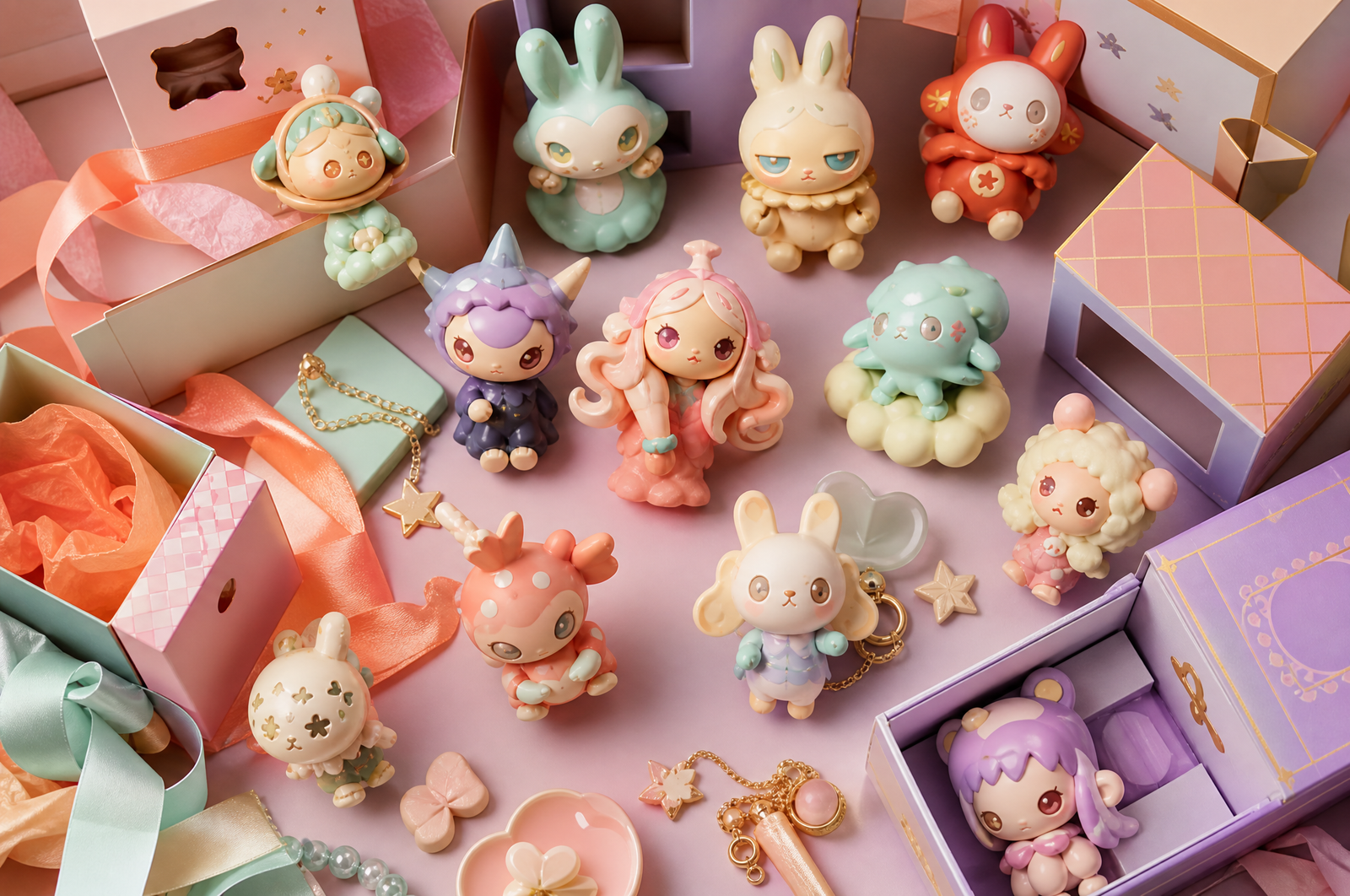
A small, slightly mischievous-looking designer toy with pointed ears and an oversized grin has spent most of 2026 colonizing TikTok. Celebrities are clipping them onto handbags. Creators are filming unboxings that rack up 5M views in a weekend. Resale prices on rare variants regularly cross $1,000. The Labubu trend is one of the most durable creator-economy phenomena of the year — and it's not slowing down.
This guide breaks down what Labubu actually is, why the trend hit so hard, and the content formats creators are using to ride the wave with their own collections.
Key takeaways
• Labubu is a designer toy character created by Hong Kong artist Kasing Lung and sold in blind boxes by Pop Mart. The line exploded into mainstream awareness through a mix of celebrity adoption (Lisa from BLACKPINK, Rihanna, Dua Lipa) and a viral TikTok unboxing economy.
• The Labubu trend has driven billions of cumulative TikTok views across unboxing videos, collection hauls, customization tutorials, and "Labubu authentication" content.
• The format works because it stacks several already-viral mechanics: blind-box gambling psychology, ASMR satisfaction, fashion-flex content, and rare-find storytelling.
• Creators monetize Labubu content through unboxings, affiliate links, custom Labubu commissions, accessory drops, and (most lucratively) reselling rare pulls.
• The same content principles apply to most blind-box and collectibles trends — Sonny Angel, Smiski, BE@RBRICK, and the many imitators that rose alongside Labubu.
What is Labubu (and how did it get so big)?
Labubu is a designer character from artist Kasing Lung's The Monsters series, originally launched in 2015 and licensed to Pop Mart — the Beijing-headquartered designer toy giant — in 2019. The character is a small, mischievous figure with pointed ears, oversized eyes, and a wide grin showing nine teeth. Each release is sold in blind boxes, meaning buyers don't know which variant they're getting until they open the package.
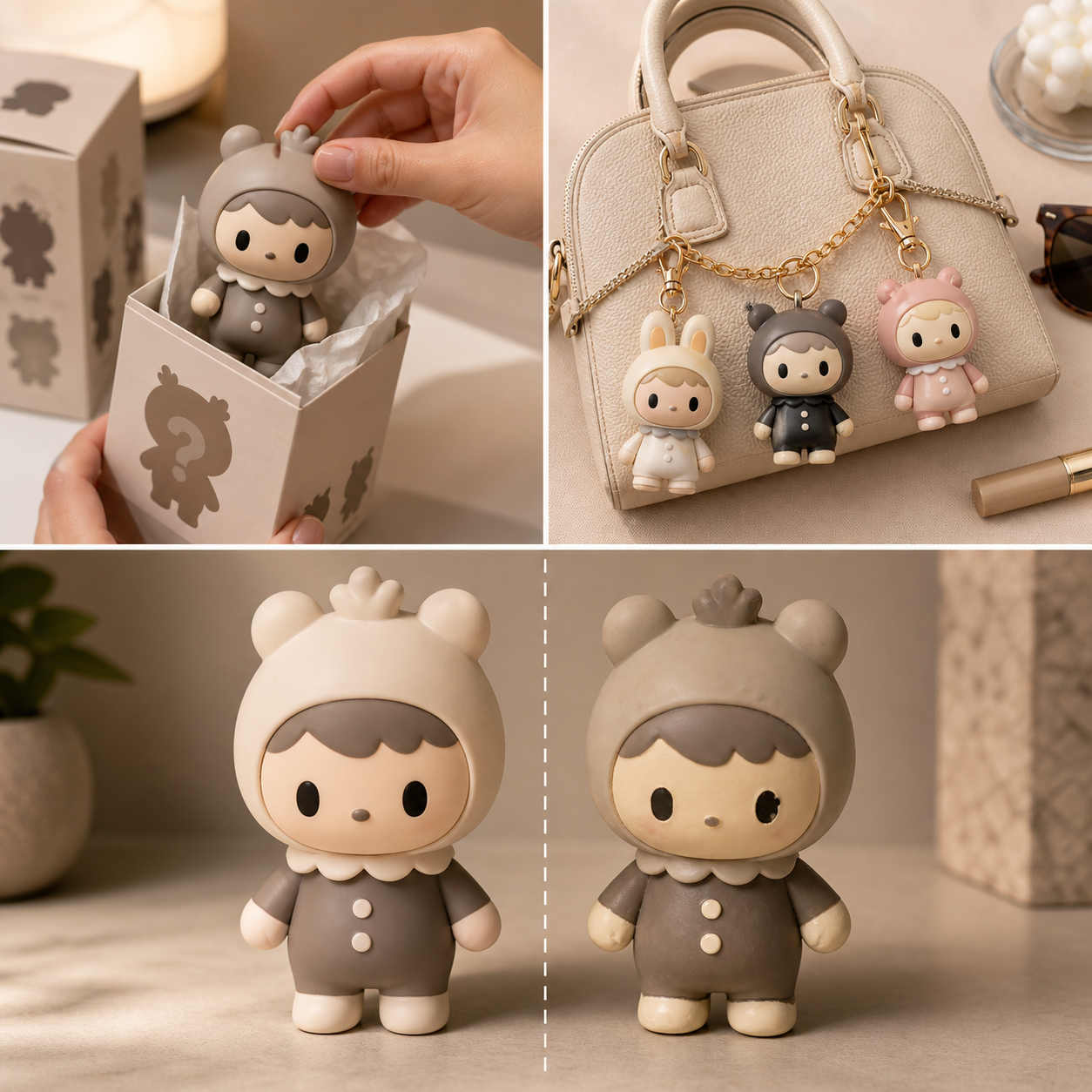
The trend's mainstream tipping point came when BLACKPINK's Lisa was photographed with Labubus clipped to her designer handbag. The clip-on accessory format — turning a $20 toy into a fashion statement attached to a $5,000 bag — gave the trend instant aspirational gravity. From there, the audience expanded fast: celebrities followed Lisa's lead, fans copied the celebrities, and the resale market exploded.
By 2026, Labubu had become a cultural shorthand for a particular kind of designer-toy fluency. Owning one signals you're in on the trend. Owning a rare variant signals you're deep in.
Why the Labubu trend keeps generating views
Five mechanics stack on top of each other to make Labubu content uniquely viral.
1. Blind-box gambling psychology. Every unboxing is a real-time reveal. The viewer doesn't know what's in the box, and neither does the creator. That uncertainty triggers the same dopamine pattern as slot machines — and it's the single most reliable retention mechanic in short-form video.
2. ASMR satisfaction. The unboxing sound design — crinkling cellophane, snapping plastic clamshells, soft fabric pouches — is intrinsically ASMR-friendly. Even on muted scrolls, the visual unwrapping pulls attention.
3. Fashion flex. Labubus have crossed from toy-collecting niche into fashion accessory. Showing your Labubu collection clipped to a Birkin is a luxury content format, not just a toy content format.
4. Rarity story arcs. The chase variants — the "secrets" or "chaser" Labubus that appear once per case — create natural narrative tension. "I opened 12 boxes and finally got the rare one" is a story arc the algorithm rewards.
5. Authentication drama. Counterfeit Labubus ("Lafufus") flooded the market in 2025–2026, spawning an entire content sub-genre of authentication tutorials, fake-spotting videos, and reaction content from creators who got duped.
The Labubu content formats that consistently hit
Creators in the niche tend to specialize in one of five formats. Each has its own retention pattern and monetization angle.
1. The unboxing reveal
The foundational format. Creator films a single blind box being opened, narrating their guesses, reacting to the pull. Length: 30–90 seconds.
The structure that performs: - Hook (0–2s): "I'm opening the new Labubu series and I need the [chaser variant]" - Build (2–20s): Removing wrapping, slowing down on the moment of reveal - Reveal (20–25s): Pulling the figure out, immediate genuine reaction - Resolution (25–60s): Identifying which variant it is, comparing to what you wanted
2. The collection haul
Shows multiple Labubus, often the entire owned collection, sometimes paired with display case or shelf reveal. Length: 30–90 seconds.
Strong hook frames: "my entire Labubu collection," "$10,000 worth of Labubus," "every Labubu I own ranked."
3. The fashion attachment
Shows Labubus clipped to handbags, keychains, backpacks. Often features designer accessories alongside. Length: 8–20 seconds.
This is the highest-performing Labubu format on Reels (which weights aesthetic feed content) and the lowest-performing on TikTok (which weights narrative/reveal content).
4. The authentication tutorial
"How to spot a fake Labubu" content. Stitches a real Labubu and a counterfeit, identifies the differences. Length: 30–90 seconds.
This format has unusually high save rates — buyers actively reference it before making purchases — which boosts algorithmic distribution.
5. The custom Labubu
Creator paints, modifies, or accessorizes their Labubu, often making it match a celebrity look or matching their personal aesthetic. Length: 30–60 seconds.
This format has high cross-format performance — works on TikTok (process video), Reels (aesthetic shots), and Shorts (transformation content).
How to make Labubu content that captures the trend's distribution
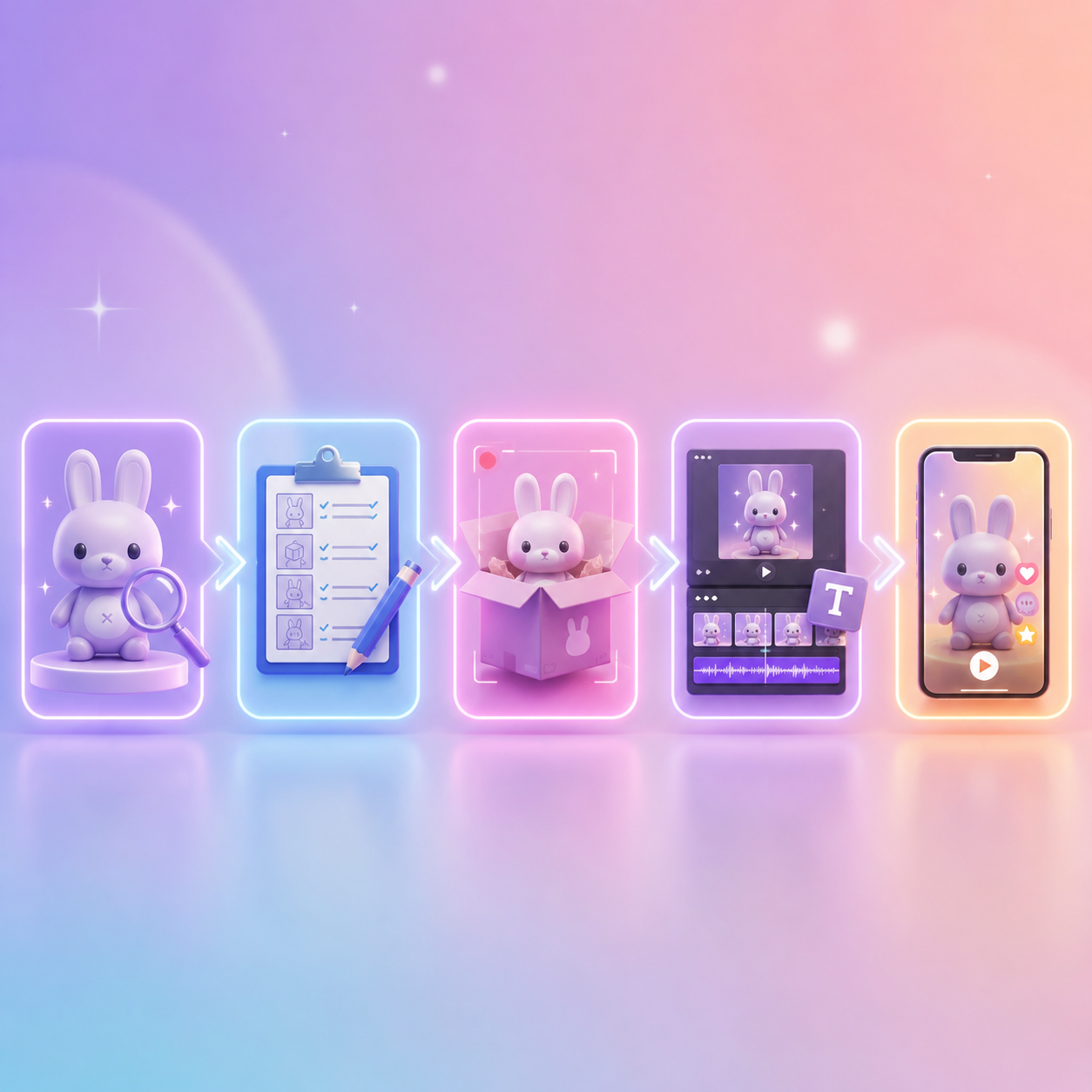
Step 1 — Source your Labubus (legitimately)
The Labubu market is rife with counterfeits. To produce credible content, source from:
• Pop Mart's official site or official Pop Mart stores
• Authorized retailers (verified resellers in major cities)
• Resale platforms with authentication (StockX, Mercari with verified sellers)
Counterfeit Labubus tank your credibility instantly — the niche audience can spot fakes immediately and will call them out in comments.
Step 2 — Plan your shot list
Pre-plan three things before you film:
• The hook frame — what's on screen in the first 0.5 seconds (a wrapped box, your hand reaching, a tagline caption)
• The reveal moment — where the figure first emerges from the packaging
• The reaction — your face or hands at the moment of identifying the variant
Don't wing it. The unboxing format depends on real reactions, but you should know which moments to film tight and which to film wide.
Step 3 — Film in good light, close framing
Most viral Labubu content is shot: - Natural daylight or a single soft key light - Tight framing — the box and the hands fill 70%+ of the frame - Stable shot — minimal handheld shake, often a tripod or phone mount - 9:16 vertical for TikTok and Reels distribution
Phone cameras are fine. The audience cares about the toy, not the production value.
Step 4 — Edit for retention with captions and hook frames
This is where the format wins or loses on the algorithm. The video needs:
• Burned-in captions that match every reaction beat
• A hook frame that previews the reveal moment (not just a closed box)
• A pacing curve that slows during the reveal and speeds up around it
• A button at the end — either a reaction CTA ("rate my pull 1–10") or a series setup ("box 2 tomorrow")
OpusClip handles auto-captions, smart reframing, and hook detection in one pass — which is the difference between shipping 1 Labubu video a day and shipping 5.
Step 5 — Caption and hashtag for distribution
Captions that consistently work on Labubu content:
• "opening 5 Labubus until I get the secret"
• "my Labubu collection finally complete"
• "how to spot a fake Labubu (save this)"
• "unboxing the rarest Labubu in the world"
• "customizing my Labubu to look like [celebrity]"
Hashtag stack: #labubu, #labubuunboxing, #popmart, #blindbox, #designertoys, #fyp, plus niche tags for your specific format.
How creators monetize Labubu content
Five revenue streams are active in the niche.
1. Affiliate links. Pop Mart and authorized retailers run affiliate programs for verified creators. Commission rates run 5–15% on Labubu sales.
2. Reselling rare pulls. Chaser variants regularly sell for 10–50x retail. A creator who pulls a rare Labubu on camera can resell it within hours for $300–$1,500+. The unboxing video itself becomes the authentication.
3. Custom commissions. Custom-painted or custom-modified Labubus sell for $100–$500+ on Etsy and Instagram. Creators with strong custom content build small production businesses around it.
4. Brand sponsorships. As the trend matured, fashion and accessory brands started sponsoring Labubu content as adjacent product placement. Bag brands, keychain brands, and display case brands have all sponsored top creators in the niche.
5. Channel monetization (Shorts/Reels). Once a Labubu channel hits monetization thresholds, the platform ad share kicks in. Top Labubu creators report $0.04–$0.15 RPM on Shorts — modest per-view but compounding fast at the millions-of-views scale the trend reaches.
Adjacent trends to ride alongside Labubu
The Labubu trend has spawned and amplified several adjacent collectible trends, each with similar viral mechanics:
• Sonny Angel — the longer-running blind-box character that Labubu fans typically also collect
• Smiski — the glow-in-the-dark Japanese figurines with their own subcultural following
• BE@RBRICK — the Medicom Toy bear figures with high-end designer collaborations
• Pop Mart's other lines — Skullpanda, Molly, Dimoo World, etc.
• Custom designer toys — independent artists selling small-batch designer figures
If you're building a content channel around the trend, mixing in adjacent collectibles diversifies your distribution and reduces risk if Labubu fatigue eventually sets in.
What's next for the Labubu trend
A few signals to watch through the rest of 2026:
• Pop Mart's continued release cadence — new Labubu series drop every 2–3 months. Each release creates a fresh content spike.
• Counterfeit market saturation — the Lafufu problem is escalating. Authentication content will continue to grow as long as the fake market does.
• Cross-platform expansion — Labubu IP is moving into apparel, animation shorts, and brand collaborations. Content riding the cross-overs catches new audiences.
• Generational ceiling check — the trend's audience is concentrated in Gen Z and younger millennials. If Pop Mart pushes harder into older demographics, the format mix will shift toward fashion/lifestyle and away from collecting.
The bottom line
The Labubu trend is one of the most durable creator-economy phenomena of 2026 because it stacks five viral mechanics in one format: blind-box gambling, ASMR, fashion flex, rarity stories, and authentication drama. The bar to enter is low — buy a Labubu, film an unboxing — but the volume game is what separates creators who ride the trend from creators who build a business off it.
The bottleneck is editing speed. Manual captioning and reframing eat your hours. OpusClip auto-captions, smart-reframes for vertical, and picks hook frames in one pass — which is what lets top creators in the niche ship 5 Labubu videos a day instead of 1.
Open your blind box. Hit record. Let the algorithm reward the reveal.