15 TikTok Hooks That Are Hijacking the Algorithm Right Now (2026)

May 12, 2026
15 TikTok Hooks That Are Hijacking the Algorithm Right Now (2026)

The first 1.5 seconds of a TikTok decide whether it gets 1,000 views or 1,000,000. We analyzed 34,635 clips through OpusClip's hook engine and pulled the 15 opening patterns that consistently break through in 2026 — with templates you can copy tonight.

The algorithm hasn't changed its job: it still scores how long viewers watch before they scroll. What's changed is which hooks earn that watch time. The "Hi guys, today we're going to talk about…" opener that worked in 2021 now buries you. The patterns below are the ones still winning, ranked roughly by how often they appear in viral clips in our 2026 dataset.

1. The product / outcome showcase

You lead with the finished thing. The transformation. The number. The result. By second 2, the viewer knows exactly what they'll get if they stay. Highest-performing hook type in our dataset — averaging roughly 6,000 views per clip across niches.

Template: "This [tool] just [outcome] in [unexpectedly short time]."

2. The specific number

Specificity beats generality. "I lost weight" doesn't stop the scroll. "I lost 23 pounds in 67 days without giving up pizza" does. Real-feeling numbers (47, 1,247) outperform round ones (50, 1,000).

Template: "I [did specific thing] [specific number] times. Here's what worked."

3. The contrarian open

You reject a widely-held belief in the first sentence. The brain can't leave the contradiction unresolved, so the viewer stays to find out how it resolves.

Template: "Everyone says [common advice]. They're wrong. Here's why."

4. The expert credential drop

Three seconds to establish authority, curiosity, and a payoff promise. Works because TikTok viewers trust short-form experts more than long-form ones — they expect the credibility signal upfront.

Template: "I've worked in [field] for [years]. Here's the thing nobody tells you about [topic]."

5. The visual "wait, what?"

No script needed — the first frame is so visually unexpected the viewer's pattern recognition stalls long enough to keep watching. A man in a suit in a swimming pool. A perfect pour of espresso into a teacup full of orange juice.

Template: Lead with the most absurd, beautiful, or unexplainable frame in your video. Caption it with a one-line question.

6. The imperative command

"Stop scrolling." "Don't buy [product] until you watch this." Demands engagement in a medium built on disengagement. High-risk hook — undersells with weak follow-through, but extraordinary when the payoff is genuine.

Template: "Stop scrolling if [outcome] is something you care about."

7. The before-and-after split

The split-screen opener. Left side: messy/broken/before. Right side: pristine/working/after. The viewer wants the bridge between them and stays for the demonstration.

Template: Open with a 1.5-second split frame. Caption: "Wait until you see how."

8. The "POV" frame

POV-style hooks frame the viewer as the protagonist in someone else's scenario. Works for storytelling, fashion, food, and tutorials. POV opens convert tutorial content into entertainment.

Template: "POV: you just [scenario], and now [unexpected complication]."

9. The "I tried [niche thing] for [time]"

The experiment framing. Bounded in time, clearly defined intervention, viewer wants the result. Especially strong for fitness, productivity, and finance.

Template: "I [did unusual thing] for [period of time]. Here's what actually happened."

10. The leaked / found / stolen frame

The audience treats "found" content as more authentic than performed content. Even when everyone knows it's staged. The hook works on the suggestion of voyeurism.

Template: "Found my old [object]. Couldn't believe what was on it."

11. The "everyone is doing this wrong" reveal

Adjacent to the contrarian open but more positioned as a generous correction than a fight. You're showing them the better way.

Template: "You're [common action] wrong. Here's the way it should be done."

12. The "wait for it" loop

A short visual setup that pays off only at the end. The audience replays to catch what they missed. Replays are weighted heavily by the algorithm.

Template: Open on a scene that "looks normal." Build the loop so the absurdity becomes visible only on second watch.

13. The two-second face check

For face-on creators only. You appear, you make a single expressive face that matches the emotion of the video. Your visual asks the question your caption answers.

Template: First frame: your face mid-reaction. Caption: state of mind in 4 words or less.

14. The interrupted setup

You start saying something — then immediately get interrupted by the thing the video is actually about. Cuts off mid-word. Pattern interrupt at its purest.

Template: "So I was about to tell you about — [hard cut to scene]."

15. The price reveal

The number that makes the audience flinch. "$0.50 for what would be $50 in a restaurant." "$47 vs $4,700 for the same look." Direct, clear, undeniable.

Template: "This costs [X]. This one costs [10X]. Tell me the difference."

What's not working anymore

A few hook patterns underperformed consistently in our dataset. If your template uses any of these, rewrite:

  • "Hi guys, today we're going to talk about…" — the YouTuber opener on a non-YouTube platform.
  • "Have you ever wondered…" — forces mental work before earning attention.
  • "Okay so…" — wastes the first two seconds resolving nothing.
  • "Let me tell you about the time…" — requires trust the viewer hasn't given you yet.

The 3-second test

After you film, watch your own video for exactly three seconds with the sound off, then ask yourself: would I keep watching? If the answer is "I'm not sure," rewrite the hook. Hooks are the cheapest part of a video to change and the highest-leverage one.

How OpusClip scores hooks

OpusClip's ClipAnything engine scores every moment of your long-form video against a hook-strength model trained on millions of clips. When it cuts your video down to shorts, it leads with the moments that score highest — so your TikTok opens with your strongest beat instead of the natural start of your sentence.

That's the difference between a clip that gets 4,000 views and one that gets 400,000.

Ship one rewritten hook this week

Pick your worst-performing recent video. Identify which hook type it used. Rewrite the first three seconds with a different pattern from this list. Re-post under a different angle. The body of the video probably doesn't need to change — 90% of underperforming videos fail in the hook, not the substance.

Auto-cut your videos around your strongest hooks with OpusClip →
On this page

Use our Free Forever Plan

Create and post one short video every day for free, and grow faster.

15 TikTok Hooks That Are Hijacking the Algorithm Right Now (2026)

The first 1.5 seconds of a TikTok decide whether it gets 1,000 views or 1,000,000. We analyzed 34,635 clips through OpusClip's hook engine and pulled the 15 opening patterns that consistently break through in 2026 — with templates you can copy tonight.

The algorithm hasn't changed its job: it still scores how long viewers watch before they scroll. What's changed is which hooks earn that watch time. The "Hi guys, today we're going to talk about…" opener that worked in 2021 now buries you. The patterns below are the ones still winning, ranked roughly by how often they appear in viral clips in our 2026 dataset.

1. The product / outcome showcase

You lead with the finished thing. The transformation. The number. The result. By second 2, the viewer knows exactly what they'll get if they stay. Highest-performing hook type in our dataset — averaging roughly 6,000 views per clip across niches.

Template: "This [tool] just [outcome] in [unexpectedly short time]."

2. The specific number

Specificity beats generality. "I lost weight" doesn't stop the scroll. "I lost 23 pounds in 67 days without giving up pizza" does. Real-feeling numbers (47, 1,247) outperform round ones (50, 1,000).

Template: "I [did specific thing] [specific number] times. Here's what worked."

3. The contrarian open

You reject a widely-held belief in the first sentence. The brain can't leave the contradiction unresolved, so the viewer stays to find out how it resolves.

Template: "Everyone says [common advice]. They're wrong. Here's why."

4. The expert credential drop

Three seconds to establish authority, curiosity, and a payoff promise. Works because TikTok viewers trust short-form experts more than long-form ones — they expect the credibility signal upfront.

Template: "I've worked in [field] for [years]. Here's the thing nobody tells you about [topic]."

5. The visual "wait, what?"

No script needed — the first frame is so visually unexpected the viewer's pattern recognition stalls long enough to keep watching. A man in a suit in a swimming pool. A perfect pour of espresso into a teacup full of orange juice.

Template: Lead with the most absurd, beautiful, or unexplainable frame in your video. Caption it with a one-line question.

6. The imperative command

"Stop scrolling." "Don't buy [product] until you watch this." Demands engagement in a medium built on disengagement. High-risk hook — undersells with weak follow-through, but extraordinary when the payoff is genuine.

Template: "Stop scrolling if [outcome] is something you care about."

7. The before-and-after split

The split-screen opener. Left side: messy/broken/before. Right side: pristine/working/after. The viewer wants the bridge between them and stays for the demonstration.

Template: Open with a 1.5-second split frame. Caption: "Wait until you see how."

8. The "POV" frame

POV-style hooks frame the viewer as the protagonist in someone else's scenario. Works for storytelling, fashion, food, and tutorials. POV opens convert tutorial content into entertainment.

Template: "POV: you just [scenario], and now [unexpected complication]."

9. The "I tried [niche thing] for [time]"

The experiment framing. Bounded in time, clearly defined intervention, viewer wants the result. Especially strong for fitness, productivity, and finance.

Template: "I [did unusual thing] for [period of time]. Here's what actually happened."

10. The leaked / found / stolen frame

The audience treats "found" content as more authentic than performed content. Even when everyone knows it's staged. The hook works on the suggestion of voyeurism.

Template: "Found my old [object]. Couldn't believe what was on it."

11. The "everyone is doing this wrong" reveal

Adjacent to the contrarian open but more positioned as a generous correction than a fight. You're showing them the better way.

Template: "You're [common action] wrong. Here's the way it should be done."

12. The "wait for it" loop

A short visual setup that pays off only at the end. The audience replays to catch what they missed. Replays are weighted heavily by the algorithm.

Template: Open on a scene that "looks normal." Build the loop so the absurdity becomes visible only on second watch.

13. The two-second face check

For face-on creators only. You appear, you make a single expressive face that matches the emotion of the video. Your visual asks the question your caption answers.

Template: First frame: your face mid-reaction. Caption: state of mind in 4 words or less.

14. The interrupted setup

You start saying something — then immediately get interrupted by the thing the video is actually about. Cuts off mid-word. Pattern interrupt at its purest.

Template: "So I was about to tell you about — [hard cut to scene]."

15. The price reveal

The number that makes the audience flinch. "$0.50 for what would be $50 in a restaurant." "$47 vs $4,700 for the same look." Direct, clear, undeniable.

Template: "This costs [X]. This one costs [10X]. Tell me the difference."

What's not working anymore

A few hook patterns underperformed consistently in our dataset. If your template uses any of these, rewrite:

  • "Hi guys, today we're going to talk about…" — the YouTuber opener on a non-YouTube platform.
  • "Have you ever wondered…" — forces mental work before earning attention.
  • "Okay so…" — wastes the first two seconds resolving nothing.
  • "Let me tell you about the time…" — requires trust the viewer hasn't given you yet.

The 3-second test

After you film, watch your own video for exactly three seconds with the sound off, then ask yourself: would I keep watching? If the answer is "I'm not sure," rewrite the hook. Hooks are the cheapest part of a video to change and the highest-leverage one.

How OpusClip scores hooks

OpusClip's ClipAnything engine scores every moment of your long-form video against a hook-strength model trained on millions of clips. When it cuts your video down to shorts, it leads with the moments that score highest — so your TikTok opens with your strongest beat instead of the natural start of your sentence.

That's the difference between a clip that gets 4,000 views and one that gets 400,000.

Ship one rewritten hook this week

Pick your worst-performing recent video. Identify which hook type it used. Rewrite the first three seconds with a different pattern from this list. Re-post under a different angle. The body of the video probably doesn't need to change — 90% of underperforming videos fail in the hook, not the substance.

Auto-cut your videos around your strongest hooks with OpusClip →
Creator name

Creator type

Team size

Channels

linkYouTubefacebookXTikTok

Pain point

Time to see positive ROI

About the creator

Don't miss these

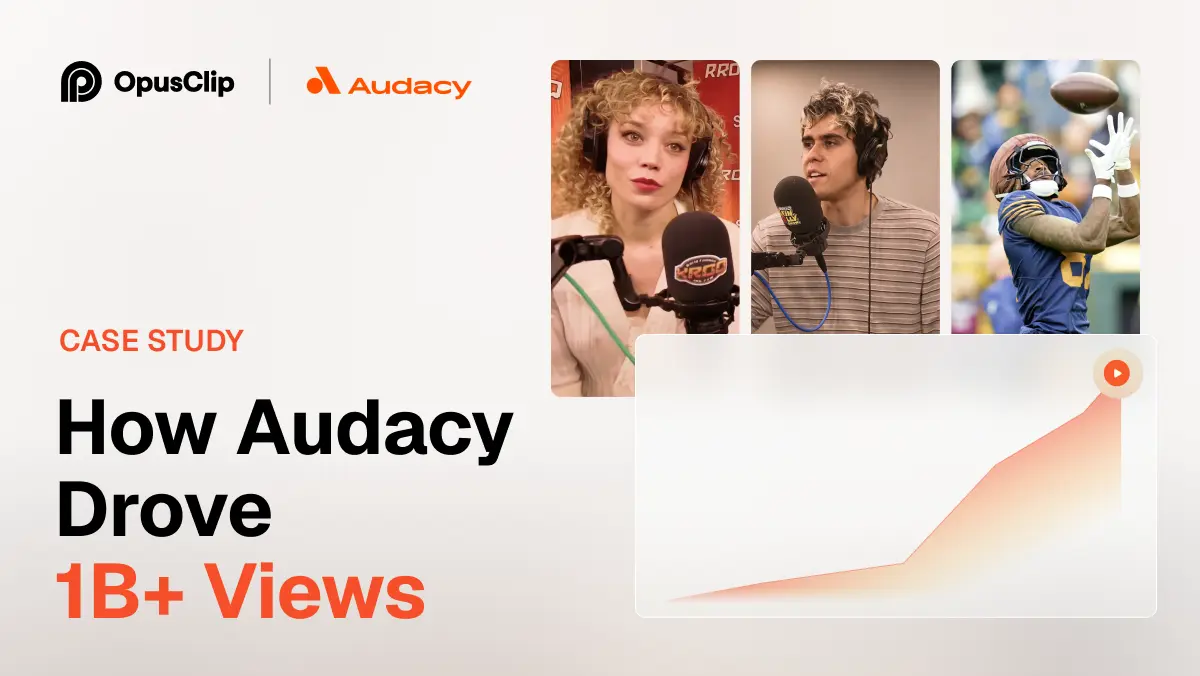
How Audacy Drove 1B+ Views by Taking a Tech-Forward Approach to Radio with OpusClip
No items found.

How Audacy Drove 1B+ Views by Taking a Tech-Forward Approach to Radio with OpusClip

How All the Smoke makes hit compilations faster with OpusSearch

How All the Smoke makes hit compilations faster with OpusSearch

Growing a new channel to 1.5M views in 90 days without creating new videos

Growing a new channel to 1.5M views in 90 days without creating new videos

15 TikTok Hooks That Are Hijacking the Algorithm Right Now (2026)

15 TikTok Hooks That Are Hijacking the Algorithm Right Now (2026)
No items found.
No items found.

Boost your social media growth with OpusClip

Create and post one short video every day for your social media and grow faster.

15 TikTok Hooks That Are Hijacking the Algorithm Right Now (2026)

15 TikTok Hooks That Are Hijacking the Algorithm Right Now (2026)

The first 1.5 seconds of a TikTok decide whether it gets 1,000 views or 1,000,000. We analyzed 34,635 clips through OpusClip's hook engine and pulled the 15 opening patterns that consistently break through in 2026 — with templates you can copy tonight.

The algorithm hasn't changed its job: it still scores how long viewers watch before they scroll. What's changed is which hooks earn that watch time. The "Hi guys, today we're going to talk about…" opener that worked in 2021 now buries you. The patterns below are the ones still winning, ranked roughly by how often they appear in viral clips in our 2026 dataset.

1. The product / outcome showcase

You lead with the finished thing. The transformation. The number. The result. By second 2, the viewer knows exactly what they'll get if they stay. Highest-performing hook type in our dataset — averaging roughly 6,000 views per clip across niches.

Template: "This [tool] just [outcome] in [unexpectedly short time]."

2. The specific number

Specificity beats generality. "I lost weight" doesn't stop the scroll. "I lost 23 pounds in 67 days without giving up pizza" does. Real-feeling numbers (47, 1,247) outperform round ones (50, 1,000).

Template: "I [did specific thing] [specific number] times. Here's what worked."

3. The contrarian open

You reject a widely-held belief in the first sentence. The brain can't leave the contradiction unresolved, so the viewer stays to find out how it resolves.

Template: "Everyone says [common advice]. They're wrong. Here's why."

4. The expert credential drop

Three seconds to establish authority, curiosity, and a payoff promise. Works because TikTok viewers trust short-form experts more than long-form ones — they expect the credibility signal upfront.

Template: "I've worked in [field] for [years]. Here's the thing nobody tells you about [topic]."

5. The visual "wait, what?"

No script needed — the first frame is so visually unexpected the viewer's pattern recognition stalls long enough to keep watching. A man in a suit in a swimming pool. A perfect pour of espresso into a teacup full of orange juice.

Template: Lead with the most absurd, beautiful, or unexplainable frame in your video. Caption it with a one-line question.

6. The imperative command

"Stop scrolling." "Don't buy [product] until you watch this." Demands engagement in a medium built on disengagement. High-risk hook — undersells with weak follow-through, but extraordinary when the payoff is genuine.

Template: "Stop scrolling if [outcome] is something you care about."

7. The before-and-after split

The split-screen opener. Left side: messy/broken/before. Right side: pristine/working/after. The viewer wants the bridge between them and stays for the demonstration.

Template: Open with a 1.5-second split frame. Caption: "Wait until you see how."

8. The "POV" frame

POV-style hooks frame the viewer as the protagonist in someone else's scenario. Works for storytelling, fashion, food, and tutorials. POV opens convert tutorial content into entertainment.

Template: "POV: you just [scenario], and now [unexpected complication]."

9. The "I tried [niche thing] for [time]"

The experiment framing. Bounded in time, clearly defined intervention, viewer wants the result. Especially strong for fitness, productivity, and finance.

Template: "I [did unusual thing] for [period of time]. Here's what actually happened."

10. The leaked / found / stolen frame

The audience treats "found" content as more authentic than performed content. Even when everyone knows it's staged. The hook works on the suggestion of voyeurism.

Template: "Found my old [object]. Couldn't believe what was on it."

11. The "everyone is doing this wrong" reveal

Adjacent to the contrarian open but more positioned as a generous correction than a fight. You're showing them the better way.

Template: "You're [common action] wrong. Here's the way it should be done."

12. The "wait for it" loop

A short visual setup that pays off only at the end. The audience replays to catch what they missed. Replays are weighted heavily by the algorithm.

Template: Open on a scene that "looks normal." Build the loop so the absurdity becomes visible only on second watch.

13. The two-second face check

For face-on creators only. You appear, you make a single expressive face that matches the emotion of the video. Your visual asks the question your caption answers.

Template: First frame: your face mid-reaction. Caption: state of mind in 4 words or less.

14. The interrupted setup

You start saying something — then immediately get interrupted by the thing the video is actually about. Cuts off mid-word. Pattern interrupt at its purest.

Template: "So I was about to tell you about — [hard cut to scene]."

15. The price reveal

The number that makes the audience flinch. "$0.50 for what would be $50 in a restaurant." "$47 vs $4,700 for the same look." Direct, clear, undeniable.

Template: "This costs [X]. This one costs [10X]. Tell me the difference."

What's not working anymore

A few hook patterns underperformed consistently in our dataset. If your template uses any of these, rewrite:

  • "Hi guys, today we're going to talk about…" — the YouTuber opener on a non-YouTube platform.
  • "Have you ever wondered…" — forces mental work before earning attention.
  • "Okay so…" — wastes the first two seconds resolving nothing.
  • "Let me tell you about the time…" — requires trust the viewer hasn't given you yet.

The 3-second test

After you film, watch your own video for exactly three seconds with the sound off, then ask yourself: would I keep watching? If the answer is "I'm not sure," rewrite the hook. Hooks are the cheapest part of a video to change and the highest-leverage one.

How OpusClip scores hooks

OpusClip's ClipAnything engine scores every moment of your long-form video against a hook-strength model trained on millions of clips. When it cuts your video down to shorts, it leads with the moments that score highest — so your TikTok opens with your strongest beat instead of the natural start of your sentence.

That's the difference between a clip that gets 4,000 views and one that gets 400,000.

Ship one rewritten hook this week

Pick your worst-performing recent video. Identify which hook type it used. Rewrite the first three seconds with a different pattern from this list. Re-post under a different angle. The body of the video probably doesn't need to change — 90% of underperforming videos fail in the hook, not the substance.

Auto-cut your videos around your strongest hooks with OpusClip →

Ready to start streaming differently?

Opus is completely FREE for one year for all private beta users. You can get access to all our premium features during this period. We also offer free support for production, studio design, and content repurposing to help you grow.
Join the beta
Limited spots remaining

Try OPUS today

Try Opus Studio

Make your live stream your Magnum Opus