Claude Sonnet 4.6 Released: What It Means for AI Video Generation

February 17, 2026

Claude Sonnet 4.6 Released: What It Means for AI Video Workflows

Anthropic just dropped Claude Sonnet 4.6, and the AI video generation community is paying attention. This latest release brings meaningful improvements to reasoning speed, instruction following, and complex task handling. For creators using multi-model video platforms, these upgrades translate directly into better script generation, smarter scene planning, and more coherent long-form video outputs.

If you have been frustrated by AI assistants that lose context mid-project or struggle with nuanced creative briefs, Claude Sonnet 4.6 addresses those pain points head-on. The question now is how these improvements ripple through the AI video generation workflows that depend on sophisticated language models for everything from prompt interpretation to narrative structure.

What Changed in Claude Sonnet 4.6

Anthropic's latest release focuses on three core areas that matter most for creative professionals: reasoning accuracy, processing speed, and instruction adherence. Understanding these changes helps clarify why this update matters for video generation specifically.

Enhanced Reasoning Capabilities

Claude Sonnet 4.6 demonstrates measurably better performance on complex reasoning tasks. This means the model can:

  • Break down multi-step creative briefs more accurately
  • Maintain logical consistency across longer outputs
  • Handle conditional instructions without losing track of constraints
  • Recognize and resolve contradictions in user prompts

For video generation, this translates to scripts that actually follow your creative vision from start to finish, rather than drifting off-topic by the third scene.

Faster Response Times

Speed improvements in Sonnet 4.6 reduce the latency between submitting a prompt and receiving usable output. When you are iterating on a video concept, waiting 30 seconds versus 15 seconds per generation adds up quickly across dozens of revisions.

Better Instruction Following

The model now handles complex, multi-part instructions with greater fidelity. Tell it to write a script that is exactly 90 seconds, maintains a professional tone, includes three specific product features, and ends with a call to action. Sonnet 4.6 is more likely to nail all four requirements simultaneously.

Why Language Models Matter for AI Video Generation

Modern AI video platforms do not just convert text to visuals. They rely on sophisticated language understanding at multiple stages of the production pipeline. Here is where that intelligence gets applied.

Script Generation and Refinement

The quality of your final video depends heavily on the script that drives it. A language model interprets your brief, expands it into scene-by-scene descriptions, writes dialogue or narration, and ensures the pacing works for your target duration.

Weak language understanding produces scripts that:

  • Miss key points from your original brief
  • Include awkward transitions between scenes
  • Fail to match the tone you requested
  • Run too long or too short for your needs

Scene Planning and Model Selection

Multi-model video platforms like Agent Opus use language understanding to analyze each scene and select the optimal AI video model for that specific shot. A scene requiring realistic human motion might route to one model, while an abstract motion graphics sequence routes to another.

Better reasoning means smarter routing decisions, which means higher quality output without manual intervention.

Prompt Optimization

The prompts that drive individual video models need careful crafting. A language model takes your high-level creative direction and translates it into the specific prompt syntax that each underlying model understands best.

How Agent Opus Benefits from Language Model Improvements

Agent Opus aggregates multiple AI video generation models including Kling, Hailuo MiniMax, Veo, Runway, Sora, Seedance, Luma, and Pika into a single platform. The system automatically selects the best model for each scene and stitches clips together into cohesive videos exceeding three minutes.

This architecture means language model improvements cascade through the entire workflow.

Smarter Brief Interpretation

When you submit a prompt, script, outline, or blog URL to Agent Opus, the platform needs to understand your intent before it can execute. Enhanced reasoning capabilities mean:

  • More accurate extraction of key themes and messages
  • Better identification of visual requirements per scene
  • Improved handling of brand guidelines and constraints
  • Clearer translation of abstract concepts into concrete visuals

More Coherent Long-Form Videos

Creating videos longer than a few seconds requires maintaining narrative consistency across multiple generated clips. Each scene needs to connect logically to what came before and after.

Improved context handling helps ensure that scene 12 still reflects the creative direction established in scene 1, even in complex multi-minute productions.

Better Voiceover Script Generation

Agent Opus supports voiceover using either cloned user voices or AI-generated voices. The scripts driving these voiceovers need to sound natural when spoken aloud, match the visual pacing, and convey information clearly.

Language model improvements directly enhance voiceover quality by producing more natural speech patterns and better timing alignment.

Practical Applications for Video Creators

Understanding the technical improvements is useful, but what does this mean for your actual video projects? Here are concrete scenarios where better language understanding makes a difference.

Marketing Video Production

Marketing videos typically need to hit specific talking points, maintain brand voice, and include clear calls to action. With improved instruction following, you can specify all these requirements upfront and expect the generated script to address each one.

Example workflow:

  • Submit your product brief and brand guidelines
  • Specify target duration and platform (vertical for social, horizontal for web)
  • Include required messaging points
  • Receive a script that actually incorporates everything

Educational Content

Educational videos require logical progression, clear explanations, and appropriate pacing for comprehension. Better reasoning capabilities help structure content in ways that actually teach effectively.

Social Media Content at Scale

When producing multiple videos from a single source (like a blog post URL), consistency matters. Enhanced context handling ensures that video 5 in a series maintains the same tone and approach as video 1.

Pro Tips for Leveraging Language Model Improvements

These practical strategies help you get the most from enhanced AI capabilities in your video generation workflow.

  • Be specific in your briefs. Better instruction following rewards detailed prompts. Include tone, duration, key messages, and visual preferences upfront.
  • Use structured inputs. Outlines and scripts give the AI more to work with than vague prompts. The improved reasoning handles complex structures more reliably.
  • Iterate on the brief, not just the output. If results miss the mark, refine your input rather than regenerating repeatedly. Better language understanding means clearer inputs produce better outputs.
  • Leverage URL inputs for consistency. Submitting a blog or article URL lets the AI extract structure and messaging directly, reducing interpretation errors.
  • Specify constraints explicitly. Duration limits, required elements, and forbidden topics should be stated clearly. The model now handles multiple constraints more reliably.

Common Mistakes to Avoid

Even with improved AI capabilities, certain approaches still produce suboptimal results.

  • Vague prompts expecting specific outputs. "Make a cool video about our product" gives the AI too little direction. Specify what makes it cool.
  • Contradictory instructions. Asking for a "short but comprehensive" video creates tension the AI must resolve. Be clear about priorities.
  • Ignoring the brief refinement step. Jumping straight to video generation without reviewing the interpreted brief misses opportunities to catch misunderstandings early.
  • Overloading single prompts. While improved reasoning handles complexity better, extremely long prompts with dozens of requirements can still cause issues. Break complex projects into logical phases.

Step-by-Step: Creating Videos with Enhanced AI Understanding

Follow this workflow to take advantage of improved language model capabilities in Agent Opus.

Step 1: Prepare Your Input

Gather your source material. This could be a detailed prompt, a written script, a structured outline, or a URL to existing content. The more structured your input, the better the AI can interpret your intent.

Step 2: Define Your Constraints

Specify duration, aspect ratio, tone, and any required elements. List these explicitly rather than assuming the AI will infer them.

Step 3: Submit to Agent Opus

Use the Agent Opus interface at opus.pro/agent to submit your input. The platform interprets your brief and plans the video structure.

Step 4: Review the Generated Plan

Before full video generation, review how the AI has interpreted your brief. This is where improved reasoning shows its value. Check that scenes align with your vision.

Step 5: Generate and Refine

Let Agent Opus select optimal models for each scene and assemble the final video. The platform handles model selection, clip generation, voiceover, soundtrack, and final assembly automatically.

Step 6: Export for Your Platform

Download in the aspect ratio you need for your target platform. Agent Opus outputs publish-ready video without requiring additional processing.

Key Takeaways

  • Claude Sonnet 4.6 brings faster reasoning, better instruction following, and improved context handling.
  • These improvements directly enhance AI video generation workflows that depend on language understanding.
  • Agent Opus benefits through smarter brief interpretation, better scene planning, and more coherent long-form video output.
  • Creators should respond by providing more detailed, structured inputs to take advantage of improved AI capabilities.
  • The gap between simple prompts and professional video output continues to narrow as underlying language models improve.

Frequently Asked Questions

How does Claude Sonnet 4.6 improve script generation for AI videos?

Claude Sonnet 4.6 enhances script generation through better reasoning and instruction following. When you submit a brief to Agent Opus, the improved language understanding extracts key themes more accurately, maintains consistent tone throughout longer scripts, and handles multiple requirements simultaneously. This means scripts that actually reflect your creative vision without drifting off-topic or missing specified elements. The speed improvements also reduce iteration time when refining scripts.

Can Agent Opus automatically select different AI models based on scene requirements?

Yes, Agent Opus automatically analyzes each scene in your video and routes it to the optimal AI video model from its available options including Kling, Hailuo MiniMax, Veo, Runway, Sora, Seedance, Luma, and Pika. Better language understanding improves this routing by more accurately identifying what each scene requires. A scene needing realistic human motion routes differently than one requiring abstract motion graphics, and improved reasoning makes these distinctions more reliably.

What input formats work best for AI video generation with improved language models?

Agent Opus accepts prompts, scripts, outlines, and blog or article URLs as inputs. With improved language model capabilities, structured inputs like detailed outlines and complete scripts produce the best results because they give the AI more context to work with. URL inputs work particularly well for repurposing existing content because the AI can extract structure, messaging, and tone directly from the source material rather than inferring from a brief prompt.

How do language model improvements affect long-form video coherence?

Creating videos longer than three minutes requires maintaining narrative consistency across many generated clips. Enhanced context handling in models like Claude Sonnet 4.6 helps Agent Opus keep track of creative direction, character consistency, and thematic elements throughout the entire production. Scene 15 remains aligned with the vision established in scene 1, producing more professional results without manual intervention to fix continuity issues.

What is the difference between using a prompt versus a script in Agent Opus?

A prompt gives Agent Opus creative direction that it expands into a full video plan, while a script provides explicit scene-by-scene instructions. With improved language understanding, prompts now produce more accurate interpretations of your intent. However, scripts still offer more control for creators who know exactly what they want. Agent Opus handles both inputs effectively, using enhanced reasoning to either expand prompts intelligently or execute scripts faithfully.

How quickly can I expect to see AI video generation improvements from new language models?

Language model improvements typically integrate into AI video workflows within weeks to months of release, depending on the platform architecture. Agent Opus continuously updates its underlying capabilities to leverage the latest advances in language understanding. The practical impact appears in better brief interpretation, smarter model selection, and more coherent outputs. Creators benefit without needing to change their workflows significantly.

What to Do Next

Claude Sonnet 4.6 represents another step forward in AI capabilities that directly benefit video creators. The improvements in reasoning, speed, and instruction following translate into better results from platforms like Agent Opus that depend on sophisticated language understanding.

Ready to see how these advances work in practice? Try Agent Opus at opus.pro/agent and experience how improved AI understanding transforms your video creation workflow.
On this page

Use our Free Forever Plan

Create and post one short video every day for free, and grow faster.

Claude Sonnet 4.6 Released: What It Means for AI Video Generation

Claude Sonnet 4.6 Released: What It Means for AI Video Workflows

Anthropic just dropped Claude Sonnet 4.6, and the AI video generation community is paying attention. This latest release brings meaningful improvements to reasoning speed, instruction following, and complex task handling. For creators using multi-model video platforms, these upgrades translate directly into better script generation, smarter scene planning, and more coherent long-form video outputs.

If you have been frustrated by AI assistants that lose context mid-project or struggle with nuanced creative briefs, Claude Sonnet 4.6 addresses those pain points head-on. The question now is how these improvements ripple through the AI video generation workflows that depend on sophisticated language models for everything from prompt interpretation to narrative structure.

What Changed in Claude Sonnet 4.6

Anthropic's latest release focuses on three core areas that matter most for creative professionals: reasoning accuracy, processing speed, and instruction adherence. Understanding these changes helps clarify why this update matters for video generation specifically.

Enhanced Reasoning Capabilities

Claude Sonnet 4.6 demonstrates measurably better performance on complex reasoning tasks. This means the model can:

  • Break down multi-step creative briefs more accurately
  • Maintain logical consistency across longer outputs
  • Handle conditional instructions without losing track of constraints
  • Recognize and resolve contradictions in user prompts

For video generation, this translates to scripts that actually follow your creative vision from start to finish, rather than drifting off-topic by the third scene.

Faster Response Times

Speed improvements in Sonnet 4.6 reduce the latency between submitting a prompt and receiving usable output. When you are iterating on a video concept, waiting 30 seconds versus 15 seconds per generation adds up quickly across dozens of revisions.

Better Instruction Following

The model now handles complex, multi-part instructions with greater fidelity. Tell it to write a script that is exactly 90 seconds, maintains a professional tone, includes three specific product features, and ends with a call to action. Sonnet 4.6 is more likely to nail all four requirements simultaneously.

Why Language Models Matter for AI Video Generation

Modern AI video platforms do not just convert text to visuals. They rely on sophisticated language understanding at multiple stages of the production pipeline. Here is where that intelligence gets applied.

Script Generation and Refinement

The quality of your final video depends heavily on the script that drives it. A language model interprets your brief, expands it into scene-by-scene descriptions, writes dialogue or narration, and ensures the pacing works for your target duration.

Weak language understanding produces scripts that:

  • Miss key points from your original brief
  • Include awkward transitions between scenes
  • Fail to match the tone you requested
  • Run too long or too short for your needs

Scene Planning and Model Selection

Multi-model video platforms like Agent Opus use language understanding to analyze each scene and select the optimal AI video model for that specific shot. A scene requiring realistic human motion might route to one model, while an abstract motion graphics sequence routes to another.

Better reasoning means smarter routing decisions, which means higher quality output without manual intervention.

Prompt Optimization

The prompts that drive individual video models need careful crafting. A language model takes your high-level creative direction and translates it into the specific prompt syntax that each underlying model understands best.

How Agent Opus Benefits from Language Model Improvements

Agent Opus aggregates multiple AI video generation models including Kling, Hailuo MiniMax, Veo, Runway, Sora, Seedance, Luma, and Pika into a single platform. The system automatically selects the best model for each scene and stitches clips together into cohesive videos exceeding three minutes.

This architecture means language model improvements cascade through the entire workflow.

Smarter Brief Interpretation

When you submit a prompt, script, outline, or blog URL to Agent Opus, the platform needs to understand your intent before it can execute. Enhanced reasoning capabilities mean:

  • More accurate extraction of key themes and messages
  • Better identification of visual requirements per scene
  • Improved handling of brand guidelines and constraints
  • Clearer translation of abstract concepts into concrete visuals

More Coherent Long-Form Videos

Creating videos longer than a few seconds requires maintaining narrative consistency across multiple generated clips. Each scene needs to connect logically to what came before and after.

Improved context handling helps ensure that scene 12 still reflects the creative direction established in scene 1, even in complex multi-minute productions.

Better Voiceover Script Generation

Agent Opus supports voiceover using either cloned user voices or AI-generated voices. The scripts driving these voiceovers need to sound natural when spoken aloud, match the visual pacing, and convey information clearly.

Language model improvements directly enhance voiceover quality by producing more natural speech patterns and better timing alignment.

Practical Applications for Video Creators

Understanding the technical improvements is useful, but what does this mean for your actual video projects? Here are concrete scenarios where better language understanding makes a difference.

Marketing Video Production

Marketing videos typically need to hit specific talking points, maintain brand voice, and include clear calls to action. With improved instruction following, you can specify all these requirements upfront and expect the generated script to address each one.

Example workflow:

  • Submit your product brief and brand guidelines
  • Specify target duration and platform (vertical for social, horizontal for web)
  • Include required messaging points
  • Receive a script that actually incorporates everything

Educational Content

Educational videos require logical progression, clear explanations, and appropriate pacing for comprehension. Better reasoning capabilities help structure content in ways that actually teach effectively.

Social Media Content at Scale

When producing multiple videos from a single source (like a blog post URL), consistency matters. Enhanced context handling ensures that video 5 in a series maintains the same tone and approach as video 1.

Pro Tips for Leveraging Language Model Improvements

These practical strategies help you get the most from enhanced AI capabilities in your video generation workflow.

  • Be specific in your briefs. Better instruction following rewards detailed prompts. Include tone, duration, key messages, and visual preferences upfront.
  • Use structured inputs. Outlines and scripts give the AI more to work with than vague prompts. The improved reasoning handles complex structures more reliably.
  • Iterate on the brief, not just the output. If results miss the mark, refine your input rather than regenerating repeatedly. Better language understanding means clearer inputs produce better outputs.
  • Leverage URL inputs for consistency. Submitting a blog or article URL lets the AI extract structure and messaging directly, reducing interpretation errors.
  • Specify constraints explicitly. Duration limits, required elements, and forbidden topics should be stated clearly. The model now handles multiple constraints more reliably.

Common Mistakes to Avoid

Even with improved AI capabilities, certain approaches still produce suboptimal results.

  • Vague prompts expecting specific outputs. "Make a cool video about our product" gives the AI too little direction. Specify what makes it cool.
  • Contradictory instructions. Asking for a "short but comprehensive" video creates tension the AI must resolve. Be clear about priorities.
  • Ignoring the brief refinement step. Jumping straight to video generation without reviewing the interpreted brief misses opportunities to catch misunderstandings early.
  • Overloading single prompts. While improved reasoning handles complexity better, extremely long prompts with dozens of requirements can still cause issues. Break complex projects into logical phases.

Step-by-Step: Creating Videos with Enhanced AI Understanding

Follow this workflow to take advantage of improved language model capabilities in Agent Opus.

Step 1: Prepare Your Input

Gather your source material. This could be a detailed prompt, a written script, a structured outline, or a URL to existing content. The more structured your input, the better the AI can interpret your intent.

Step 2: Define Your Constraints

Specify duration, aspect ratio, tone, and any required elements. List these explicitly rather than assuming the AI will infer them.

Step 3: Submit to Agent Opus

Use the Agent Opus interface at opus.pro/agent to submit your input. The platform interprets your brief and plans the video structure.

Step 4: Review the Generated Plan

Before full video generation, review how the AI has interpreted your brief. This is where improved reasoning shows its value. Check that scenes align with your vision.

Step 5: Generate and Refine

Let Agent Opus select optimal models for each scene and assemble the final video. The platform handles model selection, clip generation, voiceover, soundtrack, and final assembly automatically.

Step 6: Export for Your Platform

Download in the aspect ratio you need for your target platform. Agent Opus outputs publish-ready video without requiring additional processing.

Key Takeaways

  • Claude Sonnet 4.6 brings faster reasoning, better instruction following, and improved context handling.
  • These improvements directly enhance AI video generation workflows that depend on language understanding.
  • Agent Opus benefits through smarter brief interpretation, better scene planning, and more coherent long-form video output.
  • Creators should respond by providing more detailed, structured inputs to take advantage of improved AI capabilities.
  • The gap between simple prompts and professional video output continues to narrow as underlying language models improve.

Frequently Asked Questions

How does Claude Sonnet 4.6 improve script generation for AI videos?

Claude Sonnet 4.6 enhances script generation through better reasoning and instruction following. When you submit a brief to Agent Opus, the improved language understanding extracts key themes more accurately, maintains consistent tone throughout longer scripts, and handles multiple requirements simultaneously. This means scripts that actually reflect your creative vision without drifting off-topic or missing specified elements. The speed improvements also reduce iteration time when refining scripts.

Can Agent Opus automatically select different AI models based on scene requirements?

Yes, Agent Opus automatically analyzes each scene in your video and routes it to the optimal AI video model from its available options including Kling, Hailuo MiniMax, Veo, Runway, Sora, Seedance, Luma, and Pika. Better language understanding improves this routing by more accurately identifying what each scene requires. A scene needing realistic human motion routes differently than one requiring abstract motion graphics, and improved reasoning makes these distinctions more reliably.

What input formats work best for AI video generation with improved language models?

Agent Opus accepts prompts, scripts, outlines, and blog or article URLs as inputs. With improved language model capabilities, structured inputs like detailed outlines and complete scripts produce the best results because they give the AI more context to work with. URL inputs work particularly well for repurposing existing content because the AI can extract structure, messaging, and tone directly from the source material rather than inferring from a brief prompt.

How do language model improvements affect long-form video coherence?

Creating videos longer than three minutes requires maintaining narrative consistency across many generated clips. Enhanced context handling in models like Claude Sonnet 4.6 helps Agent Opus keep track of creative direction, character consistency, and thematic elements throughout the entire production. Scene 15 remains aligned with the vision established in scene 1, producing more professional results without manual intervention to fix continuity issues.

What is the difference between using a prompt versus a script in Agent Opus?

A prompt gives Agent Opus creative direction that it expands into a full video plan, while a script provides explicit scene-by-scene instructions. With improved language understanding, prompts now produce more accurate interpretations of your intent. However, scripts still offer more control for creators who know exactly what they want. Agent Opus handles both inputs effectively, using enhanced reasoning to either expand prompts intelligently or execute scripts faithfully.

How quickly can I expect to see AI video generation improvements from new language models?

Language model improvements typically integrate into AI video workflows within weeks to months of release, depending on the platform architecture. Agent Opus continuously updates its underlying capabilities to leverage the latest advances in language understanding. The practical impact appears in better brief interpretation, smarter model selection, and more coherent outputs. Creators benefit without needing to change their workflows significantly.

What to Do Next

Claude Sonnet 4.6 represents another step forward in AI capabilities that directly benefit video creators. The improvements in reasoning, speed, and instruction following translate into better results from platforms like Agent Opus that depend on sophisticated language understanding.

Ready to see how these advances work in practice? Try Agent Opus at opus.pro/agent and experience how improved AI understanding transforms your video creation workflow.

Creator name

Creator type

Team size

Channels

linkYouTubefacebookXTikTok

Pain point

Time to see positive ROI

About the creator

Don't miss these

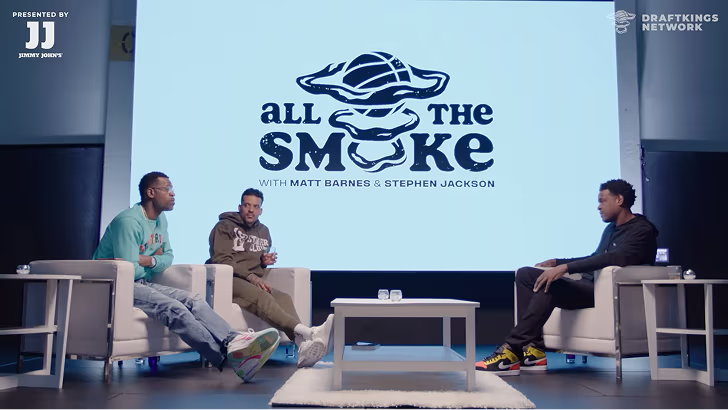
How All the Smoke makes hit compilations faster with OpusSearch

How All the Smoke makes hit compilations faster with OpusSearch

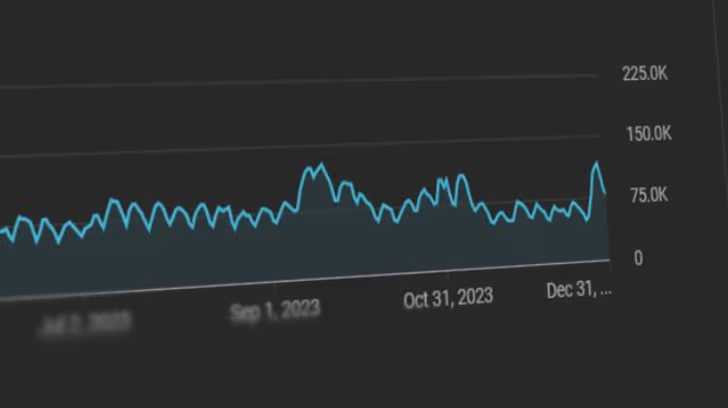
Growing a new channel to 1.5M views in 90 days without creating new videos

Growing a new channel to 1.5M views in 90 days without creating new videos

Turning old videos into new hits: How KFC Radio drives 43% more views with a new YouTube strategy

Turning old videos into new hits: How KFC Radio drives 43% more views with a new YouTube strategy

Claude Sonnet 4.6 Released: What It Means for AI Video Generation

No items found.
No items found.

Boost your social media growth with OpusClip

Create and post one short video every day for your social media and grow faster.

Claude Sonnet 4.6 Released: What It Means for AI Video Generation

Claude Sonnet 4.6 Released: What It Means for AI Video Workflows

Anthropic just dropped Claude Sonnet 4.6, and the AI video generation community is paying attention. This latest release brings meaningful improvements to reasoning speed, instruction following, and complex task handling. For creators using multi-model video platforms, these upgrades translate directly into better script generation, smarter scene planning, and more coherent long-form video outputs.

If you have been frustrated by AI assistants that lose context mid-project or struggle with nuanced creative briefs, Claude Sonnet 4.6 addresses those pain points head-on. The question now is how these improvements ripple through the AI video generation workflows that depend on sophisticated language models for everything from prompt interpretation to narrative structure.

What Changed in Claude Sonnet 4.6

Anthropic's latest release focuses on three core areas that matter most for creative professionals: reasoning accuracy, processing speed, and instruction adherence. Understanding these changes helps clarify why this update matters for video generation specifically.

Enhanced Reasoning Capabilities

Claude Sonnet 4.6 demonstrates measurably better performance on complex reasoning tasks. This means the model can:

  • Break down multi-step creative briefs more accurately
  • Maintain logical consistency across longer outputs
  • Handle conditional instructions without losing track of constraints
  • Recognize and resolve contradictions in user prompts

For video generation, this translates to scripts that actually follow your creative vision from start to finish, rather than drifting off-topic by the third scene.

Faster Response Times

Speed improvements in Sonnet 4.6 reduce the latency between submitting a prompt and receiving usable output. When you are iterating on a video concept, waiting 30 seconds versus 15 seconds per generation adds up quickly across dozens of revisions.

Better Instruction Following

The model now handles complex, multi-part instructions with greater fidelity. Tell it to write a script that is exactly 90 seconds, maintains a professional tone, includes three specific product features, and ends with a call to action. Sonnet 4.6 is more likely to nail all four requirements simultaneously.

Why Language Models Matter for AI Video Generation

Modern AI video platforms do not just convert text to visuals. They rely on sophisticated language understanding at multiple stages of the production pipeline. Here is where that intelligence gets applied.

Script Generation and Refinement

The quality of your final video depends heavily on the script that drives it. A language model interprets your brief, expands it into scene-by-scene descriptions, writes dialogue or narration, and ensures the pacing works for your target duration.

Weak language understanding produces scripts that:

  • Miss key points from your original brief
  • Include awkward transitions between scenes
  • Fail to match the tone you requested
  • Run too long or too short for your needs

Scene Planning and Model Selection

Multi-model video platforms like Agent Opus use language understanding to analyze each scene and select the optimal AI video model for that specific shot. A scene requiring realistic human motion might route to one model, while an abstract motion graphics sequence routes to another.

Better reasoning means smarter routing decisions, which means higher quality output without manual intervention.

Prompt Optimization

The prompts that drive individual video models need careful crafting. A language model takes your high-level creative direction and translates it into the specific prompt syntax that each underlying model understands best.

How Agent Opus Benefits from Language Model Improvements

Agent Opus aggregates multiple AI video generation models including Kling, Hailuo MiniMax, Veo, Runway, Sora, Seedance, Luma, and Pika into a single platform. The system automatically selects the best model for each scene and stitches clips together into cohesive videos exceeding three minutes.

This architecture means language model improvements cascade through the entire workflow.

Smarter Brief Interpretation

When you submit a prompt, script, outline, or blog URL to Agent Opus, the platform needs to understand your intent before it can execute. Enhanced reasoning capabilities mean:

  • More accurate extraction of key themes and messages
  • Better identification of visual requirements per scene
  • Improved handling of brand guidelines and constraints
  • Clearer translation of abstract concepts into concrete visuals

More Coherent Long-Form Videos

Creating videos longer than a few seconds requires maintaining narrative consistency across multiple generated clips. Each scene needs to connect logically to what came before and after.

Improved context handling helps ensure that scene 12 still reflects the creative direction established in scene 1, even in complex multi-minute productions.

Better Voiceover Script Generation

Agent Opus supports voiceover using either cloned user voices or AI-generated voices. The scripts driving these voiceovers need to sound natural when spoken aloud, match the visual pacing, and convey information clearly.

Language model improvements directly enhance voiceover quality by producing more natural speech patterns and better timing alignment.

Practical Applications for Video Creators

Understanding the technical improvements is useful, but what does this mean for your actual video projects? Here are concrete scenarios where better language understanding makes a difference.

Marketing Video Production

Marketing videos typically need to hit specific talking points, maintain brand voice, and include clear calls to action. With improved instruction following, you can specify all these requirements upfront and expect the generated script to address each one.

Example workflow:

  • Submit your product brief and brand guidelines
  • Specify target duration and platform (vertical for social, horizontal for web)
  • Include required messaging points
  • Receive a script that actually incorporates everything

Educational Content

Educational videos require logical progression, clear explanations, and appropriate pacing for comprehension. Better reasoning capabilities help structure content in ways that actually teach effectively.

Social Media Content at Scale

When producing multiple videos from a single source (like a blog post URL), consistency matters. Enhanced context handling ensures that video 5 in a series maintains the same tone and approach as video 1.

Pro Tips for Leveraging Language Model Improvements

These practical strategies help you get the most from enhanced AI capabilities in your video generation workflow.

  • Be specific in your briefs. Better instruction following rewards detailed prompts. Include tone, duration, key messages, and visual preferences upfront.
  • Use structured inputs. Outlines and scripts give the AI more to work with than vague prompts. The improved reasoning handles complex structures more reliably.
  • Iterate on the brief, not just the output. If results miss the mark, refine your input rather than regenerating repeatedly. Better language understanding means clearer inputs produce better outputs.
  • Leverage URL inputs for consistency. Submitting a blog or article URL lets the AI extract structure and messaging directly, reducing interpretation errors.
  • Specify constraints explicitly. Duration limits, required elements, and forbidden topics should be stated clearly. The model now handles multiple constraints more reliably.

Common Mistakes to Avoid

Even with improved AI capabilities, certain approaches still produce suboptimal results.

  • Vague prompts expecting specific outputs. "Make a cool video about our product" gives the AI too little direction. Specify what makes it cool.
  • Contradictory instructions. Asking for a "short but comprehensive" video creates tension the AI must resolve. Be clear about priorities.
  • Ignoring the brief refinement step. Jumping straight to video generation without reviewing the interpreted brief misses opportunities to catch misunderstandings early.
  • Overloading single prompts. While improved reasoning handles complexity better, extremely long prompts with dozens of requirements can still cause issues. Break complex projects into logical phases.

Step-by-Step: Creating Videos with Enhanced AI Understanding

Follow this workflow to take advantage of improved language model capabilities in Agent Opus.

Step 1: Prepare Your Input

Gather your source material. This could be a detailed prompt, a written script, a structured outline, or a URL to existing content. The more structured your input, the better the AI can interpret your intent.

Step 2: Define Your Constraints

Specify duration, aspect ratio, tone, and any required elements. List these explicitly rather than assuming the AI will infer them.

Step 3: Submit to Agent Opus

Use the Agent Opus interface at opus.pro/agent to submit your input. The platform interprets your brief and plans the video structure.

Step 4: Review the Generated Plan

Before full video generation, review how the AI has interpreted your brief. This is where improved reasoning shows its value. Check that scenes align with your vision.

Step 5: Generate and Refine

Let Agent Opus select optimal models for each scene and assemble the final video. The platform handles model selection, clip generation, voiceover, soundtrack, and final assembly automatically.

Step 6: Export for Your Platform

Download in the aspect ratio you need for your target platform. Agent Opus outputs publish-ready video without requiring additional processing.

Key Takeaways

  • Claude Sonnet 4.6 brings faster reasoning, better instruction following, and improved context handling.
  • These improvements directly enhance AI video generation workflows that depend on language understanding.
  • Agent Opus benefits through smarter brief interpretation, better scene planning, and more coherent long-form video output.
  • Creators should respond by providing more detailed, structured inputs to take advantage of improved AI capabilities.
  • The gap between simple prompts and professional video output continues to narrow as underlying language models improve.

Frequently Asked Questions

How does Claude Sonnet 4.6 improve script generation for AI videos?

Claude Sonnet 4.6 enhances script generation through better reasoning and instruction following. When you submit a brief to Agent Opus, the improved language understanding extracts key themes more accurately, maintains consistent tone throughout longer scripts, and handles multiple requirements simultaneously. This means scripts that actually reflect your creative vision without drifting off-topic or missing specified elements. The speed improvements also reduce iteration time when refining scripts.

Can Agent Opus automatically select different AI models based on scene requirements?

Yes, Agent Opus automatically analyzes each scene in your video and routes it to the optimal AI video model from its available options including Kling, Hailuo MiniMax, Veo, Runway, Sora, Seedance, Luma, and Pika. Better language understanding improves this routing by more accurately identifying what each scene requires. A scene needing realistic human motion routes differently than one requiring abstract motion graphics, and improved reasoning makes these distinctions more reliably.

What input formats work best for AI video generation with improved language models?

Agent Opus accepts prompts, scripts, outlines, and blog or article URLs as inputs. With improved language model capabilities, structured inputs like detailed outlines and complete scripts produce the best results because they give the AI more context to work with. URL inputs work particularly well for repurposing existing content because the AI can extract structure, messaging, and tone directly from the source material rather than inferring from a brief prompt.

How do language model improvements affect long-form video coherence?

Creating videos longer than three minutes requires maintaining narrative consistency across many generated clips. Enhanced context handling in models like Claude Sonnet 4.6 helps Agent Opus keep track of creative direction, character consistency, and thematic elements throughout the entire production. Scene 15 remains aligned with the vision established in scene 1, producing more professional results without manual intervention to fix continuity issues.

What is the difference between using a prompt versus a script in Agent Opus?

A prompt gives Agent Opus creative direction that it expands into a full video plan, while a script provides explicit scene-by-scene instructions. With improved language understanding, prompts now produce more accurate interpretations of your intent. However, scripts still offer more control for creators who know exactly what they want. Agent Opus handles both inputs effectively, using enhanced reasoning to either expand prompts intelligently or execute scripts faithfully.

How quickly can I expect to see AI video generation improvements from new language models?

Language model improvements typically integrate into AI video workflows within weeks to months of release, depending on the platform architecture. Agent Opus continuously updates its underlying capabilities to leverage the latest advances in language understanding. The practical impact appears in better brief interpretation, smarter model selection, and more coherent outputs. Creators benefit without needing to change their workflows significantly.

What to Do Next

Claude Sonnet 4.6 represents another step forward in AI capabilities that directly benefit video creators. The improvements in reasoning, speed, and instruction following translate into better results from platforms like Agent Opus that depend on sophisticated language understanding.

Ready to see how these advances work in practice? Try Agent Opus at opus.pro/agent and experience how improved AI understanding transforms your video creation workflow.

Ready to start streaming differently?

Opus is completely FREE for one year for all private beta users. You can get access to all our premium features during this period. We also offer free support for production, studio design, and content repurposing to help you grow.
Join the beta
Limited spots remaining

Try OPUS today

Try Opus Studio

Make your live stream your Magnum Opus