Google Adds AI Music to Gemini: The Rise of Multimodal AI Platforms

February 18, 2026
Google Adds AI Music to Gemini: The Rise of Multimodal AI Platforms

Google Adds AI Music to Gemini: Why Multimodal AI Platforms Lead Content Creation

Google just made a significant move that signals where AI content creation is heading. The tech giant has integrated DeepMind's Lyria 3 audio model directly into Gemini, allowing users to generate 30-second music tracks from text, images, and even videos without leaving the chatbot interface. This expansion into multimodal AI platforms represents more than a feature update. It reflects a fundamental shift in how creators will produce content in 2026 and beyond.

For video creators, marketers, and content teams, this development raises an important question: Why juggle multiple disconnected AI tools when integrated platforms can handle diverse creative tasks in one workflow? The answer is increasingly clear. The future belongs to unified AI systems that combine specialized models under a single roof.

What Google's Lyria 3 Integration Actually Means

Google's announcement brings AI music generation into the mainstream conversation. Lyria 3, developed by DeepMind, now lives inside Gemini's interface. Users worldwide can generate music tracks based on text prompts, reference images, or video clips.

The key detail here is integration. Google did not launch a separate music app. Instead, they embedded this capability directly into their existing AI assistant. This approach mirrors a broader industry pattern.

The Technical Breakdown

  • Input flexibility: Users can prompt with text descriptions, upload images for mood matching, or provide video clips for soundtrack generation
  • Output format: 30-second tracks suitable for social content, presentations, or creative projects
  • Access model: Beta rollout through the Gemini app with global availability
  • No context switching: Everything happens within the same interface where users already work

This integration philosophy is not unique to Google. It represents the direction the entire AI content industry is moving.

Why Multimodal AI Platforms Are Winning

The fragmented tool approach is dying. Creators who once bounced between five or six different AI services are discovering that integrated platforms save time, reduce friction, and produce more cohesive results.

The Problem with Tool Fragmentation

Consider the typical 2024 workflow for creating a video with AI assistance:

  • One tool for script generation
  • Another for image creation
  • A third for video generation
  • A fourth for voiceover
  • A fifth for music
  • Manual assembly of all components

Each tool has its own interface, pricing model, export formats, and learning curve. The cognitive load alone slows production significantly.

The Integrated Platform Advantage

Multimodal AI platforms solve this by combining capabilities. When a single system handles multiple content types, several benefits emerge:

  • Faster iteration: No exporting, downloading, and re-uploading between tools
  • Consistent quality: Components designed to work together produce more cohesive outputs
  • Simplified billing: One subscription instead of five
  • Reduced learning curve: Master one interface instead of many
  • Better context awareness: The system understands your full project, not just isolated pieces

How Agent Opus Embodies the Multi-Model Philosophy

While Google integrates music generation into Gemini, Agent Opus has been applying similar integration principles to video creation. The platform aggregates multiple AI video generation models into a single interface, automatically selecting the best model for each scene in your project.

The Multi-Model Aggregation Approach

Agent Opus combines capabilities from leading video generation models including Kling, Hailuo MiniMax, Veo, Runway, Sora, Seedance, Luma, and Pika. Rather than forcing users to choose one model and accept its limitations, the platform intelligently routes each scene to the model best suited for that specific content.

This means a single video project might use:

  • One model for photorealistic human scenes
  • Another for dynamic motion sequences
  • A third for stylized animated segments

The result is videos that exceed what any single model could produce alone.

From Input to Publish-Ready Video

Agent Opus accepts multiple input types to match different creator workflows:

  • Text prompts or briefs: Describe what you want and let the AI build the structure
  • Full scripts: Provide detailed scene-by-scene direction
  • Outlines: Give the framework and let AI fill in details
  • Blog or article URLs: Transform existing written content into video format

The platform then handles scene assembly, AI motion graphics, royalty-free image sourcing, voiceover generation (including voice cloning), AI avatars, background soundtracks, and social media aspect ratio formatting. The output is ready to publish without additional processing.

Use Cases Where Integrated AI Platforms Excel

Understanding when multimodal platforms provide the most value helps creators make informed tool choices.

Marketing Teams Producing at Scale

Marketing departments often need to produce dozens of video assets monthly across multiple channels. An integrated platform eliminates the coordination overhead of managing separate tools for each component. One team member can produce complete videos without specialized skills in each individual discipline.

Solo Creators and Small Businesses

Independent creators rarely have time to master multiple complex tools. A unified platform with intelligent defaults lets them focus on creative direction rather than technical execution. The AI handles the heavy lifting while the creator maintains artistic control.

Agencies Managing Multiple Clients

Agencies benefit from standardized workflows. When the entire team uses one platform, knowledge transfers easily between team members and projects. Training new staff becomes simpler, and quality remains consistent across client work.

Educational Content Producers

Educators and course creators often need to transform written materials into engaging video content. The ability to input a blog URL or article and receive a structured video dramatically accelerates content repurposing for different learning formats.

Pro Tips for Working with Multimodal AI Platforms

Getting the best results from integrated AI systems requires understanding how to leverage their unique strengths.

  • Start with clear creative direction: Even though the AI handles execution, your input quality determines output quality. Detailed prompts produce better results than vague requests.
  • Trust the model selection: Platforms like Agent Opus auto-select models for good reasons. Override only when you have specific technical requirements.
  • Iterate on sections, not entire projects: If one scene needs adjustment, refine that specific segment rather than regenerating everything.
  • Match input type to your preparation level: Use URL input when repurposing existing content. Use detailed scripts when you have specific vision requirements.
  • Plan for platform strengths: Design projects that leverage what the platform does well rather than fighting against its architecture.

Common Mistakes to Avoid

Even powerful platforms produce poor results when used incorrectly. Watch for these pitfalls:

  • Over-prompting: Extremely long, contradictory prompts confuse AI systems. Be specific but concise.
  • Ignoring output formats: Always specify your target platform's aspect ratio requirements upfront rather than trying to reformat later.
  • Skipping the brief stage: Jumping straight to generation without planning leads to wasted iterations. Outline your project structure first.
  • Expecting perfection on first try: AI generation is iterative. Budget time for refinement passes.
  • Using the wrong input type: A detailed script works better than a vague prompt when you have specific requirements. Match your input to your preparation level.

How to Create Videos with a Multi-Model AI Platform

For those new to integrated AI video generation, here is a straightforward workflow using Agent Opus:

Step 1: Define Your Project Scope

Determine your video's purpose, target audience, and distribution channel. This information shapes every subsequent decision. A LinkedIn thought leadership piece requires different treatment than a TikTok product demo.

Step 2: Choose Your Input Method

Select the input type that matches your preparation. If you have an existing blog post, use the URL input. If you have a detailed vision, write a script. If you want AI assistance with structure, start with a brief or outline.

Step 3: Provide Creative Direction

Specify tone, style, pacing, and any brand requirements. Include information about voiceover preferences, whether you want an AI avatar, and your target video length.

Step 4: Review the Generated Structure

Before full generation, review the proposed scene breakdown. This is your opportunity to adjust pacing, add or remove sections, and ensure the structure serves your goals.

Step 5: Generate and Refine

Let the platform generate your video. Review the output and identify any scenes that need adjustment. Refine specific sections rather than regenerating the entire project.

Step 6: Export for Your Target Platform

Select the appropriate aspect ratio and format for your distribution channel. The platform handles the technical formatting so your video is ready to publish.

The Broader Industry Trajectory

Google's Lyria 3 integration into Gemini is not an isolated event. It reflects a clear industry direction that will accelerate through 2026 and beyond.

Consolidation Is Inevitable

Standalone AI tools face increasing pressure. Users prefer fewer subscriptions, simpler workflows, and integrated experiences. Platforms that combine multiple capabilities will capture market share from single-purpose tools.

Model Quality Continues Improving

Each generation of AI models produces better outputs. Platforms that aggregate multiple models can offer users the best available option for each task, staying current as the technology evolves.

The Creator Economy Demands Efficiency

Content velocity requirements keep increasing. Creators who adopt integrated platforms gain competitive advantages through faster production cycles and lower per-piece costs.

Key Takeaways

  • Google's integration of Lyria 3 music generation into Gemini signals the industry's move toward multimodal AI platforms
  • Fragmented tool workflows create friction, increase costs, and slow production
  • Integrated platforms like Agent Opus combine multiple AI models to produce better results than any single model alone
  • Multi-model aggregation allows automatic selection of the best tool for each specific task
  • The trend toward consolidation will accelerate as users demand simpler, more powerful creative workflows
  • Creators who adopt integrated platforms now will have competitive advantages as the technology matures

Frequently Asked Questions

How does Google's Lyria 3 music generation compare to dedicated AI music tools?

Lyria 3's primary advantage is integration rather than raw capability. While dedicated music AI tools may offer more granular control and longer outputs, Lyria 3 eliminates context switching by living inside Gemini. For creators who need quick soundtracks for social content, this convenience often outweighs the limitations. The 30-second output length suits most short-form video needs, and the ability to generate music from images or video clips adds creative flexibility that standalone tools typically lack.

Can Agent Opus automatically add background music to generated videos?

Yes, Agent Opus includes background soundtrack generation as part of its integrated video creation workflow. When you create a video through the platform, you can specify music preferences in your creative direction. The system then selects and applies appropriate background audio that matches your content's tone and pacing. This happens automatically during the generation process, so your output includes synchronized audio without requiring separate music sourcing or manual audio editing.

What makes multi-model aggregation better than using a single AI video model?

Different AI video models excel at different content types. Some produce superior photorealistic humans while others handle motion dynamics better. Some excel at specific visual styles or animation approaches. Agent Opus analyzes each scene in your project and routes it to the model best suited for that specific content. A single video might use three or four different models, each contributing its strengths. The result is output quality that exceeds what any individual model could achieve across all scene types.

How do multimodal AI platforms handle brand consistency across different content types?

Integrated platforms maintain context across your entire project, which helps ensure consistency. When you provide brand guidelines, tone preferences, or visual direction at the project level, those parameters apply to all generated components. Agent Opus carries your creative direction through scene assembly, motion graphics, voiceover, and soundtrack selection. This unified approach produces more cohesive results than manually combining outputs from disconnected tools, where each component might interpret your brand differently.

What input format produces the best results when using Agent Opus for video generation?

The optimal input format depends on your preparation level and creative requirements. Detailed scripts work best when you have specific scene-by-scene vision and want precise control over content. URL inputs excel when repurposing existing written content like blog posts or articles. Briefs and outlines suit situations where you want AI assistance with structure while maintaining creative direction. For most users, starting with a clear brief that specifies tone, audience, and key messages produces strong results while allowing the platform's intelligence to handle structural decisions.

Will the trend toward integrated AI platforms eliminate specialized creative tools?

Specialized tools will likely persist for professional users with advanced requirements, but the mainstream market is shifting toward integrated platforms. Most creators prioritize speed and simplicity over maximum control. Integrated platforms serve this majority effectively. However, professionals in specific disciplines like music production, visual effects, or broadcast video will continue using specialized tools that offer deeper functionality. The market is bifurcating between professional-grade specialized tools and accessible integrated platforms for general creators.

What to Do Next

The shift toward multimodal AI platforms is not a future prediction. It is happening now. Google's Gemini expansion and platforms like Agent Opus represent the new standard for AI-assisted content creation. If you are still juggling multiple disconnected tools for video production, you are working harder than necessary. Experience the difference an integrated multi-model approach makes by trying Agent Opus at opus.pro/agent.
On this page

Use our Free Forever Plan

Create and post one short video every day for free, and grow faster.

Google Adds AI Music to Gemini: The Rise of Multimodal AI Platforms

Google Adds AI Music to Gemini: Why Multimodal AI Platforms Lead Content Creation

Google just made a significant move that signals where AI content creation is heading. The tech giant has integrated DeepMind's Lyria 3 audio model directly into Gemini, allowing users to generate 30-second music tracks from text, images, and even videos without leaving the chatbot interface. This expansion into multimodal AI platforms represents more than a feature update. It reflects a fundamental shift in how creators will produce content in 2026 and beyond.

For video creators, marketers, and content teams, this development raises an important question: Why juggle multiple disconnected AI tools when integrated platforms can handle diverse creative tasks in one workflow? The answer is increasingly clear. The future belongs to unified AI systems that combine specialized models under a single roof.

What Google's Lyria 3 Integration Actually Means

Google's announcement brings AI music generation into the mainstream conversation. Lyria 3, developed by DeepMind, now lives inside Gemini's interface. Users worldwide can generate music tracks based on text prompts, reference images, or video clips.

The key detail here is integration. Google did not launch a separate music app. Instead, they embedded this capability directly into their existing AI assistant. This approach mirrors a broader industry pattern.

The Technical Breakdown

  • Input flexibility: Users can prompt with text descriptions, upload images for mood matching, or provide video clips for soundtrack generation
  • Output format: 30-second tracks suitable for social content, presentations, or creative projects
  • Access model: Beta rollout through the Gemini app with global availability
  • No context switching: Everything happens within the same interface where users already work

This integration philosophy is not unique to Google. It represents the direction the entire AI content industry is moving.

Why Multimodal AI Platforms Are Winning

The fragmented tool approach is dying. Creators who once bounced between five or six different AI services are discovering that integrated platforms save time, reduce friction, and produce more cohesive results.

The Problem with Tool Fragmentation

Consider the typical 2024 workflow for creating a video with AI assistance:

  • One tool for script generation
  • Another for image creation
  • A third for video generation
  • A fourth for voiceover
  • A fifth for music
  • Manual assembly of all components

Each tool has its own interface, pricing model, export formats, and learning curve. The cognitive load alone slows production significantly.

The Integrated Platform Advantage

Multimodal AI platforms solve this by combining capabilities. When a single system handles multiple content types, several benefits emerge:

  • Faster iteration: No exporting, downloading, and re-uploading between tools
  • Consistent quality: Components designed to work together produce more cohesive outputs
  • Simplified billing: One subscription instead of five
  • Reduced learning curve: Master one interface instead of many
  • Better context awareness: The system understands your full project, not just isolated pieces

How Agent Opus Embodies the Multi-Model Philosophy

While Google integrates music generation into Gemini, Agent Opus has been applying similar integration principles to video creation. The platform aggregates multiple AI video generation models into a single interface, automatically selecting the best model for each scene in your project.

The Multi-Model Aggregation Approach

Agent Opus combines capabilities from leading video generation models including Kling, Hailuo MiniMax, Veo, Runway, Sora, Seedance, Luma, and Pika. Rather than forcing users to choose one model and accept its limitations, the platform intelligently routes each scene to the model best suited for that specific content.

This means a single video project might use:

  • One model for photorealistic human scenes
  • Another for dynamic motion sequences
  • A third for stylized animated segments

The result is videos that exceed what any single model could produce alone.

From Input to Publish-Ready Video

Agent Opus accepts multiple input types to match different creator workflows:

  • Text prompts or briefs: Describe what you want and let the AI build the structure
  • Full scripts: Provide detailed scene-by-scene direction
  • Outlines: Give the framework and let AI fill in details
  • Blog or article URLs: Transform existing written content into video format

The platform then handles scene assembly, AI motion graphics, royalty-free image sourcing, voiceover generation (including voice cloning), AI avatars, background soundtracks, and social media aspect ratio formatting. The output is ready to publish without additional processing.

Use Cases Where Integrated AI Platforms Excel

Understanding when multimodal platforms provide the most value helps creators make informed tool choices.

Marketing Teams Producing at Scale

Marketing departments often need to produce dozens of video assets monthly across multiple channels. An integrated platform eliminates the coordination overhead of managing separate tools for each component. One team member can produce complete videos without specialized skills in each individual discipline.

Solo Creators and Small Businesses

Independent creators rarely have time to master multiple complex tools. A unified platform with intelligent defaults lets them focus on creative direction rather than technical execution. The AI handles the heavy lifting while the creator maintains artistic control.

Agencies Managing Multiple Clients

Agencies benefit from standardized workflows. When the entire team uses one platform, knowledge transfers easily between team members and projects. Training new staff becomes simpler, and quality remains consistent across client work.

Educational Content Producers

Educators and course creators often need to transform written materials into engaging video content. The ability to input a blog URL or article and receive a structured video dramatically accelerates content repurposing for different learning formats.

Pro Tips for Working with Multimodal AI Platforms

Getting the best results from integrated AI systems requires understanding how to leverage their unique strengths.

  • Start with clear creative direction: Even though the AI handles execution, your input quality determines output quality. Detailed prompts produce better results than vague requests.
  • Trust the model selection: Platforms like Agent Opus auto-select models for good reasons. Override only when you have specific technical requirements.
  • Iterate on sections, not entire projects: If one scene needs adjustment, refine that specific segment rather than regenerating everything.
  • Match input type to your preparation level: Use URL input when repurposing existing content. Use detailed scripts when you have specific vision requirements.
  • Plan for platform strengths: Design projects that leverage what the platform does well rather than fighting against its architecture.

Common Mistakes to Avoid

Even powerful platforms produce poor results when used incorrectly. Watch for these pitfalls:

  • Over-prompting: Extremely long, contradictory prompts confuse AI systems. Be specific but concise.
  • Ignoring output formats: Always specify your target platform's aspect ratio requirements upfront rather than trying to reformat later.
  • Skipping the brief stage: Jumping straight to generation without planning leads to wasted iterations. Outline your project structure first.
  • Expecting perfection on first try: AI generation is iterative. Budget time for refinement passes.
  • Using the wrong input type: A detailed script works better than a vague prompt when you have specific requirements. Match your input to your preparation level.

How to Create Videos with a Multi-Model AI Platform

For those new to integrated AI video generation, here is a straightforward workflow using Agent Opus:

Step 1: Define Your Project Scope

Determine your video's purpose, target audience, and distribution channel. This information shapes every subsequent decision. A LinkedIn thought leadership piece requires different treatment than a TikTok product demo.

Step 2: Choose Your Input Method

Select the input type that matches your preparation. If you have an existing blog post, use the URL input. If you have a detailed vision, write a script. If you want AI assistance with structure, start with a brief or outline.

Step 3: Provide Creative Direction

Specify tone, style, pacing, and any brand requirements. Include information about voiceover preferences, whether you want an AI avatar, and your target video length.

Step 4: Review the Generated Structure

Before full generation, review the proposed scene breakdown. This is your opportunity to adjust pacing, add or remove sections, and ensure the structure serves your goals.

Step 5: Generate and Refine

Let the platform generate your video. Review the output and identify any scenes that need adjustment. Refine specific sections rather than regenerating the entire project.

Step 6: Export for Your Target Platform

Select the appropriate aspect ratio and format for your distribution channel. The platform handles the technical formatting so your video is ready to publish.

The Broader Industry Trajectory

Google's Lyria 3 integration into Gemini is not an isolated event. It reflects a clear industry direction that will accelerate through 2026 and beyond.

Consolidation Is Inevitable

Standalone AI tools face increasing pressure. Users prefer fewer subscriptions, simpler workflows, and integrated experiences. Platforms that combine multiple capabilities will capture market share from single-purpose tools.

Model Quality Continues Improving

Each generation of AI models produces better outputs. Platforms that aggregate multiple models can offer users the best available option for each task, staying current as the technology evolves.

The Creator Economy Demands Efficiency

Content velocity requirements keep increasing. Creators who adopt integrated platforms gain competitive advantages through faster production cycles and lower per-piece costs.

Key Takeaways

  • Google's integration of Lyria 3 music generation into Gemini signals the industry's move toward multimodal AI platforms
  • Fragmented tool workflows create friction, increase costs, and slow production
  • Integrated platforms like Agent Opus combine multiple AI models to produce better results than any single model alone
  • Multi-model aggregation allows automatic selection of the best tool for each specific task
  • The trend toward consolidation will accelerate as users demand simpler, more powerful creative workflows
  • Creators who adopt integrated platforms now will have competitive advantages as the technology matures

Frequently Asked Questions

How does Google's Lyria 3 music generation compare to dedicated AI music tools?

Lyria 3's primary advantage is integration rather than raw capability. While dedicated music AI tools may offer more granular control and longer outputs, Lyria 3 eliminates context switching by living inside Gemini. For creators who need quick soundtracks for social content, this convenience often outweighs the limitations. The 30-second output length suits most short-form video needs, and the ability to generate music from images or video clips adds creative flexibility that standalone tools typically lack.

Can Agent Opus automatically add background music to generated videos?

Yes, Agent Opus includes background soundtrack generation as part of its integrated video creation workflow. When you create a video through the platform, you can specify music preferences in your creative direction. The system then selects and applies appropriate background audio that matches your content's tone and pacing. This happens automatically during the generation process, so your output includes synchronized audio without requiring separate music sourcing or manual audio editing.

What makes multi-model aggregation better than using a single AI video model?

Different AI video models excel at different content types. Some produce superior photorealistic humans while others handle motion dynamics better. Some excel at specific visual styles or animation approaches. Agent Opus analyzes each scene in your project and routes it to the model best suited for that specific content. A single video might use three or four different models, each contributing its strengths. The result is output quality that exceeds what any individual model could achieve across all scene types.

How do multimodal AI platforms handle brand consistency across different content types?

Integrated platforms maintain context across your entire project, which helps ensure consistency. When you provide brand guidelines, tone preferences, or visual direction at the project level, those parameters apply to all generated components. Agent Opus carries your creative direction through scene assembly, motion graphics, voiceover, and soundtrack selection. This unified approach produces more cohesive results than manually combining outputs from disconnected tools, where each component might interpret your brand differently.

What input format produces the best results when using Agent Opus for video generation?

The optimal input format depends on your preparation level and creative requirements. Detailed scripts work best when you have specific scene-by-scene vision and want precise control over content. URL inputs excel when repurposing existing written content like blog posts or articles. Briefs and outlines suit situations where you want AI assistance with structure while maintaining creative direction. For most users, starting with a clear brief that specifies tone, audience, and key messages produces strong results while allowing the platform's intelligence to handle structural decisions.

Will the trend toward integrated AI platforms eliminate specialized creative tools?

Specialized tools will likely persist for professional users with advanced requirements, but the mainstream market is shifting toward integrated platforms. Most creators prioritize speed and simplicity over maximum control. Integrated platforms serve this majority effectively. However, professionals in specific disciplines like music production, visual effects, or broadcast video will continue using specialized tools that offer deeper functionality. The market is bifurcating between professional-grade specialized tools and accessible integrated platforms for general creators.

What to Do Next

The shift toward multimodal AI platforms is not a future prediction. It is happening now. Google's Gemini expansion and platforms like Agent Opus represent the new standard for AI-assisted content creation. If you are still juggling multiple disconnected tools for video production, you are working harder than necessary. Experience the difference an integrated multi-model approach makes by trying Agent Opus at opus.pro/agent.

Creator name

Creator type

Team size

Channels

linkYouTubefacebookXTikTok

Pain point

Time to see positive ROI

About the creator

Don't miss these

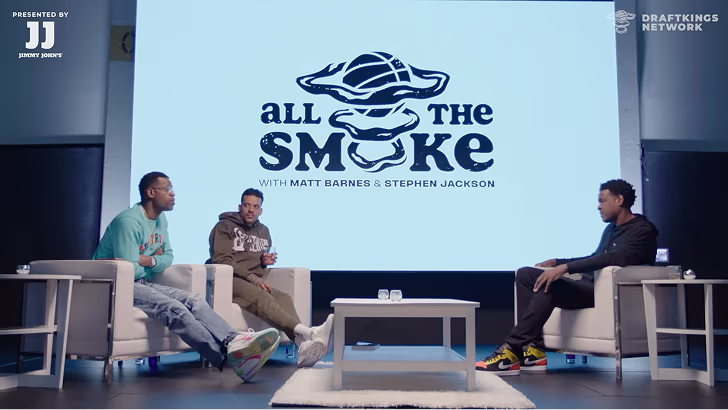
How All the Smoke makes hit compilations faster with OpusSearch

How All the Smoke makes hit compilations faster with OpusSearch

Growing a new channel to 1.5M views in 90 days without creating new videos

Growing a new channel to 1.5M views in 90 days without creating new videos

Turning old videos into new hits: How KFC Radio drives 43% more views with a new YouTube strategy

Turning old videos into new hits: How KFC Radio drives 43% more views with a new YouTube strategy

Google Adds AI Music to Gemini: The Rise of Multimodal AI Platforms

Google Adds AI Music to Gemini: The Rise of Multimodal AI Platforms
No items found.
No items found.

Boost your social media growth with OpusClip

Create and post one short video every day for your social media and grow faster.

Google Adds AI Music to Gemini: The Rise of Multimodal AI Platforms

Google Adds AI Music to Gemini: The Rise of Multimodal AI Platforms

Google Adds AI Music to Gemini: Why Multimodal AI Platforms Lead Content Creation

Google just made a significant move that signals where AI content creation is heading. The tech giant has integrated DeepMind's Lyria 3 audio model directly into Gemini, allowing users to generate 30-second music tracks from text, images, and even videos without leaving the chatbot interface. This expansion into multimodal AI platforms represents more than a feature update. It reflects a fundamental shift in how creators will produce content in 2026 and beyond.

For video creators, marketers, and content teams, this development raises an important question: Why juggle multiple disconnected AI tools when integrated platforms can handle diverse creative tasks in one workflow? The answer is increasingly clear. The future belongs to unified AI systems that combine specialized models under a single roof.

What Google's Lyria 3 Integration Actually Means

Google's announcement brings AI music generation into the mainstream conversation. Lyria 3, developed by DeepMind, now lives inside Gemini's interface. Users worldwide can generate music tracks based on text prompts, reference images, or video clips.

The key detail here is integration. Google did not launch a separate music app. Instead, they embedded this capability directly into their existing AI assistant. This approach mirrors a broader industry pattern.

The Technical Breakdown

  • Input flexibility: Users can prompt with text descriptions, upload images for mood matching, or provide video clips for soundtrack generation
  • Output format: 30-second tracks suitable for social content, presentations, or creative projects
  • Access model: Beta rollout through the Gemini app with global availability
  • No context switching: Everything happens within the same interface where users already work

This integration philosophy is not unique to Google. It represents the direction the entire AI content industry is moving.

Why Multimodal AI Platforms Are Winning

The fragmented tool approach is dying. Creators who once bounced between five or six different AI services are discovering that integrated platforms save time, reduce friction, and produce more cohesive results.

The Problem with Tool Fragmentation

Consider the typical 2024 workflow for creating a video with AI assistance:

  • One tool for script generation
  • Another for image creation
  • A third for video generation
  • A fourth for voiceover
  • A fifth for music
  • Manual assembly of all components

Each tool has its own interface, pricing model, export formats, and learning curve. The cognitive load alone slows production significantly.

The Integrated Platform Advantage

Multimodal AI platforms solve this by combining capabilities. When a single system handles multiple content types, several benefits emerge:

  • Faster iteration: No exporting, downloading, and re-uploading between tools
  • Consistent quality: Components designed to work together produce more cohesive outputs
  • Simplified billing: One subscription instead of five
  • Reduced learning curve: Master one interface instead of many
  • Better context awareness: The system understands your full project, not just isolated pieces

How Agent Opus Embodies the Multi-Model Philosophy

While Google integrates music generation into Gemini, Agent Opus has been applying similar integration principles to video creation. The platform aggregates multiple AI video generation models into a single interface, automatically selecting the best model for each scene in your project.

The Multi-Model Aggregation Approach

Agent Opus combines capabilities from leading video generation models including Kling, Hailuo MiniMax, Veo, Runway, Sora, Seedance, Luma, and Pika. Rather than forcing users to choose one model and accept its limitations, the platform intelligently routes each scene to the model best suited for that specific content.

This means a single video project might use:

  • One model for photorealistic human scenes
  • Another for dynamic motion sequences
  • A third for stylized animated segments

The result is videos that exceed what any single model could produce alone.

From Input to Publish-Ready Video

Agent Opus accepts multiple input types to match different creator workflows:

  • Text prompts or briefs: Describe what you want and let the AI build the structure
  • Full scripts: Provide detailed scene-by-scene direction
  • Outlines: Give the framework and let AI fill in details
  • Blog or article URLs: Transform existing written content into video format

The platform then handles scene assembly, AI motion graphics, royalty-free image sourcing, voiceover generation (including voice cloning), AI avatars, background soundtracks, and social media aspect ratio formatting. The output is ready to publish without additional processing.

Use Cases Where Integrated AI Platforms Excel

Understanding when multimodal platforms provide the most value helps creators make informed tool choices.

Marketing Teams Producing at Scale

Marketing departments often need to produce dozens of video assets monthly across multiple channels. An integrated platform eliminates the coordination overhead of managing separate tools for each component. One team member can produce complete videos without specialized skills in each individual discipline.

Solo Creators and Small Businesses

Independent creators rarely have time to master multiple complex tools. A unified platform with intelligent defaults lets them focus on creative direction rather than technical execution. The AI handles the heavy lifting while the creator maintains artistic control.

Agencies Managing Multiple Clients

Agencies benefit from standardized workflows. When the entire team uses one platform, knowledge transfers easily between team members and projects. Training new staff becomes simpler, and quality remains consistent across client work.

Educational Content Producers

Educators and course creators often need to transform written materials into engaging video content. The ability to input a blog URL or article and receive a structured video dramatically accelerates content repurposing for different learning formats.

Pro Tips for Working with Multimodal AI Platforms

Getting the best results from integrated AI systems requires understanding how to leverage their unique strengths.

  • Start with clear creative direction: Even though the AI handles execution, your input quality determines output quality. Detailed prompts produce better results than vague requests.
  • Trust the model selection: Platforms like Agent Opus auto-select models for good reasons. Override only when you have specific technical requirements.
  • Iterate on sections, not entire projects: If one scene needs adjustment, refine that specific segment rather than regenerating everything.
  • Match input type to your preparation level: Use URL input when repurposing existing content. Use detailed scripts when you have specific vision requirements.
  • Plan for platform strengths: Design projects that leverage what the platform does well rather than fighting against its architecture.

Common Mistakes to Avoid

Even powerful platforms produce poor results when used incorrectly. Watch for these pitfalls:

  • Over-prompting: Extremely long, contradictory prompts confuse AI systems. Be specific but concise.
  • Ignoring output formats: Always specify your target platform's aspect ratio requirements upfront rather than trying to reformat later.
  • Skipping the brief stage: Jumping straight to generation without planning leads to wasted iterations. Outline your project structure first.
  • Expecting perfection on first try: AI generation is iterative. Budget time for refinement passes.
  • Using the wrong input type: A detailed script works better than a vague prompt when you have specific requirements. Match your input to your preparation level.

How to Create Videos with a Multi-Model AI Platform

For those new to integrated AI video generation, here is a straightforward workflow using Agent Opus:

Step 1: Define Your Project Scope

Determine your video's purpose, target audience, and distribution channel. This information shapes every subsequent decision. A LinkedIn thought leadership piece requires different treatment than a TikTok product demo.

Step 2: Choose Your Input Method

Select the input type that matches your preparation. If you have an existing blog post, use the URL input. If you have a detailed vision, write a script. If you want AI assistance with structure, start with a brief or outline.

Step 3: Provide Creative Direction

Specify tone, style, pacing, and any brand requirements. Include information about voiceover preferences, whether you want an AI avatar, and your target video length.

Step 4: Review the Generated Structure

Before full generation, review the proposed scene breakdown. This is your opportunity to adjust pacing, add or remove sections, and ensure the structure serves your goals.

Step 5: Generate and Refine

Let the platform generate your video. Review the output and identify any scenes that need adjustment. Refine specific sections rather than regenerating the entire project.

Step 6: Export for Your Target Platform

Select the appropriate aspect ratio and format for your distribution channel. The platform handles the technical formatting so your video is ready to publish.

The Broader Industry Trajectory

Google's Lyria 3 integration into Gemini is not an isolated event. It reflects a clear industry direction that will accelerate through 2026 and beyond.

Consolidation Is Inevitable

Standalone AI tools face increasing pressure. Users prefer fewer subscriptions, simpler workflows, and integrated experiences. Platforms that combine multiple capabilities will capture market share from single-purpose tools.

Model Quality Continues Improving

Each generation of AI models produces better outputs. Platforms that aggregate multiple models can offer users the best available option for each task, staying current as the technology evolves.

The Creator Economy Demands Efficiency

Content velocity requirements keep increasing. Creators who adopt integrated platforms gain competitive advantages through faster production cycles and lower per-piece costs.

Key Takeaways

  • Google's integration of Lyria 3 music generation into Gemini signals the industry's move toward multimodal AI platforms
  • Fragmented tool workflows create friction, increase costs, and slow production
  • Integrated platforms like Agent Opus combine multiple AI models to produce better results than any single model alone
  • Multi-model aggregation allows automatic selection of the best tool for each specific task
  • The trend toward consolidation will accelerate as users demand simpler, more powerful creative workflows
  • Creators who adopt integrated platforms now will have competitive advantages as the technology matures

Frequently Asked Questions

How does Google's Lyria 3 music generation compare to dedicated AI music tools?

Lyria 3's primary advantage is integration rather than raw capability. While dedicated music AI tools may offer more granular control and longer outputs, Lyria 3 eliminates context switching by living inside Gemini. For creators who need quick soundtracks for social content, this convenience often outweighs the limitations. The 30-second output length suits most short-form video needs, and the ability to generate music from images or video clips adds creative flexibility that standalone tools typically lack.

Can Agent Opus automatically add background music to generated videos?

Yes, Agent Opus includes background soundtrack generation as part of its integrated video creation workflow. When you create a video through the platform, you can specify music preferences in your creative direction. The system then selects and applies appropriate background audio that matches your content's tone and pacing. This happens automatically during the generation process, so your output includes synchronized audio without requiring separate music sourcing or manual audio editing.

What makes multi-model aggregation better than using a single AI video model?

Different AI video models excel at different content types. Some produce superior photorealistic humans while others handle motion dynamics better. Some excel at specific visual styles or animation approaches. Agent Opus analyzes each scene in your project and routes it to the model best suited for that specific content. A single video might use three or four different models, each contributing its strengths. The result is output quality that exceeds what any individual model could achieve across all scene types.

How do multimodal AI platforms handle brand consistency across different content types?

Integrated platforms maintain context across your entire project, which helps ensure consistency. When you provide brand guidelines, tone preferences, or visual direction at the project level, those parameters apply to all generated components. Agent Opus carries your creative direction through scene assembly, motion graphics, voiceover, and soundtrack selection. This unified approach produces more cohesive results than manually combining outputs from disconnected tools, where each component might interpret your brand differently.

What input format produces the best results when using Agent Opus for video generation?

The optimal input format depends on your preparation level and creative requirements. Detailed scripts work best when you have specific scene-by-scene vision and want precise control over content. URL inputs excel when repurposing existing written content like blog posts or articles. Briefs and outlines suit situations where you want AI assistance with structure while maintaining creative direction. For most users, starting with a clear brief that specifies tone, audience, and key messages produces strong results while allowing the platform's intelligence to handle structural decisions.

Will the trend toward integrated AI platforms eliminate specialized creative tools?

Specialized tools will likely persist for professional users with advanced requirements, but the mainstream market is shifting toward integrated platforms. Most creators prioritize speed and simplicity over maximum control. Integrated platforms serve this majority effectively. However, professionals in specific disciplines like music production, visual effects, or broadcast video will continue using specialized tools that offer deeper functionality. The market is bifurcating between professional-grade specialized tools and accessible integrated platforms for general creators.

What to Do Next

The shift toward multimodal AI platforms is not a future prediction. It is happening now. Google's Gemini expansion and platforms like Agent Opus represent the new standard for AI-assisted content creation. If you are still juggling multiple disconnected tools for video production, you are working harder than necessary. Experience the difference an integrated multi-model approach makes by trying Agent Opus at opus.pro/agent.

Ready to start streaming differently?

Opus is completely FREE for one year for all private beta users. You can get access to all our premium features during this period. We also offer free support for production, studio design, and content repurposing to help you grow.
Join the beta
Limited spots remaining

Try OPUS today

Try Opus Studio

Make your live stream your Magnum Opus