Multi-Language Captions Tutorial: Spanish, French, Hindi via the OpusClip API

May 13, 2026
Multi-Language Captions Tutorial: Spanish, French, Hindi via the OpusClip API

English captions cover roughly 25% of internet users. The other 75% — Spanish, Mandarin, Hindi, Arabic, Portuguese, Indonesian, French, German, Japanese, Russian, and dozens more — are systematically underserved by most video publishers. For teams targeting global audiences, multi-language captions aren't a localization nicety; they're a 4x multiplier on reach.

This guide is a developer-focused look at how multi-language captioning APIs work, what to expect across the major language families, and how the OpusClip API will support multilingual workflows when it goes generally available.

The OpusClip API is currently in early accessrequest access at opus.pro/api. Code examples will publish here once the v1 spec is finalized.

Key takeaways

• Multi-language captioning combines transcription in the source language with translation to N target languages and language-aware burn-in rendering.

• Right-to-left languages (Arabic, Hebrew, Urdu) and complex-script languages (Chinese, Japanese, Korean, Hindi) need explicit text-direction and font-fallback handling.

• Translation quality matters more than transcription accuracy at the long tail — bad translation is more obviously wrong to native speakers than slightly imperfect transcription.

• For most use cases, the source audio stays unchanged and only the captions translate. Dubbing is a different (much heavier) workflow.

• The OpusClip API will support 30+ languages with one API call generating captions in multiple target languages simultaneously.

Why multi-language captioning unlocks 4x the reach

Some numbers:

English is the source language for 60%+ of US-based video publishers but only 25% of global internet users.

Spanish has 500M+ native speakers — second to Mandarin and ahead of English by native count.

Hindi, Portuguese, Bengali, and Indonesian each have 200M+ speakers that most English-only content never reaches.

TikTok's For You algorithm prioritizes language match — captions in the viewer's language increase distribution in that locale by 3-5x.

YouTube's auto-translate is unreliable for short-form content (it doesn't apply to Shorts and quality varies wildly on long-form).

For any team running a video content operation, going multilingual is the highest-ROI move available after captions themselves.

What a multi-language captions API actually does

Four steps:

1. Source transcription. Speech-to-text in the audio language. Most APIs auto-detect; you can also force a language.

2. Translation. Each transcript segment translates to each target language. Translation models tuned for short-form social content outperform generic translation models.

3. Language-aware rendering. Captions render with correct fonts (CJK glyphs, Devanagari, Arabic), text direction (LTR vs. RTL), and character spacing. Default fonts often don't include all glyphs — fallback font stacks are critical.

4. Burn-in or sidecar output. Each language gets its own output — either a separate MP4 with that language's burn-in captions, or a sidecar SRT/VTT file in that language.

Most production teams pick the top 3-5 target languages for their audience and run them on every clip.

What to consider when integrating

Translation model quality. Spanish, Portuguese, French, and German translations are typically excellent across major APIs. Hindi, Arabic, and tonal languages (Mandarin, Vietnamese, Thai) vary more — sample real content before committing.

RTL and complex-script support. Arabic and Hebrew render right-to-left. Chinese, Japanese, Korean need monospace-friendly fonts. Devanagari (Hindi) needs proper ligature handling. Confirm the renderer handles all of these correctly.

Font fallback stacks. A single font almost never covers every language. The API should fall back to language-appropriate fonts (Noto Sans family is the common choice).

Burn-in vs. sidecar. For social distribution, burn-in per language is what you want. For a multi-language YouTube upload, sidecar SRT files in each language work better (viewers select the language).

Audio dubbing vs. caption translation. Most multilingual workflows translate captions only and keep the source audio. Full dubbing (translating the audio track) is a different, much slower workflow with different quality tradeoffs.

Geographic distribution strategy. Producing captions in 10 languages doesn't help if you publish all of them to one account. Pair multi-language captions with per-region social account strategy.

Common use cases by team type

Global SaaS marketing. Product demo videos captioned in Spanish, German, French, and Portuguese for regional landing pages.

Online education. Course content with closed captions in 5-10 languages for accessibility and international student support.

News and media. Same news clip distributed to TikTok feeds in English, Spanish, and Arabic — three times the distribution from one piece of content.

Customer support. Help videos captioned in every supported language to reduce support volume in non-English regions.

Faith and nonprofit. Sermons, talks, and educational content captioned in languages spoken by congregants worldwide.

Common pitfalls

Generic translation models on idiomatic content. "Crush it" or "moving the needle" translate badly through generic models. Use APIs with domain-tuned translation for marketing/social content, or surface low-confidence translations for human review.

Forgetting RTL layout. Arabic captions that render left-to-right are immediately broken to a native speaker. Confirm RTL handling on real Arabic content before going to production.

Missing glyphs. Hindi (Devanagari), Tamil, Bengali, Thai, and other complex-script languages need fonts that include their glyph sets. Default Latin fonts fall back to boxes.

Word-by-word reveal on RTL languages. The animation that pops one word at a time from left-to-right doesn't work for RTL languages. Either disable the animation for those languages or use language-aware animation logic.

Cultural context. Translation quality includes idiomatic and cultural appropriateness. "Killing it" translates literally to "matando" in Spanish — which means actually killing. Native review for any high-stakes content.

How the OpusClip API will support multi-language captions

The OpusClip API is currently in early access. Multi-language captioning is built around:

• 30+ supported languages including Spanish, Portuguese, French, German, Italian, Hindi, Mandarin, Japanese, Korean, Arabic, Hebrew, Vietnamese, Thai, Indonesian, and Russian

• Multi-language output from a single submission (one job, one source, N output languages)

• Language-aware rendering with RTL support, font fallback, and complex-script glyph handling

• Optional translation quality scoring per segment for surfacing low-confidence translations to human review

• Per-language caption styling (different font, color, position per target language)

Full code examples and parameter reference will publish to the developer docs when the v1 spec is finalized. To get notified or apply for early access, visit opus.pro/api.

FAQ

Which languages does a multi-language captions API typically support?

Production APIs support 30+ languages including Spanish, French, German, Portuguese, Italian, Hindi, Mandarin, Japanese, Korean, Arabic, Hebrew, Turkish, Polish, Dutch, Russian, and Vietnamese. Confirm the model's published accuracy in your target languages before going to production.

Does the API handle right-to-left languages like Arabic and Hebrew?

Yes — production APIs render RTL languages with correct text direction. Confirm this on real content before launching, especially if your renderer also applies word-by-word animation.

Can I translate captions but keep the original audio?

Yes — that's the most common workflow. The translation only applies to captions; the original audio track is untouched. AI dubbing (translating the audio track itself) is a separate workflow with different quality characteristics.

How accurate are AI translations for video captions?

Major language pairs (English to Spanish/French/German/Portuguese) are excellent at the segment level. Translation quality degrades for lower-resource languages and idiomatic content. For mission-critical translations (legal, medical, brand-sensitive), use the API for the first pass and surface for human review.

Will the OpusClip API produce multiple languages from one job?

Yes — a single job submission can render captions in multiple target languages simultaneously, returning a separate output file per language. This is the standard pattern for global content operations.

Next steps

For the base captions workflow, see How to Add Captions to a Video. For end-to-end pipelines that include multi-language output, see Auto-Generate Shorts from a Podcast and Build a YouTube-to-TikTok Automation.
Request access to the OpusClip API at opus.pro/api.

On this page

Use our Free Forever Plan

Ready to build with the OpusClip API?

Create and post one short video every day for free, and grow faster.

Multi-Language Captions Tutorial: Spanish, French, Hindi via the OpusClip API

English captions cover roughly 25% of internet users. The other 75% — Spanish, Mandarin, Hindi, Arabic, Portuguese, Indonesian, French, German, Japanese, Russian, and dozens more — are systematically underserved by most video publishers. For teams targeting global audiences, multi-language captions aren't a localization nicety; they're a 4x multiplier on reach.

This guide is a developer-focused look at how multi-language captioning APIs work, what to expect across the major language families, and how the OpusClip API will support multilingual workflows when it goes generally available.

The OpusClip API is currently in early accessrequest access at opus.pro/api. Code examples will publish here once the v1 spec is finalized.

Key takeaways

• Multi-language captioning combines transcription in the source language with translation to N target languages and language-aware burn-in rendering.

• Right-to-left languages (Arabic, Hebrew, Urdu) and complex-script languages (Chinese, Japanese, Korean, Hindi) need explicit text-direction and font-fallback handling.

• Translation quality matters more than transcription accuracy at the long tail — bad translation is more obviously wrong to native speakers than slightly imperfect transcription.

• For most use cases, the source audio stays unchanged and only the captions translate. Dubbing is a different (much heavier) workflow.

• The OpusClip API will support 30+ languages with one API call generating captions in multiple target languages simultaneously.

Why multi-language captioning unlocks 4x the reach

Some numbers:

English is the source language for 60%+ of US-based video publishers but only 25% of global internet users.

Spanish has 500M+ native speakers — second to Mandarin and ahead of English by native count.

Hindi, Portuguese, Bengali, and Indonesian each have 200M+ speakers that most English-only content never reaches.

TikTok's For You algorithm prioritizes language match — captions in the viewer's language increase distribution in that locale by 3-5x.

YouTube's auto-translate is unreliable for short-form content (it doesn't apply to Shorts and quality varies wildly on long-form).

For any team running a video content operation, going multilingual is the highest-ROI move available after captions themselves.

What a multi-language captions API actually does

Four steps:

1. Source transcription. Speech-to-text in the audio language. Most APIs auto-detect; you can also force a language.

2. Translation. Each transcript segment translates to each target language. Translation models tuned for short-form social content outperform generic translation models.

3. Language-aware rendering. Captions render with correct fonts (CJK glyphs, Devanagari, Arabic), text direction (LTR vs. RTL), and character spacing. Default fonts often don't include all glyphs — fallback font stacks are critical.

4. Burn-in or sidecar output. Each language gets its own output — either a separate MP4 with that language's burn-in captions, or a sidecar SRT/VTT file in that language.

Most production teams pick the top 3-5 target languages for their audience and run them on every clip.

What to consider when integrating

Translation model quality. Spanish, Portuguese, French, and German translations are typically excellent across major APIs. Hindi, Arabic, and tonal languages (Mandarin, Vietnamese, Thai) vary more — sample real content before committing.

RTL and complex-script support. Arabic and Hebrew render right-to-left. Chinese, Japanese, Korean need monospace-friendly fonts. Devanagari (Hindi) needs proper ligature handling. Confirm the renderer handles all of these correctly.

Font fallback stacks. A single font almost never covers every language. The API should fall back to language-appropriate fonts (Noto Sans family is the common choice).

Burn-in vs. sidecar. For social distribution, burn-in per language is what you want. For a multi-language YouTube upload, sidecar SRT files in each language work better (viewers select the language).

Audio dubbing vs. caption translation. Most multilingual workflows translate captions only and keep the source audio. Full dubbing (translating the audio track) is a different, much slower workflow with different quality tradeoffs.

Geographic distribution strategy. Producing captions in 10 languages doesn't help if you publish all of them to one account. Pair multi-language captions with per-region social account strategy.

Common use cases by team type

Global SaaS marketing. Product demo videos captioned in Spanish, German, French, and Portuguese for regional landing pages.

Online education. Course content with closed captions in 5-10 languages for accessibility and international student support.

News and media. Same news clip distributed to TikTok feeds in English, Spanish, and Arabic — three times the distribution from one piece of content.

Customer support. Help videos captioned in every supported language to reduce support volume in non-English regions.

Faith and nonprofit. Sermons, talks, and educational content captioned in languages spoken by congregants worldwide.

Common pitfalls

Generic translation models on idiomatic content. "Crush it" or "moving the needle" translate badly through generic models. Use APIs with domain-tuned translation for marketing/social content, or surface low-confidence translations for human review.

Forgetting RTL layout. Arabic captions that render left-to-right are immediately broken to a native speaker. Confirm RTL handling on real Arabic content before going to production.

Missing glyphs. Hindi (Devanagari), Tamil, Bengali, Thai, and other complex-script languages need fonts that include their glyph sets. Default Latin fonts fall back to boxes.

Word-by-word reveal on RTL languages. The animation that pops one word at a time from left-to-right doesn't work for RTL languages. Either disable the animation for those languages or use language-aware animation logic.

Cultural context. Translation quality includes idiomatic and cultural appropriateness. "Killing it" translates literally to "matando" in Spanish — which means actually killing. Native review for any high-stakes content.

How the OpusClip API will support multi-language captions

The OpusClip API is currently in early access. Multi-language captioning is built around:

• 30+ supported languages including Spanish, Portuguese, French, German, Italian, Hindi, Mandarin, Japanese, Korean, Arabic, Hebrew, Vietnamese, Thai, Indonesian, and Russian

• Multi-language output from a single submission (one job, one source, N output languages)

• Language-aware rendering with RTL support, font fallback, and complex-script glyph handling

• Optional translation quality scoring per segment for surfacing low-confidence translations to human review

• Per-language caption styling (different font, color, position per target language)

Full code examples and parameter reference will publish to the developer docs when the v1 spec is finalized. To get notified or apply for early access, visit opus.pro/api.

FAQ

Which languages does a multi-language captions API typically support?

Production APIs support 30+ languages including Spanish, French, German, Portuguese, Italian, Hindi, Mandarin, Japanese, Korean, Arabic, Hebrew, Turkish, Polish, Dutch, Russian, and Vietnamese. Confirm the model's published accuracy in your target languages before going to production.

Does the API handle right-to-left languages like Arabic and Hebrew?

Yes — production APIs render RTL languages with correct text direction. Confirm this on real content before launching, especially if your renderer also applies word-by-word animation.

Can I translate captions but keep the original audio?

Yes — that's the most common workflow. The translation only applies to captions; the original audio track is untouched. AI dubbing (translating the audio track itself) is a separate workflow with different quality characteristics.

How accurate are AI translations for video captions?

Major language pairs (English to Spanish/French/German/Portuguese) are excellent at the segment level. Translation quality degrades for lower-resource languages and idiomatic content. For mission-critical translations (legal, medical, brand-sensitive), use the API for the first pass and surface for human review.

Will the OpusClip API produce multiple languages from one job?

Yes — a single job submission can render captions in multiple target languages simultaneously, returning a separate output file per language. This is the standard pattern for global content operations.

Next steps

For the base captions workflow, see How to Add Captions to a Video. For end-to-end pipelines that include multi-language output, see Auto-Generate Shorts from a Podcast and Build a YouTube-to-TikTok Automation.

Request access to the OpusClip API at opus.pro/api.

Creator name

Creator type

Team size

Channels

linkYouTubefacebookXTikTok

Pain point

Time to see positive ROI

About the creator

Don't miss these

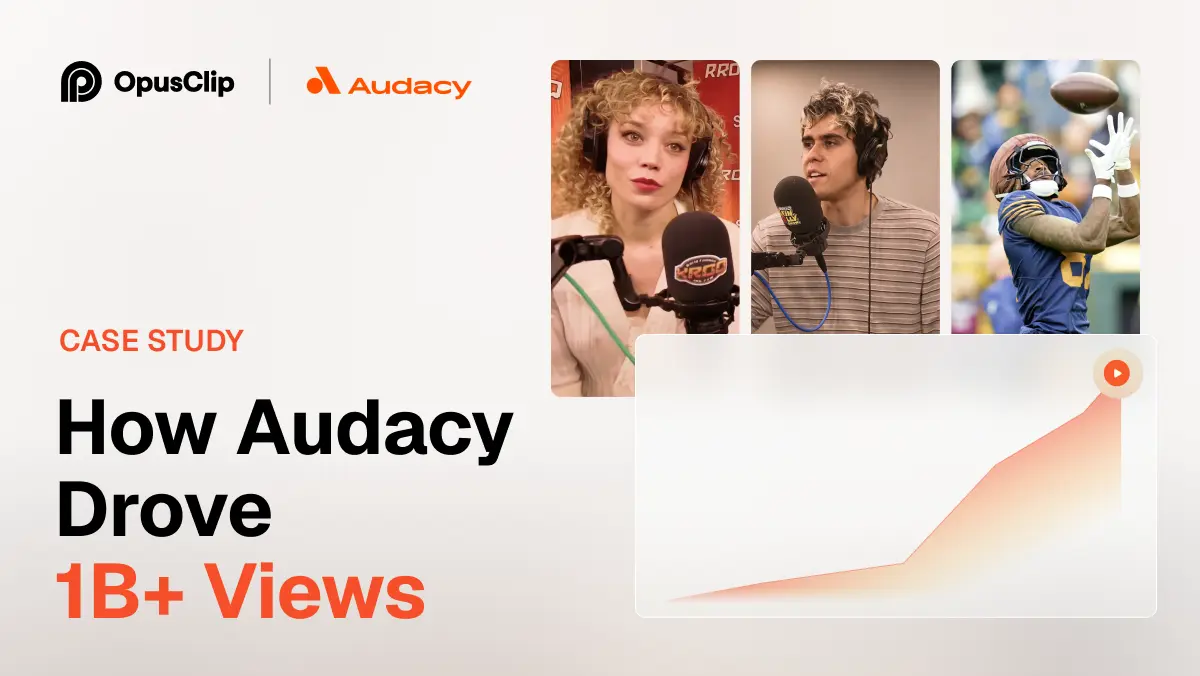
How Audacy Drove 1B+ Views by Taking a Tech-Forward Approach to Radio with OpusClip
No items found.

How Audacy Drove 1B+ Views by Taking a Tech-Forward Approach to Radio with OpusClip

How All the Smoke makes hit compilations faster with OpusSearch

How All the Smoke makes hit compilations faster with OpusSearch

Growing a new channel to 1.5M views in 90 days without creating new videos

Growing a new channel to 1.5M views in 90 days without creating new videos

Multi-Language Captions Tutorial: Spanish, French, Hindi via the OpusClip API

Multi-Language Captions Tutorial: Spanish, French, Hindi via the OpusClip API
No items found.
No items found.

Boost your social media growth with OpusClip

Create and post one short video every day for your social media and grow faster.

Multi-Language Captions Tutorial: Spanish, French, Hindi via the OpusClip API

Multi-Language Captions Tutorial: Spanish, French, Hindi via the OpusClip API

English captions cover roughly 25% of internet users. The other 75% — Spanish, Mandarin, Hindi, Arabic, Portuguese, Indonesian, French, German, Japanese, Russian, and dozens more — are systematically underserved by most video publishers. For teams targeting global audiences, multi-language captions aren't a localization nicety; they're a 4x multiplier on reach.

This guide is a developer-focused look at how multi-language captioning APIs work, what to expect across the major language families, and how the OpusClip API will support multilingual workflows when it goes generally available.

The OpusClip API is currently in early accessrequest access at opus.pro/api. Code examples will publish here once the v1 spec is finalized.

Key takeaways

• Multi-language captioning combines transcription in the source language with translation to N target languages and language-aware burn-in rendering.

• Right-to-left languages (Arabic, Hebrew, Urdu) and complex-script languages (Chinese, Japanese, Korean, Hindi) need explicit text-direction and font-fallback handling.

• Translation quality matters more than transcription accuracy at the long tail — bad translation is more obviously wrong to native speakers than slightly imperfect transcription.

• For most use cases, the source audio stays unchanged and only the captions translate. Dubbing is a different (much heavier) workflow.

• The OpusClip API will support 30+ languages with one API call generating captions in multiple target languages simultaneously.

Why multi-language captioning unlocks 4x the reach

Some numbers:

English is the source language for 60%+ of US-based video publishers but only 25% of global internet users.

Spanish has 500M+ native speakers — second to Mandarin and ahead of English by native count.

Hindi, Portuguese, Bengali, and Indonesian each have 200M+ speakers that most English-only content never reaches.

TikTok's For You algorithm prioritizes language match — captions in the viewer's language increase distribution in that locale by 3-5x.

YouTube's auto-translate is unreliable for short-form content (it doesn't apply to Shorts and quality varies wildly on long-form).

For any team running a video content operation, going multilingual is the highest-ROI move available after captions themselves.

What a multi-language captions API actually does

Four steps:

1. Source transcription. Speech-to-text in the audio language. Most APIs auto-detect; you can also force a language.

2. Translation. Each transcript segment translates to each target language. Translation models tuned for short-form social content outperform generic translation models.

3. Language-aware rendering. Captions render with correct fonts (CJK glyphs, Devanagari, Arabic), text direction (LTR vs. RTL), and character spacing. Default fonts often don't include all glyphs — fallback font stacks are critical.

4. Burn-in or sidecar output. Each language gets its own output — either a separate MP4 with that language's burn-in captions, or a sidecar SRT/VTT file in that language.

Most production teams pick the top 3-5 target languages for their audience and run them on every clip.

What to consider when integrating

Translation model quality. Spanish, Portuguese, French, and German translations are typically excellent across major APIs. Hindi, Arabic, and tonal languages (Mandarin, Vietnamese, Thai) vary more — sample real content before committing.

RTL and complex-script support. Arabic and Hebrew render right-to-left. Chinese, Japanese, Korean need monospace-friendly fonts. Devanagari (Hindi) needs proper ligature handling. Confirm the renderer handles all of these correctly.

Font fallback stacks. A single font almost never covers every language. The API should fall back to language-appropriate fonts (Noto Sans family is the common choice).

Burn-in vs. sidecar. For social distribution, burn-in per language is what you want. For a multi-language YouTube upload, sidecar SRT files in each language work better (viewers select the language).

Audio dubbing vs. caption translation. Most multilingual workflows translate captions only and keep the source audio. Full dubbing (translating the audio track) is a different, much slower workflow with different quality tradeoffs.

Geographic distribution strategy. Producing captions in 10 languages doesn't help if you publish all of them to one account. Pair multi-language captions with per-region social account strategy.

Common use cases by team type

Global SaaS marketing. Product demo videos captioned in Spanish, German, French, and Portuguese for regional landing pages.

Online education. Course content with closed captions in 5-10 languages for accessibility and international student support.

News and media. Same news clip distributed to TikTok feeds in English, Spanish, and Arabic — three times the distribution from one piece of content.

Customer support. Help videos captioned in every supported language to reduce support volume in non-English regions.

Faith and nonprofit. Sermons, talks, and educational content captioned in languages spoken by congregants worldwide.

Common pitfalls

Generic translation models on idiomatic content. "Crush it" or "moving the needle" translate badly through generic models. Use APIs with domain-tuned translation for marketing/social content, or surface low-confidence translations for human review.

Forgetting RTL layout. Arabic captions that render left-to-right are immediately broken to a native speaker. Confirm RTL handling on real Arabic content before going to production.

Missing glyphs. Hindi (Devanagari), Tamil, Bengali, Thai, and other complex-script languages need fonts that include their glyph sets. Default Latin fonts fall back to boxes.

Word-by-word reveal on RTL languages. The animation that pops one word at a time from left-to-right doesn't work for RTL languages. Either disable the animation for those languages or use language-aware animation logic.

Cultural context. Translation quality includes idiomatic and cultural appropriateness. "Killing it" translates literally to "matando" in Spanish — which means actually killing. Native review for any high-stakes content.

How the OpusClip API will support multi-language captions

The OpusClip API is currently in early access. Multi-language captioning is built around:

• 30+ supported languages including Spanish, Portuguese, French, German, Italian, Hindi, Mandarin, Japanese, Korean, Arabic, Hebrew, Vietnamese, Thai, Indonesian, and Russian

• Multi-language output from a single submission (one job, one source, N output languages)

• Language-aware rendering with RTL support, font fallback, and complex-script glyph handling

• Optional translation quality scoring per segment for surfacing low-confidence translations to human review

• Per-language caption styling (different font, color, position per target language)

Full code examples and parameter reference will publish to the developer docs when the v1 spec is finalized. To get notified or apply for early access, visit opus.pro/api.

FAQ

Which languages does a multi-language captions API typically support?

Production APIs support 30+ languages including Spanish, French, German, Portuguese, Italian, Hindi, Mandarin, Japanese, Korean, Arabic, Hebrew, Turkish, Polish, Dutch, Russian, and Vietnamese. Confirm the model's published accuracy in your target languages before going to production.

Does the API handle right-to-left languages like Arabic and Hebrew?

Yes — production APIs render RTL languages with correct text direction. Confirm this on real content before launching, especially if your renderer also applies word-by-word animation.

Can I translate captions but keep the original audio?

Yes — that's the most common workflow. The translation only applies to captions; the original audio track is untouched. AI dubbing (translating the audio track itself) is a separate workflow with different quality characteristics.

How accurate are AI translations for video captions?

Major language pairs (English to Spanish/French/German/Portuguese) are excellent at the segment level. Translation quality degrades for lower-resource languages and idiomatic content. For mission-critical translations (legal, medical, brand-sensitive), use the API for the first pass and surface for human review.

Will the OpusClip API produce multiple languages from one job?

Yes — a single job submission can render captions in multiple target languages simultaneously, returning a separate output file per language. This is the standard pattern for global content operations.

Next steps

For the base captions workflow, see How to Add Captions to a Video. For end-to-end pipelines that include multi-language output, see Auto-Generate Shorts from a Podcast and Build a YouTube-to-TikTok Automation.

Request access to the OpusClip API at opus.pro/api.

Ready to start streaming differently?

Opus is completely FREE for one year for all private beta users. You can get access to all our premium features during this period. We also offer free support for production, studio design, and content repurposing to help you grow.
Join the beta
Limited spots remaining

Try OPUS today

Try Opus Studio

Make your live stream your Magnum Opus