Samsung Goes All-In on AI Video Ads: What Creators Must Know

February 17, 2026

Samsung Goes All-In on AI Video Ads: What Creators Must Know

Samsung just made a statement that every content creator and marketer needs to hear. The tech giant is now producing AI-generated video ads across YouTube, Instagram, and TikTok, including teasers for its upcoming Galaxy S26 series. When one of the world's largest consumer electronics companies shifts its marketing strategy toward AI video creation, it signals something bigger than a single campaign decision.

This move validates what many creators have suspected: AI video tools are no longer experimental. They are becoming essential infrastructure for content production at every scale. Whether you are a solo creator or a marketing team, understanding this shift will help you stay competitive in 2026 and beyond.

What Samsung Actually Did (And Why It Matters)

Samsung has been integrating AI into its products for years. Now, the company is applying that same philosophy to its marketing content. Recent videos posted across Samsung's official social channels were created or edited using generative AI tools.

This is not a quiet test. Samsung is publicly embracing AI video production for some of its most visible campaigns, including promotional content for flagship products like the Galaxy S26.

The Scale of This Shift

Consider what this means in practical terms:

  • Samsung operates in over 80 countries with localized marketing
  • The company releases dozens of products annually, each requiring video content
  • Social media demands constant fresh content across multiple platforms
  • Traditional video production at this scale requires massive budgets and timelines

By adopting AI video tools, Samsung can produce more content, faster, while maintaining brand consistency. This is the same efficiency that creators and smaller marketing teams have been chasing.

Why Enterprise Adoption Changes Everything for Creators

When major brands adopt new technology, it creates ripple effects throughout the content ecosystem. Here is why Samsung's move matters for individual creators and marketing teams.

Validation of AI Video Quality

Enterprise brands are notoriously risk-averse with their marketing. Samsung would not stake its brand reputation on AI-generated content if the quality was not meeting professional standards. This signals that AI video tools have crossed a critical threshold.

Increased Audience Expectations

As viewers encounter more polished AI-assisted content from major brands, their expectations rise. Creators who do not leverage similar tools may find their content looking dated by comparison.

Democratization of Production Value

The same tools that help Samsung produce content at scale are available to creators. This levels the playing field in ways that were impossible just two years ago.

How This Trend Connects to Your Content Strategy

You do not need Samsung's budget to benefit from AI video tools. The key is understanding which aspects of AI video production apply to your workflow.

Repurposing Long-Form Content

Samsung creates hero content and then adapts it across platforms. You can do the same with your existing videos. Tools like OpusClip let you take a single long-form video and automatically generate multiple short clips optimized for different platforms.

This approach mirrors exactly what enterprise teams do: create once, distribute everywhere.

Maintaining Brand Consistency

Samsung's AI-generated content still looks unmistakably like Samsung. Brand consistency matters whether you have a global marketing team or you are building a personal brand.

OpusClip's brand kit features let you apply consistent colors, fonts, and styling across all your clips. Every piece of content reinforces your visual identity without manual editing.

Speed to Market

Enterprise brands use AI to reduce production timelines from weeks to days. Creators can achieve similar compression. What once required hours of editing can now happen in minutes with AI-powered clipping and caption generation.

Practical Ways to Adapt Your Workflow

Understanding the trend is one thing. Implementing changes is another. Here are specific actions you can take.

Audit Your Current Production Process

Before adding new tools, understand where your time goes. Most creators spend disproportionate time on:

  • Identifying the best moments in longer videos
  • Cutting and reformatting for different platforms
  • Adding captions and text overlays
  • Adjusting aspect ratios for vertical versus horizontal formats

These are exactly the tasks that AI tools handle efficiently.

Start with Repurposing

If you already create long-form content, repurposing offers the fastest path to increased output. A single 30-minute video can yield 10 or more short clips, each optimized for different platforms.

OpusClip analyzes your content to identify the most engaging segments automatically. The AI considers factors like speaker energy, topic completeness, and hook potential.

Prioritize Captions

Most social video is watched without sound. Samsung's AI-generated content includes polished captions as standard. Your content should too.

AI-powered caption generation is now accurate enough for professional use. OpusClip generates captions automatically and lets you customize styling to match your brand.

Common Mistakes to Avoid

As AI video tools become mainstream, certain pitfalls emerge. Learn from others' errors.

  • Over-relying on defaults: AI tools provide starting points, not finished products. Review and refine outputs to maintain your unique voice.
  • Ignoring platform differences: A clip that works on TikTok may not suit LinkedIn. Adjust tone and pacing for each platform's audience.
  • Forgetting the human element: AI handles production tasks, but strategy and creativity remain human responsibilities. Use time savings to focus on content planning.
  • Skipping quality review: AI occasionally makes errors. Always preview content before publishing.
  • Abandoning consistency: More content is only valuable if it reinforces your brand. Use brand kits and templates to maintain visual cohesion.

Step-by-Step: Implementing AI Video Repurposing

Ready to start? Follow this process to integrate AI video tools into your workflow.

Step 1: Select Your Source Content

Choose a long-form video with clear audio and multiple distinct topics or moments. Podcasts, interviews, tutorials, and presentations work well.

Step 2: Upload to OpusClip

Import your video directly or paste a link from YouTube or other platforms. The AI will analyze the content automatically.

Step 3: Review AI-Generated Clips

OpusClip identifies potential clips and ranks them by predicted engagement. Review the suggestions and select the ones that align with your goals.

Step 4: Customize Formatting

Apply your brand kit for consistent styling. Adjust aspect ratios for your target platforms. Refine captions if needed.

Step 5: Export and Schedule

Download your clips in platform-optimized formats. Schedule them across your social channels for consistent posting.

Step 6: Analyze and Iterate

Track which clips perform best. Use those insights to guide future content creation and clip selection.

Pro Tips for Maximizing AI Video Tools

These strategies help you get more value from AI-assisted video production.

  • Batch your processing: Upload multiple videos at once and review clips in a single session for efficiency.
  • Create platform-specific versions: The same moment might need different framing for TikTok versus YouTube Shorts.
  • Use hooks strategically: AI can identify engaging moments, but you decide which hooks align with your current campaigns.
  • Build a clip library: Save high-performing clips for future compilation videos or throwback content.
  • Test caption styles: Different audiences respond to different caption aesthetics. Experiment to find what works for your viewers.

Key Takeaways

  • Samsung's adoption of AI video ads signals mainstream enterprise acceptance of AI video tools
  • The same technology powering enterprise campaigns is available to individual creators
  • Repurposing long-form content into short clips offers the fastest path to increased output
  • Brand consistency matters more as content volume increases
  • AI handles production tasks, freeing you to focus on strategy and creativity
  • Quality review remains essential even with AI assistance
  • Tools like OpusClip make enterprise-level efficiency accessible to creators at any scale

Frequently Asked Questions

How does Samsung's AI video strategy apply to smaller creators?

Samsung uses AI to produce more content faster while maintaining brand consistency. Creators can apply the same principles using tools like OpusClip. Instead of manually editing each clip, you let AI identify the best moments from your long-form content and automatically format them for different platforms. The efficiency gains scale down perfectly to individual workflows.

What types of content work best for AI-powered repurposing?

Long-form videos with clear audio and multiple distinct segments perform best. Podcasts, interviews, tutorials, webinars, and live streams are ideal candidates. OpusClip's AI analyzes speaker energy, topic completeness, and hook potential to identify clips that will engage viewers. Content with natural pauses between topics makes it easier for AI to find clean cut points.

Will AI-generated video content hurt my authenticity with audiences?

AI tools handle production tasks like clipping, captioning, and reformatting. Your ideas, voice, and personality remain entirely yours. Samsung's AI-generated ads still look and feel like Samsung content. Similarly, using OpusClip to repurpose your videos does not change your message or style. It simply makes distribution more efficient while you maintain creative control.

How do I maintain brand consistency when producing more AI-assisted content?

OpusClip includes brand kit features that let you save your colors, fonts, and styling preferences. Once configured, every clip you generate automatically applies your brand elements. This mirrors how enterprise teams like Samsung maintain visual consistency across hundreds of pieces of content. Set up your brand kit once and apply it to all future clips.

What is the learning curve for implementing AI video tools?

Most creators can start producing clips within their first session. OpusClip's interface guides you through uploading content, reviewing AI-generated clips, and customizing outputs. The AI handles the technical complexity of identifying engaging moments and formatting for different platforms. You focus on selecting which clips to publish and refining them to match your standards.

How does AI clipping compare to hiring a video editor?

AI clipping excels at high-volume, repeatable tasks like identifying highlights, adding captions, and reformatting aspect ratios. A human editor brings creative judgment for complex projects. Many creators use both: OpusClip for rapid repurposing of regular content, and editors for flagship productions. The combination maximizes output while maintaining quality where it matters most.

What to Do Next

Samsung's move toward AI video ads confirms what forward-thinking creators already know: AI video tools are becoming standard infrastructure for content production. You do not need an enterprise budget to benefit from the same efficiency gains. Start by repurposing your existing long-form content into platform-optimized clips. Visit opus.pro to see how OpusClip can help you produce more content without multiplying your workload.

On this page

Use our Free Forever Plan

Create and post one short video every day for free, and grow faster.

Samsung Goes All-In on AI Video Ads: What Creators Must Know

Samsung Goes All-In on AI Video Ads: What Creators Must Know

Samsung just made a statement that every content creator and marketer needs to hear. The tech giant is now producing AI-generated video ads across YouTube, Instagram, and TikTok, including teasers for its upcoming Galaxy S26 series. When one of the world's largest consumer electronics companies shifts its marketing strategy toward AI video creation, it signals something bigger than a single campaign decision.

This move validates what many creators have suspected: AI video tools are no longer experimental. They are becoming essential infrastructure for content production at every scale. Whether you are a solo creator or a marketing team, understanding this shift will help you stay competitive in 2026 and beyond.

What Samsung Actually Did (And Why It Matters)

Samsung has been integrating AI into its products for years. Now, the company is applying that same philosophy to its marketing content. Recent videos posted across Samsung's official social channels were created or edited using generative AI tools.

This is not a quiet test. Samsung is publicly embracing AI video production for some of its most visible campaigns, including promotional content for flagship products like the Galaxy S26.

The Scale of This Shift

Consider what this means in practical terms:

  • Samsung operates in over 80 countries with localized marketing
  • The company releases dozens of products annually, each requiring video content
  • Social media demands constant fresh content across multiple platforms
  • Traditional video production at this scale requires massive budgets and timelines

By adopting AI video tools, Samsung can produce more content, faster, while maintaining brand consistency. This is the same efficiency that creators and smaller marketing teams have been chasing.

Why Enterprise Adoption Changes Everything for Creators

When major brands adopt new technology, it creates ripple effects throughout the content ecosystem. Here is why Samsung's move matters for individual creators and marketing teams.

Validation of AI Video Quality

Enterprise brands are notoriously risk-averse with their marketing. Samsung would not stake its brand reputation on AI-generated content if the quality was not meeting professional standards. This signals that AI video tools have crossed a critical threshold.

Increased Audience Expectations

As viewers encounter more polished AI-assisted content from major brands, their expectations rise. Creators who do not leverage similar tools may find their content looking dated by comparison.

Democratization of Production Value

The same tools that help Samsung produce content at scale are available to creators. This levels the playing field in ways that were impossible just two years ago.

How This Trend Connects to Your Content Strategy

You do not need Samsung's budget to benefit from AI video tools. The key is understanding which aspects of AI video production apply to your workflow.

Repurposing Long-Form Content

Samsung creates hero content and then adapts it across platforms. You can do the same with your existing videos. Tools like OpusClip let you take a single long-form video and automatically generate multiple short clips optimized for different platforms.

This approach mirrors exactly what enterprise teams do: create once, distribute everywhere.

Maintaining Brand Consistency

Samsung's AI-generated content still looks unmistakably like Samsung. Brand consistency matters whether you have a global marketing team or you are building a personal brand.

OpusClip's brand kit features let you apply consistent colors, fonts, and styling across all your clips. Every piece of content reinforces your visual identity without manual editing.

Speed to Market

Enterprise brands use AI to reduce production timelines from weeks to days. Creators can achieve similar compression. What once required hours of editing can now happen in minutes with AI-powered clipping and caption generation.

Practical Ways to Adapt Your Workflow

Understanding the trend is one thing. Implementing changes is another. Here are specific actions you can take.

Audit Your Current Production Process

Before adding new tools, understand where your time goes. Most creators spend disproportionate time on:

  • Identifying the best moments in longer videos
  • Cutting and reformatting for different platforms
  • Adding captions and text overlays
  • Adjusting aspect ratios for vertical versus horizontal formats

These are exactly the tasks that AI tools handle efficiently.

Start with Repurposing

If you already create long-form content, repurposing offers the fastest path to increased output. A single 30-minute video can yield 10 or more short clips, each optimized for different platforms.

OpusClip analyzes your content to identify the most engaging segments automatically. The AI considers factors like speaker energy, topic completeness, and hook potential.

Prioritize Captions

Most social video is watched without sound. Samsung's AI-generated content includes polished captions as standard. Your content should too.

AI-powered caption generation is now accurate enough for professional use. OpusClip generates captions automatically and lets you customize styling to match your brand.

Common Mistakes to Avoid

As AI video tools become mainstream, certain pitfalls emerge. Learn from others' errors.

  • Over-relying on defaults: AI tools provide starting points, not finished products. Review and refine outputs to maintain your unique voice.
  • Ignoring platform differences: A clip that works on TikTok may not suit LinkedIn. Adjust tone and pacing for each platform's audience.
  • Forgetting the human element: AI handles production tasks, but strategy and creativity remain human responsibilities. Use time savings to focus on content planning.
  • Skipping quality review: AI occasionally makes errors. Always preview content before publishing.
  • Abandoning consistency: More content is only valuable if it reinforces your brand. Use brand kits and templates to maintain visual cohesion.

Step-by-Step: Implementing AI Video Repurposing

Ready to start? Follow this process to integrate AI video tools into your workflow.

Step 1: Select Your Source Content

Choose a long-form video with clear audio and multiple distinct topics or moments. Podcasts, interviews, tutorials, and presentations work well.

Step 2: Upload to OpusClip

Import your video directly or paste a link from YouTube or other platforms. The AI will analyze the content automatically.

Step 3: Review AI-Generated Clips

OpusClip identifies potential clips and ranks them by predicted engagement. Review the suggestions and select the ones that align with your goals.

Step 4: Customize Formatting

Apply your brand kit for consistent styling. Adjust aspect ratios for your target platforms. Refine captions if needed.

Step 5: Export and Schedule

Download your clips in platform-optimized formats. Schedule them across your social channels for consistent posting.

Step 6: Analyze and Iterate

Track which clips perform best. Use those insights to guide future content creation and clip selection.

Pro Tips for Maximizing AI Video Tools

These strategies help you get more value from AI-assisted video production.

  • Batch your processing: Upload multiple videos at once and review clips in a single session for efficiency.
  • Create platform-specific versions: The same moment might need different framing for TikTok versus YouTube Shorts.
  • Use hooks strategically: AI can identify engaging moments, but you decide which hooks align with your current campaigns.
  • Build a clip library: Save high-performing clips for future compilation videos or throwback content.
  • Test caption styles: Different audiences respond to different caption aesthetics. Experiment to find what works for your viewers.

Key Takeaways

  • Samsung's adoption of AI video ads signals mainstream enterprise acceptance of AI video tools
  • The same technology powering enterprise campaigns is available to individual creators
  • Repurposing long-form content into short clips offers the fastest path to increased output
  • Brand consistency matters more as content volume increases
  • AI handles production tasks, freeing you to focus on strategy and creativity
  • Quality review remains essential even with AI assistance
  • Tools like OpusClip make enterprise-level efficiency accessible to creators at any scale

Frequently Asked Questions

How does Samsung's AI video strategy apply to smaller creators?

Samsung uses AI to produce more content faster while maintaining brand consistency. Creators can apply the same principles using tools like OpusClip. Instead of manually editing each clip, you let AI identify the best moments from your long-form content and automatically format them for different platforms. The efficiency gains scale down perfectly to individual workflows.

What types of content work best for AI-powered repurposing?

Long-form videos with clear audio and multiple distinct segments perform best. Podcasts, interviews, tutorials, webinars, and live streams are ideal candidates. OpusClip's AI analyzes speaker energy, topic completeness, and hook potential to identify clips that will engage viewers. Content with natural pauses between topics makes it easier for AI to find clean cut points.

Will AI-generated video content hurt my authenticity with audiences?

AI tools handle production tasks like clipping, captioning, and reformatting. Your ideas, voice, and personality remain entirely yours. Samsung's AI-generated ads still look and feel like Samsung content. Similarly, using OpusClip to repurpose your videos does not change your message or style. It simply makes distribution more efficient while you maintain creative control.

How do I maintain brand consistency when producing more AI-assisted content?

OpusClip includes brand kit features that let you save your colors, fonts, and styling preferences. Once configured, every clip you generate automatically applies your brand elements. This mirrors how enterprise teams like Samsung maintain visual consistency across hundreds of pieces of content. Set up your brand kit once and apply it to all future clips.

What is the learning curve for implementing AI video tools?

Most creators can start producing clips within their first session. OpusClip's interface guides you through uploading content, reviewing AI-generated clips, and customizing outputs. The AI handles the technical complexity of identifying engaging moments and formatting for different platforms. You focus on selecting which clips to publish and refining them to match your standards.

How does AI clipping compare to hiring a video editor?

AI clipping excels at high-volume, repeatable tasks like identifying highlights, adding captions, and reformatting aspect ratios. A human editor brings creative judgment for complex projects. Many creators use both: OpusClip for rapid repurposing of regular content, and editors for flagship productions. The combination maximizes output while maintaining quality where it matters most.

What to Do Next

Samsung's move toward AI video ads confirms what forward-thinking creators already know: AI video tools are becoming standard infrastructure for content production. You do not need an enterprise budget to benefit from the same efficiency gains. Start by repurposing your existing long-form content into platform-optimized clips. Visit opus.pro to see how OpusClip can help you produce more content without multiplying your workload.

Creator name

Creator type

Team size

Channels

linkYouTubefacebookXTikTok

Pain point

Time to see positive ROI

About the creator

Don't miss these

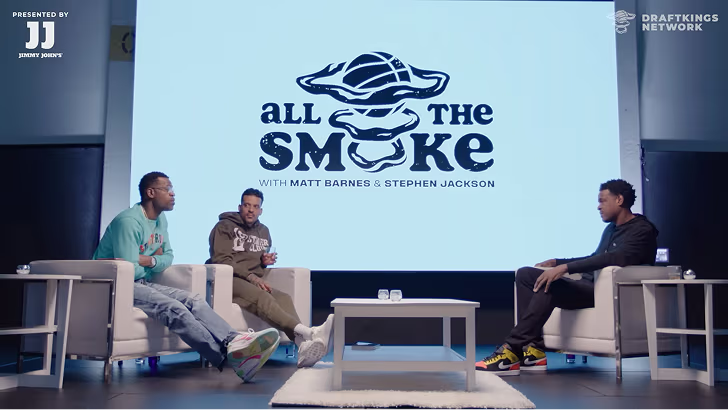
How All the Smoke makes hit compilations faster with OpusSearch

How All the Smoke makes hit compilations faster with OpusSearch

Growing a new channel to 1.5M views in 90 days without creating new videos

Growing a new channel to 1.5M views in 90 days without creating new videos

Turning old videos into new hits: How KFC Radio drives 43% more views with a new YouTube strategy

Turning old videos into new hits: How KFC Radio drives 43% more views with a new YouTube strategy

Samsung Goes All-In on AI Video Ads: What Creators Must Know

No items found.
No items found.

Boost your social media growth with OpusClip

Create and post one short video every day for your social media and grow faster.

Samsung Goes All-In on AI Video Ads: What Creators Must Know

Samsung Goes All-In on AI Video Ads: What Creators Must Know

Samsung just made a statement that every content creator and marketer needs to hear. The tech giant is now producing AI-generated video ads across YouTube, Instagram, and TikTok, including teasers for its upcoming Galaxy S26 series. When one of the world's largest consumer electronics companies shifts its marketing strategy toward AI video creation, it signals something bigger than a single campaign decision.

This move validates what many creators have suspected: AI video tools are no longer experimental. They are becoming essential infrastructure for content production at every scale. Whether you are a solo creator or a marketing team, understanding this shift will help you stay competitive in 2026 and beyond.

What Samsung Actually Did (And Why It Matters)

Samsung has been integrating AI into its products for years. Now, the company is applying that same philosophy to its marketing content. Recent videos posted across Samsung's official social channels were created or edited using generative AI tools.

This is not a quiet test. Samsung is publicly embracing AI video production for some of its most visible campaigns, including promotional content for flagship products like the Galaxy S26.

The Scale of This Shift

Consider what this means in practical terms:

  • Samsung operates in over 80 countries with localized marketing
  • The company releases dozens of products annually, each requiring video content
  • Social media demands constant fresh content across multiple platforms
  • Traditional video production at this scale requires massive budgets and timelines

By adopting AI video tools, Samsung can produce more content, faster, while maintaining brand consistency. This is the same efficiency that creators and smaller marketing teams have been chasing.

Why Enterprise Adoption Changes Everything for Creators

When major brands adopt new technology, it creates ripple effects throughout the content ecosystem. Here is why Samsung's move matters for individual creators and marketing teams.

Validation of AI Video Quality

Enterprise brands are notoriously risk-averse with their marketing. Samsung would not stake its brand reputation on AI-generated content if the quality was not meeting professional standards. This signals that AI video tools have crossed a critical threshold.

Increased Audience Expectations

As viewers encounter more polished AI-assisted content from major brands, their expectations rise. Creators who do not leverage similar tools may find their content looking dated by comparison.

Democratization of Production Value

The same tools that help Samsung produce content at scale are available to creators. This levels the playing field in ways that were impossible just two years ago.

How This Trend Connects to Your Content Strategy

You do not need Samsung's budget to benefit from AI video tools. The key is understanding which aspects of AI video production apply to your workflow.

Repurposing Long-Form Content

Samsung creates hero content and then adapts it across platforms. You can do the same with your existing videos. Tools like OpusClip let you take a single long-form video and automatically generate multiple short clips optimized for different platforms.

This approach mirrors exactly what enterprise teams do: create once, distribute everywhere.

Maintaining Brand Consistency

Samsung's AI-generated content still looks unmistakably like Samsung. Brand consistency matters whether you have a global marketing team or you are building a personal brand.

OpusClip's brand kit features let you apply consistent colors, fonts, and styling across all your clips. Every piece of content reinforces your visual identity without manual editing.

Speed to Market

Enterprise brands use AI to reduce production timelines from weeks to days. Creators can achieve similar compression. What once required hours of editing can now happen in minutes with AI-powered clipping and caption generation.

Practical Ways to Adapt Your Workflow

Understanding the trend is one thing. Implementing changes is another. Here are specific actions you can take.

Audit Your Current Production Process

Before adding new tools, understand where your time goes. Most creators spend disproportionate time on:

  • Identifying the best moments in longer videos
  • Cutting and reformatting for different platforms
  • Adding captions and text overlays
  • Adjusting aspect ratios for vertical versus horizontal formats

These are exactly the tasks that AI tools handle efficiently.

Start with Repurposing

If you already create long-form content, repurposing offers the fastest path to increased output. A single 30-minute video can yield 10 or more short clips, each optimized for different platforms.

OpusClip analyzes your content to identify the most engaging segments automatically. The AI considers factors like speaker energy, topic completeness, and hook potential.

Prioritize Captions

Most social video is watched without sound. Samsung's AI-generated content includes polished captions as standard. Your content should too.

AI-powered caption generation is now accurate enough for professional use. OpusClip generates captions automatically and lets you customize styling to match your brand.

Common Mistakes to Avoid

As AI video tools become mainstream, certain pitfalls emerge. Learn from others' errors.

  • Over-relying on defaults: AI tools provide starting points, not finished products. Review and refine outputs to maintain your unique voice.
  • Ignoring platform differences: A clip that works on TikTok may not suit LinkedIn. Adjust tone and pacing for each platform's audience.
  • Forgetting the human element: AI handles production tasks, but strategy and creativity remain human responsibilities. Use time savings to focus on content planning.
  • Skipping quality review: AI occasionally makes errors. Always preview content before publishing.
  • Abandoning consistency: More content is only valuable if it reinforces your brand. Use brand kits and templates to maintain visual cohesion.

Step-by-Step: Implementing AI Video Repurposing

Ready to start? Follow this process to integrate AI video tools into your workflow.

Step 1: Select Your Source Content

Choose a long-form video with clear audio and multiple distinct topics or moments. Podcasts, interviews, tutorials, and presentations work well.

Step 2: Upload to OpusClip

Import your video directly or paste a link from YouTube or other platforms. The AI will analyze the content automatically.

Step 3: Review AI-Generated Clips

OpusClip identifies potential clips and ranks them by predicted engagement. Review the suggestions and select the ones that align with your goals.

Step 4: Customize Formatting

Apply your brand kit for consistent styling. Adjust aspect ratios for your target platforms. Refine captions if needed.

Step 5: Export and Schedule

Download your clips in platform-optimized formats. Schedule them across your social channels for consistent posting.

Step 6: Analyze and Iterate

Track which clips perform best. Use those insights to guide future content creation and clip selection.

Pro Tips for Maximizing AI Video Tools

These strategies help you get more value from AI-assisted video production.

  • Batch your processing: Upload multiple videos at once and review clips in a single session for efficiency.
  • Create platform-specific versions: The same moment might need different framing for TikTok versus YouTube Shorts.
  • Use hooks strategically: AI can identify engaging moments, but you decide which hooks align with your current campaigns.
  • Build a clip library: Save high-performing clips for future compilation videos or throwback content.
  • Test caption styles: Different audiences respond to different caption aesthetics. Experiment to find what works for your viewers.

Key Takeaways

  • Samsung's adoption of AI video ads signals mainstream enterprise acceptance of AI video tools
  • The same technology powering enterprise campaigns is available to individual creators
  • Repurposing long-form content into short clips offers the fastest path to increased output
  • Brand consistency matters more as content volume increases
  • AI handles production tasks, freeing you to focus on strategy and creativity
  • Quality review remains essential even with AI assistance
  • Tools like OpusClip make enterprise-level efficiency accessible to creators at any scale

Frequently Asked Questions

How does Samsung's AI video strategy apply to smaller creators?

Samsung uses AI to produce more content faster while maintaining brand consistency. Creators can apply the same principles using tools like OpusClip. Instead of manually editing each clip, you let AI identify the best moments from your long-form content and automatically format them for different platforms. The efficiency gains scale down perfectly to individual workflows.

What types of content work best for AI-powered repurposing?

Long-form videos with clear audio and multiple distinct segments perform best. Podcasts, interviews, tutorials, webinars, and live streams are ideal candidates. OpusClip's AI analyzes speaker energy, topic completeness, and hook potential to identify clips that will engage viewers. Content with natural pauses between topics makes it easier for AI to find clean cut points.

Will AI-generated video content hurt my authenticity with audiences?

AI tools handle production tasks like clipping, captioning, and reformatting. Your ideas, voice, and personality remain entirely yours. Samsung's AI-generated ads still look and feel like Samsung content. Similarly, using OpusClip to repurpose your videos does not change your message or style. It simply makes distribution more efficient while you maintain creative control.

How do I maintain brand consistency when producing more AI-assisted content?

OpusClip includes brand kit features that let you save your colors, fonts, and styling preferences. Once configured, every clip you generate automatically applies your brand elements. This mirrors how enterprise teams like Samsung maintain visual consistency across hundreds of pieces of content. Set up your brand kit once and apply it to all future clips.

What is the learning curve for implementing AI video tools?

Most creators can start producing clips within their first session. OpusClip's interface guides you through uploading content, reviewing AI-generated clips, and customizing outputs. The AI handles the technical complexity of identifying engaging moments and formatting for different platforms. You focus on selecting which clips to publish and refining them to match your standards.

How does AI clipping compare to hiring a video editor?

AI clipping excels at high-volume, repeatable tasks like identifying highlights, adding captions, and reformatting aspect ratios. A human editor brings creative judgment for complex projects. Many creators use both: OpusClip for rapid repurposing of regular content, and editors for flagship productions. The combination maximizes output while maintaining quality where it matters most.

What to Do Next

Samsung's move toward AI video ads confirms what forward-thinking creators already know: AI video tools are becoming standard infrastructure for content production. You do not need an enterprise budget to benefit from the same efficiency gains. Start by repurposing your existing long-form content into platform-optimized clips. Visit opus.pro to see how OpusClip can help you produce more content without multiplying your workload.

Ready to start streaming differently?

Opus is completely FREE for one year for all private beta users. You can get access to all our premium features during this period. We also offer free support for production, studio design, and content repurposing to help you grow.
Join the beta
Limited spots remaining

Try OPUS today

Try Opus Studio

Make your live stream your Magnum Opus